In a significant evolutionary stride for industrial automation, engineers are increasingly transitioning from traditional pneumatic cylinders to advanced electric linear actuators within automated assembly systems. This strategic shift is primarily driven by an imperative to conserve energy, enhance operational flexibility, and meet the escalating demands for precision and control in modern manufacturing environments. While pneumatic systems have long been lauded for their simplicity, speed, and cost-effectiveness in basic, repetitive movements, the complexities and exacting requirements of contemporary assembly lines necessitate a more sophisticated approach, one that electric actuators are uniquely poised to provide.
The Paradigm Shift in Industrial Automation
For decades, pneumatic cylinders have been the workhorse of industrial automation, providing robust and rapid linear motion by converting compressed air into mechanical force. Their advantages are undeniable in applications requiring swift, repeated movement of light loads between two fixed points, such as pushing, clamping, or lifting in packaging or simple assembly tasks. They are relatively inexpensive to purchase and install, and their inherent mechanical simplicity translates to a degree of ruggedness. However, the operational reality of pneumatic systems often involves significant energy waste, primarily due to the inefficiencies of air compression, leaks in air lines, and the inherent ‘all-or-nothing’ nature of their actuation. Studies by organizations like the U.S. Department of Energy have consistently highlighted that compressed air systems can account for a substantial portion of a manufacturing plant’s total electricity consumption, often with only a fraction of that energy actually performing useful work. The constant noise generated by air compressors and exhaust valves also contributes to less favorable working conditions.
The advent of Industry 4.0 and the push towards smart factories have fundamentally reshaped expectations for manufacturing processes. Modern assembly demands not just speed, but also granular control, adaptability, and real-time data feedback. This environment prioritizes processes that are highly efficient, environmentally sustainable, and capable of producing customized products with minimal waste. It is within this evolving landscape that electric linear actuators have emerged as the superior alternative, offering a compelling blend of precision, efficiency, and intelligence that pneumatics cannot match.
Precision and Performance: The Electric Actuator Advantage
Electric linear actuators represent a fundamental departure from their pneumatic counterparts in their operational mechanism. Instead of relying on a piston driven by compressed air, an electric actuator utilizes an electric motor to drive a power screw, which in turn translates rotary motion into precise linear movement of a rod. This electromechanical design unlocks a realm of capabilities previously unattainable with pneumatics.
One of the most critical distinctions lies in positional control. Pneumatic cylinders typically operate between two hard stops, offering limited intermediate positioning. Electric actuators, conversely, can achieve highly precise positioning along their entire stroke length, often with repeatability down to micrometers (e.g., ±0.005 to ±0.01 millimeter, as seen in IAI America Inc.’s RCP6 series). This level of accuracy is indispensable for intricate assembly tasks, micro-component placement, and quality control processes where even slight deviations can lead to defects.
Furthermore, electric actuators offer unparalleled control over acceleration and velocity. Unlike pneumatics, where motion is often abrupt and difficult to fine-tune, electric systems allow for programmable acceleration and deceleration ramps, ensuring smooth, controlled movements that reduce wear and tear on machinery and minimize shock to delicate workpieces. This also enables dynamic adjustments to speed during operation, optimizing cycle times and adapting to varying product requirements. The maximum speed capabilities of electric actuators are also highly competitive, with products like the RCP6 series offering speeds ranging from 100 to an impressive 1,440 millimeters per second, catering to a wide array of application speeds.
The force and payload capacity of electric actuators are also significant. While the original text mentions a maximum payload for horizontal applications of 10 to 100 kilograms, advanced electric actuators are capable of handling much heavier loads, often exceeding several tons, making them suitable for robust industrial applications that once exclusively relied on hydraulic systems. The ability to maintain consistent force throughout the stroke is another key advantage, crucial for tasks like pressing, forming, or clamping where variable force can compromise product integrity.
Beyond these core performance metrics, electric actuators boast several operational benefits:

- Energy Efficiency: By directly converting electrical energy into mechanical motion, electric actuators eliminate the significant energy losses associated with compressing and distributing air. They consume power only when actively moving or holding a position, leading to substantial energy savings—often 80% or more compared to pneumatic systems for similar tasks. This directly translates to reduced operating costs and a smaller carbon footprint.
- Cleanliness: Without the need for compressed air, electric systems eliminate the risk of oil mist, moisture, or particulate contamination that can be present in pneumatic lines. This makes them ideal for cleanroom environments, food and beverage processing, pharmaceutical manufacturing, and electronics assembly where product purity is paramount.
- Quiet Operation: The absence of air compressors, exhaust valves, and the characteristic hiss of air leaks makes electric actuator systems significantly quieter, contributing to a more pleasant and safer working environment for employees.
- Durability and Lifespan: With fewer moving parts and precision-engineered components, electric actuators generally offer a longer operational lifespan and require less frequent maintenance compared to pneumatic cylinders, which are susceptible to seal wear and leaks.
Technological Innovations: IAI America’s RCP6 Series and Beyond
The ongoing development in electric linear actuator technology exemplifies the industry’s commitment to enhancing manufacturing capabilities. IAI America Inc.’s RCP6 series, for instance, showcases several key advancements. Its impressive speed range of 100 to 1,440 millimeters per second, combined with stroke lengths from 25 to 1,000 millimeters, demonstrates the versatility required across diverse applications. The positional repeatability of ±0.005 to ±0.01 millimeter highlights the precision now achievable at an industrial scale.
The internal mechanics of these actuators are also crucial to their performance. The choice of motor—either a stepper motor for cost-effective, open-loop control or a servomotor for closed-loop, high-precision, and dynamic control—allows for customization based on application demands. Servomotors, in particular, with their ability to provide continuous feedback on position, speed, and torque, are central to achieving the high levels of control and accuracy that define modern electric actuation. Mounting options for the motor, whether in-line with the screw or parallel, provide flexibility for integration into various machine designs, especially in space-constrained environments. When mounted to the side, connections via timing belts or helical gears ensure efficient power transmission.
The type of power screw used also significantly impacts performance. Ballscrews, known for their high efficiency, low friction, and excellent positional accuracy, are commonly employed in high-performance applications. Acme screws offer robustness and self-locking capabilities, while roller screws provide even higher load capacity and longer life for demanding tasks. The continuous innovation in these mechanical components, coupled with advancements in motor and drive technology, is what propels the capabilities of electric actuators forward.
Streamlining Integration: The e-Wiring System
While the performance benefits of electric actuators are clear, their integration into complex automation systems has traditionally involved a degree of wiring complexity. Unlike pneumatics, which primarily require air lines and a valve manifold, electric actuators necessitate routing power and sensor wires to and from a central controller. Recognizing this challenge, companies like IAI America have introduced innovative solutions such as their e-Wiring system, designed to simplify and accelerate the installation process.
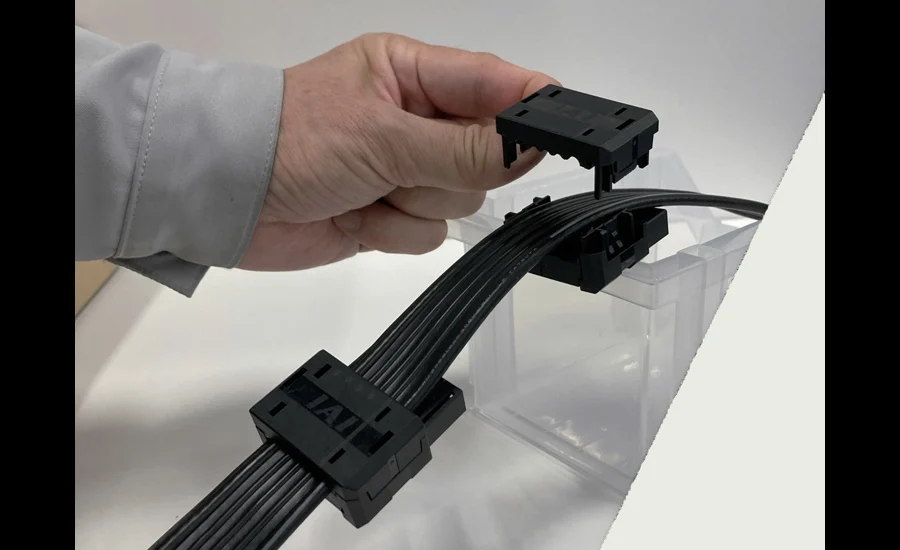
The e-Wiring system represents a significant step forward in reducing the complexity and time associated with integrating multiple electric actuators. It allows engineers to quickly connect up to 16 electric actuators using a single dedicated bus cable with integrated branch connections. This approach dramatically reduces the number of individual cables that need to be run, significantly decluttering control panels and machine infrastructure.
A key feature of the e-Wiring system is its use of pressure-welded connectors, which engineers can apply to the flat bus cable using specialized pliers. This method bypasses the need for traditional, labor-intensive crimping or soldering, shortening wiring time by approximately 64 percent. Such efficiency gains are crucial in modern manufacturing, where project timelines are tight and labor costs are a significant consideration. Furthermore, the flat design of the bus cable often eliminates the need for bulky cable carriers, saving space and further simplifying machine design.
Beyond installation speed, the e-Wiring system offers operational advantages. The ability to install power supplies for actuators closer to the equipment saves valuable space within centralized control panels, which are often at a premium. This decentralized power distribution can also improve system responsiveness and reduce voltage drop over long cable runs. From an inventory management perspective, the system simplifies procurement and stocking, as engineers no longer need to manage and track multiple cable lengths for different actuators, leading to reduced administrative overhead and potential cost savings.
Connectivity and Control: The Smart Factory Backbone
The true power of electric actuators in the context of Industry 4.0 lies in their inherent digital nature and seamless integration with broader control architectures. Unlike pneumatic systems, which typically rely on discrete I/O signals, electric actuators are designed to communicate digitally, forming a crucial component of the smart factory’s nervous system.
In IAI’s system, an RCON controller acts as the central brain, orchestrating the movements of the connected actuators. This controller is then integrated into the plant’s overall automation network via standard industrial fieldbus protocols. Compatibility with widely adopted fieldbuses such as DeviceNet, CC-Link, EtherCAT, Ethernet/IP, and Profibus ensures that these electric actuator systems can be easily incorporated into existing Programmable Logic Controller (PLC) infrastructures from various manufacturers. This interoperability is fundamental for creating flexible, scalable, and future-proof automation solutions.

The e-Wiring system connects the power supply and actuators directly to the RCON controller. The flat cable extending from the RCON unit can span lengths up to 30 meters, with recommendations for a power supply to be located every 10 meters along this length to ensure stable power delivery. Branch lines from the central cable are ideally kept within 1 meter, optimizing signal integrity and power distribution. This networked approach allows for centralized monitoring, diagnostics, and precise control over each actuator, enabling predictive maintenance, rapid troubleshooting, and adaptive process adjustments—all hallmarks of intelligent manufacturing.
Economic and Environmental Impact
The transition to electric linear actuators carries profound economic and environmental implications for manufacturing industries. Economically, the initial investment in electric systems, while potentially higher than pneumatics, is often offset rapidly by significant operational cost reductions. The primary driver of these savings is energy efficiency. With electric actuators consuming a fraction of the energy of their pneumatic counterparts, especially in applications with variable loads or frequent stops, companies can realize substantial reductions in electricity bills. Furthermore, the lower maintenance requirements, reduced downtime due to fewer mechanical failures, and simplified spare parts inventory contribute to a lower total cost of ownership (TCO) over the lifespan of the equipment.
Environmentally, the benefits are equally compelling. The reduction in energy consumption directly translates to a decrease in greenhouse gas emissions associated with electricity generation. The elimination of compressed air leaks also mitigates energy waste. Moreover, the cleaner operation of electric actuators, free from oil mist and exhaust, contributes to a healthier working environment and reduces the need for specialized filtration or waste disposal associated with pneumatic lubricants. This aligns with global sustainability goals and corporate social responsibility initiatives, allowing manufacturers to improve their environmental footprint while boosting efficiency.
Market Outlook and Future Trends
The market for electric linear actuators is projected to experience robust growth in the coming years, driven by the expanding adoption of industrial automation, the proliferation of robotics, and the ongoing demand for greater precision and efficiency across diverse sectors. Industries such as automotive, aerospace, medical device manufacturing, electronics assembly, and packaging are increasingly investing in electric actuator technology to meet the stringent quality standards, rapid production cycles, and flexibility required for personalized products.
The ongoing miniaturization of components, coupled with advancements in sensor technology and artificial intelligence, will further enhance the capabilities of electric actuators. Expect to see more compact designs, integrated intelligence for autonomous operation, and even more sophisticated communication protocols for seamless integration into the Internet of Things (IoT) and cyber-physical systems. As manufacturing processes become more complex and dynamic, the adaptability and data-driven insights offered by electric linear actuators will become even more critical.
The Assembly Show: A Hub for Innovation
Industry events play a crucial role in showcasing these technological advancements and fostering collaboration. The Assembly Show, held annually at venues such as the Donald E. Stephens Convention Center in Rosemont, IL, serves as a vital platform for manufacturers to explore the latest innovations in assembly technology. Attendees can engage with over 200 suppliers specializing in automation, fastening tools, software, presses, workstations, adhesives, dispensing and curing technology, test and inspection systems, and plastics joining equipment. This provides a comprehensive overview of the tools and solutions shaping the future of manufacturing, including the latest developments in robotics and motion control technology, such as the electric linear actuators highlighted by companies like IAI America. These events are instrumental in accelerating the adoption of advanced manufacturing practices and driving the industry forward.
In conclusion, the shift from pneumatic to electric linear actuators is more than a mere component swap; it represents a fundamental re-evaluation of efficiency, precision, and control in automated assembly. With their superior accuracy, energy efficiency, cleanliness, and seamless digital integration, electric actuators are not just replacing an older technology but are actively enabling the next generation of smart, sustainable, and highly flexible manufacturing systems. As industries continue to embrace the principles of Industry 4.0, the role of these sophisticated motion control devices will only grow in importance, solidifying their position as an indispensable element of the modern factory.