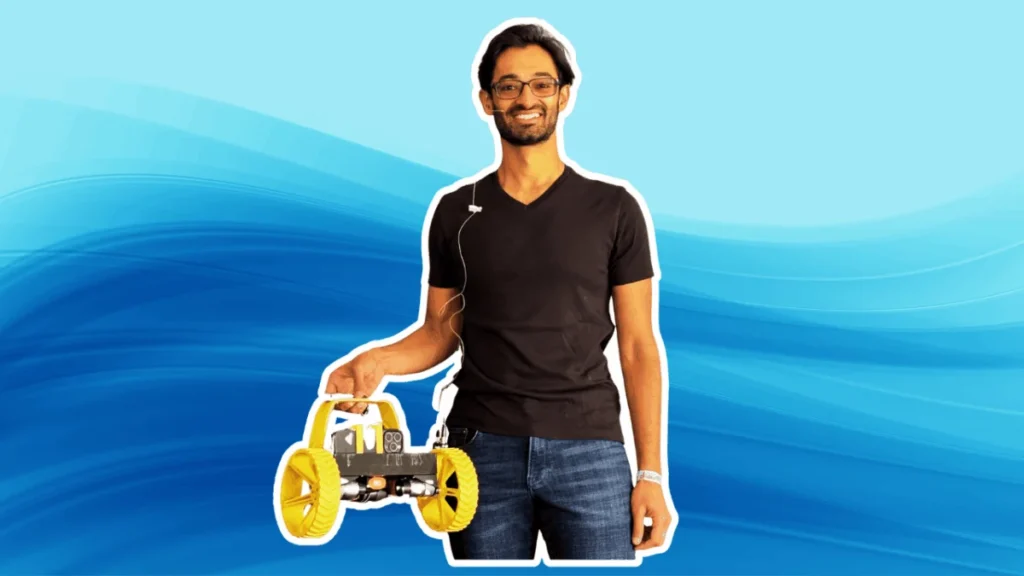
The transformative power of iterative design and accessible technology was vividly demonstrated by maker Survy Vaish at the recent Maker Faire Bay Area, where his journey from a rudimentary shoebox-on-wheels to a sophisticated, phone-powered outdoor autonomous robot captivated attendees. This project serves as a compelling testament to the idea that complex technological endeavors do not necessitate vast budgets or specialized laboratories but rather a commitment to persistent experimentation and problem-solving. Survy’s presentation underscored the practical application of engineering principles, showing how a nascent concept can evolve into a functional machine capable of navigating diverse environments and performing object identification, all built upon readily available components.
The Genesis of an Autonomous Vision: From Concept to Crude Prototype
Survy Vaish’s ambitious undertaking began with a seemingly simple yet profound question: how to construct an autonomous robot. The initial answer, as presented at Maker Faire, was disarmingly humble: a shoebox affixed with basic motors and wheels. This foundational prototype, far from an engineering marvel, deliberately stripped the project down to its bare essentials. Its sole purpose was to validate the core concept of mobility, to confirm that a self-contained unit could achieve locomotion. This phase is crucial in any design process, emphasizing functionality over sophistication and proving the viability of the most fundamental requirement before introducing additional complexities. The initial setup likely involved simple DC motors, a basic power source, and a rudimentary control mechanism, perhaps a breadboard with a microcontroller, laying the groundwork for future iterations. This minimalist approach allowed for rapid prototyping and immediate identification of basic mechanical and electrical challenges, such as motor integration, power distribution, and structural integrity.
The Iterative Design Process: A Cornerstone of Engineering Innovation
The true narrative arc of Survy’s project, and indeed much of successful engineering, is encapsulated in the continuous cycle of "test, fix, iterate." This methodology, central to agile development and design thinking, posits that perfection is not achieved in a single stroke but through successive refinements driven by empirical observation. Survy’s journey highlighted how each perceived "failure" or limitation of the prototype became a critical learning opportunity, directly informing the next stage of development.
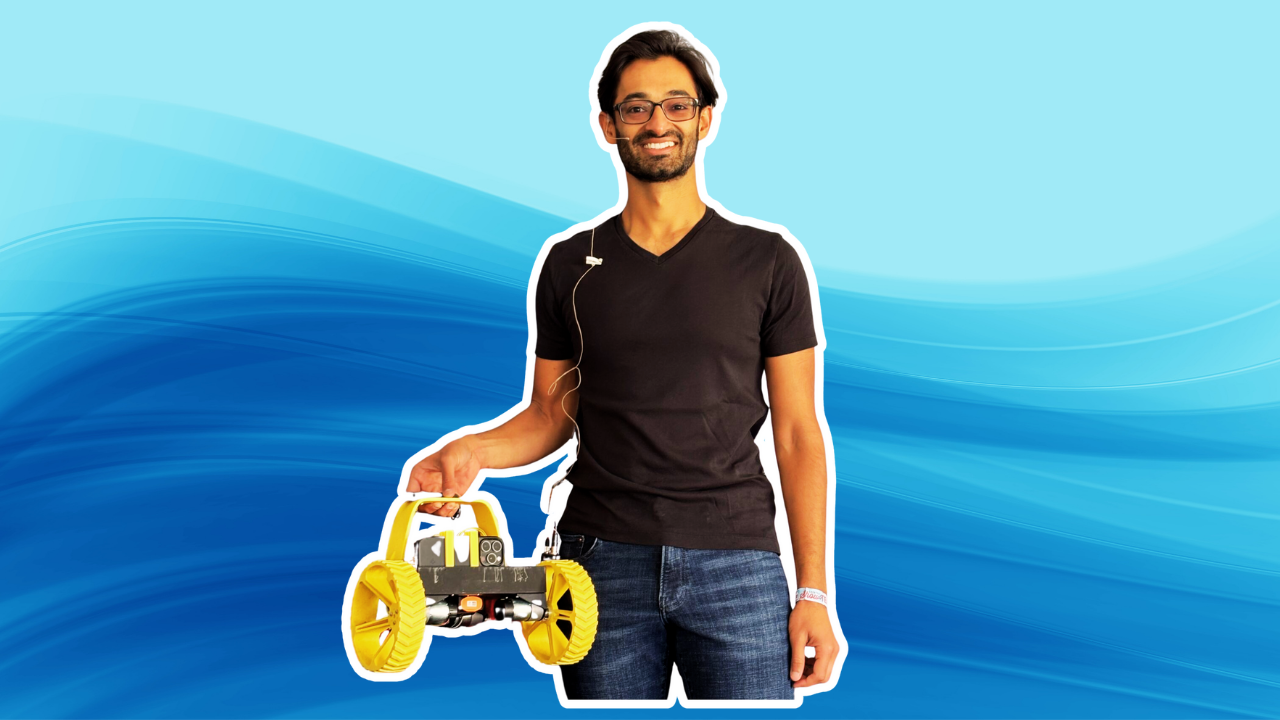
- Initial Mobility Challenges: The shoebox model, while proving movement, likely encountered issues with stability, traction on varied surfaces, or inconsistent power delivery. Addressing these would involve upgrading motor types, experimenting with different wheel materials or treads, and potentially reinforcing the chassis.
- Environmental Awareness: The need for the robot to understand its surroundings quickly became apparent for autonomous navigation. This prompted the integration of sensors. Early additions might include ultrasonic distance sensors for obstacle avoidance or infrared sensors for edge detection, crucial for preventing collisions or falls. These sensors feed data back to a central processing unit, allowing the robot to react dynamically to its immediate environment.
- Processing Power and Intelligence: As the sensor suite expanded, the need for a more robust "brain" to process this influx of data became paramount. This led to the incorporation of a Raspberry Pi. The Raspberry Pi, a versatile single-board computer, provides the necessary computational power to interpret sensor readings, execute navigation algorithms, and manage motor control with greater precision. Its Linux-based operating system also allows for the development and deployment of more complex software, including libraries for robotics and artificial intelligence.
- Advanced Navigation and Perception: To achieve true outdoor autonomy, the robot required sophisticated spatial awareness and object recognition capabilities. This is where the integration of a smartphone proved revolutionary. Modern smartphones are equipped with an array of powerful sensors – GPS for precise location tracking, high-resolution cameras for visual input, accelerometers and gyroscopes for orientation and movement sensing, and powerful System-on-Chips (SoCs) for on-board processing. Leveraging a smartphone effectively provided the robot with eyes, a sense of direction, and significant computational muscle for tasks like simultaneous localization and mapping (SLAM) or real-time object detection using pre-trained machine learning models.
- Power Management and Endurance: With increasing complexity, the power demands of the robot would also escalate. Iterations would involve optimizing battery selection, power distribution circuits, and potentially incorporating energy-saving modes or solar charging solutions for extended outdoor operation.
Each step in this progression was a direct, problem-driven response, embodying the core principle of iterative design: identify a problem, devise a solution, implement it, test it, and then refine it based on the results. This methodical yet flexible approach allowed Survy to incrementally build complexity and capability into his robot, moving from a basic concept to a highly functional system.
Maker Faire Bay Area: A Crucible of Innovation
Survy Vaish’s presentation at Maker Faire Bay Area provided the ideal platform for sharing this journey. Maker Faire, often described as "the Greatest Show (and Tell) on Earth," is a global movement celebrating invention, creativity, and resourcefulness. Originating in 2006, Maker Faire Bay Area has grown into a seminal event, attracting tens of thousands of attendees and showcasing projects ranging from intricate robotics to sustainable energy solutions, handcrafted arts, and experimental technology. Its mission is to entertain, inform, and connect a diverse community of makers, encouraging innovation and the sharing of knowledge.
The environment of Maker Faire is particularly conducive to projects like Survy’s because it champions the spirit of DIY (Do-It-Yourself) and DIWO (Do-It-With-Others). It provides a space where individuals, regardless of formal training, can present their creations, receive feedback, and inspire others. Survy’s ability to articulate the challenges and triumphs of his build resonated deeply with the Faire’s ethos, demonstrating that groundbreaking innovation can emerge from accessible materials and persistent effort, rather than solely from institutional research labs. The event acts as a powerful accelerator for ideas, fostering a culture of open-source development and collaborative problem-solving, which are crucial for advancing technological literacy and accessibility.
The Technological Ecosystem: Raspberry Pi, Smartphones, and Open-Source Robotics
The successful execution of Survy’s robot relies heavily on the integration of consumer-grade technology and open-source platforms, a trend that has significantly democratized robotics.

- Raspberry Pi: This credit-card-sized computer has revolutionized hobbyist electronics and educational computing. Its low cost, versatile GPIO (General Purpose Input/Output) pins, and robust community support make it an ideal choice for controlling sensors, motors, and executing complex algorithms in robotics projects. For Survy’s robot, the Raspberry Pi likely served as the primary microcontroller, interfacing with sensors, processing data from the smartphone, and sending commands to the motor drivers. Its ability to run a full Linux operating system allows for sophisticated programming environments, including Python, a popular language for robotics due to its readability and extensive libraries.
- Smartphones: The use of a smartphone as the robot’s "eyes and brain" for high-level tasks is a particularly innovative aspect. Modern smartphones are veritable supercomputers in our pockets, packed with an impressive array of sensors and processing capabilities:
- GPS (Global Positioning System): Essential for outdoor navigation, providing accurate location data.
- Camera: Enables computer vision tasks such as object detection, recognition, and potentially SLAM, allowing the robot to map its environment and localize itself within it. Advanced algorithms can differentiate between various objects (e.g., trees, benches, pathways) in a park setting.
- IMU (Inertial Measurement Unit): Comprising accelerometers and gyroscopes, this sensor suite provides data on the robot’s orientation, speed, and angular velocity, crucial for stable movement and precise turns.
- Powerful Processors: Contemporary smartphone SoCs (System-on-Chips) are highly optimized for machine learning tasks, making them capable of running AI models for real-time object identification without needing to offload data to cloud servers.
- Connectivity: Wi-Fi and cellular capabilities allow for remote monitoring, data logging, and potential cloud-based processing if needed.
This synergistic integration—the Raspberry Pi handling low-level control and sensor integration, while the smartphone provides advanced perception and high-level decision-making—creates a powerful yet cost-effective autonomous system. It exemplifies how readily available consumer electronics can be repurposed for advanced engineering applications, making robotics more accessible to a broader audience.
Broader Implications and Future Outlook
Survy Vaish’s robot project carries significant implications across several domains:
- Democratization of Technology: By demonstrating that sophisticated autonomous systems can be built with relatively inexpensive, off-the-shelf components, Survy’s work lowers the barrier to entry for aspiring roboticists and innovators. This fosters a more inclusive technological landscape, moving beyond institutional confines.
- STEM Education: The project is an invaluable pedagogical tool. It illustrates core STEM principles—physics of motion, electrical engineering, computer programming, and artificial intelligence—in a tangible, engaging manner. Educators can leverage such examples to inspire students, encouraging hands-on learning and problem-solving skills that are critical for future careers in science and technology. The "test, fix, iterate" cycle is a perfect demonstration of the scientific method in action.
- Sustainable Innovation: Repurposing existing technology, like an old smartphone, for new applications promotes a more sustainable approach to innovation, reducing electronic waste and maximizing the utility of consumer devices.
- The Power of the Maker Movement: The success of Survy’s robot is a testament to the vitality and potential of the global maker movement. This community-driven phenomenon fosters innovation from the grassroots up, often leading to novel solutions that established industries might overlook. Maker Faire, as its flagship event, amplifies these efforts and connects individuals with shared passions.
- Future Applications of Low-Cost Autonomous Robots: While Survy’s robot navigated a park, the underlying principles could be applied to various real-world challenges. Imagine low-cost autonomous robots for environmental monitoring in remote areas, assisting with crop inspection in precision agriculture, delivering small packages in urban environments, or even aiding in disaster relief reconnaissance. The scalability and affordability demonstrated by Survy’s project open doors for diverse, impactful applications.
Statements from the Community (Inferred)
"Projects like Survy’s are the very heartbeat of Maker Faire," stated a spokesperson for Maker Faire Bay Area, emphasizing the event’s commitment to fostering grassroots innovation. "It’s a powerful example of how curiosity, coupled with accessible technology and perseverance, can lead to incredible achievements. We see countless individuals come here with an idea, and through their dedication and the support of the maker community, they turn it into a reality. This robot perfectly encapsulates the spirit of making: starting simple, learning from challenges, and pushing the boundaries of what’s possible with your own hands."
A hypothetical robotics educator, Dr. Anya Sharma, commented on the educational value: "What Survy has achieved is a masterclass in applied robotics. It beautifully illustrates that you don’t need a multi-million-dollar lab to innovate. By starting with a shoebox and incrementally adding complexity – from basic motors to a Raspberry Pi and a smartphone – he demonstrates the iterative design process that is fundamental to all engineering disciplines. This approach is highly effective for teaching students not just how to build, but how to think critically, troubleshoot, and adapt in the face of unforeseen problems."

An industry analyst specializing in consumer electronics integration, Mr. David Chen, noted, "The intelligent repurposing of smartphones for advanced robotics is a growing trend. These devices pack incredible computational power, sophisticated sensors, and communication capabilities that, when combined with platforms like the Raspberry Pi, unlock previously unattainable levels of autonomy for hobbyists and small-scale developers. It’s a clear indicator of how accessible and powerful technology is becoming, driving innovation from the ground up and blurring the lines between consumer gadgets and specialized industrial tools."
Conclusion: The Journey Continues
Survy Vaish’s journey from a shoe box to an autonomous outdoor robot is more than just a technical achievement; it is an inspiring narrative about the power of vision, persistence, and the democratization of technology. It serves as a potent reminder that the most profound innovations often begin with humble origins and are refined through a rigorous, iterative process. For anyone contemplating their own venture into building, creating, or innovating, Survy’s project offers a clear and encouraging message: the most critical step is simply to begin, to embrace the learning process, and to let each challenge guide the path forward. The full build journey, as captured in the accompanying video, provides an invaluable resource for understanding the gritty, problem-solving reality behind a polished final product, inviting countless others to embark on their own maker adventures.