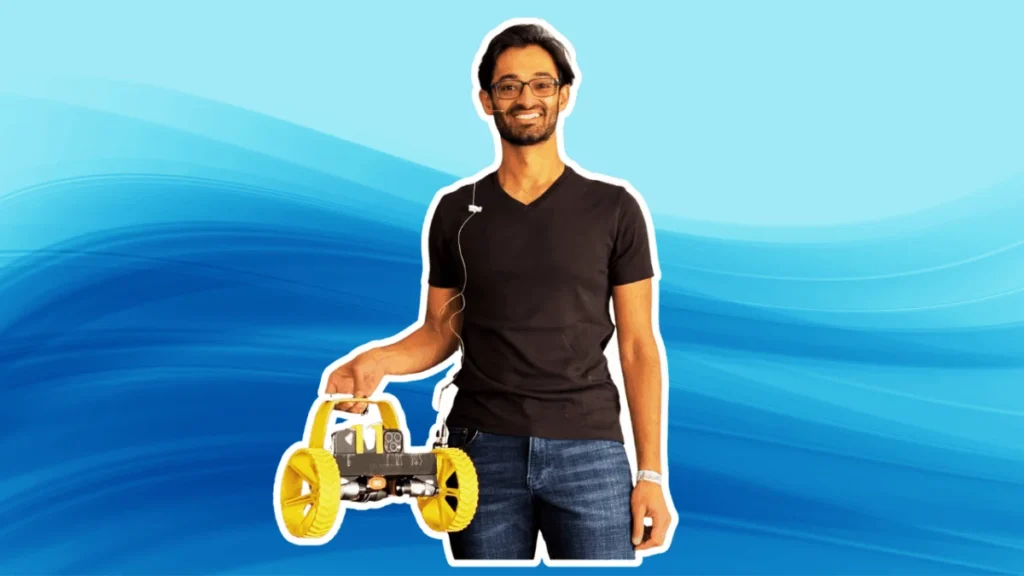
In a compelling demonstration at Maker Faire Bay Area, innovator Survy Vaish captivated audiences by chronicling his remarkable journey from a rudimentary shoe box on wheels to a sophisticated, phone-powered outdoor autonomous robot. This project stands as a testament to the accessible nature of modern technology and the power of iterative design, proving that advanced robotics are no longer the exclusive domain of well-funded laboratories but are within reach for resourceful individuals with an inventive spirit. Vaish’s work not only showcased a functional autonomous system capable of navigating outdoor environments and identifying objects but also provided an invaluable blueprint for aspiring makers, emphasizing that the most complex creations often begin with the simplest steps and a commitment to continuous improvement.
The Genesis of an Idea: From Abstract Concept to Tangible Prototype
Every significant technological breakthrough starts with an idea, often a broad aspiration that seems daunting in its initial scope. For Survy Vaish, this germinating thought was "I want to build an autonomous robot." The sheer ambition of this goal could deter many, but Vaish, embodying the true spirit of the maker movement, understood that the path to complexity is paved with simplicity. He deliberately chose to bypass the pursuit of immediate perfection, instead opting for the most straightforward, fundamental approach to validate his core concept: mobility.
His initial prototype was disarmingly humble: a standard shoe box, stripped of its original purpose and repurposed with basic motors and wheels. This first iteration, far from being a polished piece of engineering, served a singular, critical function: to demonstrate that the concept of a self-moving entity, however primitive, was achievable. This "shoe box on wheels" was not designed for advanced navigation or complex data processing; its sole purpose was to move. This emphasis on a Minimum Viable Product (MVP) is a cornerstone of modern product development and agile engineering, allowing creators to quickly test foundational hypotheses without investing excessive resources into premature complexity. By proving basic locomotion, Vaish established a tangible starting point from which all subsequent enhancements could logically flow. This foundational step is often overlooked in narratives of innovation, yet it is arguably the most crucial, transforming a vague aspiration into a concrete project.
Maker Faire Bay Area: A Crucible for Innovation
The platform for Vaish’s inspiring demonstration was none other than Maker Faire Bay Area, an event synonymous with fostering ingenuity, creativity, and the democratization of technology. Established in 2006 by Make: magazine, Maker Faire has evolved into a global phenomenon, serving as a vibrant convergence point for engineers, artists, scientists, and hobbyists of all ages. These events are not merely exhibitions; they are interactive festivals of invention, celebrating the "do-it-yourself" (DIY) and "do-it-together" (DIT) ethos. Maker Faire Bay Area, in particular, stands as a flagship event, drawing tens of thousands of attendees annually and showcasing a diverse array of projects ranging from intricate robotics and custom electronics to sustainable crafts and experimental art installations.
The Faire’s mission is to inspire, educate, and entertain, creating an environment where sharing knowledge and collaborating on projects are paramount. It actively encourages experimentation and the practical application of STEM (Science, Technology, Engineering, and Mathematics) principles, making advanced concepts accessible to a broad public. For makers like Survy Vaish, presenting at such an event provides an unparalleled opportunity to share their work, gather feedback, and connect with a community that champions hands-on learning and grassroots innovation. The atmosphere at Maker Faire is one of collective curiosity and mutual encouragement, where the process of making is celebrated as much as the final product. It is within this supportive ecosystem that projects like Vaish’s truly shine, illustrating the tangible results of perseverance and creative problem-solving to a receptive and engaged audience. The event underscores the significant societal impact of the maker movement, contributing to a culture of innovation that transcends traditional academic or corporate research settings.
The Iterative Path to Autonomy: Test, Fix, Iterate in Practice
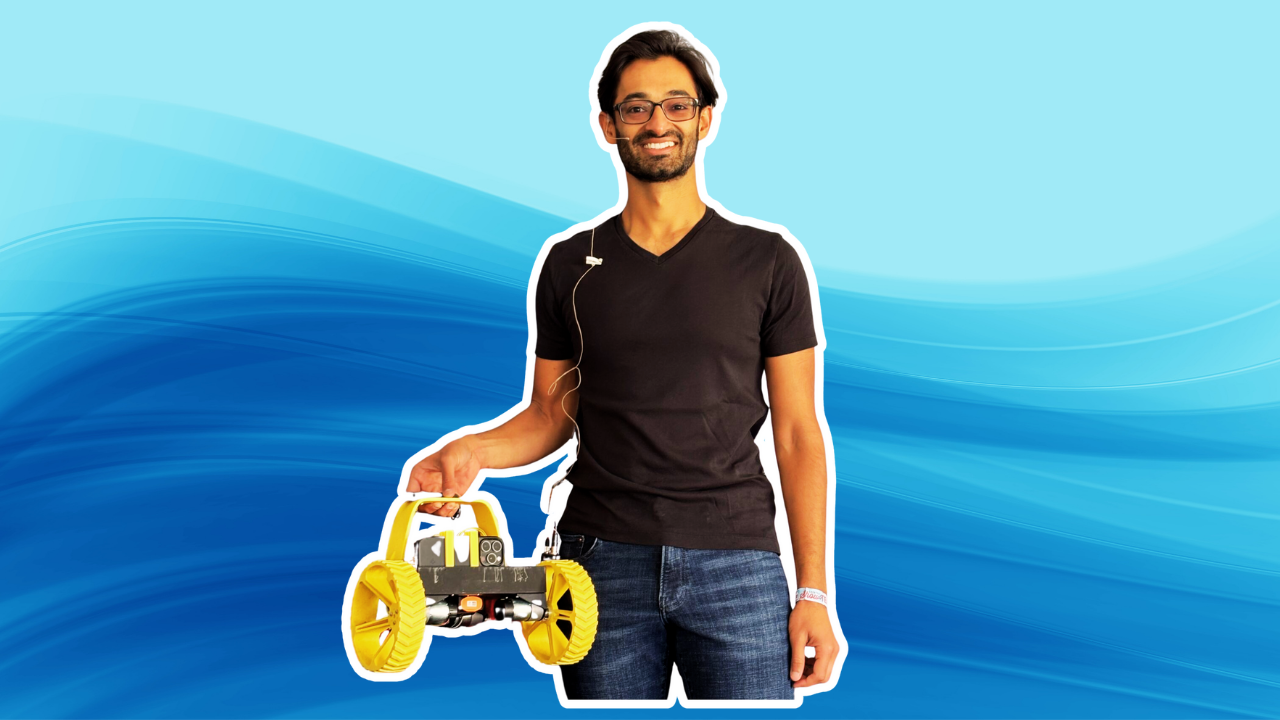
Vaish’s journey is a masterclass in the iterative design process, a methodology that underpins much of contemporary engineering and software development. Far from building a perfect robot in a single attempt, his approach was characterized by a continuous cycle of testing, identifying shortcomings, implementing solutions, and retesting. This relentless pursuit of improvement, driven by empirical observation, is the true essence of engineering.
The Humble Beginnings: A Shoe Box as the Foundation
As noted, the initial "shoe box on wheels" served as the most basic mobile platform. This simple structure allowed Vaish to focus purely on the mechanics of movement. Once basic locomotion was achieved, the limitations became apparent: the robot could move, but it had no awareness of its surroundings, no ability to make decisions, and no sense of its own position. These limitations were not failures but critical insights that dictated the next phase of development.
Integrating Intelligence: Sensors and the Raspberry Pi
The first major leap towards autonomy involved equipping the robot with the ability to perceive its environment. This necessitated the integration of various sensors. While specific sensor types were not detailed in the original brief, common choices for hobbyist robots include ultrasonic sensors for distance measurement, infrared (IR) sensors for obstacle detection, and possibly even an Inertial Measurement Unit (IMU) for understanding the robot’s orientation and movement. These sensors provided the raw data necessary for the robot to understand its immediate surroundings.
To process this incoming data and translate it into meaningful actions, a "brain" was required. Vaish chose the Raspberry Pi, a credit-card-sized single-board computer that has revolutionized hobbyist electronics and educational robotics. The Raspberry Pi’s affordability, versatility, and robust community support make it an ideal choice for such projects. It served as the central processing unit, capable of running operating systems like Linux, executing custom code (often in Python), and interfacing with a multitude of hardware components. Its role was critical: to interpret sensor readings, execute navigation algorithms, and control the motors, effectively transforming the simple mobile platform into a responsive machine.
The Smartphone Revolution: Vision, Navigation, and Processing Power
The most innovative aspect of Vaish’s robot, and perhaps the most significant in terms of accessibility, was the integration of a smartphone for advanced capabilities. Modern smartphones are veritable powerhouses, packing high-resolution cameras, sophisticated GPS modules, powerful multi-core processors, and an array of micro-sensors (accelerometers, gyroscopes, magnetometers) into a compact, energy-efficient package. By harnessing a smartphone, Vaish bypassed the need for expensive, dedicated vision systems and GPS modules.
The smartphone’s camera became the robot’s "eyes," enabling it to perform complex tasks like object identification and potentially even simultaneous localization and mapping (SLAM), allowing the robot to build a map of its environment while simultaneously locating itself within it. Its integrated GPS provided precise outdoor positioning, crucial for navigating a park. Furthermore, the smartphone’s processing power could be leveraged for on-board machine learning inference, using frameworks like TensorFlow Lite to identify specific objects or features in real-time, greatly enhancing the robot’s environmental understanding. This ingenious use of an everyday device underscores a broader trend in robotics: leveraging consumer-grade technology to achieve industrial-grade functionality at a fraction of the cost.
Overcoming Obstacles: Learning from Every "Failure"
Crucially, Vaish’s process was not a linear progression of success. Each new component and software integration brought its own set of challenges. Perhaps the robot struggled with uneven terrain, requiring modifications to its drive system. Maybe the sensor data was noisy, demanding sophisticated filtering algorithms. Object recognition might have been inaccurate in varying light conditions, prompting adjustments to the camera’s setup or the machine learning model. These "failures" were not setbacks but invaluable learning opportunities. Each problem encountered during testing provided specific, actionable feedback, directly informing the next iteration of the design. This continuous loop of "Test, Fix, Iterate" is the core principle that allowed Vaish to systematically refine his robot from a basic concept to a fully autonomous system.
The Technological Underpinnings: Accessible Innovation
Survy Vaish’s robot exemplifies how readily available and relatively inexpensive technologies are democratizing robotics. The combination of open-source hardware, powerful consumer electronics, and accessible software frameworks forms the backbone of this new era of innovation.

The Power of the Raspberry Pi in DIY Robotics
The Raspberry Pi, first launched in 2012, has become a cornerstone of the maker movement. Its low cost (starting from around $35), small form factor, and robust GPIO (General Purpose Input/Output) pins make it ideal for controlling motors, reading sensor data, and running complex algorithms. Programmed predominantly in Python, its user-friendly environment allows hobbyists to quickly develop control logic and integrate various peripherals. Beyond basic control, the more powerful Raspberry Pi models are capable of running machine learning models, acting as miniature servers, and processing real-time data streams, making them suitable for advanced robotic applications that once required significantly more expensive hardware.
Unlocking Potential with Smartphone Capabilities
The integration of a smartphone is arguably the most ingenious aspect of Vaish’s design. A modern smartphone is an unparalleled compact computing device, equipped with:
- High-resolution cameras: Essential for computer vision tasks like object detection, facial recognition, and SLAM.
- GPS modules: Providing accurate location data for outdoor navigation.
- Inertial Measurement Units (IMUs): Comprising accelerometers and gyroscopes, these sensors provide data on orientation, movement, and balance, crucial for robot stability and dead reckoning.
- Powerful Processors (CPUs and GPUs): Capable of executing complex machine learning models and real-time data processing.
- Connectivity (Wi-Fi, Bluetooth, Cellular): Enabling remote control, data logging, and communication with other devices or cloud services.
By leveraging an existing smartphone, Vaish avoided the prohibitive costs and complexity associated with acquiring and integrating these components separately. This approach significantly lowers the barrier to entry for aspiring roboticists, transforming a ubiquitous personal device into a powerful robotic component.
The Role of Open-Source Software and Hardware
The success of projects like Vaish’s is heavily reliant on the open-source ecosystem. Platforms like Linux (often running on the Raspberry Pi), programming languages like Python with extensive libraries (e.g., OpenCV for computer vision, NumPy for numerical operations), and frameworks such as potentially the Robot Operating System (ROS) – a flexible framework for writing robot software – provide powerful, free tools. These resources allow makers to build upon the work of others, sharing code, troubleshooting issues, and accelerating development. The collaborative nature of the open-source community is a vital catalyst for grassroots innovation, enabling individuals to tackle projects that would be impossible without such shared knowledge and tools.
Witnessing Autonomy: The Robot in Action
The culmination of Vaish’s painstaking iterative process was the final autonomous robot, a sophisticated system performing its intended mission outdoors. The video accompanying his presentation visually captures this thrilling payoff: a machine that, having started as a simple shoe box, now navigates a park environment with purpose. It demonstrates its ability to move independently, avoid obstacles, and, crucially, identify objects within its field of vision. This operational success in a real-world, dynamic setting underscores the efficacy of the "Test, Fix, Iterate" methodology and the power of integrating accessible technologies. The robot’s performance serves as a powerful validation of Vaish’s vision and perseverance, transitioning from theoretical concept to practical application.
Expert and Community Perspectives: Echoes of Inspiration
The impact of Survy Vaish’s project extends far beyond the technical achievement itself, resonating deeply within the maker community, educational spheres, and among robotics enthusiasts.
Survy Vaish’s Vision and Perseverance
Reflecting on his journey, Vaish likely emphasizes the importance of starting, even when the path ahead is unclear. His project serves as a practical demonstration of how sustained effort and a methodical approach to problem-solving can transform a humble beginning into a significant accomplishment. He would undoubtedly highlight the lessons learned from each iteration, framing challenges not as failures but as essential steps towards refinement. His motivation, inferred from the project’s spirit, seems rooted in a genuine curiosity and a desire to prove that complex technological feats are achievable with resourcefulness and dedication.
The Maker Faire Perspective
A spokesperson for Maker Faire Bay Area would likely underscore how Vaish’s robot perfectly embodies the Faire’s core mission. "Projects like Survy’s are precisely what Maker Faire aims to foster," they might state. "He took a challenging concept, broke it down into manageable steps, and used readily available tools to achieve something truly remarkable. This not only inspires other attendees but also demonstrates the immense potential when creativity meets accessible technology. It’s a powerful message that innovation isn’t confined to corporate labs; it thrives in garages, workshops, and at events like ours." The Faire’s role in providing a platform for such demonstrations is critical for inspiring the next generation of innovators.

Educational Implications and STEM Advocacy
Educators and experts in STEM (Science, Technology, Engineering, and Mathematics) fields often point to projects like Vaish’s as prime examples of effective pedagogical tools. "The iterative design process that Survy Vaish employed is a fundamental principle taught in engineering and design thinking courses," explains Dr. Anya Sharma, a professor of robotics education. "Seeing it applied so effectively with accessible materials makes it incredibly relatable for students. It demystifies robotics and encourages hands-on experimentation, showing that ‘failure’ is an integral part of learning and innovation." Such projects encourage critical thinking, problem-solving, and interdisciplinary skills, aligning perfectly with modern educational objectives to prepare students for a technologically advanced future. They illustrate that practical application of scientific principles can lead to tangible, exciting results, inspiring more students to pursue careers in STEM.
Broader Implications: Democratizing Robotics and Fostering Future Innovators
Survy Vaish’s "shoe box to smart robot" journey holds profound implications for the broader landscape of technology, education, and innovation.
Firstly, it dramatically highlights the democratization of advanced technology. For decades, robotics was an expensive, specialized field, largely confined to industrial settings or academic research institutions. Vaish’s project, by leveraging a common smartphone and an affordable single-board computer, shatters this perception. It demonstrates that the computational power, sensing capabilities, and software tools required for sophisticated autonomous systems are now within reach of individuals and small teams with modest budgets. This shift empowers a new generation of inventors and problem-solvers, fostering grassroots innovation that can address diverse challenges, from environmental monitoring to personal assistance, without needing massive capital investment.
Secondly, the project serves as a powerful catalyst for STEM education and practical learning. It offers a tangible, relatable example of engineering principles in action. For students, seeing how complex systems are built incrementally from simple components can be far more engaging than theoretical lessons. It encourages hands-on experimentation, problem-solving, and a growth mindset, where mistakes are seen as opportunities for learning. Schools and informal educational programs can draw inspiration from Vaish’s approach, developing curricula that emphasize iterative design, prototyping, and the creative use of readily available resources, thereby cultivating essential skills for the future workforce.
Thirdly, it underscores the importance of resourcefulness and sustainability in technological development. By repurposing a shoe box and a smartphone, Vaish champions an approach that minimizes waste and maximizes the utility of existing resources. This ethos aligns with growing global concerns about environmental impact and the need for more sustainable practices in technology. It demonstrates that innovation doesn’t always require manufacturing new components from scratch but can involve ingeniously combining existing elements.
Finally, Vaish’s journey reinforces the enduring value of the maker movement and community platforms like Maker Faire. These environments are crucial for fostering collaboration, sharing knowledge, and providing visibility for independent innovators. They create a supportive ecosystem where ideas can be exchanged, projects can be refined with peer feedback, and inspiration can be ignited. The collective intelligence and open-source spirit of these communities are vital engines for accelerating technological progress and ensuring that innovation remains accessible and inclusive.
In conclusion, Survy Vaish’s transformation of a shoe box into an autonomous outdoor robot is more than just a clever hack; it is a compelling narrative about perseverance, ingenuity, and the power of accessible technology. It provides a blueprint for aspiring innovators, proving that the journey of a thousand miles begins with a single, simple step, and that the most sophisticated creations often emerge from humble beginnings through a disciplined process of "Test, Fix, Iterate." His work at Maker Faire Bay Area serves as an enduring inspiration, signaling a future where advanced robotics is not a distant dream but a tangible reality for anyone willing to embark on the maker’s journey.