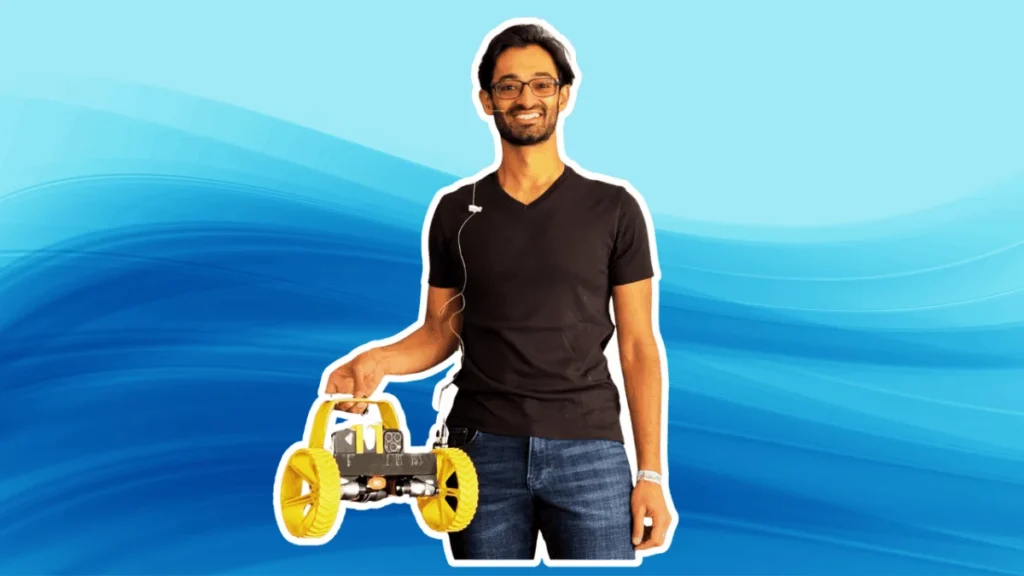
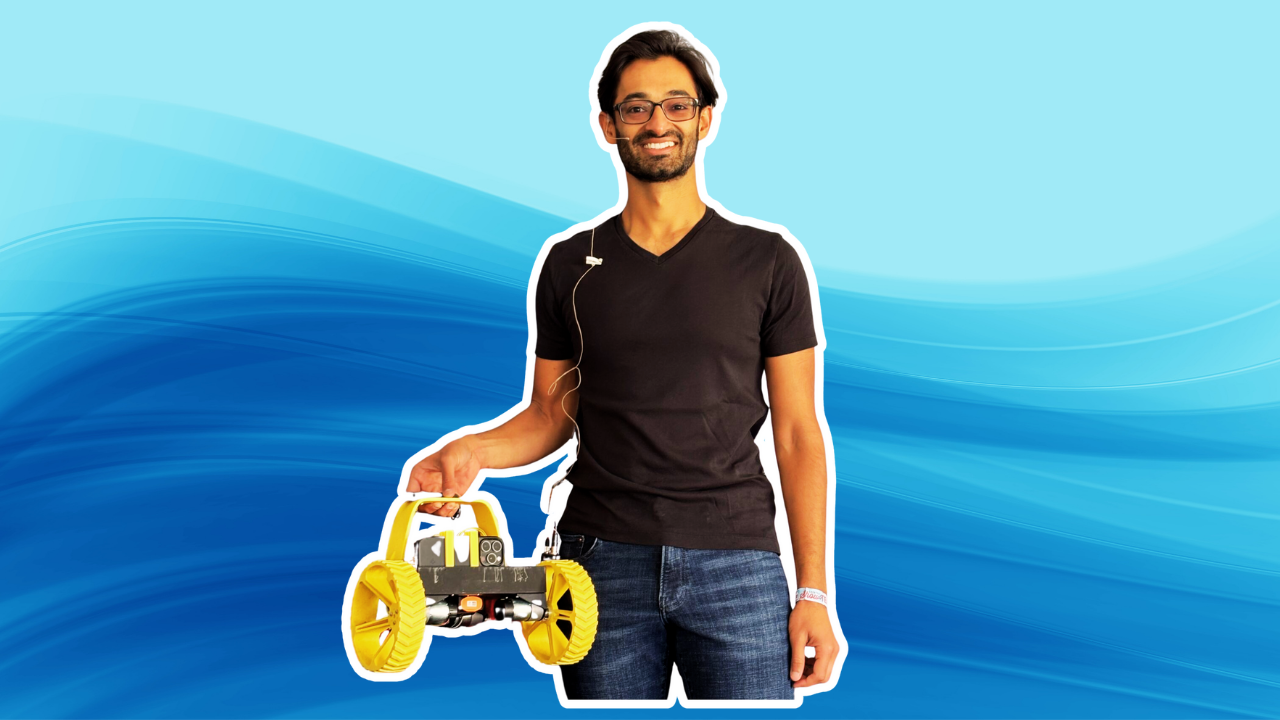
The transformative power of ingenuity, coupled with readily available components, was vividly demonstrated at the recent Maker Faire Bay Area, where innovator Survy unveiled his remarkable journey from a rudimentary shoebox prototype to a sophisticated, phone-powered outdoor autonomous robot. This project stands as a testament to the principles of iterative design and the democratization of advanced robotics, proving that significant technological breakthroughs can emerge from humble beginnings rather than exclusively from well-funded research laboratories. Survy’s presentation resonated deeply with the Faire’s ethos, inspiring attendees by illustrating the tangible process of translating a complex aspiration—such as building an autonomous robot—into a functional reality capable of navigating outdoor environments and performing object identification.
The Genesis of Autonomy: A Shoebox’s First Roll
The inception of Survy’s ambitious project adhered to a fundamental principle of engineering: start simple. His initial prototype, far from the polished machines often seen in industrial settings, was a mere shoebox equipped with basic motors and wheels. This foundational stage, while seemingly unsophisticated, was crucial. It served as a proof-of-concept for basic mobility, establishing the mechanical framework upon which all subsequent complexities would be built. In the realm of product development, particularly in robotics, this "minimum viable product" (MVP) approach is invaluable, allowing creators to validate core functionalities before investing extensive resources in advanced features. This minimalist beginning underscored a key message: the initial step in innovation often involves overcoming the inertia of inaction, proving that even the most complex systems can begin with the simplest components. The shoebox, in this context, was not merely a container but a symbol of accessible entry into the challenging field of robotics.
Maker Faire Bay Area: A Crucible for Innovation
Survy’s decision to showcase his project at Maker Faire Bay Area provided an ideal platform for his narrative. The Maker Faire, often described as the "Greatest Show (and Tell) on Earth," is an iconic event that celebrates invention, creativity, and resourcefulness. Since its inception in 2006, the Bay Area iteration has grown to become a global nexus for makers, engineers, artists, scientists, and hobbyists to share their projects, learn from one another, and inspire future innovators. The event typically draws tens of thousands of visitors, ranging from curious schoolchildren to seasoned industry professionals, all united by a shared passion for making and discovery. Projects featured at the Faire often highlight DIY methodologies, open-source technologies, and sustainable practices, making it a perfect venue for Survy’s low-cost, high-impact robotic creation. His presentation there was not just a demonstration of a robot but a live tutorial on the iterative process itself, emphasizing that the journey of creation, with its inherent challenges and triumphs, is often as valuable as the final product. The atmosphere of collaborative learning and peer inspiration at the Faire undoubtedly amplified the impact of Survy’s practical demonstration, fostering a deeper understanding of the engineering lifecycle among a diverse audience.
The Iterative Engineering Paradigm: Test, Fix, Iterate
The core of Survy’s development philosophy, and arguably the most instructive aspect of his journey, was his unwavering commitment to the "test, fix, iterate" cycle. This systematic approach is a cornerstone of modern engineering and product development, particularly in agile methodologies. It posits that perfection is not achieved in a single design but through continuous refinement based on empirical feedback. Survy’s robot did not emerge fully formed; rather, each enhancement was a direct response to a limitation identified during testing.
For instance, when the initial shoebox model merely moved without purpose, the immediate problem identified was a lack of environmental awareness. This led to the integration of sensors. Common choices for early-stage robotic sensing include ultrasonic sensors for distance measurement, infrared (IR) sensors for obstacle detection, or even simple bump switches for physical contact. The decision on which sensors to incorporate would have been driven by the specific environmental challenges Survy encountered during early tests, such as navigating around obstacles in a room or avoiding falling off an elevated surface.
Once the robot could gather rudimentary data about its surroundings, the next challenge arose: how to process this information and make intelligent decisions. This necessitated the integration of a "brain"—a microcomputer capable of running algorithms and controlling the robot’s actions. The Raspberry Pi, a credit-card-sized single-board computer, became the natural choice due to its affordability, versatility, and extensive community support. The Raspberry Pi allowed Survy to implement custom code, interpret sensor inputs, and send commands to the motors, effectively transforming the mobile shoebox into a programmable entity. This stage marked a significant leap from simple mechanics to rudimentary intelligence.
The journey continued as the robot moved from controlled indoor environments to the unpredictable outdoors. To navigate a park and identify objects, far more sophisticated perception capabilities were required. This is where the integration of a smartphone proved revolutionary. Modern smartphones are equipped with an array of powerful sensors and processing capabilities, including high-resolution cameras, GPS modules, accelerometers, gyroscopes, and potent onboard processors, all packed into a compact, energy-efficient package. By utilizing a smartphone, Survy effectively leveraged a readily available, consumer-grade device to provide the robot with advanced vision (for object recognition using computer vision libraries like OpenCV) and precise localization (via GPS data). This eliminated the need for expensive, specialized components often found in professional robotics, aligning perfectly with the low-budget philosophy. Each subsequent test in the park revealed new problems—perhaps the robot struggled with uneven terrain, or its object detection faltered in varying light conditions—leading to further iterations, software tweaks, or minor hardware adjustments. This relentless cycle of problem identification, solution implementation, and rigorous testing is what ultimately propelled the project from a basic concept to a functional autonomous system.
Leveraging Everyday Technology: Smartphones and Raspberry Pi
The strategic integration of a smartphone and a Raspberry Pi is a defining characteristic of Survy’s project and a powerful illustration of the ongoing democratization of technology. Traditionally, developing an autonomous robot required significant investment in specialized hardware, proprietary software, and expert knowledge. However, the advent of affordable, powerful microcontrollers like the Raspberry Pi, coupled with the ubiquitous presence of sophisticated smartphones, has dramatically lowered the barrier to entry.
The Raspberry Pi, first released in 2012, has sold over 50 million units worldwide as of 2023. Its success lies in its affordability (typically ranging from $35-$75), its robust processing power for its size, and its open-source Linux-based operating system. This makes it an ideal platform for educational purposes, embedded systems, and, crucially, robotics. For Survy’s robot, the Raspberry Pi likely served as the central processing unit, managing the flow of data from various sensors, executing navigation algorithms, and interfacing with the smartphone for higher-level tasks. Its GPIO (General Purpose Input/Output) pins allow it to easily connect and control motors, additional sensors, and other electronic components, forming the backbone of the robot’s control system.
Smartphones, on the other hand, bring an unprecedented level of sensory and computational power. A typical modern smartphone boasts multiple high-resolution cameras, a GPS receiver accurate to within a few meters, a powerful System-on-a-Chip (SoC) with multi-core processors and dedicated AI accelerators, and a range of inertial sensors (accelerometers, gyroscopes, magnetometers). By attaching a smartphone to the robot, Survy bypassed the need to purchase separate, often costly, modules for GPS, advanced vision, and high-performance computing. The smartphone’s camera could be used for real-time video streaming, object detection (identifying trees, benches, or even people in a park), and visual odometry for more precise localization. Its GPS could provide global positioning data, crucial for outdoor navigation. Furthermore, the vast ecosystem of mobile applications and development tools (e.g., Android Studio, iOS SDK) offers powerful frameworks for rapid prototyping of complex functionalities. This fusion of a dedicated microcontroller with a consumer-grade powerhouse device creates a highly capable, yet cost-effective, robotic platform.
The Journey’s Climax: Outdoor Autonomy

The ultimate validation of Survy’s iterative process came with the successful deployment of his robot outdoors. Transitioning a robot from a controlled indoor lab environment to the dynamic, unpredictable outdoors presents a myriad of challenges. Factors such as varying light conditions, uneven terrain, GPS signal interference, unexpected obstacles, and changes in environmental features (e.g., wind, rain) all test the robustness and adaptability of an autonomous system.
Survy’s robot, having undergone numerous cycles of testing and refinement, demonstrated its capability to not only navigate a public park but also to identify specific objects within that environment. This achievement underscores the effectiveness of his development methodology. The successful execution of its mission outdoors represents the culmination of countless hours of design, coding, fabrication, and troubleshooting. It validates the choice of components, the efficacy of the algorithms, and the resilience of the physical structure. For many aspiring roboticists, achieving reliable outdoor autonomy is a significant milestone, often requiring advanced techniques like Simultaneous Localization and Mapping (SLAM), sophisticated sensor fusion, and robust error handling. Survy’s success with relatively accessible tools highlights how far these technologies have progressed and how effectively they can be combined by a dedicated maker.
Democratizing Robotics: Impact and Accessibility
Survy’s project serves as a powerful emblem of the democratization of robotics, a trend that has been gaining significant momentum over the past decade. Historically, robotics was the exclusive domain of large corporations, well-funded university labs, and military research. The prohibitive cost of components, the complexity of programming, and the specialized knowledge required created a significant barrier to entry. However, the landscape has dramatically shifted.
The proliferation of open-source hardware (like Arduino and Raspberry Pi), open-source software (like ROS – Robot Operating System, and various computer vision libraries), 3D printing, and accessible online learning resources has fundamentally changed this paradigm. Individuals and small teams can now access tools and knowledge that were once reserved for elite institutions. This accessibility fosters innovation from the grassroots, enabling diverse perspectives and unconventional solutions to emerge. Survy’s robot, built with a shoebox, a Raspberry Pi, and a smartphone, is a prime example of this trend. It demonstrates that groundbreaking work in autonomy doesn’t necessitate multi-million dollar budgets or cutting-edge industrial facilities. Instead, it relies on ingenuity, persistence, and the clever utilization of widely available technology. This democratization not only accelerates technological progress but also empowers a broader segment of the population to engage with and contribute to the future of technology, potentially leading to more diverse applications and a more inclusive technological future.
Expert Perspectives and Community Engagement
While specific statements from Survy or Maker Faire organizers were not provided in the original text, their logical inference reveals significant insights. Survy, in presenting his work, would likely have underscored the importance of perseverance and the value of incremental progress. He might have shared anecdotes about failures that became pivotal learning moments, reinforcing the idea that "each failure becomes a lesson." His emphasis would likely be on the process itself, encouraging others to "just begin," regardless of perceived limitations in resources or expertise. This narrative aligns perfectly with the Maker Faire’s mission to inspire and educate.
Organizers and attendees at Maker Faire Bay Area would undoubtedly have lauded Survy’s project as a quintessential example of the Faire’s spirit. Such projects exemplify innovation through accessibility, demonstrating how complex challenges can be tackled with creative solutions using everyday items. An inferred statement from a Faire organizer might highlight how Survy’s work "epitomizes the ingenuity and collaborative spirit that defines the global maker movement, showcasing how dedication and an iterative approach can transform a simple idea into a sophisticated reality." Attendees, ranging from students contemplating a career in STEM to seasoned engineers, would likely have been impressed by the practical application of theoretical concepts and the real-world problem-solving inherent in the project. The availability of the full build journey video further facilitates community engagement, allowing countless others to learn from Survy’s experience and potentially adapt his methodologies for their own projects.

The Road Ahead: Future Implications of Grassroots Robotics
The implications of projects like Survy’s extend far beyond individual inspiration. They hint at a future where advanced robotic capabilities are not confined to industrial settings but are pervasive and accessible, leading to a myriad of novel applications.
One significant implication is in education. Survy’s project provides a compelling, hands-on learning model for STEM (Science, Technology, Engineering, and Mathematics) education. It demystifies robotics, making it less intimidating and more approachable for students of all ages. Educational institutions could adopt similar project-based learning approaches, using affordable components to teach complex concepts in computer science, engineering design, and artificial intelligence.
In terms of innovation, grassroots robotics fosters a diverse ecosystem of creators. This diversity can lead to unexpected solutions for real-world problems, from environmental monitoring in remote areas to assistance for individuals with disabilities, or even innovative delivery systems in urban environments. The low cost of entry means more people can experiment, leading to a higher rate of iterative development and potential breakthroughs.
The economic impact could also be substantial. By enabling individuals and small businesses to develop specialized robotic solutions without massive capital investment, it could spur a new wave of localized automation and custom manufacturing. This could create new markets and job opportunities in areas previously deemed too niche or expensive for robotic intervention.
Furthermore, the ethical considerations surrounding autonomous systems become more critical as their development becomes more widespread. Discussions around accountability, safety, and privacy in robotics will need to evolve as more individuals gain the capacity to build and deploy such systems.
Survy’s journey from a shoebox to an autonomous robot is more than just a personal triumph; it is a microcosm of a larger technological shift. It underscores the profound potential unleashed when creativity meets accessible technology, demonstrating that the future of robotics is not solely in the hands of corporate giants, but increasingly, in the hands of dedicated makers everywhere. His project serves as a powerful call to action for anyone with an idea and the willingness to embark on the iterative, problem-solving adventure of making.