The journey from a nascent idea scribbled on a napkin to a tangible product in consumers’ hands is often complex and fraught with challenges. However, for professional product designer and BattleBots robot fighting champion Bam Singhasaneh, this intricate process is demystified by a deceptively simple, yet profoundly effective, mantra: "Don’t Design, Prototype!" Singhasaneh shared her unique insights into the wild and wonderful world of professional product design at the recent Maker Faire Bay Area in September, offering a refreshing departure from theoretical discussions by grounding her advice in real-life triumphs and tribulations gleaned from both the high-stakes robot arena and the bustling toy designer’s desk. Her presentation underscored a critical paradigm shift in product development, emphasizing rapid iteration and learning through immediate experimentation.
The Prototyping Imperative: A Foundational Shift in Design Philosophy
Singhasaneh initiated her talk by challenging conventional wisdom, asserting that the path to optimal design begins not with meticulous planning on paper, but with immediate, hands-on prototyping. This philosophy, while seemingly counterintuitive to those accustomed to linear design processes, is a cornerstone of agile development and a testament to the power of experiential learning. She vividly illustrated this principle using the renowned Marshmallow Challenge, a team-building exercise that provides a stark demonstration of the effectiveness of iterative prototyping.
In the Marshmallow Challenge, diverse groups are provided with a limited set of common materials—typically 20 sticks of spaghetti, one yard of tape, one yard of string, and one marshmallow—with the singular objective of constructing the tallest freestanding structure capable of supporting the marshmallow at its apex within an 18-minute timeframe. While adults often dedicate significant time to planning, strategizing, and debating design specifics before attempting construction, Singhasaneh highlighted a consistent, fascinating outcome: kindergartners frequently outperform teams of business school graduates, engineers, and architects.
The reason for this unexpected success, Singhasaneh explained, lies in the kindergartners’ inherent approach. Unburdened by the fear of failure or the pressure for perfection, they instinctively engage in immediate prototyping. They build, test, observe collapse, and then rebuild, learning from each iteration. Their towers may fall repeatedly, but each collapse provides invaluable data, leading to quick adjustments and, ultimately, more stable and taller structures. In contrast, adult teams often invest heavily in a "perfect" initial design, only to discover its fatal flaws when the marshmallow is finally placed, often too late to recover. This real-world experiment powerfully reinforces Singhasaneh’s core tenet: "Prototype Quickly = Iterate Quickly = Learn Quickly." It champions the idea that tangible, albeit imperfect, early models provide more actionable feedback than elaborate theoretical blueprints, accelerating the learning curve and refining the product faster.
From High-Stakes Combat to Children’s Play: Bam Singhasaneh’s Diverse Arena

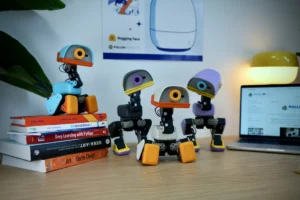
Bam Singhasaneh’s unique background provides a compelling testament to the universality of her prototyping philosophy. As a professional product designer, her expertise spans a broad spectrum, from consumer electronics to innovative educational toys. Her contributions to CrunchLabs, a subscription toy series spearheaded by renowned YouTube personality and former NASA engineer Mark Rober, exemplify her ability to translate complex engineering principles into engaging, hands-on learning experiences for children. CrunchLabs aims to inspire the next generation of innovators by delivering monthly boxes filled with components and instructions for building unique, fun gadgets, each demonstrating a scientific concept. Designing these physical toys, especially those integrating electronic elements, presents a unique set of challenges, demanding robust functionality, child safety, and an intuitive user experience.
Beyond the realm of toy development, Singhasaneh is a formidable presence in the world of competitive robotics, specifically BattleBots. BattleBots is a globally televised combat sports series where custom-built, armored, and weaponized robots engage in destructive arena battles. It is a grueling test of engineering prowess, material science, and strategic thinking. Singhasaneh, as part of Team Valkyrie, has competed at the highest levels, experiencing firsthand the brutal realities of mechanical failure under extreme pressure. This dual exposure – the meticulous, user-centric design of toys and the high-octane, failure-driven environment of robot combat – has profoundly shaped her approach to product development, providing a rich tapestry of experiences that validate her prototyping-first methodology.
Toy Design Secrets: Embracing the "Ugly" Prototype at CrunchLabs
Designing for CrunchLabs, where the goal is to create captivating and educational toys, brought Singhasaneh and her team face-to-face with the inherent complexities of integrating physical mechanics with electronic components. The challenge wasn’t merely aesthetic; it was about ensuring fundamental functionality and user interaction, especially when the final design hadn’t yet materialized. How does one prototype something that exists only as a conceptual idea?
Singhasaneh revealed that the answer lay in embracing "ugly prototypes." These weren’t polished, aesthetically pleasing models; rather, they were often crude, hastily assembled contraptions built from readily available materials, sometimes even scavenged parts. Their primary purpose was not to look good, but to test core hypotheses and validate fundamental concepts. For instance, if a toy required a motion sensor, the team would quickly rig up a basic electronic circuit to test its responsiveness and accuracy, regardless of how clunky or exposed the wiring might be. Was the motion sensor sensitive enough to detect a child’s hand? Was the button’s reaction time satisfactory for an engaging play experience? These seemingly minor questions, if left unanswered until late-stage development, could lead to costly redesigns and significant delays.
The "ugly prototypes" allowed for rapid iteration and crucial early-stage feedback. By isolating and testing individual functionalities, the team could identify and resolve critical issues long before committing to expensive tooling or manufacturing processes. This approach is rooted in the principle of de-risking the design. By tackling the most uncertain or technically challenging aspects first with minimal investment, designers can quickly pivot or refine their approach without derailing the entire project. This systematic validation of core functionalities, even through rudimentary means, is a testament to the efficiency and cost-effectiveness of rapid, iterative prototyping in product development.
Learning Through Catastrophic Failure: Lessons from the BattleBots Arena

If toy design offers a controlled environment for iterative learning, BattleBots provides the ultimate crucible for understanding failure. Singhasaneh shared how her experiences in the BattleBots arena have fundamentally reshaped her perspective on design, iteration, and especially, the intrinsic value of failure. "In BattleBots," she explained, "when your bot fails, it fails hard. You don’t get graceful failure; it explodes or gets thrown across the arena. But that’s the best way to learn."
This dramatic assertion highlights a profound truth. In the high-stakes environment of robot combat, a design flaw isn’t merely a minor inconvenience; it’s a catastrophic breakdown that leads to immediate, undeniable defeat. A weapon might fail to spin up, armor might buckle under impact, or a critical drive system could be severed. Each of these spectacular failures provides unequivocal data. Was the motor undersized? Was the chassis material too brittle? Was the wiring exposed to damage? Such unambiguous feedback, delivered in real-time and often with spectacular visual evidence, leaves no room for ambiguity.
Singhasaneh draws a direct parallel between tweaking a BattleBot to achieve maximum destructive capability and refining a product design. When a prototype fails spectacularly in front of a user—or, in the case of BattleBots, an opponent—the lessons learned are far more indelible and impactful than if the product had simply performed "adequately." An "adequate" performance might mask underlying vulnerabilities, delaying their discovery and potentially leading to more significant problems down the line. The BattleBots philosophy encourages designers to actively seek out and even provoke failure in their prototypes, understanding that these breakdowns are not setbacks but rather indispensable data points that illuminate the path to a more robust, effective, and ultimately, successful design. This culture of embracing failure as a learning opportunity is increasingly being adopted across various high-tech industries, recognizing that true innovation often emerges from the ashes of repeated experimentation.
Broader Implications and the Rise of Iterative Design in Industry
The principles championed by Bam Singhasaneh extend far beyond the specific domains of toy design and competitive robotics. Her methodology resonates deeply with the evolving landscape of product development across myriad industries, from software engineering and automotive manufacturing to aerospace and medical device innovation. The traditional "waterfall" model, where each phase of development (requirements, design, implementation, verification, maintenance) must be completed before the next begins, is increasingly being supplanted by agile and iterative approaches.
Economic Benefits and Market Responsiveness: Rapid prototyping offers substantial economic advantages. By identifying flaws and refining designs in early stages, companies can significantly reduce the cost of changes, which typically escalate exponentially as development progresses. A design flaw caught during the conceptual prototyping phase might cost dollars to fix, while the same flaw discovered after tooling has been created and production has begun could cost millions. This efficiency translates to faster time-to-market, allowing companies to respond more dynamically to evolving consumer demands and competitive pressures. In today’s fast-paced global economy, the ability to quickly pivot and adapt is a critical determinant of commercial success.
Enhanced User Experience and Reduced Risk: Iterative prototyping, especially when coupled with user testing, ensures that the final product is genuinely aligned with user needs and expectations. By putting rough prototypes into the hands of target users early on, designers can gather authentic feedback on usability, functionality, and desirability. This user-centric approach drastically reduces the risk of launching a product that fails to resonate with its intended audience, thereby maximizing return on investment and fostering customer loyalty.

Cultural Shift in Innovation: Singhasaneh’s insights also highlight a broader cultural shift towards embracing experimentation and learning from failure. This mindset is crucial for fostering innovation within organizations. Companies that encourage their teams to "fail fast" and view mistakes as opportunities for growth are more likely to develop groundbreaking products and services. This approach cultivates a creative environment where ideas are tested and refined rapidly, rather than being stifled by an overly cautious, risk-averse culture.
Educational Impact and the Maker Movement: The ethos of "learning by doing" and rapid prototyping is also central to the global Maker Movement, which Maker Faire Bay Area exemplifies. Events like Maker Faire provide platforms for individuals and small teams to showcase their inventions, share knowledge, and inspire others to create. Figures like Bam Singhasaneh serve as powerful role models, demonstrating that complex engineering and design challenges can be tackled through hands-on experimentation, curiosity, and a willingness to iterate. Her advocacy for prototyping reinforces the value of STEM education that prioritizes practical application and problem-solving over rote memorization, equipping future generations with the skills needed to innovate in an increasingly complex world.
Conclusion: The Enduring Power of Prototyping
Bam Singhasaneh’s captivating presentation at Maker Faire Bay Area served as a powerful reminder that every remarkable product, from the simplest toy to the most sophisticated robot, originates not as a perfectly formed vision, but as a nascent idea subjected to rigorous, iterative refinement. Her stories, imbued with humor, humility, and the thrilling proof of concept, illuminate the transformative power of prototyping. Whether in the high-octane spectacle of BattleBots or the intricate development of educational toys at CrunchLabs, the fundamental lesson remains consistent: embrace rapid experimentation, learn quickly from every failure, and allow the tangible feedback of prototypes to guide the journey from concept to creation. For aspiring designers, engineers, and makers, Singhasaneh’s message is an empowering call to action: don’t just design, prototype, and watch your wildest concepts evolve into something truly extraordinary. Her insights provide a clear roadmap for navigating the complexities of product development, ensuring that innovation is not just dreamt, but built, tested, and brought to life.