A groundbreaking study published in Advanced Functional Materials details a novel method for detecting and monitoring damage in complex 3D printed lattice structures, a development with significant implications for the safety and longevity of critical components in industries such as aerospace and automotive. The research, spearheaded by Professor Shanmugam Kumar and his team at the Sustainable Multifunctional Materials and Additive Manufacturing (SM2AM) Lab at the University of Glasgow, leverages Electrical Impedance Tomography (EIT) to transform the material itself into a sophisticated sensing system. This "self-sensing" capability promises to revolutionize how structural integrity is assessed, moving beyond traditional, often time-consuming and costly, inspection methods.
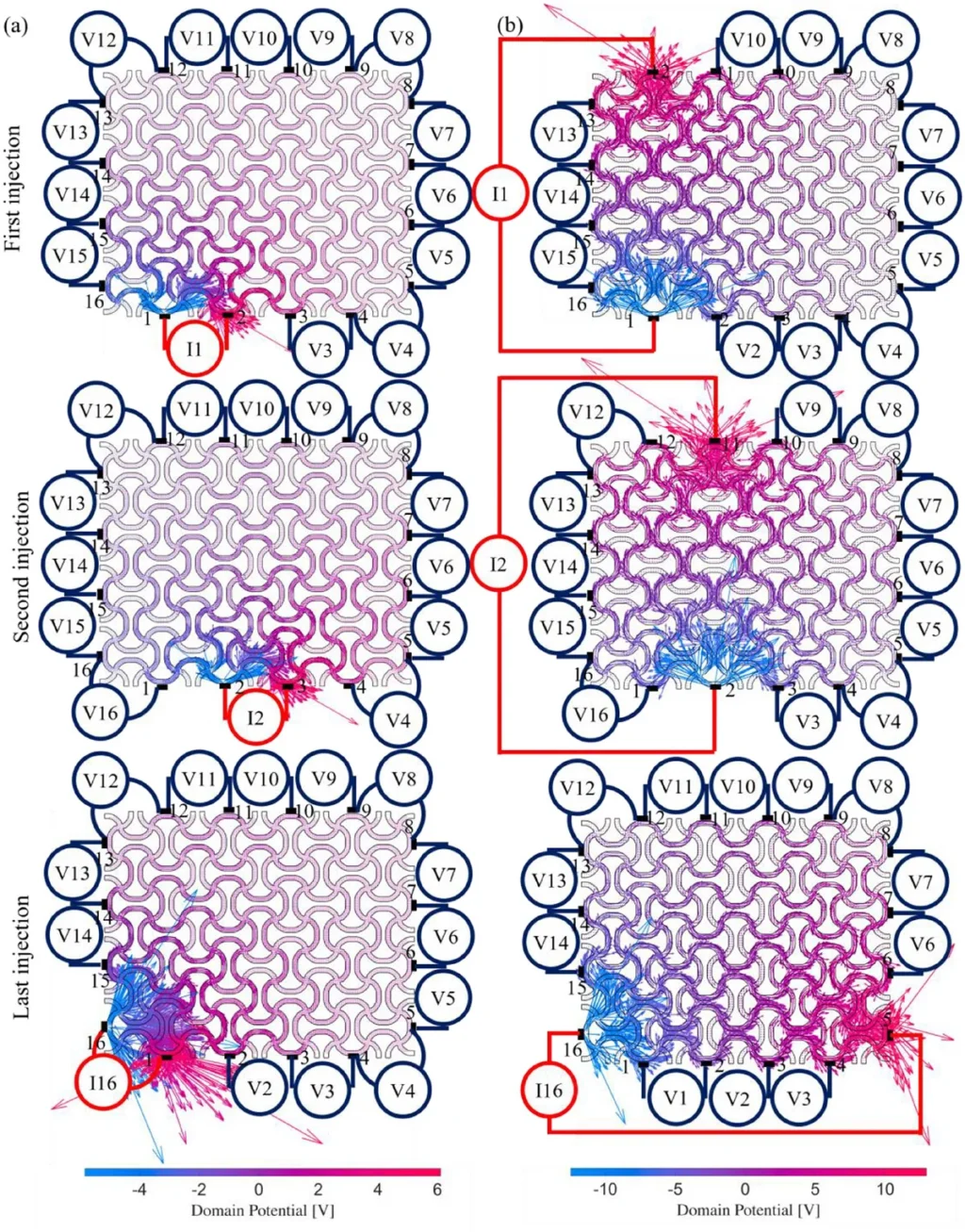
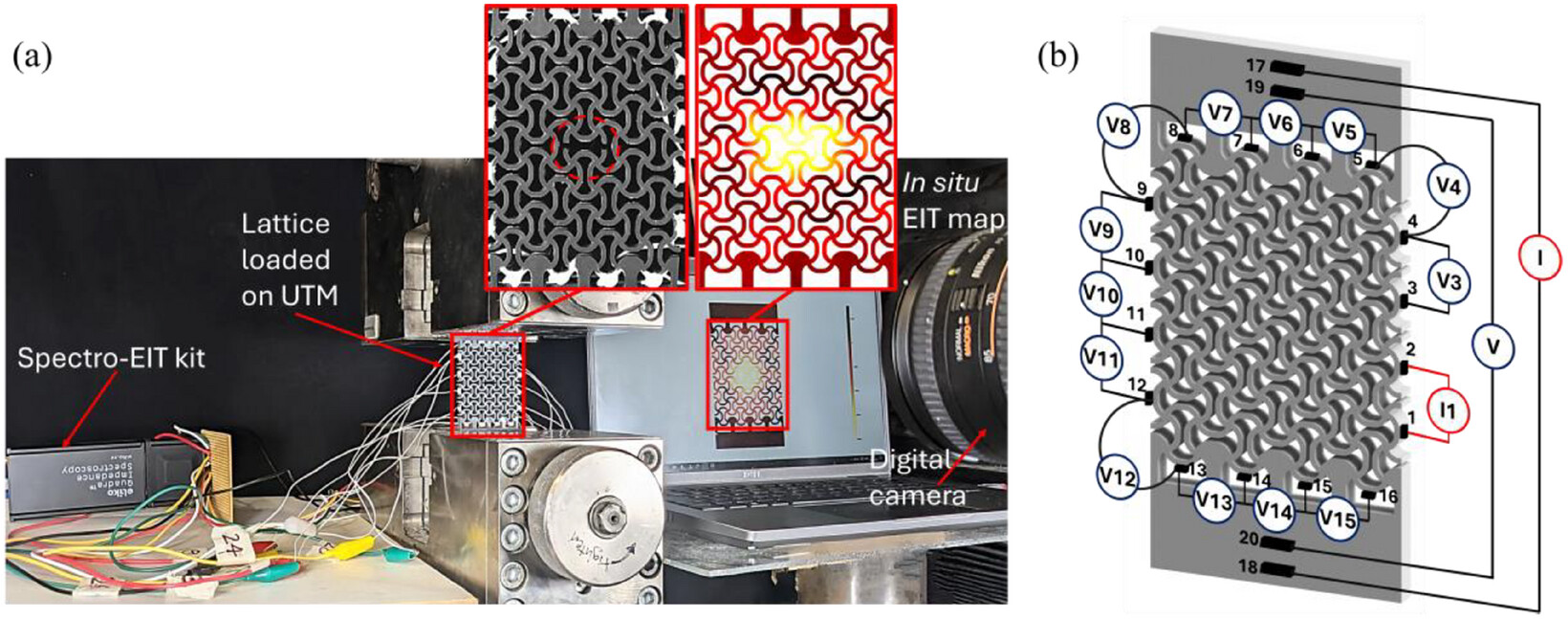
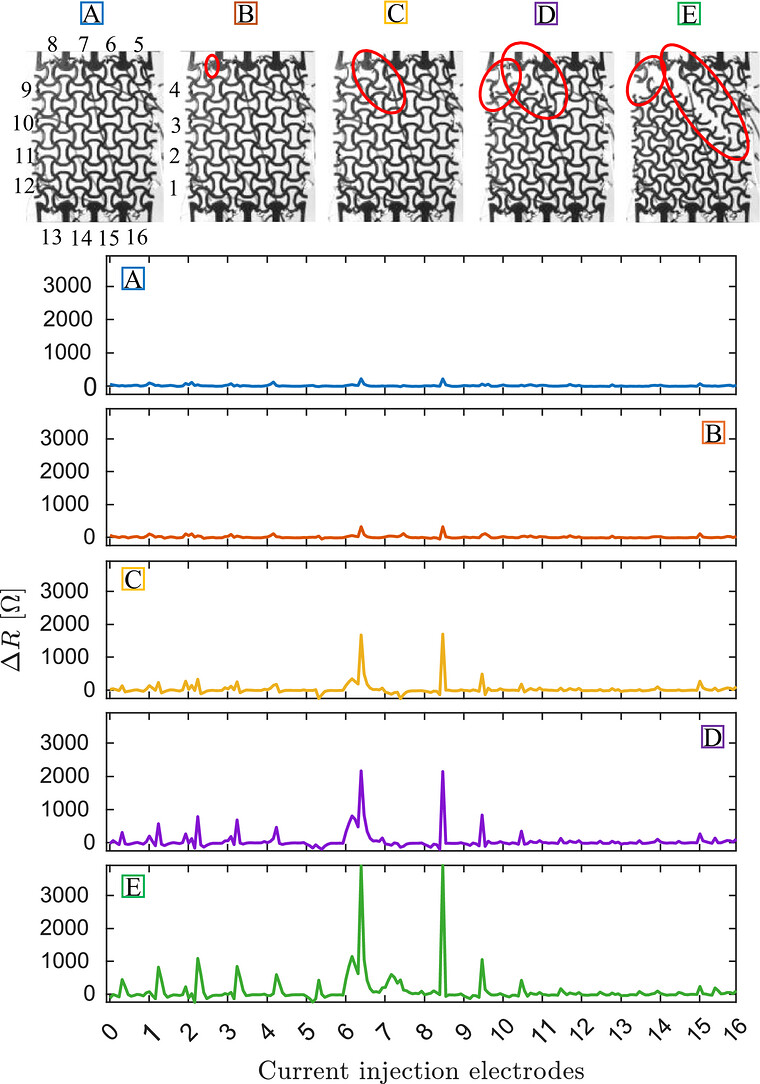
The core innovation lies in integrating EIT, a non-invasive imaging technique, with architected lattice structures. EIT works by applying electrical currents across a conductive material and measuring the resulting voltage changes. These measurements are then used to reconstruct a conductivity map of the material, revealing internal details without the need for physical access. In this research, the team developed carbon nanotube-doped resins, which were then 3D printed into intricate Voronoi lattice structures, each approximately 48 millimeters in width. By mapping the electrical conductivity across these lattices, they could identify areas where damage, such as fractures, occurred by observing corresponding losses in conductivity. This method offers a live, detailed view of structural health, akin to an MRI scan for materials.
The Challenge of Structural Health Monitoring
Ensuring the safety and reliability of complex engineered systems, particularly those operating in demanding environments, is a perpetual challenge. In sectors like aviation, where component failure can have catastrophic consequences, rigorous testing, inspection, and maintenance are paramount. While scheduled maintenance protocols account for known wear and tear, as well as anticipated stresses, the reality of material science and engineering often involves unpredictable failure modes. Sudden, rapid damage propagation, or unexpected material fatigue can occur, defying predictive models.
Traditional approaches to monitoring structural health often involve embedding discrete sensors. However, this strategy introduces its own set of challenges. Adding sensors increases the overall cost of a component or system, introduces potential points of failure, and can add complexity to power management and data acquisition. Furthermore, the very presence and placement of sensors, or their power requirements, could inadvertently create new vulnerabilities or stress concentrations within the material. This has driven the pursuit of intrinsically "smart" materials—materials that possess inherent sensing capabilities without requiring external additions. The work from Professor Kumar’s lab directly addresses this need by making the material structure itself the sensor.
Electrical Impedance Tomography: A Powerful Diagnostic Tool
Electrical Impedance Tomography (EIT) is a well-established imaging modality with a history of application in diverse fields. In medicine, it is employed to monitor lung function by detecting changes in electrical conductivity associated with breathing. In industrial settings, it finds use in mapping oil flow within pipelines or assessing the state of chemical processes. The fundamental principle involves a network of electrodes placed around or within the material of interest. These electrodes are sequentially used to inject small electrical currents and measure the resulting voltages at other electrodes. By analyzing how the electrical current is distributed and how voltages vary, algorithms can infer the conductivity of different regions within the material. This data is then processed to create a visual representation, often a color-coded map, illustrating the internal electrical properties. In this context, conductivity variations directly correlate with physical changes, such as the formation of cracks or delaminations.
Integrating EIT with Architected Lattices
The University of Glasgow team’s innovation lies in the synergistic combination of EIT with advanced 3D printing and lattice design. The use of carbon nanotube-doped resins imbues the printed structures with the necessary electrical conductivity to enable EIT measurements. The choice of Voronoi lattice structures is also critical. These complex, often biomimetic, geometries offer inherent advantages in terms of mechanical properties and surface area, which are beneficial for both structural performance and the effectiveness of EIT.
The researchers established a baseline conductivity map for an intact lattice specimen. As the lattice was subjected to strain, and subsequently developed damage, the EIT system captured real-time updates to this conductivity map. The crucial observation was that damage consistently appeared as regions of conductivity loss. This direct correlation allowed the researchers to not only detect the presence of damage but also to quantify its extent. Furthermore, they discovered that the topology of the lattice—how the struts and nodes were arranged—influenced the sensitivity and resolution of damage detection. Different lattice designs could offer varying levels of detail in pinpointing damage, suggesting that material architecture can be engineered to optimize sensing fidelity.
Professor Kumar elaborated on the significance of their findings: "In this research, we’ve developed a new way to map electrical changes across an entire 3D-printed lattice structure in real time. The output is somewhat like an MRI scan: just as an MRI can show what is happening throughout the body, our approach allows us to see how different parts of the lattice are responding while it is under strain. Conventional measurements can tell us what is happening at a particular location in a material, or provide an overall, averaged indication of the structural health of the whole structure. However, they cannot show us in detail where damage is developing and how it is spreading throughout the structure. Our research shows that, by combining carefully designed lattice structures with EIT, we can obtain this much richer picture of structural behaviour, including detecting damage before the structure ultimately fails. The engineered lattice architectures enable control over sensing fidelity. This technique could open up potential applications in areas such as structural health monitoring and other advanced engineering systems, although further work is needed to develop and scale the technology for practical applications."
The algorithm developed by the team demonstrated a remarkable ability to track crack propagation, often identifying fractures up to one strut away from the point of failure. This level of detail in damage localization and tracking is a significant leap forward from current methods, which often provide only an aggregate assessment of structural integrity.
A Timeline of Innovation and Collaboration
The research represents a culmination of efforts from a collaborative team. The foundational work on the lattice structures and EIT integration was conducted at the University of Glasgow’s SM2AM Lab. Key contributors from Glasgow included Akash Deep and Professor Andrew McBride. Complementary expertise was provided by Dr. Andrea Samore and Professor Alistair McEwan from the University of Sydney, underscoring the international nature of cutting-edge materials research. While a precise timeline for the research’s inception and completion was not detailed, the publication in Advanced Functional Materials indicates that the core experimental and analytical phases have been successfully concluded and peer-reviewed. The research builds upon years of ongoing advancements in 3D printing, materials science, and computational imaging techniques. The specific mention of Voronoi patterns suggests a connection to earlier explorations of these complex geometries for their unique mechanical properties, now finding an unexpected but highly valuable application in sensing.
Broader Implications and Future Potential
The implications of this self-sensing lattice technology are far-reaching. In the aerospace industry, for example, components like wing spars, fuselage panels, and engine parts are subjected to immense stresses and fatigue. The ability to integrate damage detection directly into these critical parts could lead to:
- Enhanced Safety: Early detection of micro-cracks or material degradation before they propagate to critical levels can prevent in-flight failures and enhance overall flight safety.
- Reduced Maintenance Costs: By providing real-time, detailed information about structural health, maintenance can become more proactive and targeted. This could reduce the need for extensive, costly, and time-consuming manual inspections. Instead of scheduled, blanket inspections, maintenance could be triggered by actual detected damage.
- Extended Component Lifespan: Understanding exactly when and where damage begins to form can inform more precise repair strategies, potentially extending the operational life of expensive components.
- Improved Design Iterations: Feedback from real-world performance, captured by the integrated sensing capabilities, can inform future designs, leading to more robust and resilient structures.
The technology is particularly relevant for additive manufacturing, which allows for the creation of highly complex geometries like lattices that are difficult or impossible to produce with traditional manufacturing methods. This opens up possibilities for 3D-printed valves, impellers, ship screws, and even components for extreme environments like rocket engines. The article specifically highlights challenges with creep strength, cyclical loading, and the long-term durability of vat-polymerization-made structures, areas where this sensing technology could provide invaluable insights and mitigation strategies.
The potential for live monitoring in dynamic systems like ship engines or rocket propulsion is particularly exciting. Such applications often involve extreme temperatures, pressures, and vibrations, where continuous, detailed structural health assessment is crucial. The ability to detect damage as it occurs in these high-stakes environments could be transformative.
Challenges and Next Steps
While the findings are highly promising, Professor Kumar acknowledges that further work is necessary to transition this technology from the laboratory to practical applications. Scaling up the EIT systems to accommodate larger structures, refining the algorithms for even greater precision and speed, and ensuring the long-term reliability and durability of the embedded sensing elements within demanding operational conditions are key areas for future research and development. The cost-effectiveness of mass-producing these self-sensing components will also be a critical factor in their widespread adoption.
Nevertheless, this research represents a significant stride towards the realization of "smart" materials and structures that can actively report on their own integrity. By turning architected lattices into intelligent sensors, the University of Glasgow team has paved a pathway toward intrinsically self-sensing, damage-aware material systems, promising a future where safety, efficiency, and reliability are enhanced through inherent material intelligence.