In a significant stride towards revolutionizing computational energy efficiency, researchers in the United States, led by an interdisciplinary team from Georgia Tech, have announced the development of a novel computer logic system that leverages nanoscale mechanical strain to process information. This pioneering approach, known as Mechanically Amplified Ferroic-Actuated (MEFA) Logic, holds the potential to be at least 100 times more energy efficient than current state-of-the-art computing technologies, addressing a critical bottleneck in the future of digital processing.
The ambitious project has secured substantial backing, receiving USD 10.6 million in funding from the Defense Advanced Research Projects Agency (DARPA). This investment is channeled through DARPA’s Fast and Curious program, an initiative specifically designed to spur the creation of logic circuits capable of dramatically reducing power consumption while maintaining or enhancing performance. At the helm of this transformative research is Dr. Asif Khan, an associate professor at Georgia Tech’s School of Electrical and Computer Engineering, along with his dedicated team.
Dr. Khan underscored the foundational principle guiding their work, stating, "Whether it’s charge, light, magnetism, or strain, computing doesn’t care how information is transported as long as it reliably represents a one and a zero. Our approach explores a different path by blending multiple information-carrying modalities together." This philosophy highlights a departure from conventional electron-based computing, seeking to harness alternative physical phenomena for data processing.
The Urgent Need for Energy-Efficient Computing
The quest for more energy-efficient computing is not merely an academic exercise; it is an imperative driven by the escalating demands of modern technology. Current computing paradigms, predominantly reliant on complementary metal-oxide-semiconductor (CMOS) technology, are rapidly approaching fundamental physical limits. For decades, Moore’s Law—the observation that the number of transistors on a microchip doubles approximately every two years—has propelled the industry forward, leading to exponential increases in processing power. However, this progress has been increasingly challenged by the "power wall," where further increases in transistor density lead to prohibitive energy consumption and heat dissipation.
Data centers, the backbone of the digital economy, already consume a staggering amount of electricity. Estimates suggest that data centers globally account for approximately 1-2% of worldwide electricity consumption, a figure projected to rise significantly with the proliferation of artificial intelligence, big data analytics, and the Internet of Things (IoT). For instance, a single modern AI training run can consume as much energy as several homes over a year. The energy cost not only translates into substantial operational expenses but also contributes to environmental concerns, making the development of ultra-low-power computing solutions a critical global priority. DARPA, recognizing the strategic implications of this energy challenge for national security and technological superiority, has been actively funding research into post-CMOS technologies for several years.
Understanding MEFA Logic: A Paradigm Shift
Traditional computers process information by manipulating the flow of electrical charge through billions of transistors. Each transistor acts as a tiny switch, toggling between an "on" (representing a binary one) and "off" (representing a binary zero) state. This constant switching and movement of electrons consume energy, and as transistors shrink, leakage currents become a more significant issue, further increasing power consumption.
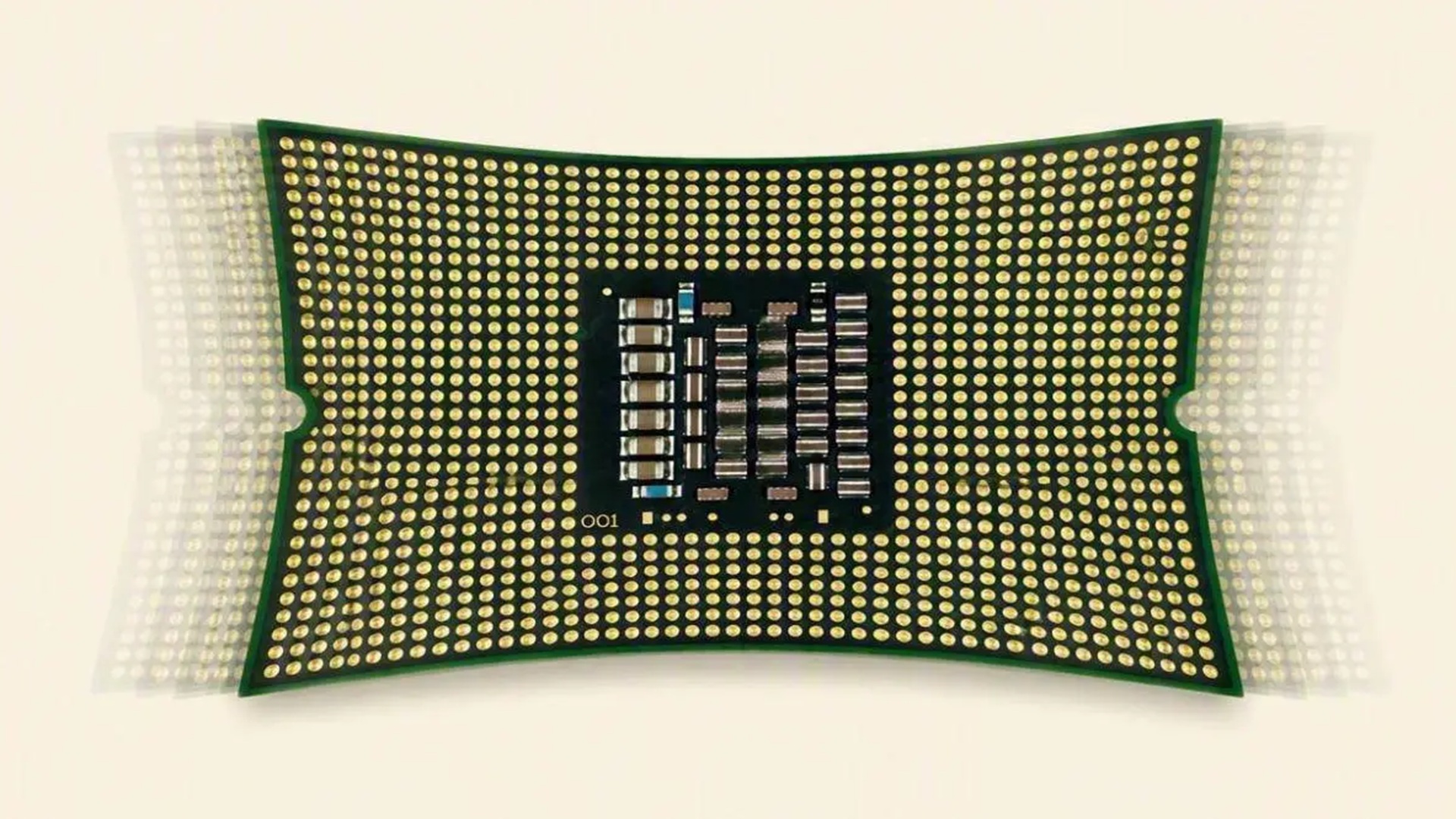
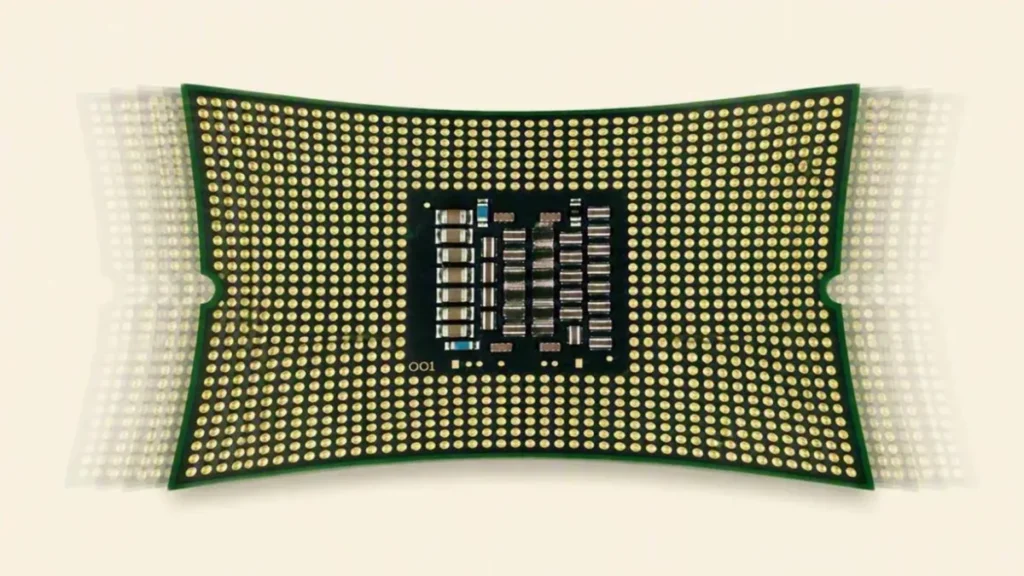
MEFA Logic proposes an entirely different mechanism. It utilizes special ferroic materials that exhibit a precise, voltage-dependent deformation—they slightly expand or contract when an electrical voltage is applied. This minuscule mechanical movement is then ingeniously amplified and transferred to a nearby semiconductor channel. Within this channel, the induced mechanical strain alters the material’s electronic properties, specifically its band structure and electron mobility. This alteration, in turn, precisely controls the flow of current, effectively switching the logic state of the device.
In essence, instead of directly moving electrons to represent data, MEFA Logic uses electrical signals to mechanically strain a material, and that strain then dictates the electrical state of the device. This "mechano-electric" coupling offers a highly efficient way to switch states with minimal energy dissipation compared to purely electronic switching. The intrinsic properties of ferroic materials allow for non-volatile memory capabilities, where the strained state could potentially persist even without continuous power, further contributing to energy savings.
The Genesis of the Fast and Curious Program
The funding for MEFA Logic stems from DARPA’s "Fast and Curious" program, officially launched with the objective of developing revolutionary logic circuits that could achieve at least a 100-fold improvement in energy efficiency over current technologies. This program is part of a broader DARPA initiative to explore alternatives to traditional CMOS, which, despite its incredible success, is facing diminishing returns in performance per watt.
The Fast and Curious program specifically seeks to explore novel materials, device architectures, and computing paradigms that can overcome the inherent limitations of charge-based switching. By diversifying the physical phenomena used for computing—be it spin, light, or, in this case, mechanical strain—DARPA aims to unlock entirely new avenues for energy efficiency and performance gains. The selection of Georgia Tech’s MEFA Logic project underscores the agency’s confidence in the potential of mechano-electric coupling as a viable path forward. This aligns with DARPA’s historical role in fostering groundbreaking research that often forms the bedrock of future technological advancements, from the internet to GPS.
Beyond the Lab: Manufacturability and Integration
A critical aspect of the MEFA Logic project, as emphasized by Dr. Khan, is its focus on manufacturability and integration from the outset. "A new computing technology only becomes useful if it can ultimately fit into the broader semiconductor ecosystem," Khan pointed out. "We’re thinking about manufacturability and integration from the beginning." This forward-thinking approach is crucial because many promising laboratory-scale innovations fail to transition to commercial viability due to challenges in scaling up production or integrating with existing manufacturing processes.
The team’s strategy involves designing MEFA Logic components with an eye towards compatibility with advanced semiconductor manufacturing techniques. This includes using materials and fabrication methods that are amenable to large-scale production, potentially allowing for seamless integration into existing fabrication facilities (fabs) with minimal retooling. By considering these practical aspects early in the development cycle, the researchers aim to accelerate the path from proof-of-concept to deployable technology. This includes ensuring that the nanoscale mechanical elements can be reliably manufactured at high densities and that the electromechanical coupling remains stable and efficient under operational conditions.
A Collaborative Endeavor

The development of such a complex and multifaceted technology requires a collaborative effort spanning diverse scientific and engineering disciplines. The Georgia Tech-led team is bolstered by contributions from researchers at Rice University and the University of Southern California, alongside scientists from Northrop Grumman’s Space Park Foundry. This consortium brings together expertise in materials science, device physics, nanotechnology, and advanced manufacturing.
Rice University and the University of Southern California likely contribute specialized knowledge in novel materials synthesis, characterization of ferroic properties, and theoretical modeling of strain effects on semiconductor band structures. Northrop Grumman’s involvement, particularly through its Space Park Foundry, is significant. As a major defense contractor, Northrop Grumman brings invaluable experience in advanced device fabrication, reliability engineering, and the rigorous testing required for systems destined for critical applications, including those relevant to national security. Their expertise in scaling up sophisticated manufacturing processes and ensuring the robustness of novel components will be instrumental in bridging the gap between laboratory prototypes and robust, deployable computing platforms.
Implications for the Future of Computing
The potential implications of MEFA Logic and similar energy-efficient computing paradigms are vast and far-reaching.
- Artificial Intelligence and Machine Learning: The energy demands of training and running complex AI models are rapidly increasing. A 100-fold improvement in energy efficiency could dramatically lower the environmental footprint and operational costs of AI, enabling more powerful and ubiquitous AI applications, from edge devices to massive cloud-based systems.
- Mobile and Edge Computing: For devices like smartphones, wearables, and IoT sensors, battery life is a paramount concern. MEFA Logic could extend device longevity significantly, enabling new functionalities and reducing the frequency of charging. In edge computing, where processing occurs closer to the data source, highly efficient chips would allow for more sophisticated local processing without relying on constant cloud connectivity, enhancing privacy and reducing latency.
- Data Centers: Reduced energy consumption in data centers would translate into massive cost savings and a smaller carbon footprint. It would also alleviate cooling challenges, which currently represent a substantial portion of data center energy usage. This could allow for denser server racks and more powerful computational clusters within existing physical footprints.
- Defense Applications: For DARPA, the primary driver is enhancing the capabilities of the U.S. military. Energy-efficient computing is crucial for autonomous systems, advanced sensors, secure communications, and battlefield analytics, where power sources are often limited and operational endurance is critical. It enables smaller, lighter, and longer-lasting systems for various military platforms.
- Sustainability: Beyond specific applications, the broader adoption of ultra-energy-efficient computing could have a profound positive impact on global energy consumption and the environment, aligning with global efforts to combat climate change.
Challenges and the Road Ahead
While the promise of MEFA Logic is substantial, several significant challenges lie ahead. The research team aims to advance the MEFA technology from individual devices to increasingly sophisticated circuits. This involves demonstrating not just individual switch functionality but also complex logic gates, memory elements, and ultimately, integrated circuits capable of performing meaningful computations.
Key hurdles include:
- Scalability: Ensuring that nanoscale mechanical elements can be reliably integrated into extremely dense arrays, similar to current transistor densities, without compromising performance or energy efficiency.
- Reliability and Endurance: Mechanical systems, even at the nanoscale, are subject to fatigue and wear. Proving the long-term reliability and endurance of MEFA devices over billions or trillions of cycles will be critical for commercial adoption.
- Speed: While energy efficiency is the primary goal, MEFA Logic must also achieve sufficient operating speeds to be competitive with or surpass existing technologies. The speed of mechanical motion, even at the nanoscale, can sometimes be slower than electronic switching. Optimizing the mechanical response and electrical readout will be key.
- Integration with existing infrastructure: While aiming for manufacturability, the full integration of a fundamentally different logic paradigm into the vast and mature semiconductor industry ecosystem will be a monumental task, requiring new design tools, testing methodologies, and intellectual property.
Looking Forward
The Georgia Tech team’s work represents a compelling step forward in the exploration of "More than Moore" computing paradigms. By demonstrating the feasibility of using mechanical strain alongside electrical signals, they are opening up new avenues for innovation that could reshape the future of digital technology. Dr. Khan concluded, "The exciting part isn’t just the device physics. It’s the possibility of combining extremely low energy consumption with the speed and functionality required for real computing systems." This sentiment encapsulates the ambitious yet achievable vision behind MEFA Logic: to deliver not just a theoretically efficient solution, but a practical, high-performance computing platform that can significantly reduce global energy requirements. The success of projects like MEFA Logic could usher in a new era of computing, one where energy efficiency is as fundamental to design as speed and density, unlocking unprecedented capabilities across a multitude of applications.