The global military landscape is currently experiencing an unprecedented era of technological transformation, characterized by rapid advancements in artificial intelligence, autonomous systems, advanced missile capabilities, and innovative drone technologies. This surge in innovation is fundamentally reshaping defense strategies, influencing global conflicts, and prompting nations to re-evaluate their operational doctrines and procurement priorities. From the integration of AI in battlefield command to the deployment of sophisticated autonomous naval systems, the intersection of cutting-edge technology and military applications is defining the future of warfare.
The Rise of AI and Autonomous Systems in Modern Warfare
Artificial intelligence is rapidly becoming a pivotal force in military development, promising to revolutionize decision-making processes and operational efficiency. Recent reports highlight China’s significant strides in this domain, with its military AI demonstrating superior performance over human commanders, achieving an impressive 90% recall accuracy in simulated assault tests. This development underscores a broader trend towards integrating AI for enhanced reconnaissance, strategic planning, and rapid response capabilities, potentially reducing cognitive load on human operators and accelerating reaction times in complex combat scenarios.
Beyond theoretical applications, AI is also enhancing existing military assets. Iran, for instance, is reportedly utilizing AI-enhanced satellite imagery, sourced from China, to refine its targeting capabilities against US bases in the Middle East. This demonstrates how AI, even when applied to readily available data, can significantly augment the precision and effectiveness of military operations, raising concerns about asymmetric warfare and the proliferation of advanced targeting technologies.
The drive for autonomy extends to ground combat vehicles. The US Army’s next-generation combat vehicle program is actively incorporating advanced autonomous features alongside a formidable 50mm cannon, aiming to create more lethal and less vulnerable units. Autonomy in ground systems promises to reduce human casualties, enable operations in hazardous environments, and streamline logistical challenges, although it also presents complex ethical and command-and-control dilemmas regarding accountability and decision-making authority in combat.
Naval operations are also seeing a significant push towards autonomous solutions. The United Kingdom has recently deployed its $500 million autonomous ‘Adventure’ minehunter system, designed to neutralize naval mines without risking human lives. This system represents a crucial advancement in maritime security, offering a safer and more efficient method for clearing dangerous underwater ordnance. Such deployments highlight the cost-effectiveness and risk reduction benefits that autonomous systems bring to specialized military tasks.
However, the path to fully autonomous military systems is not without its challenges. A prototype ‘drone wingman’ developed by General Atomics for the US Air Force recently crashed during tests in California. This incident, while a setback, underscores the inherent complexities and risks associated with developing and integrating advanced autonomous aerial platforms. The rigorous testing and iterative development cycles are essential to ensure the reliability and safety of systems that will operate in high-stakes environments.
Drone Proliferation and Diversification: A Multi-Domain Revolution
The role of unmanned aerial vehicles (UAVs) and other drones has expanded dramatically, transforming from niche surveillance tools into versatile instruments of modern warfare across land, air, and sea. Ukraine has unveiled a new multi-role naval drone with a reported range of 50 miles, indicating a growing emphasis on asymmetric naval capabilities, particularly in contested maritime zones. These surface drones can be used for reconnaissance, surveillance, and potentially offensive operations, offering a cost-effective counter to larger, more traditional naval assets.
Underwater drones are also emerging as significant players in intelligence gathering and strategic reconnaissance. The recovery of a torpedo-shaped drone linked to China from Indonesian waters points to the ongoing covert operations and the use of sophisticated unmanned underwater vehicles (UUVs) for intelligence collection in sensitive geopolitical regions. These incidents highlight the silent, unseen battles being waged for information dominance beneath the waves.
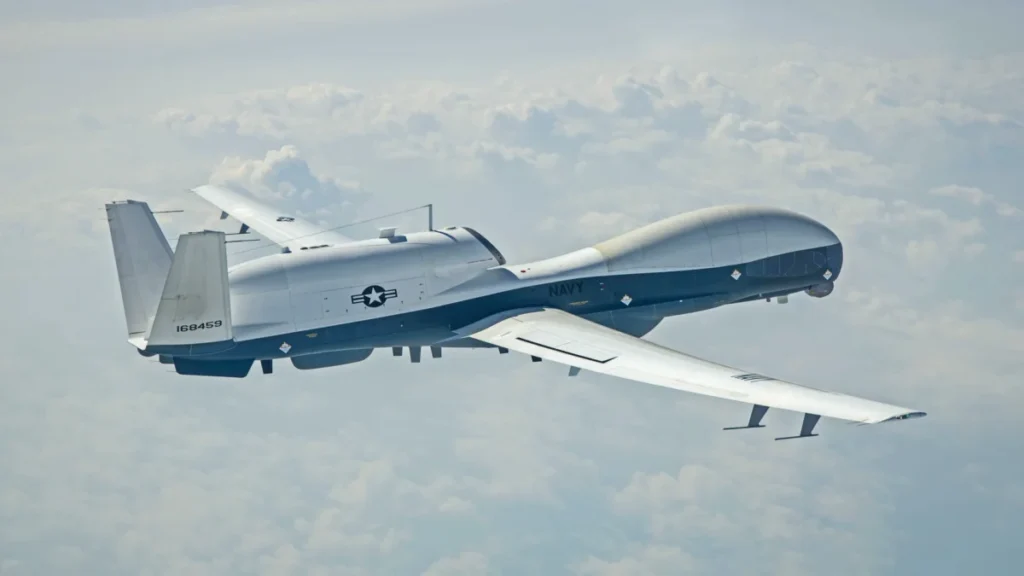
In the aerial domain, the development of specialized drones continues apace. The US has reportedly spotted a secretive, ‘B-21 bomber-like’ drone, built for high-altitude flight, over Greece. Such stealthy, high-altitude drones are likely designed for long-range reconnaissance, surveillance, and potentially targeting, offering persistent intelligence gathering capabilities in denied airspace.
Tactical deployment of drones is also seeing innovation. The UK’s new compact HAL10 launcher can rapidly deploy ten ‘Wasp’ drones for battlefield surveillance, providing forces with immediate, localized situational awareness. Similarly, a new 190 mph-speeding ‘STUD’ tactical drone can be deployed in just two seconds, emphasizing the need for rapid-response intelligence and reconnaissance assets in fast-moving combat situations. These smaller, rapidly deployable drones are becoming indispensable for frontline units.
The counter-drone landscape is evolving just as quickly. The US’ 450-mile-range ‘Laila’ drone is being enhanced with a ‘SAMURAI’ edge, specifically designed to take down enemy drones. This development signifies the growing importance of layered air defense systems capable of neutralizing the increasingly sophisticated and numerous drone threats faced by modern militaries. Meanwhile, the Eurofighter Typhoon is testing 70mm laser rockets as a low-cost anti-drone solution, showcasing efforts to develop economical yet effective countermeasures against drone swarms and individual UAVs. The US Air Force is also planning to equip its HH-60W rescue helicopters with lasers to protect them from heat-seeking missiles, extending defensive capabilities to vulnerable rotary-wing aircraft.

Advancements in Missile Technology and Strategic Deterrence
The development and deployment of advanced missile systems remain a cornerstone of global military power and strategic deterrence. The United States recently conducted a joint Army-Navy test of a hypersonic missile capable of reaching speeds exceeding Mach 5. This successful test is a critical step in the ongoing hypersonic arms race, where major powers are striving to develop weapons that can travel at extreme speeds, making them incredibly difficult to intercept and fundamentally altering strategic balances. Hypersonic weapons represent a significant leap in offensive capabilities, reducing reaction times for adversaries and posing new challenges for missile defense systems.
Ukraine, facing ongoing conflict, is reportedly developing an air-launched ballistic missile with a range exceeding 500 miles. This initiative reflects a strategic effort to enhance its long-range strike capabilities, providing a significant deterrent and a means to project power against distant targets. Such a development could reshape regional power dynamics and complicate strategic calculations for its adversaries.
Meanwhile, the US Navy is pushing for a staggering 1,200% increase in its inventory of Tomahawk cruise missiles, aiming to replenish stocks depleted by ongoing conflicts and maintain readiness for potential future engagements. The Tomahawk, a versatile, long-range, all-weather subsonic cruise missile, remains a crucial asset for precision strikes from naval platforms. This demand highlights the continuous need for large inventories of proven, reliable munitions in an era of sustained global military operations.
Even Cold War-era assets are being maintained and upgraded. Boeing has secured a contract to sustain the US Air Force’s AGM-86B nuclear missiles through 2033. These air-launched cruise missiles are a vital component of the US nuclear triad, ensuring a credible deterrent posture. The continued investment in these long-standing systems underscores the enduring importance of strategic stability and the need to maintain diverse and robust deterrent capabilities.
Enhancing Traditional Platforms and Global Readiness
While new technologies dominate headlines, ongoing efforts to enhance and modernize traditional military platforms remain crucial for maintaining operational readiness and projecting power. A US firm is set to deliver a Patriot missile defense system to a NATO member, designed to defeat tactical ballistic and cruise missiles. The Patriot system is a cornerstone of air and missile defense for many allied nations, providing critical protection against a range of aerial threats. This delivery reinforces alliance capabilities and collective security against evolving missile threats.
The US Marine Corps is also boosting its ground capabilities with the acquisition of new 37,000-lb armored vehicles. These vehicles are designed to enhance both battle power and reconnaissance missions, providing Marines with increased protection, mobility, and situational awareness in diverse operational environments. Such investments reflect a commitment to modernizing ground forces to meet contemporary and future combat requirements.
Beyond specific technologies, the ability to conduct complex, multi-asset operations remains paramount. The extensive deployment of US air assets – four bombers, 64 fighter jets, and 13 rescue aircraft – for an F-15E crew rescue mission demonstrates the sheer logistical scale and coordinated effort required for modern military operations, even in non-combat roles. This incident highlights the comprehensive capabilities and interoperability required for rapid response and personnel recovery in challenging environments.
Strategic Implications and the Future of Conflict
The confluence of these technological advancements carries profound strategic implications. The integration of AI and autonomous systems raises fundamental questions about human control, ethical boundaries, and the potential for unintended escalation. The proliferation of diverse drone technologies, from stealthy high-altitude platforms to rapidly deployable tactical units and underwater reconnaissance assets, complicates intelligence gathering and defense strategies, making battlefields more transparent yet also more complex and unpredictable.
The renewed focus on hypersonic missiles and the sustained investment in both conventional and nuclear deterrence systems underscore a global arms race, driven by major powers seeking to maintain or gain a technological edge. This competition influences geopolitics, arms control discussions, and the overall stability of the international system. Nations are grappling with the challenges of interoperability, secure supply chains, and training personnel to operate increasingly sophisticated systems. The high costs associated with developing and acquiring these technologies also force difficult trade-offs between capability, cost, and reliability, as highlighted by military analysts.
Ultimately, these developments paint a picture of a military future that is increasingly automated, data-driven, and multi-dimensional. The relentless pace of innovation means that military systems are constantly evolving, demanding continuous adaptation in strategy, doctrine, and ethical frameworks. Understanding these ongoing transformations is crucial for comprehending the conflicts of tomorrow and navigating the intricate balance of global power.