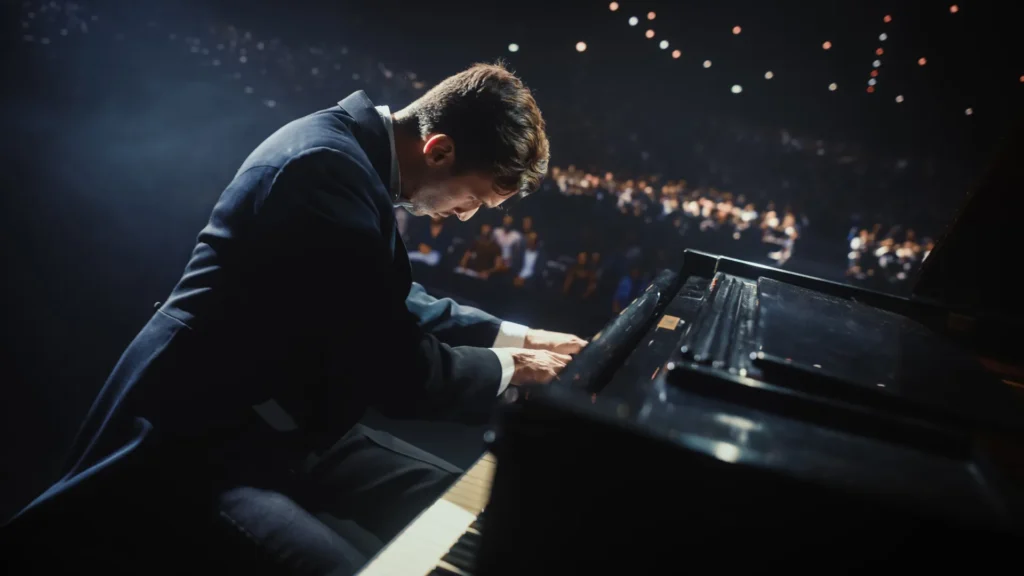
For generations, the nuanced world of piano performance has been characterized by an enduring debate: can a pianist’s individual touch truly alter the intrinsic character of a piano’s sound, or is the resulting tone merely a product of the instrument’s mechanics once the hammer strikes the string? Skeptics, often rooted in early acoustic science, championed the latter, arguing that a piano’s sound was largely predetermined. Musicians and pedagogues, conversely, have long championed the former, describing tonal qualities in vivid, tactile terms like "warm," "bright," or "heavy." Now, a landmark scientific study has provided the most definitive evidence to date, firmly siding with the artists and demonstrating that pianists possess a remarkable ability to shape a piano’s timbre through touch alone.
The research, spearheaded by Dr. Shinichi Furuya of the NeuroPiano Institute and Sony Computer Science Laboratories, Inc., utilized cutting-edge ultra-high-speed sensing technology to peel back the layers of complexity surrounding expressive piano playing. Their groundbreaking findings, meticulously detailed in the prestigious Proceedings of the National Academy of Sciences (PNAS), reveal that the subtlest, almost imperceptible motions of a pianist’s fingers and hands profoundly influence how listeners perceive crucial qualities such as brightness, heaviness, and clarity within individual musical notes. This revelation not only validates a long-held artistic intuition but also opens new avenues for understanding motor control, perception, and the very essence of musical expression.
The Enduring Mystery: A Century of Debate
The question of whether pianists could truly manipulate timbre through their physical interaction with the instrument has been a contentious subject since the dawn of the 20th century. During this period, advancements in acoustics began to demystify the physical properties of sound, leading some scientists to conclude that the piano, as a mechanical device, offered limited scope for individual sonic imprint beyond variations in loudness and timing. Proponents of this "ballistic" theory often cited the fixed nature of the hammer’s trajectory once set in motion, suggesting that the precise manner of contact between the hammer and string dictated the initial sound, leaving little room for subjective manipulation via the performer’s touch. Influential figures like Hermann von Helmholtz, whose seminal work on acoustics shaped much of early sound science, focused on measurable physical parameters, implicitly downplaying the role of subtle human input.
Conversely, the world of classical piano performance, steeped in centuries of pedagogical tradition, has consistently emphasized the profound impact of touch. Legendary pianists and revered teachers, from Franz Liszt and Frédéric Chopin to Artur Rubinstein and Glenn Gould, frequently discussed and taught the concept of Klangfarbe (tone color) as directly emanating from the pianist’s physical approach. They spoke of a "singing tone," a "velvet touch," or a "percussive attack," believing these qualities were not merely metaphors but achievable sonic realities directly controlled by the performer. This dichotomy between scientific skepticism and artistic conviction created a significant intellectual divide, with empirical proof remaining elusive due to the sheer difficulty of accurately measuring the infinitesimal movements involved in high-level piano playing. Previous studies often struggled to isolate touch from other contributing factors like dynamics (loudness) and articulation (timing), leaving the core debate unresolved.
Technological Breakthroughs Pave the Way
The resolution of this century-old enigma was made possible by significant advancements in sensing and data analysis technologies. For decades, the primary hurdle for researchers was the inability to capture the minute, high-velocity movements of piano keys and hammers with sufficient precision and speed without interfering with the performance itself. Traditional optical or mechanical sensors often lacked the necessary temporal and spatial resolution, or they physically altered the instrument’s response, rendering the data unreliable for studying subtle touch.
Dr. Furuya’s team overcame these limitations by developing a custom-built, noncontact sensing system dubbed "HackKey." This innovative system was capable of recording the movements of all 88 piano keys at an astonishing speed of 1,000 frames per second. Crucially, it achieved this with microscopic spatial precision, meaning it could detect even the most minuscule variations in key depression depth and velocity profiles that are invisible to the naked eye. This noncontact approach was paramount, as it ensured that the measurement process itself did not alter the natural tactile feedback or acoustic output of the piano, allowing for an authentic capture of a pianist’s interaction. This technological leap provided the unprecedented granular data needed to deconstruct the complex interplay between physical gesture and sonic outcome, finally offering a scientific lens into a phenomenon previously confined to artistic intuition.
Unveiling the Mechanics of Expressive Touch
The methodology employed in the study was rigorous and meticulously designed to isolate the impact of touch. Twenty internationally acclaimed pianists, recognized for their mastery and expressive capabilities, were invited to participate. Each pianist was tasked with playing individual notes while deliberately attempting to produce contrasting tonal qualities. These intentional variations included playing "bright" versus "dark" sounds, and "light" versus "heavy" sounds – distinctions that pianists intuitively understand and strive to achieve. The high-resolution data from the HackKey system captured every nuance of their finger and hand movements during these performances.
Following the performance phase, the recorded piano sounds were presented to a diverse group of listeners. This group included both individuals with extensive musical training and those with no prior musical background. The results of these listening tests were compelling: listeners consistently recognized and correctly identified the intended timbres (e.g., distinguishing between a "bright" and a "dark" note played by the same pianist). This consistency held true across both musically trained and untrained ears, underscoring the objective and perceptible nature of these tonal differences. Professional pianists participating in the listening tests demonstrated an even greater sensitivity to these subtle timbral variations, confirming that the distinctions were not merely subjective or psychological but grounded in detectable acoustic phenomena.
Upon analyzing the vast dataset of movement patterns, researchers made a pivotal discovery: only a select handful of extremely precise movement features were strongly correlated with changes in perceived timbre. These critical features included tiny variations in the acceleration profile of the key depression, the precise timing of key releases, and the subtle synchronization between movements of different fingers or hands, even when playing single notes. The study went a step further to establish causality, demonstrating that by altering just one of these specific movement features, researchers could reliably change how listeners described the sound. This direct evidence definitively proved that touch itself plays a causal role in shaping timbre, rather than merely co-occurring with other musical effects like changes in loudness or tempo. The researchers concluded that these subtle gestures are part of a highly refined, shared motor skill, meticulously developed through years of advanced piano training, suggesting that the artistry behind piano tone is not a mere metaphor but a measurable, physical manifestation of skilled action.
Reactions from the Scientific and Artistic Communities
The publication of these findings has resonated deeply across both scientific and artistic communities. Dr. Furuya articulated the profound significance of the work, stating that it "helps bring a long-standing artistic intuition into the realm of science." He emphasized that the study not only validates what many pianists have instinctively believed for decades but also offers an unprecedented, clearer understanding of the precise mechanisms through which skilled movement translates into rich emotional and aesthetic experiences in music. This sentiment is likely echoed by countless professional pianists worldwide, who can now point to concrete scientific evidence supporting their deeply ingrained beliefs about the power of their touch. For many, it represents a vindication of their lifelong pursuit of expressive nuance.
Music educators, particularly piano pedagogues, are expected to embrace these findings with enthusiasm. The prospect of moving beyond abstract, qualitative instructions like "play warmer" or "use a lighter touch" to offer students precise, scientifically informed guidance on physical movements is transformative. Imagine a future where students can receive real-time feedback, visualizing their finger acceleration or synchronization patterns, directly linked to desired tonal outcomes. This could revolutionize teaching methodologies, making the mastery of expressive techniques more accessible and efficient.
Beyond music, the scientific community, particularly neuroscientists, motor control specialists, and researchers in human-computer interaction, are keenly interested. The study provides invaluable insights into how advanced motor control systems in the human brain translate into finely tuned physical actions that can directly influence sensory perception. It underscores the intricate brain-body connection and how sensory experiences are actively shaped by our motor intentions and execution. This offers a rich dataset for further exploration into motor learning, neuroplasticity, and the complex integration of sensory and motor information.
Transforming Music Education and Performance
The implications of this research for music education are potentially revolutionary. For centuries, piano instruction has relied heavily on oral tradition, demonstration, and metaphorical language to convey concepts of touch and tone. While effective for some, this approach can be subjective and difficult to standardize. The new findings suggest a paradigm shift, where future training systems could integrate ultra-high-speed sensing technology to provide students with objective, visual, and quantifiable feedback on their movements.
Imagine a "smart piano" or a specialized training apparatus that can instantly display a student’s finger acceleration profile or the exact timing difference between simultaneous key presses. This data could then be correlated with the resulting sound, allowing students to directly observe how specific physical adjustments lead to desired timbral changes. Such tools could demystify complex expressive techniques, accelerate learning, and potentially even help prevent injuries that often arise from inefficient or incorrect motor patterns developed during intense practice. This aligns with the broader movement of "dynaformics," the science of music performance, which aims to leverage scientific understanding to enhance musicians’ training efficiency, longevity, and overall well-being. By understanding the precise biomechanics of expressive playing, teachers can guide students more effectively towards both artistic excellence and physical health.
Beyond the Concert Hall: Wider Scientific and Technological Implications
The ripple effects of this study extend far beyond the confines of concert halls and practice rooms. Its insights are poised to influence several disparate scientific and technological domains:
- Rehabilitation Science: The study’s focus on fine motor control and its impact on perception could inform new therapeutic approaches. For individuals recovering from stroke or other neurological conditions affecting motor skills, musical movement-based therapies could be designed to specifically target the subtle dexterity and coordination required for expressive piano playing, fostering neural plasticity and functional recovery. The objective measurement of movement features could also provide valuable metrics for tracking progress.
- Neuroscience: By pinpointing the exact physical actions linked to timbre perception, the research offers a clearer window into how the brain integrates movement and sensory experience. This could lead to a deeper understanding of motor learning, sensorimotor integration, and the neural underpinnings of aesthetic judgment and emotional response to music.
- Robotics and Human-Computer Interaction (HCI): The findings could enable the creation of more nuanced and expressive robotic systems. Robots designed for delicate manipulation or human interaction could learn to mimic the subtle touch variations identified in the study, leading to more natural and sophisticated interactions. In HCI, interfaces could be developed that respond to subtle human gestures with greater sensitivity, translating nuanced physical input into richer digital outputs.
- Artificial Intelligence (AI) and Music Technology: Researchers in AI are already exploring how to model timbre and generate realistic piano motion. This study provides crucial data for building more sophisticated AI models that can reproduce subtle expressive nuances in performance, leading to more human-like generative music or more responsive digital instruments. Imagine virtual instruments that can truly emulate the "touch" of a master pianist, or AI composers that can imbue their creations with specific timbral intentions.
The interdisciplinary field of dynaformics, which aims to scientifically understand and optimize music performance, receives a significant boost from this research. It highlights the potential for scientific inquiry to not only explain artistic phenomena but also to provide practical tools for musicians, helping them to train more efficiently, avoid injury, and overcome physical limitations.
A Deeper Understanding of Creativity and Human Perception
Crucially, this study makes a profound contribution to the growing scientific effort to understand creativity itself. For many decades, research into music perception largely focused on more easily quantifiable elements such as pitch, loudness, and rhythm. Timbre, often described as the "color" or "texture" of a sound, has remained notoriously difficult to study scientifically because it involves higher-level sensory interpretation, complex cognitive processing, and deep emotional response. It is often perceived as subjective and elusive.
By identifying specific, measurable physical actions directly linked to timbre perception, Dr. Furuya’s team has unlocked a critical door. Their work demonstrates how artistic expression emerges from the intricate and dynamic interaction between the human body, the brain, and the resulting sound. It bridges the gap between the physical mechanics of an instrument and the subjective, aesthetic experience of music. The study provides a concrete framework for investigating how skilled motor control can translate into nuanced emotional and aesthetic impact, moving beyond simple acoustic parameters to explore the very essence of musical artistry.
The excitement surrounding these findings extends beyond merely solving a long-standing musical mystery. It reveals a deeper truth: some of the most profound emotional power and aesthetic richness in music may stem from movements so minute they are almost imperceptible to the observer, yet so precisely executed that human listeners can instinctively feel and interpret the difference. This study stands as a testament to the extraordinary capabilities of human motor control and perception, fundamentally reshaping our understanding of the pianist’s artistry and the intricate science behind the magic of music.