Researchers at the Helmholtz-Zentrum Dresden-Rossendorf (HZDR) are currently spearheading a critical scientific initiative to tackle one of the most persistent environmental challenges of the modern industrial era: the presence of per- and polyfluoroalkyl substances, commonly known as PFAS. This vast family of more than 10,000 synthetic chemicals, used extensively in consumer products and industrial applications since the 1940s, has earned the moniker "forever chemicals" due to their near-total resistance to natural degradation. By testing two innovative technologies—hydrodynamic cavitation and cold atmospheric plasma—the HZDR team aims to move beyond mere filtration toward the total molecular destruction of these hazardous compounds.
The urgency of this research is underscored by the recent detection of high concentrations of PFAS in major European waterways, including the Elbe River. These chemicals, which enter the environment through industrial discharge, firefighting foams, and domestic wastewater, have now achieved a global footprint, appearing in everything from Arctic ice to human blood. As part of Germany’s comprehensive "National Water Strategy," which seeks to safeguard the country’s long-term drinking water supply, the HZDR is focused on developing decentralized treatment solutions that can neutralize PFAS at the source—before they reach the open environment.
The Chemistry of Persistence: Why PFAS Endure
To understand the difficulty of destroying PFAS, one must look at the molecular level. The defining characteristic of these chemicals is the carbon-fluorine (C-F) bond. In the realm of organic chemistry, the C-F bond is widely regarded as the strongest possible single bond. This stability is what makes PFAS so useful for heat-resistant cookware, water-repellent clothing, and grease-resistant food packaging. However, this same stability means that standard biological treatment processes used in municipal wastewater plants are entirely ineffective at breaking them down.
When PFAS are released into the environment, they do not rot, rust, or dissolve into harmless components. Instead, they bioaccumulate. Studies have increasingly linked PFAS exposure to a range of severe health outcomes, including thyroid disease, increased cholesterol levels, liver damage, and various forms of cancer. Because long-chain PFAS are also surface-active, they tend to migrate easily through soil and water, eventually entering the food chain through irrigation and aquatic life.
Hydrodynamic Cavitation: Harnessing the Power of Imploding Bubbles
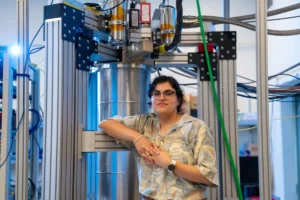
The first technology under investigation at HZDR is hydrodynamic cavitation, a process that utilizes extreme physical forces to rupture chemical bonds. Led by postdoctoral researcher Dr. Ysabel Huaccallo-Aguilar, the team began a preliminary study in 2022 to determine if the physical energy of "bursting bubbles" could degrade these stable molecules.
In this process, PFAS-enriched water is forced through a specifically designed constriction in a pipe. As the water passes through this narrow point, its velocity increases and its pressure drops, causing the formation of millions of microscopic vapor bubbles. This phenomenon is known as cavitation. When the water moves past the constriction into a wider section, the pressure rises again, causing these tiny bubbles to collapse violently.
"When the bubbles burst under the rising ambient pressure in the water downstream of the constriction, the PFAS that are attached to the bubbles are exposed to local temperature spikes of several thousand degrees Celsius," explains Dr. Sebastian Reinecke, head of the Department of Water and Environmental Technologies at HZDR.
This localized, extreme heat provides the activation energy necessary to snap the carbon-fluorine bonds. Furthermore, the process generates hydroxyl radicals—highly reactive molecules that act as secondary "chemical scissors," attacking the intermediate products of the PFAS breakdown. In initial experiments focusing on perfluorooctane sulfonate (PFOS), the team achieved a degradation rate of 37 percent. Crucially, analyses by the Helmholtz Centre for Environmental Research (UFZ) confirmed the release of fluoride ions, a process known as mineralization, which proves that the chemicals are being systematically destroyed rather than just trapped.
Cold Atmospheric Plasma: A High-Energy Chemical Attack
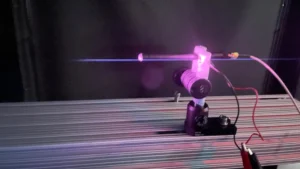
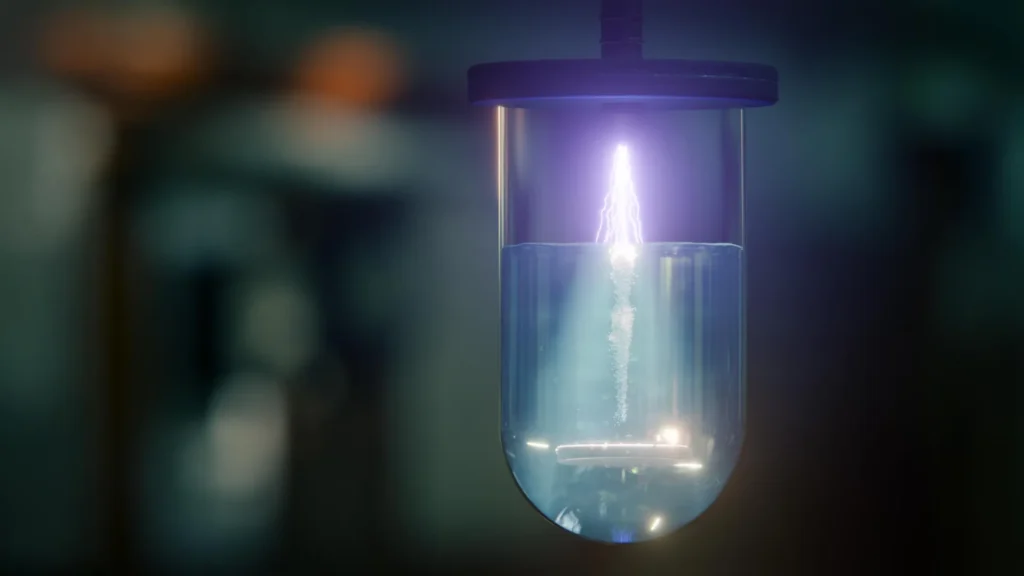
While cavitation relies on physical pressure changes, the second method—developed by environmental engineer Dr. Amit Kumar—uses the "fourth state of matter" to achieve degradation. Cold atmospheric plasma involves ionizing gas to create a highly reactive environment at room temperature and standard pressure.
In the HZDR experimental setup, plasma is generated at the water’s surface while gas is simultaneously bubbled through the contaminated liquid. Because PFAS molecules are hydrophobic (water-repelling) on one end, they naturally migrate to the surface of these gas bubbles. As the bubbles rise, they act as an elevator, transporting the PFAS directly to the plasma zone at the surface.
The results of the plasma treatment have been remarkable. The method has shown the ability to almost completely degrade both long-chain and short-chain PFAS, the latter of which are often even harder to remove via traditional methods like activated carbon. The plasma treatment achieved a 35 percent mineralization rate of fluorine atoms in a significantly shorter timeframe than cavitation.
However, the technology currently faces a trade-off between efficiency and resource consumption. "While this method has significantly faster reaction kinetics than cavitation, it also consumes far more energy per volume unit," Reinecke notes. Additionally, researchers are closely monitoring the formation of gaseous transformation products to ensure that the process does not trade water pollution for air pollution.
A Timeline of Development and Future Scaling
The research at HZDR follows a structured chronology aimed at moving from laboratory success to industrial application:
- 2022: Launch of the preliminary study on hydrodynamic cavitation led by Dr. Ysabel Huaccallo-Aguilar, focusing on PFOS degradation.
- 2023: Integration of cold atmospheric plasma experiments by Dr. Amit Kumar, demonstrating rapid kinetics for short-chain PFAS.
- 2024 (Current Phase): Scaling the reaction volume. The team is currently transitioning from 50-milliliter laboratory samples to a 5-liter system. This involves the use of multiple electrodes and advanced technical gas injectors to maintain consistency at a larger scale.
- Future Outlook: The long-term objective is a hybrid system that combines the energy efficiency of cavitation with the aggressive degradation power of plasma.
The researchers have set specific benchmarks for the next phase of development: achieving a degradation rate of over 80 percent for PFAS in solution and a mineralization rate of at least 50 percent for the bound fluorine.
Supporting Data and Comparative Analysis
The data gathered thus far highlights the distinct advantages of these "destructive" technologies over current "separation" technologies. Currently, most industrial sites use activated carbon or ion-exchange resins to "clean" water. While effective at removing PFAS from the water stream, these methods create a secondary waste problem: highly contaminated filters that must be landfilled or incinerated at extremely high temperatures (often exceeding 1,000°C), which is both costly and energy-intensive.
In contrast, the HZDR methods offer a path to "on-site mineralization."
- Cavitation Performance: 37% PFOS degradation with low energy input; high potential for integration into existing pumping infrastructure.
- Plasma Performance: Near 100% degradation of both long and short-chain PFAS; high energy input; requires further study of gaseous byproducts.
- Mineralization Evidence: UFZ analysis confirmed a steady increase in fluoride salts in the treated water, providing empirical proof that the C-F bonds are being broken.
Institutional and Regulatory Context
The development of these technologies is not occurring in a vacuum. It is a direct response to a shifting regulatory landscape in Europe and North America. The European Chemicals Agency (ECHA) is currently considering a proposal to restrict the use of all PFAS, which would be one of the largest chemical bans in the history of the European Union.
The research is funded through the Helmholtz Association’s Impulse and Networking Fund via the Clean Water Technology Lab (CLEWATEC). Additional financial support comes from the "HyKaPro SAB-EFRE" and "Plasma4PFAS SAB-EFRE" projects, which are co-financed by the European Union and the Saxon state budget. This level of institutional backing reflects the high priority German and European authorities have placed on water security.
Broader Implications for Global Water Security
If HZDR successfully integrates these two technologies, the impact could be transformative for several sectors. Industrial manufacturers, particularly those in the chemical, textile, and semiconductor industries, could install these systems to treat their wastewater "at the tap," ensuring that "forever chemicals" never reach the municipal sewer system.
Furthermore, these technologies offer hope for remediating "hotspots" such as airports and military bases where firefighting foams have heavily contaminated groundwater. By destroying the chemicals in situ, the environmental liability associated with PFAS could be significantly reduced.
"I believe we’ll achieve high degradation rates by combining the highly reactive species from the plasma with the effects of cavitation," says Dr. Reinecke. As the team moves toward larger-scale testing, the focus remains on creating a system that is not only scientifically effective but also economically viable for widespread industrial adoption. The battle against "forever chemicals" is far from over, but the work at HZDR suggests that the bonds that make these chemicals so durable may finally have met their match.