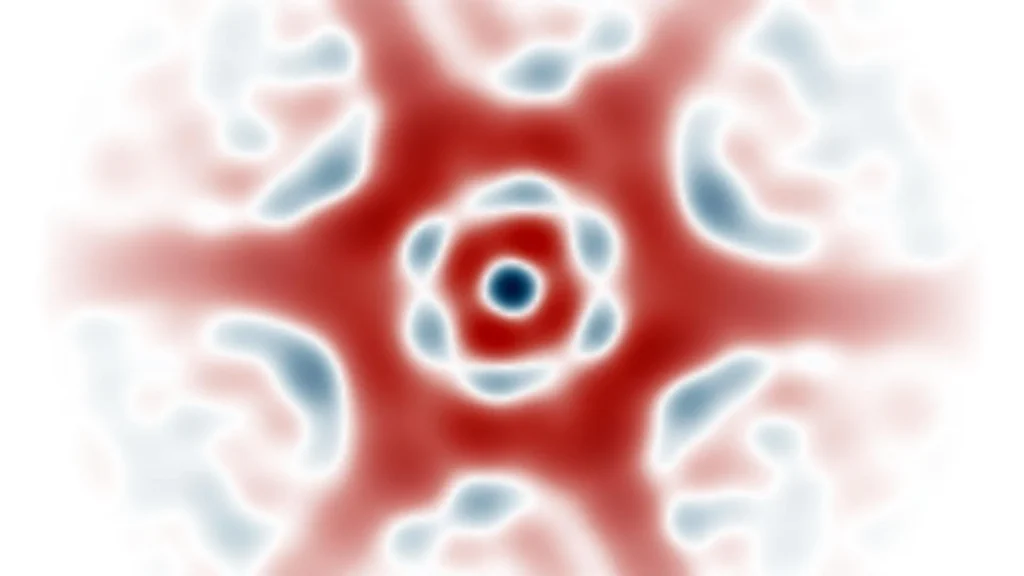
Researchers at the University of Oxford have achieved a significant breakthrough in quantum physics by creating an entirely new type of quantum superposition, a phenomenon famously associated with Erwin Schrödinger’s paradoxical cat thought experiment. Unlike previous demonstrations that often relied on components analogous to classical states, these newly demonstrated quantum states are constructed from highly nonclassical quantum building blocks. This pioneering work is poised to accelerate the development of quantum computing beyond traditional binary systems, enhance the precision of sensing technologies, and offer unprecedented insights into the foundational principles of quantum mechanics itself. The implications for both applied technology and theoretical understanding are profound, potentially ushering in a new era of quantum innovation.
Unveiling the Quantum Realm: Superposition and Schrödinger’s Cat
At the heart of quantum mechanics lies the counterintuitive principle that objects can exist in multiple states simultaneously—a concept known as superposition. This notion challenges classical intuition, where an object is definitively in one state or another. The most iconic illustration of superposition remains Schrödinger’s cat, a hypothetical feline enclosed in a box with a device that may or may not release poison, contingent on a quantum event. Until the box is opened and the cat observed, quantum theory dictates that the cat exists in a superposition of both "alive" and "dead" states concurrently. While a thought experiment designed to highlight the bizarre implications of quantum theory when scaled to macroscopic objects, it has profoundly influenced scientific discourse.
In the laboratory, scientists routinely create and manipulate real quantum superpositions. Particles such as atoms and photons, and even collective phenomena like light fields and mechanical vibrations, can be coerced into existing in multiple quantum states at once. The ability to precisely generate, control, and measure these ephemeral states is not merely an academic exercise; it is the cornerstone for developing transformative technologies such as quantum computers, which promise to solve problems intractable for even the most powerful classical machines, and ultra-precise clocks that redefine our understanding of time and navigation.
A widely understood example of superposition in action is the quantum bit, or qubit. Unlike a classical bit, which can only be in a state of 0 or 1, a qubit can exist in a combination of both 0 and 1 simultaneously. This inherent parallelism is what gives quantum computers their potential power. However, the quantum world is far richer than mere two-state behavior suggests. Researchers are continuously exploring systems that offer a broader spectrum of possibilities, aiming to harness more complex quantum phenomena.
Beyond Qubits: The Potential of Quantum Harmonic Oscillators
Quantum harmonic oscillators represent a particularly fertile ground for exploring these richer possibilities. These systems, which can occupy many discrete energy levels, serve as fundamental models across a vast range of physical phenomena. They describe everything from the quantized energy levels of light in a cavity to the vibrations of atoms in a crystal lattice and the precisely controlled motion of trapped particles. Scientists have extensively utilized quantum harmonic oscillators to engineer diverse kinds of quantum superpositions.
A well-known example of such a state is the "cat state," named in homage to Schrödinger’s thought experiment. In this scenario, a quantum harmonic oscillator exists as a superposition of two distinct "wave packets" moving in opposite directions in phase space. These wave packets, often referred to as "coherent states," are particularly significant because they represent the closest quantum analogue to classical motion. They exhibit minimal quantum uncertainty and behave in many ways like classical oscillating systems. The creation of these coherent-state cat states has been a major achievement in quantum optics and atomic physics, paving the way for advanced quantum experiments and initial explorations into quantum information processing using continuous variables.
A New Frontier: Building Quantum States from Nonclassical Components
The recent achievement by the Oxford team, detailed in their groundbreaking publication, marks a profound departure from these established methods. Rather than constructing cat-like states from coherent-state wave packets, which are quantum states with the most classical properties, the researchers developed an entirely new technique. Their innovation lies in combining a broad range of quantum components that are already highly nonclassical. This distinction is crucial; it means the fundamental building blocks of their superposition states inherently possess properties that cannot be explained by classical physics.
One prominent example of such nonclassical components used in this context is "squeezed states." In squeezed-state superpositions, the quantum uncertainty—a fundamental aspect of quantum mechanics described by Heisenberg’s uncertainty principle—is distributed unevenly across different variables or parts of the state. This "squeezing" allows for enhanced precision in one variable at the expense of another, a property that is impossible in classical physics and offers significant advantages for quantum sensing. By utilizing such intrinsically nonclassical elements, the Oxford team has opened up a new avenue for creating quantum states with unprecedented properties.
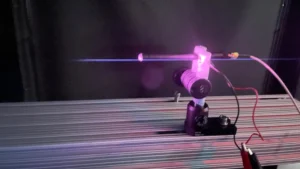
The experiment itself relied on the exquisite control offered by a single trapped ion. This platform is unique because it effectively combines two distinct quantum systems within one setup. The ion’s internal electronic state behaves like a conventional qubit, capable of existing in a superposition of two distinct energy levels. Simultaneously, the ion’s physical motion acts as a quantum harmonic oscillator, capable of occupying many different motional states. This hybrid nature makes trapped ions exceptionally versatile for generating complex quantum states that extend far beyond the binary limitations of conventional qubits. Indeed, trapped ion systems are at the forefront of quantum computing research due to their long coherence times and high-fidelity operations, making them ideal for exploring such fundamental quantum phenomena.
To generate these novel states, the researchers meticulously engineered specific interactions that entangled the ion’s internal qubit state with its various possible motional states. This entanglement—a deep quantum correlation where the state of one particle instantly influences the state of another, regardless of distance—was a critical step. Following this entanglement, they performed a precise mid-circuit quantum measurement on the internal state of the ion. This measurement, a hallmark of quantum mechanics, caused the ion’s motion to "collapse" into the desired superposition of these highly nonclassical components.
"This approach gave us a tool to sculpt the quantum superposition into almost any shape," explains lead author Dr. Sebastian Saner from the Department of Physics at the University of Oxford. This statement underscores the unprecedented level of control and flexibility achieved, hinting at a vast landscape of quantum states yet to be explored.
Programmable Control and Definitive Verification
The new methodology provided the Oxford team with an extraordinary degree of programmable control over the quantum states they produced. By precisely adjusting various experimental parameters, such as the timing and intensity of laser pulses, they could modify the relative size, orientation, and separation of the nonclassical components within the superposition. This unparalleled flexibility allowed them to create a wide variety of unusual motional quantum states, each with unique properties, all within the same trapped-ion system. This adaptability is crucial for both fundamental research and for tailoring quantum states for specific applications.
To confirm the successful creation of these exotic states, the researchers meticulously reconstructed them using advanced quantum state tomography techniques. Their measurements yielded clear and unequivocal evidence of genuine quantum superpositions. Specifically, they observed intricate interference patterns—a definitive signature of wave-like quantum behavior—and regions of "Wigner negativity." The Wigner function is a quasi-probability distribution used to represent quantum states in phase space. The presence of negativity in the Wigner function is a stringent criterion and a clear indication that a quantum state cannot be described by classical physics; it is a direct signature of nonclassicality. These observations unequivocally confirmed that the experiment had successfully produced genuine quantum superpositions composed of truly nonclassical motional states, moving beyond the classical-like coherent states previously employed.
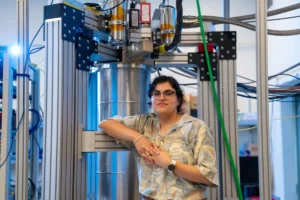
The team is now actively collaborating with theoretical physicists to delve deeper into the exact nature and extent of "quantumness" embodied by these newly created states. This collaborative effort aims to develop a more profound theoretical understanding that can guide future experimental explorations and potential applications. "We were really encouraged by our colleagues’ reaction when we showed them what we had made," says Dr. Raghavendra Srinivas from the Department of Physics at the University of Oxford, who supervised the work. "We believe we’re still scratching the surface of what’s possible, both for practical applications and for understanding these states at a more fundamental level." This sentiment encapsulates the excitement and vast potential that the quantum community sees in this breakthrough.
Broader Impact and Transformative Implications
The research conducted by the Oxford team carries significant implications across several domains, pointing towards future quantum technologies that harness the rich capabilities of quantum oscillators rather than solely relying on simple two-state quantum bits (qubits).
Advancing Quantum Computing: One of the most promising applications lies in quantum computing. The use of highly nonclassical components in these superpositions could lead to quantum states that are inherently more resistant to environmental noise and decoherence—a major challenge currently plaguing quantum computers. Furthermore, these types of states may support simpler and more effective error-correction strategies. Current quantum computers require complex and resource-intensive error correction protocols to mitigate errors caused by the fragility of quantum information. If these new nonclassical states offer improved intrinsic robustness or facilitate more efficient error correction, it could dramatically accelerate the path towards fault-tolerant quantum computers. Moreover, moving beyond qubits to systems that can encode information in multiple energy levels (known as "qudits" or continuous variable systems) could enable higher-dimensional quantum information processing, potentially allowing for more information to be stored and processed per physical unit. Leading quantum computing researchers envision a future where such advanced quantum states could unlock new computational paradigms, pushing the boundaries of what is possible.
Revolutionizing Quantum Sensing and Metrology: Beyond computing, the ability to create and precisely control highly nonclassical superpositions offers a new experimental platform for quantum sensing and metrology. Quantum sensors leverage quantum properties to achieve sensitivities far beyond classical limits. For instance, atomic clocks, which are already the most precise timekeepers, could be further improved. Gravimeters, magnetometers, and gyroscopes could achieve unprecedented levels of precision, enabling advancements in navigation, fundamental physics experiments, and medical diagnostics. The unique distribution of quantum uncertainty in squeezed states, for example, makes them ideal for sensing applications where noise reduction in a specific parameter is critical.
Probing Fundamental Physics: Perhaps most profoundly, this research provides a powerful new experimental platform for investigating one of physics’ biggest and most enduring questions: where the boundary lies between the classical world we experience and the underlying quantum reality that governs it. By creating macroscopic-like superpositions from intrinsically nonclassical components, scientists can explore the limits of quantum mechanics and the mechanisms by which quantum phenomena transition into classical behavior. This could lead to a deeper understanding of decoherence, the measurement problem, and even potentially uncover new physics beyond the Standard Model. Theoretical physicists are particularly keen on using these new states to test various interpretations of quantum mechanics and explore the fundamental nature of reality itself.
Timeline and Context: This Oxford breakthrough stands on the shoulders of decades of quantum research. From Max Planck’s introduction of energy quanta in 1900, Albert Einstein’s work on the photoelectric effect, and Niels Bohr’s atomic model, through to the development of quantum mechanics by Schrödinger, Heisenberg, and Dirac in the 1920s, the understanding of the quantum world has continuously evolved. The concept of superposition, formalized in these early years, found its most vivid illustration in Schrödinger’s 1935 thought experiment. Experimental demonstrations of superpositions in the lab began in earnest with atomic and photonic systems in the latter half of the 20th century. The first "cat states" in superconducting circuits and trapped ions emerged in the early 2000s, building superpositions from coherent (classical-like) states. The Oxford team’s innovation now takes this a critical step further, moving beyond these classical analogues to construct superpositions from fundamentally nonclassical building blocks, marking a new chapter in the quest to harness the full power of quantum mechanics.
In summary, the creation of these new, highly nonclassical quantum superpositions by Oxford researchers represents a pivotal moment in quantum science. It not only demonstrates a sophisticated new level of control over quantum matter but also opens up a wealth of opportunities for developing more robust quantum computers, more sensitive quantum sensors, and for deepening our understanding of the very fabric of the universe. The journey from Schrödinger’s hypothetical cat to engineered nonclassical superpositions is a testament to human ingenuity and the enduring allure of the quantum frontier.