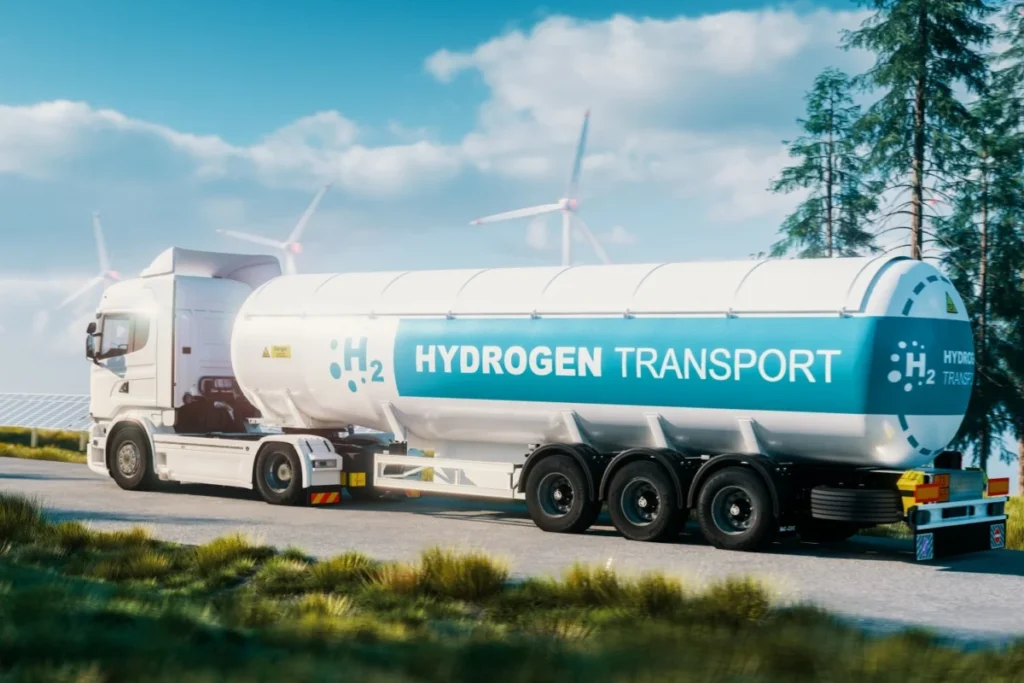
Many experts herald hydrogen as "the fuel of the future," envisioning its pivotal role in decarbonizing the global economy. Its potential lies in two primary applications: combustion or fuel cell utilization, both yielding storable energy with zero carbon emissions and water as the sole byproduct. Furthermore, hydrogen can serve as a crucial substitute for fossil fuels and as a chemical feedstock in industrial sectors notoriously difficult to decarbonize, such as steel and cement production. However, for hydrogen to truly fulfill this promise, two significant hurdles must be overcome. The first, the development of cost-effective and low-carbon methods for producing pure hydrogen, is the subject of intensive research worldwide. The second, equally critical yet less discussed, involves establishing efficient and economical means of transporting and storing this potent, yet challenging, energy carrier.
A team spearheaded by researchers at the MIT Energy Initiative (MITEI), in collaboration with ExxonMobil Technology and Engineering Co., has been diligently addressing this latter challenge. Their work acknowledges a fundamental logistical reality: the optimal locations for pure hydrogen production are likely to be geographically distant from the points of consumption. This necessitates robust and scalable transportation solutions, a task complicated by hydrogen’s unique properties. As the lightest gas known, hydrogen possesses a low energy density by volume. Consequently, delivering a significant amount of energy requires a substantial volume of the gas, necessitating exceptionally tight containment to prevent even the smallest molecules from escaping. This inherent characteristic makes transporting hydrogen considerably more complex than handling liquid fuels like gasoline. Without effective storage and transportation infrastructure, hydrogen’s aspiration to become the world’s primary clean fuel remains largely theoretical.
Recognizing this critical gap, the MITEI-led research team, bolstered by funding from ExxonMobil Technology and Engineering Co. in 2024, embarked on a comprehensive examination of various hydrogen transportation methodologies. Their extensive analysis has led to a significant conclusion: there is no universal "best" solution. The economic viability and carbon footprint associated with any given transportation method are intrinsically tied to the specific location and its associated factors. Instead of presenting a singular, prescriptive answer, the researchers have developed an innovative and adaptive tool designed to empower users to navigate the complex landscape of hydrogen transport options and select the most suitable approach for their unique use cases.
This groundbreaking study and the accompanying tool, aptly named the Hydrogen Carrier Analysis Tool (HyCAT), have been published in the esteemed journal Fuel. The research was co-led by former MITEI postdocs Gasim Ibrahim, now an R&D Engineer/Scientist at Honeywell, and Guiyan Zang, who transitioned from her role as MITEI Group Lead to become an Associate Professor at Washington State University. Additional contributions from other former MIT postdocs, including Bosong Lin, Jacqueline Garrido, Woojae Shin, and Haoxiang Lai, underscore the collaborative and multi-faceted nature of this endeavor.
The Hydrogen Transportation Conundrum and the Role of "Carriers"
The foundational premise of the MITEI team’s investigation was the necessity for hydrogen to be transported over long distances to achieve its global potential. This often implies intercontinental shipping, crossing vast oceans, or traversing large landmasses. Given the challenges of transporting gaseous hydrogen, converting it into a more manageable liquid form before shipment emerged as a logical starting point. However, the critical questions remained: what are the most effective methods for this conversion and subsequent transportation, what are the associated costs, and what is the environmental impact in terms of the delivered hydrogen’s carbon intensity?
"There hasn’t been a lot of attention paid to addressing those questions," remarked Dr. Gasim Ibrahim in an interview. He elaborated that while some studies have touched upon these issues, their conclusions often lack consistency, and significant uncertainties persist. These uncertainties stem from the inherent variability in costs and emissions from one locale to another, coupled with a relative paucity of data on the practicalities of large-scale hydrogen transportation.
"So we decided the best thing to do was to develop an adaptive tool that would enable users to perform their own assessments – a tool that could be updated very easily," Dr. Ibrahim explained. "And we would make it open source, so anyone can see and update the numbers that we used in formulating and testing it. As the industry develops, and as scale becomes more a factor, the assumptions made in [our initial] assessments of the economics and the carbon intensity [of different shipping methods] will need to be updated."
To maintain focus on the core transportation and storage challenges, HyCAT was specifically designed to operate within a defined boundary: it does not evaluate the methods of hydrogen production or its ultimate end-use. Instead, the tool meticulously quantifies the costs and greenhouse gas (GHG) emissions incurred during the transportation and delivery phases. While a comprehensive life-cycle assessment would encompass all environmental impacts, HyCAT’s current iteration prioritizes GHG emissions, a critical metric in the global climate change mitigation effort.
The user-friendliness of HyCAT was a key design objective. Dr. Ibrahim highlighted its intuitive interface, which features drop-down menus for inputting assumptions. The results of any analysis are presented in clear bar charts, with direct links to detailed tables for users who wish to delve deeper into the underlying data.
Dr. Ibrahim further clarified that while HyCAT operates with a well-defined scope – "incoming hydrogen to outgoing hydrogen" – users are empowered to incorporate site-specific factors. When analyzing a particular supply chain scenario, users can input variables related to the local context, including the carbon intensity and cost of producing the incoming hydrogen. "So that will inform the final values that come out of a HyCAT analysis," he stated, underscoring why the tool’s outputs naturally vary based on the user’s inputs and the specific geographical and economic conditions being modeled.
Based on the user-defined assumptions, HyCAT meticulously calculates the cost and GHG emissions across five key stages of the hydrogen supply chain:
- Hydrogen Carrier Production/Liquefaction: This stage accounts for the energy and emissions associated with converting hydrogen gas into a transportable liquid or a stable carrier compound.
- Carrier Transportation: This involves the cost and emissions related to moving the liquefied hydrogen or carrier compound via various modes of transport, such as ships, pipelines, or trucks.
- Carrier Storage: The energy expenditure and emissions associated with maintaining the integrity of the stored hydrogen or carrier at both the export and import terminals are factored in.
- Hydrogen Recovery/Re-gasification: This stage quantifies the energy and emissions required to convert the transported liquid hydrogen back into its gaseous form or to release it from its carrier compound at the destination.
- Local Distribution: While not the primary focus, HyCAT can incorporate estimated costs and emissions associated with the final leg of delivery to the end-user.
Exploring the Landscape of Hydrogen Liquefaction and Carriers
A pivotal decision point in any hydrogen transport plan revolves around how to transform gaseous hydrogen into a liquid state for efficient shipping, and subsequently, how to reclaim the pure hydrogen at its destination.
One direct approach involves the physical liquefaction of hydrogen gas. This process demands extreme cooling, a factor that significantly impacts energy consumption. Dr. Ibrahim noted, "you would need to consume about a third of the energy content of the hydrogen to make the gaseous hydrogen cold enough to liquify." Furthermore, maintaining the extremely low temperatures required to keep hydrogen in its liquid state during storage and transit presents a considerable challenge. Without highly efficient insulation, some of the liquefied hydrogen can re-gasify and escape, leading to potential losses. The primary advantage of this method is that it does not involve complex chemical reactions.
Alternatively, hydrogen can be transported using "carrier" compounds. These are liquid chemical substances capable of absorbing hydrogen atoms under specific conditions and releasing them under others. This method essentially uses a chemical intermediary to facilitate hydrogen transport. The process involves two key chemical reactions: one to bind the hydrogen to the carrier at the production site and another to release it upon arrival at the destination.
In their demonstration runs, the MITEI researchers evaluated three potential hydrogen carrier compounds, each possessing distinct advantages and disadvantages:
-
Toluene-based Carrier: This method involves adding hydrogen to toluene, a chemical compound derived primarily from the oil and gas industry. A known drawback of this approach is the relatively high carbon intensity of toluene itself, which contributes to the overall carbon footprint of the hydrogen transport. Additionally, some toluene can be lost over time, necessitating periodic replenishment. While the specific chemical reaction for hydrogen absorption into toluene has not been extensively studied for transport applications, its potential is being explored.
-
Synthetic Methane: This carrier is produced by reacting hydrogen with carbon dioxide (CO2). This well-established reaction has the added benefit of consuming CO2, a greenhouse gas, which can be captured from the atmosphere. However, a significant disadvantage of this process is that water is produced as a byproduct, leading to a loss of some hydrogen with each reaction cycle.
-
Ammonia: Formed by the reaction of hydrogen with nitrogen from the air, ammonia production is a mature and commercially utilized process. "We’ve been producing ammonia for a long time," stated Dr. Ibrahim. The existing infrastructure for ammonia transportation and storage is extensive and well-established, making it a potentially attractive option. Dr. Ibrahim referred to ammonia as "the most promising option" due to these factors, although he acknowledged that the reaction required to release the hydrogen from ammonia has not yet received extensive research attention for this specific application.
Divergent Conclusions and Forward-Looking Strategies
The initial simulations conducted using HyCAT revealed a crucial insight: the optimal transportation pathway is not a one-size-fits-all solution. The "best" carrier or liquefaction method is highly contingent upon the specific circumstances of the supply chain. "As we developed the tool, we saw that the ‘best’ carrier was very specific to the supply chain at hand," Dr. Ibrahim emphasized. "It’s a function of how far you’re trying to ship your hydrogen, energy and shipping costs at your exporting and importing countries, the capital cost of building the needed facilities at both ends, and more."
The economic factors include fluctuating global energy prices, the cost of capital for infrastructure development (such as liquefaction plants, specialized storage tanks, and transport vessels), and the operational costs associated with each stage of the supply chain. Similarly, the carbon emissions associated with each step are influenced by the energy sources used for production, liquefaction, and transportation, as well as the efficiency of the chemical processes involved in carrier-based systems.
Looking ahead, Dr. Ibrahim and his team are planning a follow-up study that will leverage HyCAT to analyze specific, real-world supply chain scenarios under defined conditions. This phase will involve identifying assumptions that carry a high degree of uncertainty and exploring the potential range of outcomes associated with those variables. "Then we’ll be able to say, ‘under these conditions, this carrier is better than that one,’ or ‘this carrier is better at cost, but worse at carbon intensity,’" Dr. Ibrahim elaborated. This will provide a more nuanced understanding of the trade-offs involved in different hydrogen transportation strategies.
For the present, the overarching conclusion of the current study, according to Dr. Ibrahim, is a deliberate call for caution against overgeneralization: "there’s no conclusion." He strongly advises decision-makers against assuming that findings from one context can be easily applied or extrapolated to their unique circumstances. Instead, he advocates for the active utilization of HyCAT as a tool for exploration. By engaging with the tool, understanding the variables, and analyzing the results, decision-makers can be guided by data-driven insights, aligning their choices with their specific objectives and corporate values. This tailored approach, the researchers contend, is the most effective pathway to optimizing hydrogen supply chains and ultimately realizing the widespread adoption of clean-burning hydrogen as a cornerstone of the global energy transition. The development of HyCAT represents a significant step forward in demystifying the complex logistics of hydrogen, providing a much-needed framework for informed decision-making in this rapidly evolving sector.