Researchers at Imperial College London have achieved a significant milestone in quantum sensing technology, demonstrating for the first time in a real-world setting that a crucial noise-cancellation technique can enable future quantum detectors to operate outside of idealized laboratory conditions. This prototype quantum sensor has shown that by comparing two long-baseline atom interferometers, the pervasive experimental noise can be effectively eliminated, allowing scientists to extract meaningful signals that would otherwise be completely obscured. This breakthrough, published in the esteemed journal Nature, represents a pivotal step towards developing next-generation instruments capable of detecting elusive gravitational waves from the early universe and potentially uncovering the mysterious nature of dark matter.
The Quantum Leap: Overcoming Noise in Precision Measurement
The core of this groundbreaking research lies in its ability to address one of the most formidable challenges in high-precision quantum sensing: background noise. Atom interferometers, highly sensitive instruments that leverage lasers to precisely track the motion of atoms, are designed to detect incredibly faint signals. These signals, however, are often dwarfed by inherent noise, particularly from the lasers themselves. The phase noise generated during the operation of these lasers is typically far stronger than the subtle quantum signals scientists aim to detect, rendering individual measurements effectively useless without an innovative solution.
The Imperial College London team, part of the UK-wide Atom Interferometer Observatory and Network (AION) collaboration, has successfully validated a long-proposed theoretical solution: comparing two interferometers to cancel out their shared noise. While this concept has been a foundational element in the design of future quantum detectors, its practical demonstration under realistic experimental conditions had remained elusive until now. This validation marks a critical advancement, transitioning a theoretical premise into an experimentally proven method.
Dr. Charles Baynham, co-lead of the Ultracold Strontium Laboratory at Imperial College London, underscored the profound implications of this achievement: "We’ve known for a long time that quantum sensors can help us understand the universe, but it’s only recently that it’s become possible to build them with the resolution needed. We’re immensely proud of our team’s efforts to make these sensors a reality — I can’t wait for the day when signals from an atom are telling us about a black hole that merged millions of years ago." This sentiment highlights the long-term vision for these technologies, extending from fundamental physics to cosmological observation.
The Mechanism: How Atom Interferometers Function
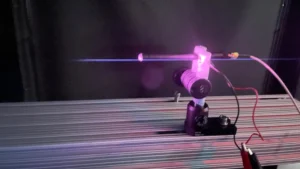
Atom interferometers operate on principles derived from quantum mechanics, specifically the wave-particle duality of matter. In these devices, clouds of ultracold atoms (in this case, strontium-87) are subjected to precisely tuned laser pulses. These pulses act as "beamsplitters," placing the atoms into a superposition of states where they effectively travel along two different paths simultaneously. After a period, another set of laser pulses "recombines" these atomic wave packets. The interference pattern created upon recombination is exquisitely sensitive to any tiny changes in the atoms’ environment or motion, allowing researchers to measure incredibly subtle effects.
The "long-baseline" aspect refers to the physical separation between the atom clouds, which enhances sensitivity to phenomena that might affect spacetime or fields across a distance. By comparing the behavior of two such atom clouds, located in different places but controlled by the same laser, researchers can look for minute differences that could indicate the presence of previously unseen phenomena, such as gravitational waves or a dark matter field. The challenge, as noted, has always been distinguishing these faint signals from the overwhelming laser phase noise.
The Experimental Setup: Mimicking Cosmic Conditions on a Tabletop
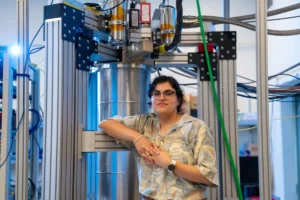
To rigorously test their noise-cancellation concept, the Imperial team constructed a sophisticated tabletop experimental system within the Ultracold Strontium Laboratory. This setup meticulously replicated the demanding conditions expected in future large-scale detectors, where environmental noise and the intrinsic challenges of controlling quantum systems become even more pronounced.
The experiment utilized two widely separated clouds of ultracold strontium-87 atoms, measured with a single ultrastable clock laser. To create an especially challenging test environment, the researchers intentionally injected large amounts of additional phase noise into the system, far exceeding the typical noise levels generated by conventional clock lasers. This deliberate augmentation was crucial for accurately mimicking the noisy operational environment anticipated in future long-baseline atom interferometers.
Under these intentionally adverse conditions, each individual interferometer, when analyzed in isolation, became effectively unusable. The subtle interference patterns, which are essential for extracting meaningful measurements, were completely buried beneath the deliberately amplified noise. However, when the scientists compared the data from the two interferometers, the underlying signal miraculously reappeared. This demonstrated that despite each individual measurement appearing random and incoherent, the inherent relationship between the two datasets allowed the system’s true behavior to be unveiled. The combined result achieved the fundamental limit imposed by quantum physics, providing robust confirmation that the noise-canceling approach functions precisely as intended.
To further validate their findings, the team then introduced an additional oscillating signal, specifically designed to emulate the effect of a passing gravitational wave or a dark matter field. Even in scenarios where neither interferometer on its own could produce any useful information, this simulated signal remained clearly detectable when the data from both systems were analyzed in tandem. This critical step solidified the potential of this technique for real-world astrophysical and particle physics searches.
The Broader Context: Unanswered Questions in Physics
The quest for a deeper understanding of the universe is fraught with profound unanswered questions, two of the most pressing being the nature of dark matter and the detection of gravitational waves from the earliest epochs of cosmic history.
Dark Matter: Despite overwhelming astrophysical evidence for its existence – from galactic rotation curves to gravitational lensing and the cosmic microwave background – dark matter remains an elusive enigma. It is estimated to constitute about 27% of the universe’s mass-energy content, yet it does not interact with light or other electromagnetic radiation, making it invisible to conventional telescopes. Candidates for dark matter include hypothetical particles like WIMPs (Weakly Interacting Massive Particles) or axions. Current experiments typically search for dark matter through direct detection (looking for interactions with ordinary matter), indirect detection (looking for annihilation products), or collider searches. Quantum sensors offer a novel approach, potentially detecting subtle interactions of dark matter fields with atoms, which could manifest as tiny changes in atomic motion or fundamental constants.
Gravitational Waves: Predicted by Albert Einstein’s theory of general relativity, gravitational waves are ripples in the fabric of spacetime, generated by the most cataclysmic events in the cosmos, such as the merger of black holes or neutron stars. Their direct detection by the LIGO (Laser Interferometer Gravitational-Wave Observatory) and Virgo collaborations in 2015 ushered in a new era of astronomy. However, current ground-based detectors are sensitive to gravitational waves in a specific frequency range (tens to thousands of Hertz), primarily from stellar-mass black hole binaries. To probe phenomena like the stochastic background of gravitational waves from the very early universe (a relic from the Big Bang or cosmic inflation) or those generated by supermassive black hole mergers, entirely new detectors operating at much lower frequencies (milliHertz to picoHertz) are required. Long-baseline atom interferometers offer the promise of accessing these previously inaccessible frequency bands, opening a unique window into the primordial universe.
Both of these ambitious goals hinge on the ability to detect incredibly faint signals that can easily vanish beneath background noise. Developing methods that can reliably separate these minuscule signals from overwhelming interference is absolutely essential if researchers hope to explore regions of the universe that remain beyond the reach of current instruments and theories.
AION and the Global Pursuit of Quantum Sensing
This research is not an isolated endeavor but forms a crucial part of the Atom Interferometer Observatory and Network (AION), a comprehensive UK-wide collaboration. Led by Imperial College London, AION brings together expertise from several leading universities, including Birmingham, Cambridge, Liverpool, King’s College London, and Oxford, alongside the STFC Rutherford Appleton Laboratory. The collaboration’s overarching mission is to develop next-generation quantum sensing technologies specifically tailored for fundamental physics research, from dark matter searches to gravitational wave astronomy.
The AION program is also deeply integrated into a broader international effort, fostering close collaboration with major projects like MAGIS (Matter-wave Atomic Gradiometer Interferometric Sensor) at Fermilab in the United States, as well as other US institutions. Together, these collaborations are driving the advancement of large-scale atom interferometers, pushing the boundaries of what is possible in fundamental physics research.
One particularly ambitious future project is the proposed Atom Interferometry CERN Experiment (AICE), which would apply similar quantum sensing techniques across vastly greater distances. If realized, AICE would represent a significant new direction for CERN, utilizing quantum sensing technologies to investigate fundamental physics on an unprecedented scale. It could potentially become one of the largest quantum experiments ever constructed, spanning kilometers and offering unparalleled sensitivity.
Dr. Richard Hobson, also co-lead of the Ultracold Strontium Laboratory at Imperial, articulated the expansive vision: "We have taken some of the most precise instruments ever built – atomic clocks and atom interferometers – and shown that they can be repurposed to open entirely new windows onto the invisible parts of our Universe. Our current experiment is just a prototype, but scaling it to a full-scale facility at laboratories such as CERN or Fermilab will allow us to tackle some of the deepest mysteries in physics, including the nature of dark matter."
Implications and Future Outlook
The experimental confirmation of this central principle behind long-baseline atom interferometers addresses one of the most significant developmental challenges facing these complex instruments. By proving that noise cancellation works effectively under realistic conditions, the Imperial team has significantly de-risked future large-scale projects, accelerating the timeline for their potential deployment.
This breakthrough has profound implications for several fields:
- Cosmology: Enabling the detection of primordial gravitational waves could provide direct evidence for cosmic inflation, a theoretical period of rapid expansion in the early universe, and shed light on the universe’s fundamental origins.
- Particle Physics: The ability to detect incredibly faint interactions could open new avenues for searching for dark matter particles or fields, potentially revealing new fundamental forces beyond the Standard Model.
- Quantum Technology: This research pushes the boundaries of quantum coherence and control, contributing to the broader development of quantum computing, communication, and other sensing applications.
Professor Oliver Buchmueller, Principal Investigator of the AION collaboration at Imperial, emphasized the global significance: "This work marks an important milestone towards future large-scale quantum sensors for fundamental physics. It demonstrates, under realistic experimental conditions, a key technique relevant for next-generation atom interferometer facilities currently under development internationally, including MAGIS at Fermilab and the proposed AICE facility at CERN."
Imperial researchers continue to refine their plans for even larger systems as part of this concerted global effort to construct a new generation of quantum sensors. In the future, these advanced detectors promise to explore gravitational-wave frequencies that are currently entirely inaccessible and to search for entirely new forms of matter, thereby providing a fresh and unprecedented way to study the cosmos and uncover its deepest secrets. The path from a tabletop experiment to a kilometer-scale observatory is long, but this pivotal demonstration has brought that ambitious future significantly closer.
The AION collaboration is strategically supported by the Quantum Technologies for Fundamental Physics (QTFP) program, a joint initiative by the Science and Technology Facilities Council (STFC) and the Engineering and Physical Sciences Research Council (EPSRC), underscoring the UK’s commitment to advancing frontier research in quantum science.