Researchers in the United States, spearheaded by a pioneering team at the U.S. Department of Energy’s (DOE) Argonne National Laboratory, have successfully developed a groundbreaking new material that promises to produce hydrogen peroxide (H2O2) with unprecedented efficiency and sustainability. This novel composite, marrying inorganic semiconductor properties with sophisticated biological components, represents a significant leap forward in green chemistry, leveraging ambient conditions and abundant natural resources to generate a chemical vital across a multitude of industrial and domestic applications. The discovery, detailed in the Journal of the American Chemical Society, underscores the transformative potential of nanoarchitectonics in addressing critical challenges in chemical manufacturing and environmental sustainability.
Hydrogen peroxide stands as a cornerstone chemical in modern society, widely recognized for its potent oxidizing properties. From its ubiquitous presence in medicine cabinets as an antiseptic to its indispensable role in large-scale industrial processes, H2O2 serves myriad functions. It is a powerful disinfectant, employed extensively in healthcare, food processing, and water treatment to sanitize surfaces and sterilize equipment. In the manufacturing sector, it acts as a primary bleaching agent for textiles and pulp in the paper industry, contributing to the production of countless consumer goods. Furthermore, its whitening capabilities are harnessed in oral care products and hair dyes, while in specialized applications, it finds use as an oxidizer in rocket propulsion and a reagent in various chemical syntheses. The global demand for hydrogen peroxide is substantial and continually growing, driven by expanding industrial applications and increasing awareness of hygiene and environmental concerns. However, the conventional methods for its production are often energy-intensive and environmentally taxing, highlighting an urgent need for more sustainable alternatives.
The Energy-Intensive Legacy of Hydrogen Peroxide Production
For decades, the dominant industrial method for producing hydrogen peroxide has been the anthraquinone auto-oxidation process (also known as the Riedl-Pfleiderer process). This multi-step chemical synthesis involves the catalytic hydrogenation of an anthraquinone derivative, typically 2-ethylanthraquinone, to its corresponding hydroanthraquinone, followed by oxidation with air to regenerate the anthraquinone and produce hydrogen peroxide. While effective, this process is characterized by several significant drawbacks. It requires high energy inputs for various reaction steps, including hydrogenation and solvent recovery, contributing to a substantial carbon footprint. Moreover, it necessitates the use of organic solvents, which pose environmental and safety concerns related to their handling, recovery, and potential emissions. The complexity of the process, involving multiple reactors and separation units, also adds to operational costs and logistical challenges. Consequently, the conventional production of hydrogen peroxide is not only resource-intensive but also centralized, making on-demand, localized production impractical and uneconomical. The pursuit of alternative, greener pathways for H2O2 synthesis has thus become a critical area of research, aiming to reduce energy consumption, minimize waste generation, and enable more decentralized and sustainable manufacturing.
Nanoarchitectonics: Engineering at the Atomic Scale
The breakthrough at Argonne National Laboratory hinges on a cutting-edge technological approach known as nanoarchitectonics. This discipline involves the precise assembly of nanoscale building blocks into functional architectures, often drawing profound inspiration from the intricate designs found in living systems. As articulated by Jinhyeong Jang, an Argonne postdoctoral appointee and a key contributor to the research, "Nanoarchitectonics is on par with artificial intelligence and quantum information science as one of the most important technologies of the 21st century." This bold statement underscores the profound impact this field is expected to have across scientific and technological frontiers, promising to unlock capabilities previously deemed impossible. Jang further elaborated on the practical implications of their work, stating, "Our work demonstrates that we can use it to tune living systems for functional purposes." This ability to precisely manipulate and integrate biological components at the nanoscale is central to the innovative material’s success.
Nanoarchitectonics allows scientists to design materials with tailored properties and functions by controlling their structure and composition at the atomic and molecular levels. Unlike traditional material synthesis, which often relies on bulk properties, nanoarchitectonics focuses on the emergent properties that arise from specific nanoscale arrangements. This biomimetic approach, drawing lessons from how nature constructs complex, highly efficient systems, offers unprecedented control over material behavior. In the context of the Argonne research, it enabled the creation of a hybrid system where two vastly different materials—one synthetic inorganic and one naturally occurring biological—could be seamlessly integrated to work in concert, achieving a synergistic effect far greater than their individual contributions. The precision offered by nanoarchitectonics is crucial for optimizing the interface between these components, facilitating efficient energy transfer and chemical reactions under mild conditions.
The Hybrid Heart: Bismuth Oxychloride Meets Purple Membrane
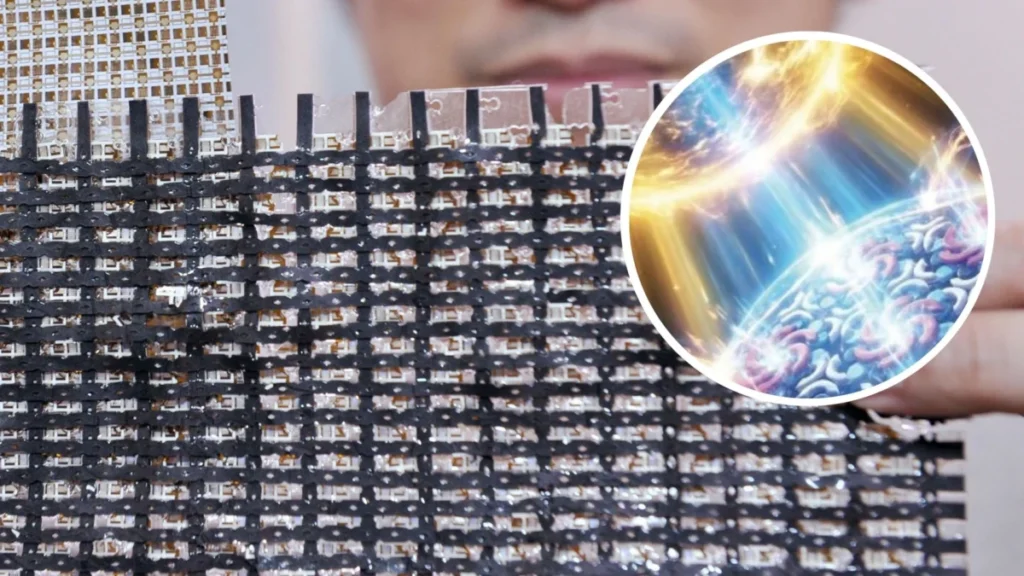
The core of this revolutionary system is a hybrid material composed of layered nanosheets, astonishingly thin at approximately 200 nanometers – roughly 500 times thinner than a human hair. These ultra-thin layers form a sophisticated composite system, carefully engineered through nanoarchitectonics. One key component is bismuth oxychloride (BiOCl), a synthetic semiconducting material known for its unique layered structure and photocatalytic properties. Bismuth oxychloride is a promising semiconductor due to its relatively narrow bandgap, which allows it to absorb light, and its excellent stability.
The second, equally vital component is a purple membrane (PM), derived from salt-loving microorganisms called archaea. The purple membrane is a naturally occurring, light-absorbing biological material containing bacteriorhodopsin, a proton pump that uses light energy to transport protons across the cell membrane. In essence, the purple membrane acts as a highly efficient biological solar panel, adept at capturing light energy and converting it into electrochemical potential. When light illuminates the hybrid material, the purple membrane efficiently absorbs photons, harnessing this energy to drive the movement of protons and electrons. This directed flow of charge carriers occurs precisely at the interface between the purple membrane patches and the bismuth oxychloride nanosheets. This intricate interplay is crucial; the light-driven charge separation in the purple membrane effectively "powers" the semiconductor, enabling it to catalyze the conversion of oxygen from the air and water into hydrogen peroxide. The synergistic integration of these two components results in a dramatic enhancement of the photocatalytic efficiency. The researchers reported that this hybrid material produced over five times more hydrogen peroxide than the bismuth oxychloride semiconductor alone, unequivocally demonstrating the superior performance achieved through this bio-inspired nanoarchitectonic design.
A Sustainable Chemistry Paradigm: Ambient Conditions and Abundant Resources
One of the most compelling aspects of this new production method is its inherent sustainability and operational simplicity. Elena Rozhkova, a scientist at the Center for Nanoscale Materials (CNM), a DOE Office of Science user facility at Argonne, emphasized these advantages: "Our system operates at ambient conditions and uses only inexpensive, abundant materials." This stands in stark contrast to conventional industrial processes, which typically demand high temperatures, pressures, and specialized catalysts, all contributing to significant energy consumption and operational complexity. Rozhkova elaborated on the transformative potential, stating, "If we were to do the same reaction industrially, it would require high energy input and more complex catalytic systems. Our approach shows how carefully designed nano-bio interfaces can direct chemical reactions under mild conditions."
The ability to perform the reaction under ambient conditions—room temperature and atmospheric pressure—drastically reduces the energy footprint and the need for expensive, robust infrastructure. Furthermore, the reliance on readily available and inexpensive materials, such as bismuth, oxygen from air, and water, contributes significantly to the economic viability and scalability of the process. This eliminates dependence on costly or rare earth catalysts, mitigating supply chain risks and reducing overall production costs. The process efficiently converts dioxygen into hydrogen peroxide through a two-electron and two-proton transfer mechanism, a highly selective and clean reaction pathway. Remarkably, the research also revealed that this innovative system could simultaneously convert ethylene glycol into other value-added chemicals, presenting an exciting opportunity for multi-product synthesis and enhanced economic returns from a single, sustainable platform. This dual functionality underscores the versatility and potential of nanoarchitectonically designed hybrid catalysts in future chemical industries.
Broader Impact and Implications: Reshaping Industrial Chemistry
The development of this hybrid material for efficient hydrogen peroxide production carries profound implications across multiple sectors, promising to reshape industrial chemistry and foster a more sustainable future.
- Environmental Benefits: The most immediate impact is the significant reduction in the environmental footprint of H2O2 production. By eliminating the need for high energy inputs and harsh chemicals associated with the anthraquinone process, the new method dramatically lowers carbon emissions and minimizes waste generation. This aligns perfectly with global efforts to transition towards green chemistry principles and sustainable manufacturing practices, offering a cleaner pathway for a crucial industrial chemical.
- Economic Advantages: Operating at ambient conditions with inexpensive, abundant materials translates directly into substantial cost savings. Reduced energy consumption, lower capital expenditure for equipment (e.g., no need for high-pressure reactors), and cheaper raw materials can make hydrogen peroxide more accessible and affordable, particularly in regions where energy costs are high or infrastructure is limited. This could democratize H2O2 production.
- Decentralized Production: The mild operating conditions and simple inputs open the door for localized, on-demand hydrogen peroxide production. Instead of manufacturing H2O2 in large, centralized plants and transporting it, often requiring specialized and hazardous handling, smaller, distributed units could produce it directly at the point of use. This would reduce transportation costs, enhance safety by minimizing the storage of large quantities of concentrated H2O2, and provide greater flexibility for various industries. Imagine hospitals, remote communities, or small-scale industrial operations producing their own H2O2 for sanitation or processing needs.
- Impact on Key Industries:
- Pulp and Paper: As a primary bleaching agent, a cheaper, greener H2O2 supply would further accelerate the shift away from chlorine-based bleaching, enhancing environmental compliance and reducing toxic byproducts.
- Textiles: Similar benefits apply to textile bleaching, allowing for more sustainable dyeing and finishing processes.
- Water and Wastewater Treatment: H2O2 is an effective oxidant for treating contaminated water. Easier access to it could improve water quality management, especially in regions facing water scarcity and pollution challenges.
- Healthcare and Food Industry: Enhanced availability of sustainably produced H2O2 would bolster sterilization and disinfection practices, contributing to improved public health and food safety.
- Chemical Synthesis: The dual ability to convert ethylene glycol simultaneously into other value-added chemicals highlights its potential as a versatile platform for sustainable chemical synthesis, opening new avenues for circular economy models.
- Advancement in Materials Science and Photocatalysis: Beyond hydrogen peroxide, this research validates the immense potential of nanoarchitectonics and bio-inspired materials in catalysis and artificial photosynthesis. It demonstrates a successful strategy for integrating biological light-harvesting systems with inorganic semiconductors, paving the way for developing other highly efficient, sustainable catalytic systems for a wide range of chemical transformations. This study presents a nanoarchitectonic approach that leverages the photogenerated charge-carrier dynamics of archaeal subcellular fractions to effectively modulate the optoelectronic and catalytic capacity limitations inherent in traditional semiconductors.
The Path Forward: Scaling and Optimization
While the Argonne team’s discovery marks a monumental step, the journey from laboratory breakthrough to widespread industrial adoption involves navigating several challenges and future directions.
- Scalability: The most immediate challenge lies in scaling up the production of this hybrid material and the H2O2 synthesis process from laboratory bench scale to industrial quantities. This involves developing cost-effective methods for mass-producing the layered nanosheets and the archaea-derived purple membrane patches while maintaining their precise nanoscale architecture and catalytic efficiency.
- Long-Term Stability and Durability: For industrial applications, the hybrid material must demonstrate long-term stability and durability under continuous operation. Factors such as photostability, resistance to fouling, and mechanical integrity over extended periods need rigorous evaluation and optimization.
- Economic Viability: While the system uses inexpensive materials and operates under mild conditions, a comprehensive techno-economic analysis is crucial to compare its overall cost-effectiveness against established industrial methods, accounting for all inputs, outputs, and potential byproducts.
- Efficiency Optimization: Although a five-fold increase in H2O2 production is significant, continuous research will aim to further optimize the material’s composition, architecture, and reaction conditions to maximize H2O2 yield and selectivity. This could involve exploring different types of semiconductors, modifying the biological components, or fine-tuning the interface between them.
- Broader Applications of Nano-Bio Interfaces: The success of this platform encourages exploration into other chemical reactions that could benefit from similar nano-bio hybrid catalytic systems. The principles learned from this research could be applied to develop new catalysts for fuel production, carbon dioxide reduction, or the synthesis of other high-value chemicals.
In conclusion, the development of this innovative hybrid material by the Argonne National Laboratory team represents a pivotal moment in sustainable chemistry. By ingeniously combining the precision of nanoarchitectonics with the efficiency of biological light harvesting and the catalytic power of inorganic semiconductors, they have forged a pathway to produce hydrogen peroxide more efficiently, economically, and environmentally responsibly. This breakthrough not only promises to revolutionize the production of a vital industrial chemical but also serves as a powerful testament to the potential of bio-inspired materials science in engineering a greener, more sustainable future for chemical manufacturing worldwide. As research progresses from fundamental discovery to practical implementation, the world stands on the cusp of a paradigm shift in how essential chemicals are produced, driven by the ingenuity at the intersection of nanotechnology and biology.