In the quiet suburbs of Edina, Minnesota, a fifth-grade classroom is challenging the traditional silence of the school day. Inside Allison Knoph’s room at the height of autumn, the creative writing station is frequently the most boisterous area in the building. Rather than hushed scribbling, the air is filled with the sound of laughter, collaborative problem-solving, and the digital pings of students testing their own interactive stories. This atmosphere is not a lapse in discipline but a calculated pedagogical strategy. Knoph utilizes "Experience CS," a specialized computer science curriculum, to transform creative writing from a solitary act of pen and paper into a dynamic exercise in logic, sequencing, and digital expression. By integrating coding into the core humanities, Knoph is part of a growing movement of educators attempting to solve a systemic deficit in computer science education within the state of Minnesota.
The Experience CS program, developed by the Raspberry Pi Foundation, is designed for students between the ages of 8 and 14. Unlike traditional computer science courses that often exist as standalone electives, this curriculum is built to be "standards-aligned," meaning it weaves computational tasks directly into existing subjects such as mathematics, science, and English Language Arts (ELA). For Knoph’s students, this means that their creative writing requirements are met through the construction of digital narratives where they build characters, script dialogue, and program jokes. The result is a high-engagement environment where the "giggling" of ten-year-olds serves as an audible indicator of successful logic testing and narrative delivery.
A Chronology of Curricular Integration
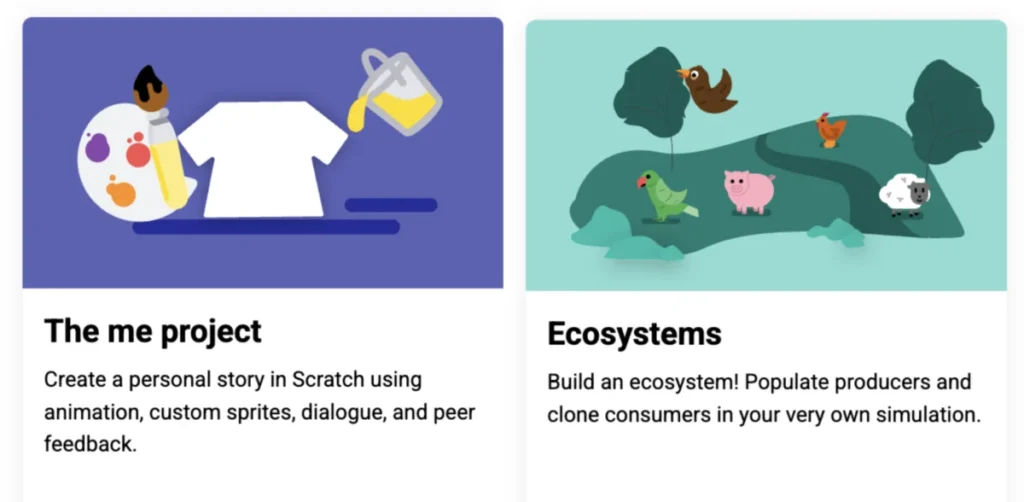
Knoph’s implementation of computer science begins every October, a timing she describes as essential for setting the classroom culture for the remainder of the academic year. The process typically follows a structured progression through specific units tailored to different developmental stages and subject matters. Over the past several years, Knoph has focused on two primary modules: "The Me Project" and "Ecosystems."
"The Me Project," designed for the 9-to-10-year-old demographic, serves as the entry point. This unit focuses heavily on storywriting and personal expression, mapping directly onto the language arts benchmarks required for fifth graders. During this phase, students are given a framework that acts as a set of narrative signposts. However, the internal complexity of the projects is left to student discretion. The chronology of the unit shows a wide spectrum of engagement: while some students complete the basic requirements and move on, others spend upwards of three weeks iterating on their work. These advanced students often build multi-scene epics complete with custom sound effects and complex branching paths, effectively engaging in the same revision process required in traditional writing, but through the lens of debugging code.
Following the success of the narrative unit, Knoph introduces the "Ecosystems" module, which is technically designed for a slightly older age group (12-to-13-year-olds). This unit shifts the focus from humanities to the life sciences, requiring students to model biological interactions through code. While Knoph notes that this unit presents a steeper learning curve, the chronological placement after "The Me Project" allows students to apply the logic skills they have already mastered. The students who thrive in this more challenging phase are often those who have developed a "gung-ho" attitude toward the technology, viewing the complexity as a puzzle to be solved rather than a barrier to be avoided.
Supporting Data: The Minnesota Landscape
The urgency behind Knoph’s work is underscored by sobering statistics regarding computer science access in the North Star State. According to the most recent "State of Computer Science Education" report, Minnesota ranks near the bottom of the United States in terms of student access to foundational computer science courses. Only 34 percent of Minnesota’s public high schools offer a foundational computer science course, a figure that pales in comparison to the national average of 60 percent.
This disparity creates a "leaky pipeline" where students may reach higher education or the workforce without ever having encountered the logic systems that govern the modern world. For teachers like Knoph, the data suggests that waiting until high school to introduce these concepts is a losing strategy. If only a third of high schools provide the opportunity, the responsibility for foundational literacy falls on elementary and middle school educators. By embedding these skills in fifth grade, Knoph ensures that her students have a baseline level of "computational thinking" regardless of what their future high schools may or may not offer.
The Pedagogy of Peer Support
One of the most significant observations from Knoph’s classroom involves the shift in social and academic hierarchies when technology is introduced. In a traditional academic setting, students who struggle with reading or conventional testing often find themselves marginalized. However, the logic of computer programming frequently resonates with different cognitive profiles.
Knoph recalls instances where students who faced significant difficulties with reading comprehension were the first to grasp the sequencing required for a complex program. Within a week of starting the Experience CS units, these students often become the "class experts." A peer-support model emerges organically; rather than the teacher being the sole source of knowledge, a line of students forms at the desks of those who have mastered a specific coding function.
This model fosters a "we can figure it out" mentality. Knoph notes that the resilience developed while debugging a computer program—where failure is a constant but fixable part of the process—transfers into other subjects. When a student encounters a difficult math problem or a complex writing prompt later in the year, they are more likely to apply the same iterative logic they used in October to find a solution.
Critical Analysis: Coding in the Age of Generative AI
The integration of computer science in 2024 and beyond faces a new challenge: the rise of Artificial Intelligence. With the advent of Large Language Models (LLMs) that can generate code in seconds, some critics argue that teaching children to write code is becoming obsolete. However, the Raspberry Pi Foundation and educators like Knoph argue the opposite. In a position paper on the importance of coding in the AI era, the Foundation asserts that while AI can generate code, it lacks the ability to understand context, ethics, or specific debugging needs.
Knoph illustrates this through an example from her son’s robotics team. The students were divided into two camps: those who understood the underlying code and those who simply "dropped in" code generated by external tools. When the robot inevitably behaved unexpectedly during a competition, the students who understood the syntax could diagnose the error and adapt the code. The students who relied on generated code were helpless because they lacked the "comprehension" required to fix what they had not built.
This distinction is the core of Knoph’s argument for computational thinking. It is not about training every child to be a professional software engineer; it is about literacy. In a world where AI-generated content is becoming ubiquitous, the ability to read, judge, and modify code is a vital skill for maintaining human agency over technology.
Overcoming Institutional Barriers
Despite the clear benefits, the barrier to entry for many elementary teachers remains high. Educators frequently cite three primary obstacles: lack of time in an already packed curriculum, the high cost of specialized software or hardware, and "technophobia"—the fear of being asked a question by a student that they cannot answer.
The Experience CS model addresses these barriers by being a "low-floor, high-ceiling" resource. It is free for schools, reducing the financial burden on districts. Because it is designed for "little direct instruction," the teacher acts more as a facilitator than a lecturer, which mitigates the fear of not having all the answers. Furthermore, because the lessons are standards-aligned, teachers do not have to "find time" for computer science; they simply change the medium through which they teach existing math, science, and ELA standards.
Broader Implications and Conclusion
The success of the program in Edina serves as a blueprint for how Minnesota—and other states with low CS engagement—might begin to climb the national rankings. By removing the "Computer Science" label and instead treating it as a foundational tool for creative expression and scientific inquiry, schools can democratize access to these critical skills.
As the school year progresses in Edina, the "we can figure it out" mantra remains the defining characteristic of Knoph’s classroom. The loud, giggling creative writing station of October evolves into a focused, resilient cohort of students by spring. In the broader context of American education, the lesson from this fifth-grade room is clear: the digital divide is not just about who has a computer, but about who is taught to understand the language the computer speaks. For Allison Knoph and her students, the loudest place in the room is where the most significant learning is happening—one line of code, and one joke, at a time.