Custom Machine & Tool Co. (CMT), a prominent U.S. manufacturer specializing in power transmission and motion control components, has unveiled an advanced interactive 3D catalog designed to streamline the specification and procurement processes for its Concentric Maxi Torque keyless bushings and precision timing pulleys. This new digital resource, developed in collaboration with eCATALOG 3Dfindit by CADENAS, represents a significant leap forward in providing design engineers, product developers, and procurement teams with immediate access to crucial 3D CAD and engineering data, facilitating real-time product configuration and accelerating design cycles. The catalog is engineered to support over 100 native and neutral CAD formats, making it a versatile tool for a broad spectrum of engineering environments.
Revolutionizing Component Specification with Digital Access
The core benefit of CMT’s new interactive 3D catalog lies in its ability to empower engineers to configure and download precise 3D CAD models of standard stock sizes directly from the company’s website. This eliminates the traditional bottlenecks associated with component sourcing, such as waiting for custom files or navigating through lengthy communication channels. Engineers can now specify the exact part needed and acquire its corresponding digital model in mere seconds, thereby dramatically expediting the design of machine axes and other complex mechanical systems. This instantaneous access to high-fidelity product data is paramount in today’s fast-paced engineering landscape, where speed to market and design accuracy are critical differentiators.
The integration of eCATALOG 3Dfindit by CADENAS underscores a broader industry trend towards digitalization and the adoption of "digital twins" in product development. CADENAS, a global leader in providing digital parts catalogs and engineering data, brings its robust platform to CMT, ensuring that the catalog is not only user-friendly but also highly compatible with diverse CAD software ecosystems. This compatibility includes major platforms such as Siemens NX, Solid Edge, SOLIDWORKS, Dassault Systèmes Catia, PTC Creo, Autodesk Inventor, and many others, reflecting an understanding of the fragmented software landscape in modern engineering firms. By offering data in such a wide array of formats, CMT ensures that its components can be seamlessly integrated into virtually any existing design workflow without conversion issues or data loss.
The Concentric Maxi Torque System: Precision and Performance
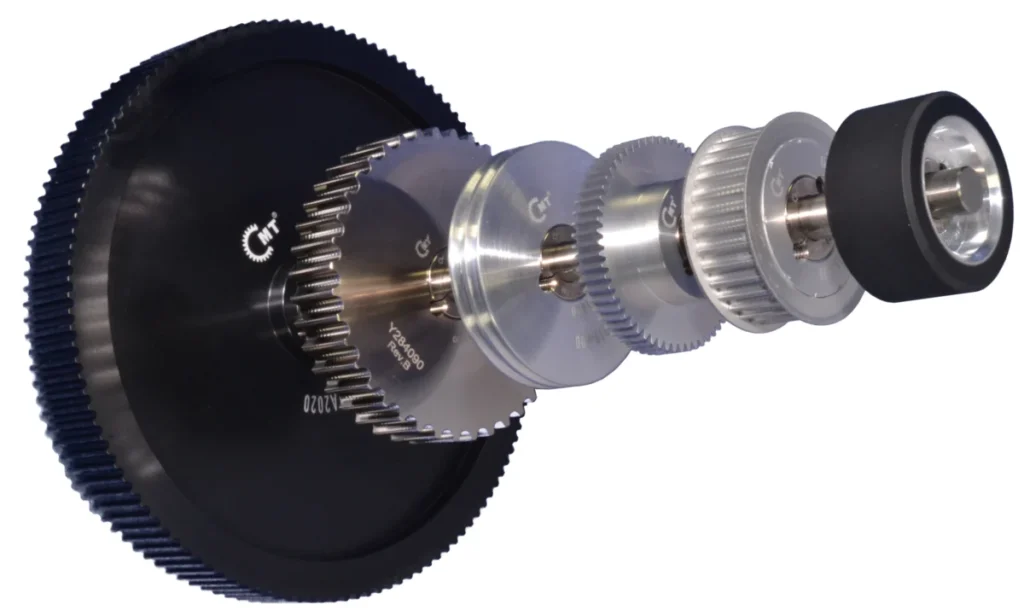
Central to the new catalog is CMT’s innovative Concentric Maxi Torque system. This proprietary technology offers a keyless hub-to-shaft connection method, designed for mounting pulleys, gears, and various other rotating components with unparalleled precision and ease. Unlike traditional keyed connections, which can introduce backlash and require complex alignment routines, the Concentric Maxi Torque system ensures a secure, concentric fit that minimizes runout and enhances overall system performance. Its fully reversible design further broadens its applicability, making it equally suitable for applications involving bidirectional motion, a common requirement in many advanced automation and robotics systems.
The significance of this technology has been recognized within the industry, with publications like Design World highlighting its particular utility in demanding applications. Specifically, the system proves invaluable on machine axes characterized by extreme compactness or those that are inherently difficult or impractical to service. A prime example includes axes driven by stepper motors paired with belt drives, where space constraints and the need for long-term reliability are paramount. In such scenarios, the Concentric Maxi Torque system maintains a consistently secure connection, negating the need for frequent adjustments and proactively preventing eventual misalignment or shaft damage that could otherwise lead to costly downtime and reduced operational efficiency. This robustness is a critical factor for industries where uninterrupted operation is non-negotiable, such as semiconductor manufacturing, medical device production, and high-speed packaging.

Chronology of Digitalization in Mechanical Engineering
The journey towards interactive 3D catalogs and digital component specification has been a gradual but transformative one within mechanical engineering. For decades, engineers relied heavily on bulky printed catalogs, often requiring manual transcription of dimensions and specifications into their drawings. The advent of Computer-Aided Design (CAD) in the latter half of the 20th century marked the first major shift, allowing designs to move from drafting boards to digital screens. However, component sourcing remained largely analogue, involving phone calls to manufacturers, faxes, or mailing physical drawings for custom quotes.
The late 1990s and early 2000s saw the emergence of rudimentary online catalogs, often featuring static 2D drawings or simple data sheets. While an improvement, these still lacked the interactivity and direct CAD integration that engineers truly needed. The mid-2000s brought specialized software tools for part configuration, but these were often proprietary or limited in their output formats. The true inflection point arrived with the widespread adoption of web-based platforms and standardized data exchange formats, coupled with advancements in 3D modeling and rendering capabilities. Companies like CADENAS began to build comprehensive digital part libraries, offering not just static models but configurable components that could be downloaded in a multitude of native CAD formats. This evolution culminated in the modern interactive 3D catalog, such as CMT’s new offering, which represents the pinnacle of digital accessibility and configurability, aligning perfectly with the principles of Industry 4.0 and smart manufacturing. This progression underscores a consistent drive towards greater efficiency, accuracy, and interoperability in the engineering design process.
Implications for Design Engineers and Procurement Teams
The introduction of CMT’s interactive 3D catalog carries profound implications across the engineering and manufacturing ecosystem:
- Enhanced Design Efficiency: By providing immediate access to configurable 3D models, the catalog drastically reduces the time engineers spend searching for, creating, or converting component data. This allows them to allocate more time to innovation, optimization, and core design challenges, rather than tedious data management. The ability to "design machine axes faster" translates directly into shorter product development cycles.
- Improved Design Accuracy and Reduced Errors: Direct download of manufacturer-verified CAD models eliminates the risk of human error associated with manual data entry or misinterpretation of specifications from 2D drawings. This ensures that the digital twin in the CAD environment precisely matches the physical component, leading to more accurate simulations, fewer design iterations, and a higher first-pass success rate for prototypes.
- Cost Savings and Faster Time-to-Market: The cumulative effect of increased efficiency and accuracy is significant cost reduction. Less engineering time spent on non-design tasks, fewer prototype rework cycles, and a quicker path from concept to production all contribute to substantial savings. Faster time-to-market is a critical competitive advantage, especially in rapidly evolving sectors like automation and robotics.
- Streamlined Procurement: Procurement teams benefit from standardized digital data, which simplifies the quoting process and ensures that the components ordered are precisely what the design team intended. This reduces miscommunications, accelerates purchasing decisions, and improves supply chain reliability. The "confidence in design data" extends throughout the entire product lifecycle.
- Greater Accessibility and Collaboration: The universal compatibility of the catalog’s output formats lowers the barrier for engineers using diverse CAD platforms. This fosters better collaboration within large organizations and allows smaller firms or independent designers to leverage high-quality components that might have previously been difficult to integrate.
Official Responses and Industry Perspectives (Inferred)
While specific official statements were not provided, one can logically infer the perspectives of the key stakeholders involved:
From Custom Machine & Tool Co. (CMT):
"Our commitment at Custom Machine & Tool Co. has always been to empower engineers with the best possible tools and components to drive innovation," a CMT spokesperson might state. "The launch of our interactive 3D catalog, powered by CADENAS eCATALOG 3Dfindit, is a testament to this commitment. We understand the pressures engineers face in today’s demanding environment, and this catalog directly addresses those challenges by providing instant, accurate, and configurable access to our Concentric Maxi Torque bushings and pulleys. This initiative will not only enhance the design process for our customers but also reinforce our position as a leader in power transmission and motion control solutions."

From CADENAS (eCATALOG 3Dfindit):
A representative from CADENAS could comment, "We are proud to partner with Custom Machine & Tool Co. to bring their high-quality Concentric Maxi Torque components into the digital realm. Our eCATALOG 3Dfindit platform is designed to bridge the gap between manufacturers and engineers, providing a seamless flow of essential product data. CMT’s embrace of this technology demonstrates a forward-thinking approach that will undoubtedly benefit their customers by dramatically simplifying component specification and accelerating product development cycles across various industries."
Broader Impact and Future Trends in Digital Manufacturing
CMT’s new catalog is more than just a convenience; it is a strategic move that aligns with the broader digital transformation sweeping through the manufacturing sector. The emphasis on accessible, accurate, and configurable digital component data is a cornerstone of Industry 4.0, which envisions highly integrated and intelligent manufacturing processes. As industries continue to move towards smart factories, digital twins, and advanced automation, the ability to seamlessly integrate digital models of physical components becomes increasingly critical.
This trend is also impacting how manufacturers interact with their customer base. Providing robust digital tools is no longer a luxury but an expectation. Companies that fail to offer such resources risk being left behind by competitors who prioritize digital accessibility and user experience. Furthermore, the data collected from such catalogs can offer invaluable insights into customer preferences, popular configurations, and emerging design trends, allowing manufacturers to refine their product offerings and R&D efforts.
The future of component specification will likely see even deeper integration of these digital catalogs with advanced simulation software, AI-driven design tools, and real-time supply chain management systems. Engineers might eventually be able to not only download a 3D model but also simulate its performance within their assembly under various conditions, receive instant pricing and availability, and even place an order, all within a single integrated environment. CMT’s investment in this interactive 3D catalog positions them well within this evolving landscape, demonstrating a clear understanding of the needs of modern engineering and manufacturing.
While the catalog currently focuses on CMT’s in-stock program and common sizes, the Concentric Maxi Torque system’s versatility extends to a wide range of custom products found in automation, robotics, and general industrial equipment. This flexibility, combined with the newfound ease of digital specification, ensures that both standard and bespoke applications can benefit from CMT’s innovative solutions. Engineers are now equipped with direct access to CMT’s product models, enabling them to work faster, with greater precision, and with enhanced confidence in their design data, solidifying the catalog’s role as an indispensable tool in contemporary mechanical design. Further information and access to the online CAD configurator are available via CMT’s official website.