The electric vehicle (EV) landscape is a Darwinian battlefield, a stark testament to the immense capital, technological prowess, and strategic acumen required to survive, let alone thrive. For every groundbreaking success like Tesla, a graveyard of ambitious ventures lies littered with the cautionary tales of Fisker, Faraday Future, Canoo, Lordstown Motors, and numerous others. While some of these EV aspirants faltered from inception, others displayed a tenacious fight, their demise often delayed but ultimately inevitable. A common thread, a discernible inflection point, frequently marks the unravelling of these companies, a moment that, in hindsight, appears as the irrefutable beginning of the end. This often manifests as the delay or outright cancellation of a much-anticipated product, a signal that the carefully laid plans have encountered insurmountable obstacles, typically occurring when the launch was imminent.
This pattern of precariousness now casts a shadow over Lucid Motors, a company once heralded as a serious challenger to established luxury automakers and Tesla alike. The recent announcement that the arrival of its more accessible model, initially slated for this fall, has been pushed back to Fall 2027, has ignited fervent discussions within the automotive and financial sectors. This delay, particularly for what would be Lucid’s third offering in its lineup—a feat in itself that elevates it above the majority of nascent EV companies—has led many to question the long-term viability of the luxury electric car manufacturer.
A Troubled Path to Market: The History of Lucid’s Model Pipeline
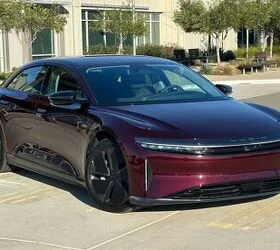
Lucid Motors, founded in 2007 as Atieva, initially focused on battery technology before pivoting to its own premium electric vehicles. The company unveiled its flagship luxury sedan, the Lucid Air, in 2020, with initial deliveries commencing in late 2021. The Air, praised for its impressive range, performance, and sophisticated design, positioned Lucid as a purveyor of high-end electric mobility. The Air Dream Edition, in particular, garnered significant attention for its extended range and luxury appointments, targeting a segment of the market accustomed to opulence and cutting-edge technology.
Following the Air, Lucid announced its intention to produce an SUV, the Gravity, which was also subject to developmental timelines. The forthcoming "affordable" model, often referred to as the "mid-size" or "entry-level" Lucid, was intended to broaden Lucid’s appeal and significantly increase production volumes. The strategy was clear: leverage the brand equity and technological advancements established with the Air to capture a larger market share. The delay of this crucial third model, therefore, represents a significant setback in Lucid’s ambitious growth trajectory.
The Specter of Bankruptcy: Rumors and Reassurance
The announcement of the product delay arrived amidst a backdrop of intense financial scrutiny. Throughout late July, Lucid Motors found itself the subject of persistent rumors suggesting it was consulting with financial advisors to explore bankruptcy protection. These reports, amplified by the volatile nature of the EV market and the capital-intensive demands of automotive manufacturing, sent ripples of concern through investors and industry observers.
In response to these swirling anxieties, newly appointed CEO Silvio Napoli, who assumed the leadership role in April 2024, addressed the speculation directly. Speaking with Reuters, Napoli characterized the company’s strategic adjustments as a deliberate "reset" aimed at preventing the repetition of past missteps. This "reset," he explained, is designed to ensure the company’s long-term sustainability and build a more robust foundation for future growth. While his statements offered a degree of reassurance, the timing of the "reset" coinciding with a significant product delay inevitably fuels skepticism.
Analyzing the "Moment of No Return"
The automotive industry, especially the EV sector, is replete with examples where product delays have been harbingers of deeper financial distress. The history of automotive startups is littered with companies that failed to bring their promised vehicles to market on time or within budget. These delays often lead to a cascade of negative consequences:
- Erosion of Investor Confidence: Delays signal operational challenges and financial strain, making investors hesitant to commit further capital. This can dry up funding crucial for production scaling and research and development.
- Loss of Market Momentum: Competitors can seize the opportunity presented by a delay, introducing their own products and capturing potential customers. The initial excitement and demand can wane, making it harder to regain traction.
- Increased Development Costs: Extending development timelines invariably leads to higher engineering, testing, and manufacturing setup costs, further straining a company’s financial resources.
- Supply Chain Disruptions: Protracted development can also lead to outdated components or the need to re-engineer systems to align with evolving supply chain realities and technological advancements.
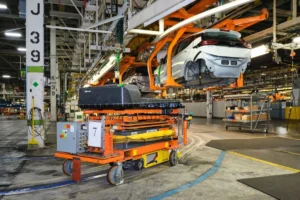
For Lucid, the delay of its more affordable model is particularly critical. While the Air and the forthcoming Gravity cater to a niche luxury market, the success of a mass-market, or at least higher-volume, offering is essential for achieving profitability and scaling production to a level that justifies the immense investment in its manufacturing facilities, particularly its Advanced Manufacturing Plant (AMP-1) in Casa Grande, Arizona.
Supporting Data: The Financial Realities of EV Manufacturing
The EV industry is characterized by extraordinarily high capital expenditures. Building and equipping automotive manufacturing plants requires billions of dollars. For Lucid, this has been a significant undertaking. The company’s financial performance has been closely watched, and its cash burn rate has been a recurring concern.
In its most recent quarterly reports, Lucid has consistently reported substantial net losses. For instance, in the first quarter of 2024, Lucid reported a net loss of $281 million. While this represents an improvement from previous periods, it underscores the ongoing need for significant funding to sustain operations and growth. The company has relied heavily on capital raises and strategic investments, including a substantial investment from Saudi Arabia’s Public Investment Fund (PIF), which is a majority shareholder.
The challenge for Lucid, and indeed for many EV startups, is to transition from a low-volume, high-margin luxury product to a higher-volume, more accessible offering without compromising quality or brand perception, all while managing a relentless cash burn. The delay in its third model suggests that the path to achieving this delicate balance is proving more arduous than anticipated.
Broader Industry Context: A Shifting EV Landscape
Lucid’s struggles are not isolated. The broader EV market, while growing, is also facing increasing competition and evolving consumer preferences.
- Maturing Market: The initial hype surrounding EVs has given way to a more discerning consumer base that is increasingly focused on practicality, affordability, charging infrastructure, and total cost of ownership.
- Legacy Automaker Push: Traditional automakers, such as Ford, General Motors, Volkswagen, and Stellantis, are investing heavily in their own EV lineups, leveraging their established brand recognition, dealer networks, and manufacturing expertise. This intensified competition puts pressure on newer entrants.
- Economic Headwinds: Rising interest rates, inflation, and economic uncertainty can impact consumer spending on high-value items like new vehicles, particularly luxury EVs.
- Supply Chain Volatility: The global supply chain for critical EV components, such as batteries and semiconductors, remains susceptible to disruptions, impacting production schedules and costs.
The current market conditions necessitate not only innovative products but also robust financial management and efficient production processes. The delay in Lucid’s affordable model could be interpreted as a response to these external pressures, a recalibration of its strategy in a more challenging environment.
Expert and Industry Reactions (Inferred)
While direct quotes from competitors or industry analysts regarding Lucid’s specific situation might be guarded, the general sentiment within the automotive sector regarding EV startups is one of cautious observation.
- Financial Analysts: Many financial analysts closely following the EV sector have expressed concerns about the capital intensity and competitive pressures facing companies like Lucid. They will be scrutinizing Lucid’s financial reports and operational updates intensely in the coming months. The delay will likely lead to revised earnings forecasts and potentially lower target prices for Lucid’s stock.
- Automotive Engineers and Designers: Within the engineering community, product delays are often viewed as symptomatic of deeper issues in product development, testing, or manufacturing readiness. The success of an "affordable" model hinges on achieving economies of scale, which requires meticulous planning and execution.
- Potential Investors and Partners: The delay could make potential investors more cautious and may prompt strategic partners to re-evaluate their commitments. Securing future funding rounds will likely become more challenging without a clear path to market for its key upcoming products.
The Path Forward: A Critical Juncture for Lucid
The decision by Lucid Motors to postpone its affordable model until Fall 2027 is a pivotal moment. It signifies a strategic pivot, a move that CEO Silvio Napoli claims is essential for long-term survival. However, it also raises profound questions about the company’s ability to execute its ambitious vision.
The coming years will be critical for Lucid. The company must demonstrate:
- Financial Discipline: A clear and sustainable path to profitability, with a demonstrable reduction in its cash burn rate.
- Production Ramp-Up: The ability to efficiently scale production of its existing Air sedan and the upcoming Gravity SUV.
- Product Development Execution: The successful development and launch of the delayed affordable model, ensuring it meets market expectations for price, performance, and quality.
- Market Adaptation: Agility in responding to the evolving demands of the EV market and the competitive landscape.
The EV industry has a history of promising ventures that ultimately fail to materialize. Whether Lucid Motors can navigate these turbulent waters and emerge as a sustainable player, or if this delay marks the early stages of a more significant decline, remains to be seen. The narrative of the electric vehicle revolution is still being written, and Lucid’s chapter is currently at a critical turning point, poised between potential resurgence and the specter of another cautionary tale in the annals of automotive innovation. The industry, investors, and consumers will be watching closely to see if Lucid can indeed "reset" and chart a course towards enduring success, or if this delay is indeed the beginning of the end.