Materials science has long been defined by a fundamental trade-off: the pursuit of strength often comes at the expense of ductility. For decades, engineers have sought materials that can withstand extreme environments—such as the white-hot interior of a jet engine or the high-pressure environment of a power plant—without succumbing to brittle fracture. A breakthrough recently published in Science Advances by a team of researchers at Purdue University suggests that this compromise may no longer be an absolute rule. By manipulating the internal architecture of cobalt aluminum (CoAl) intermetallics at the atomic scale, the team has successfully synthesized a material that is not only ten times stronger than structural steel but also possesses the plasticity required for advanced industrial manufacturing.
The Challenge of Brittle Intermetallics
Intermetallics occupy a unique space in the hierarchy of engineering materials. Unlike traditional alloys, where atoms are randomly distributed within a lattice, intermetallics consist of two or more metallic elements arranged in a highly ordered, rigid crystal structure. This internal discipline grants them exceptional properties, including high melting temperatures, low density, and remarkable resistance to "creep"—the tendency of solid materials to move slowly or deform permanently under the influence of persistent mechanical stresses.
However, the very rigidity that makes intermetallics strong also makes them notoriously difficult to work with. At room temperature, most intermetallics, including Cobalt Aluminum, are glass-like in their brittleness. When subjected to stress, they do not bend or stretch; they shatter. This lack of plasticity has historically limited their use to specific coatings or niche components, as they cannot be easily forged, rolled, or machined into the complex geometries required for modern aerospace and automotive engineering.
Engineering a Solution: The Role of Dislocations
To overcome this inherent brittleness, the Purdue team, led by Xinghang Zhang, a professor in the School of Materials Engineering, focused on the behavior of dislocations. In the world of metallurgy, a dislocation is a crystallographic defect or irregularity within a crystal structure. While "defect" typically implies a flaw, in materials science, dislocations are the primary carriers of plasticity. When a metal deforms, it is because these microscopic irregularities are moving through the crystal lattice.
In traditional CoAl, the density of these dislocations is too low, and their movement is too restricted to allow for significant deformation. Previous attempts to solve this involved "alloying," or adding third elements to the mix, but these efforts often resulted in a loss of the material’s signature high-temperature strength.
The Purdue researchers took a radically different approach. Instead of changing the chemical recipe, they changed the fabrication method. By utilizing magnetron sputtering deposition—a process where a target material is bombarded with high-energy ions to create a vapor that then condenses onto a substrate—they were able to build the CoAl material atom by atom. This "nonequilibrium" fabrication technique allowed the team to bake "preexisting dislocations" directly into the material’s structure from the moment of its creation.
The Breakthrough: Framework of Amorphous Interfaces (FAI)
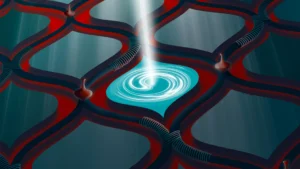
The most significant innovation detailed in the study is the introduction of a "Framework of Amorphous Interfaces" (FAI). In the synthesized CoAl nanolaminate, the researchers designed thin, flexible boundaries that lack a defined crystalline structure. These amorphous layers act as a buffer between the highly ordered CoAl crystals.
"We designed the framework of amorphous interfaces to act as flexible boundaries," explained Professor Zhang. "These interfaces serve a dual purpose: they provide structural flexibility and, more importantly, they partially crystallize during deformation. This phase change promotes the nucleation of new dislocations, allowing the material to sustain stress by deforming rather than breaking."
As the material is compressed or stretched, the amorphous interfaces act as "factories" for dislocations. When the stress reaches a certain threshold, the disordered atoms in the interface begin to align, shedding new dislocations into the neighboring CoAl layers. This mechanism ensures a constant supply of defects that can carry the load of deformation, granting the intermetallic a level of plasticity previously thought impossible for this class of material.
Quantitative Analysis: Surpassing Structural Steel
The mechanical performance of the newly engineered CoAl is staggering. In controlled laboratory tests, the material exhibited a yield strength of approximately 6 gigapascals (GPa). To put this in perspective, high-strength structural steel typically has a yield strength ranging from 0.4 to 1.0 GPa. The Purdue-engineered intermetallic is essentially six to ten times stronger than the steel used to build skyscrapers and bridges.
Despite this immense strength, the material demonstrated 15% plastic strain under compression at room temperature. In the context of intermetallics, 15% strain is a landmark achievement. It represents the difference between a component that fails catastrophically under a sudden impact and one that can absorb the energy and remain intact.
"This combination of ultrahigh mechanical strength and outstanding plasticity make the current CoAl nanolaminate system one of the best intermetallic systems reported to date," said Ke Xu, a postdoctoral researcher and the study’s first author.
Visualizing Atomic Deformation
To validate their findings, the Purdue team collaborated with researchers from the University of Houston, including Professor Yashashree Kulkarni and PhD student Anand Mathew. The Houston team utilized molecular dynamics (MD) simulations to provide a high-resolution "map" of how the atoms moved during stress.
These simulations confirmed the experimental observations made via in situ mechanical testing inside a scanning electron microscope (SEM). The SEM allowed researchers to watch the material deform in real-time at micrometer precision, while the MD simulations explained the "why" behind the behavior. The simulations showed that the amorphous interfaces were not static; they were dynamic zones of transformation that absorbed energy and redistributed it through the crystal lattice by generating and moving dislocations.
Chronology and Research Context
The development of this CoAl nanolaminate is the result of years of iterative research within Purdue’s Nanometal Group. The timeline of this breakthrough reflects a broader shift in materials science toward "nanostructuring."
- Phase 1: Identification of the Brittleness Barrier. Researchers identified that CoAl’s potential for turbine blades was being throttled by its room-temperature fragility.
- Phase 2: Experimentation with Sputtering. The team moved away from traditional melt-casting, recognizing that the rapid cooling inherent in vapor deposition could "freeze" beneficial defects into the material.
- Phase 3: Interface Engineering. The concept of the FAI was developed to solve the problem of dislocation exhaustion, where a material runs out of ways to deform and eventually cracks.
- Phase 4: Multi-Institutional Validation. The integration of University of Houston’s computational power allowed the team to finalize the design of the nanolaminate structure.
Industrial and Aerospace Implications
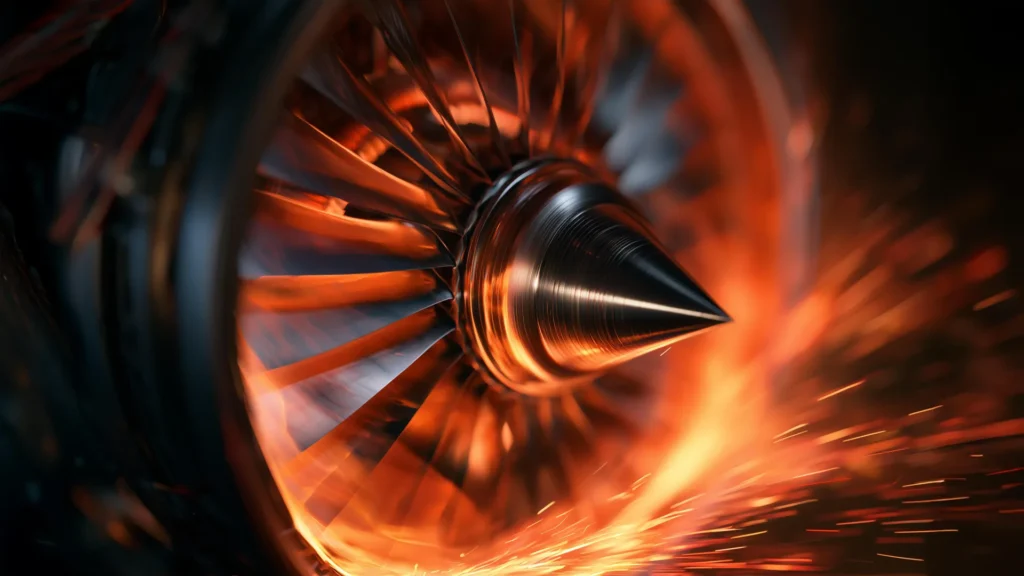
The implications for the aerospace industry are particularly profound. Modern jet engines, such as the gas turbines used in commercial aircraft, rely on materials that can withstand the massive centrifugal forces generated by spinning at thousands of revolutions per minute. Currently, nickel-based superalloys are the industry standard, but they are heavy and reaching their thermal limits.
A high-strength, deformable CoAl alloy could lead to the development of lighter, more durable turbine blades. Because CoAl has a higher melting point and lower density than many current alloys, engines could potentially run hotter and faster. This would result in significant gains in fuel efficiency and thrust-to-weight ratios, reducing the carbon footprint of global aviation.
Beyond aerospace, the "flexible intermetallic" concept has applications in:
- Energy Storage: Materials that can withstand the mechanical expansion and contraction of battery cycles.
- Automotive Engineering: High-performance engine components that reduce weight without sacrificing safety.
- Defense: Advanced armor and structural components for extreme environments.
- Space Exploration: Materials capable of maintaining structural integrity in the vacuum of space and under the thermal stress of atmospheric re-entry.
Future Outlook: Scaling to Bulk Materials
While the current research focused on nanolaminates produced via sputtering—which typically results in thin films—the Purdue team is already looking toward the next horizon: scalability. The challenge now lies in translating these atomic-scale successes into "bulk" materials—large-scale ingots or components that can be used in industrial manufacturing.
"We will be testing the concept using other intermetallics," said Xu. "Our goal is to establish the general applicability of FAIs for improving plasticity across this entire class of metals."
The research, primarily funded by the National Science Foundation’s Metals and Metallic Nanostructures program, represents a pivotal step in the "Materials Genome Initiative," a federal effort to discover, manufacture, and deploy advanced materials twice as fast at a fraction of the cost. By proving that the internal "framework" of a material is just as important as its chemical composition, the Purdue team has provided a new blueprint for the next generation of super-materials.