The global scientific community gathered in Los Angeles on April 18 to celebrate the recipients of the 2024 Breakthrough Prizes, an event often referred to as the "Oscars of Science." Among the luminaries recognized for their transformative contributions to human knowledge were several affiliates of the Massachusetts Institute of Technology (MIT). These researchers, spanning the disciplines of life sciences, fundamental physics, and mathematics, were lauded for work that ranges from the development of the first CRISPR-based medical treatment to profound insights into the expansion of the universe and the fundamental symmetries of quantum fields. The ceremony, held at the Academy Museum of Motion Pictures, underscored the vital role of institutional research in solving some of the most complex challenges in medicine and theoretical science.
Revolutionary Advancements in Gene Editing and Life Sciences
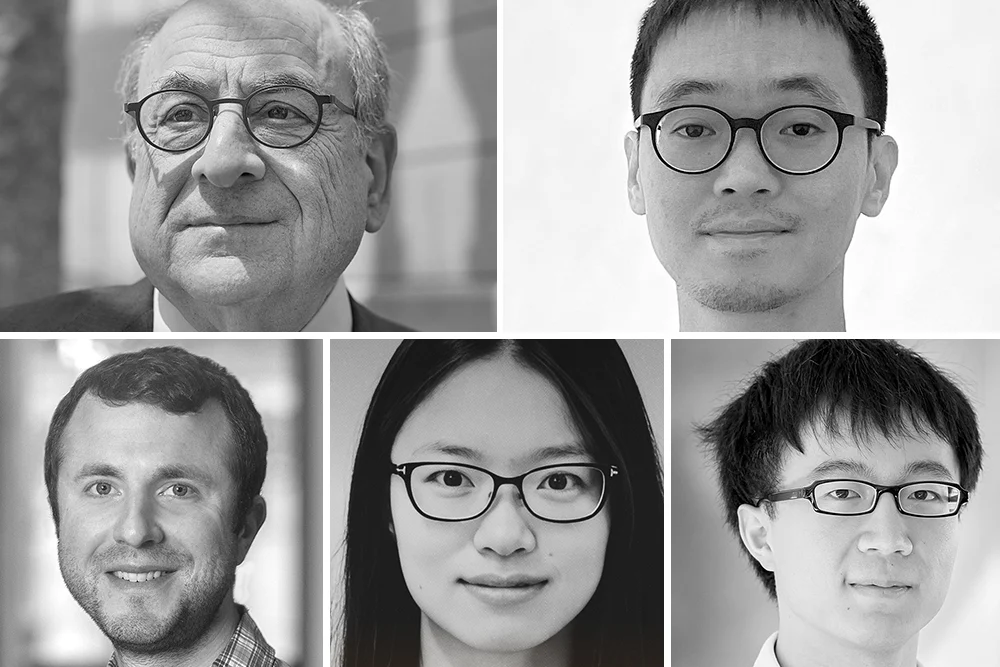
A primary highlight of the evening was the awarding of the Breakthrough Prize in Life Sciences to Stuart H. Orkin, a 1967 graduate of the MIT Department of Biology and currently a professor of pediatrics at Harvard Medical School. Orkin shared the honor with Swee Lay Thein for their collective efforts in transforming the treatment landscape for sickle cell disease and beta-thalassemia. For decades, these genetic blood disorders were considered incurable, managed only through palliative care or high-risk bone marrow transplants.
Orkin’s research focused on the molecular mechanisms of "hemoglobin switching." In early human development, the body produces fetal hemoglobin, which has a high affinity for oxygen. Shortly after birth, the body switches to producing adult hemoglobin. In patients with sickle cell disease or beta-thalassemia, the adult hemoglobin is defective, leading to chronic pain, organ damage, and shortened lifespans. Orkin identified the "master switch"—a transcription factor known as BCL11A—that controls the transition from fetal to adult hemoglobin.
By silencing this switch, Orkin and his team demonstrated that the body could be induced to resume the production of fetal hemoglobin, effectively bypassing the genetic defect found in adult hemoglobin. This discovery served as the scientific foundation for Casgevy, the first medicine utilizing CRISPR-Cas9 gene-editing technology to receive regulatory approval. The impact of this work is immense; sickle cell disease affects approximately 100,000 people in the United States and millions worldwide, particularly those of African, Mediterranean, and Middle Eastern descent. The approval of Casgevy represents a watershed moment in biotechnology, marking the transition of gene editing from a laboratory tool to a clinical reality.
In a related victory for the life sciences, Bryan Traynor, a former student in the Harvard-MIT Program in Health Sciences and Technology (HST), was also awarded a Breakthrough Prize in Life Sciences. Traynor, who currently serves as a senior investigator at the National Institutes of Health (NIH), shared the prize with Rosa Rademakers. Their research led to the discovery of a specific genetic mutation—a hexanucleotide repeat expansion in the C9orf72 gene—which is now recognized as the most common genetic cause of both amyotrophic lateral sclerosis (ALS) and frontotemporal dementia (FTD).
ALS is a progressive neurodegenerative disease that affects nerve cells in the brain and spinal cord, leading to loss of muscle control and eventual respiratory failure. FTD is a group of disorders caused by progressive nerve cell loss in the brain’s frontal or temporal lobes. The identification of the C9orf72 mutation has provided a unified genetic link between these two seemingly different conditions, opening new avenues for targeted therapies and diagnostic tools. This discovery is a cornerstone of modern neurogenetics, offering hope to families affected by hereditary forms of these devastating diseases.
Probing the Foundations of Physics and the Early Universe
The Breakthrough Prize Foundation also recognizes emerging leaders through the New Horizons in Physics Prize. This year, Shu-Heng Shao, an assistant professor of physics at MIT and a researcher in the MIT Center for Theoretical Physics—a Leinweber Institute—was among the recipients. Shao shared the 2026 New Horizons in Physics Prize with Clay Córdova of the University of Chicago, Thomas Dumitrescu of the University of California at Los Angeles, and Yifan Wang, an MIT alumnus who earned his PhD in 2016 and is currently affiliated with New York University.
The four physicists were cited for their work in discovering and developing the theory of "generalized symmetries" in quantum field theory (QFT). Quantum field theory is the mathematical framework used to describe the behavior of subatomic particles and the forces that govern them. Traditionally, symmetries in physics refer to properties of a system that remain unchanged under certain transformations, such as rotation or translation. However, Shao and his colleagues have expanded this definition, identifying higher-form and non-invertible symmetries that were previously overlooked. These generalized symmetries provide a more powerful language for understanding phase transitions in matter and the fundamental structure of the vacuum, potentially leading to new insights into quantum gravity and condensed matter physics.
The New Horizons in Physics Prize also recognized J. Colin Hill, a 2008 MIT graduate, who shared the award with a collaborative team including Dillon Brout, Mathew Madhavacheril, Maria Vincenzi, Daniel Scolnic, and W. L. Kimmy Wu. Hill’s research is focused on cosmology, specifically the analysis of the Cosmic Microwave Background (CMB)—the "afterglow" radiation left over from the Big Bang.
Hill has been instrumental in advancing the precision of data analysis from the CMB, which allows scientists to measure the expansion rate and composition of the universe with unprecedented accuracy. By studying the subtle fluctuations in the CMB, researchers can test the Standard Model of Cosmology and search for discrepancies that might indicate new physics, such as the nature of dark matter and dark energy. Hill’s work is particularly relevant to the ongoing "Hubble Tension," a discrepancy between different methods of measuring how fast the universe is expanding. His contributions help refine the timeline of the universe’s evolution, from the first fractions of a second after the Big Bang to the present day.
Excellence in Mathematics and Harmonic Analysis
The 2024 New Horizons in Mathematics Prize was awarded to Hong Wang, who earned her PhD from MIT in 2019. Wang, currently an associate professor at New York University’s Courant Institute, was recognized for her significant contributions to harmonic analysis. This branch of mathematics involves the study of how complex functions can be represented as the sum of simpler trigonometric waves, a concept essential to fields ranging from signal processing to quantum mechanics.
Wang’s work addresses the "restriction conjecture," a notoriously difficult problem in the field that relates to the behavior of Fourier transforms on curved surfaces. Resolving or making progress on such problems requires a deep understanding of geometric measure theory and the decoupling of different frequency components. Her achievements in this area are considered a major step forward in a discipline that has challenged mathematicians for decades. By developing new techniques to handle these complexities, Wang has provided the mathematical community with tools that have implications for partial differential equations and number theory.
The Significance of the Breakthrough Prizes
Founded in 2012 by Sergey Brin, Priscilla Chan and Mark Zuckerberg, Julia and Yuri Milner, and Anne Wojcicki, the Breakthrough Prizes were established to celebrate scientific achievement and inspire the next generation of researchers. Unlike many other scientific awards, the Breakthrough Prizes are known for their significant monetary value—$3 million for each of the main categories—and their high-profile gala ceremonies that feature celebrities and industry leaders.
The inclusion of multiple MIT affiliates in this year’s roster of laureates highlights the institute’s role as a primary engine of scientific innovation. From the biology labs where the mechanisms of genetic disease are unraveled to the theoretical physics centers where the laws of the universe are rewritten, the MIT community continues to push the boundaries of what is possible.
The 2024 ceremony served not only as a recognition of past achievements but also as a call to action for future investment in basic and applied sciences. The stories of researchers like Stuart Orkin and Shu-Heng Shao illustrate a critical trajectory: basic research into the fundamental "switches" of biology or the "symmetries" of physics eventually yields tangible benefits for humanity, whether through life-saving medicines or a deeper understanding of our place in the cosmos.
Timeline and Context of the Discoveries
The path to these awards often spans decades of rigorous inquiry. The chronology of Stuart Orkin’s work, for instance, traces back to the 1970s and 80s, when he first began investigating the genetics of hemoglobin. The pivotal identification of BCL11A occurred in 2008, followed by years of laboratory validation before the first human clinical trials for CRISPR therapy could begin in the late 2010s.
Similarly, the work of the New Horizons winners reflects the rapid evolution of their respective fields over the last decade. The discovery of the C9orf72 expansion by Bryan Traynor’s team in 2011 fundamentally changed the trajectory of ALS research, leading to a decade of intense focus on RNA-targeted therapies. In physics, the concept of generalized symmetries has gained significant traction only within the last five to seven years, moving from a niche theoretical curiosity to a central theme in high-energy physics.
Broader Impact and Future Implications
The recognition of these MIT affiliates carries profound implications for the future of global research. In the realm of medicine, the success of Orkin’s gene-editing approach provides a blueprint for treating other monogenic disorders. If the "master switch" for fetal hemoglobin can be successfully manipulated, researchers may find similar switches for other conditions, potentially leading to cures for a wide range of genetic diseases.
In the physical sciences, the work of Shao and Hill contributes to a more cohesive understanding of the universe. As experimental facilities like the Large Hadron Collider and the James Webb Space Telescope provide more data, the theoretical frameworks developed by these researchers will be essential for interpreting new findings. The mathematical advancements made by Hong Wang ensure that the underlying language of science remains robust and capable of describing increasingly complex phenomena.
The 2024 Breakthrough Prizes reaffirm that the pursuit of knowledge is a collaborative and multi-generational endeavor. By honoring those who have dedicated their lives to understanding the fundamental truths of nature and biology, the foundation ensures that science remains at the forefront of the global conversation. For the MIT affiliates recognized this year, the prizes are a testament to their individual brilliance and the supportive, rigorous environment of the institution that helped shape their careers. As these laureates return to their laboratories and classrooms, their work continues to inspire a new era of discovery, promising a future where once-incurable diseases are managed and the deepest mysteries of the universe are brought into focus.