The sweltering reality of a planet increasingly gripped by extreme heat became starkly apparent to MIT mechanical engineering Professor Kripa Varanasi when he landed in New Delhi in June 2024. The capital of India, notorious for its intense summer temperatures, greeted him with a searing 104-degree Fahrenheit at midnight. What followed was a week-long conference dominated by an oppressive heat that saw daytime temperatures soar to nearly 122 F, effectively confining Varanasi to his hotel. "This was June, and it was crazy. It was so hot for the whole meeting that I never left the hotel," Varanasi recounted, a stark contrast to his childhood memories of India. This personal experience served as a powerful catalyst, igniting a renewed determination to confront the global challenge of extreme heat, particularly for vulnerable populations.
Varanasi’s direct encounter with India’s escalating heat crisis underscored a global imperative that MIT had already begun to address through its Critical Cooling initiative. Launched by the MIT Climate Project, this ambitious program provided seed funding for four innovative research projects, totaling $450,000, aimed at developing sustainable and accessible cooling solutions. These projects, now completed, have demonstrated significant promise, pushing the boundaries of conventional cooling technologies and exploring novel approaches to mitigate the devastating impacts of a warming world.
The Unbearable Heat: A Global Crisis Intensified
The heatwave that engulfed New Delhi in June 2024 was not an isolated incident but a symptom of a much larger, accelerating global crisis. For weeks leading up to Varanasi’s arrival, northern India, including Delhi, had been baking under record-breaking temperatures, with some areas registering highs exceeding 125 F (52 degrees Celsius). The India Meteorological Department (IMD) had issued numerous "red alerts" for severe heatwave conditions, warning of increased likelihood of heatstroke and other heat-related illnesses. Hospitals reported a surge in patients suffering from dehydration and heat exhaustion, while infrastructure, including power grids, struggled under the immense strain of increased demand for cooling.
This regional crisis reflects a broader global pattern. According to the World Meteorological Organization (WMO), the past decade has been the warmest on record, and extreme heat events are becoming more frequent, longer-lasting, and more intense due to anthropogenic climate change. Scientific consensus, as articulated by the Intergovernmental Panel on Climate Change (IPCC), indicates that global average temperatures have already risen by approximately 1.1 degrees Celsius above pre-industrial levels, and without drastic emissions reductions, are projected to exceed 1.5 degrees Celsius in the coming decades. Such warming translates directly into more severe heatwaves, particularly impacting tropical and subtropical regions, including vast swathes of the Global South.
The human toll of this escalating heat is profound. Heat stress can lead to a range of health issues, from mild discomfort and reduced productivity to severe heatstroke, organ damage, and death. Vulnerable populations – including the elderly, young children, outdoor workers, and those with pre-existing health conditions – are disproportionately affected. Economically, extreme heat leads to significant losses in agricultural productivity, disrupts supply chains, and places immense pressure on public health systems and energy infrastructure. The urgency to find effective, sustainable, and equitable cooling solutions has never been greater.
MIT’s Proactive Stance: The Critical Cooling Initiative
Recognizing this escalating threat, the MIT Climate Project spearheaded the Critical Cooling initiative. Christoph Reinhart, the Terri and Alan Spoon Professor of Architecture and Climate and head of MIT’s Sustainable Design Lab (SDL), was instrumental in championing this effort and served as the faculty lead. Reinhart explained that the term "critical cooling" emerged from a collaboration between SDL and Harvard’s Human Rights Entrepreneurs Clinic. "It is motivated by the fact that climate change increasingly causes heat fatalities, primarily among vulnerable populations, who lack access to active cooling," he stated. This humanitarian perspective profoundly shaped the initiative’s core philosophy: "cooling people, not spaces." This vision, Reinhart emphasized, holds "enormous" potential impact, guiding the selection of projects that prioritized innovative, accessible, and energy-efficient solutions for those most in need.
The grant program was designed to be agile and impactful, providing seed funding for six months to allow researchers to rapidly develop proof-of-concept prototypes and explore truly novel approaches. The objective was not just to invent new technologies but to develop solutions that could be deployed effectively in regions with limited resources and infrastructure, addressing the critical nexus of climate change, energy poverty, and human well-being.
Diverse Approaches to a Singular Challenge
The four projects funded under the Critical Cooling initiative represent a spectrum of innovative thinking, from wearable personal cooling to novel refrigeration cycles, each addressing different facets of the cooling dilemma.
Personal Cooling: Kripa Varanasi’s Wearable Solution
Inspired by his personal ordeal in Delhi, Professor Kripa Varanasi’s project focused on developing a wearable personal cooling system. His approach eschews the energy-intensive cooling of entire spaces in favor of targeted, individual thermal regulation. The device operates on a principle akin to how an elephant uses its large, vascularized ears to dissipate heat and cool its blood – an efficient biological mechanism adapted for human application.
The prototype wearable device is remarkably energy-efficient, consuming only about 33 watts, a stark contrast to a typical room air conditioner that demands around 1,000 watts. This significant reduction in power consumption makes it particularly suitable for regions with unreliable or expensive electricity. Economically, Varanasi estimates that the prototype, if manufactured using U.S. materials, would cost approximately $20. However, with local sourcing and manufacturing in India, he believes the cost could drop to less than $1 per unit, making it exceptionally affordable and scalable.
Varanasi envisions a socio-economic model where governments could procure these garments in large quantities for distribution to communities. Local entrepreneurs could then establish charging stations to recharge the devices, perhaps after a night’s wear, fostering local economic activity. Furthermore, local businesses could be empowered to manufacture the systems, creating jobs and self-sufficiency. The design also considers practicality: the cooling material is separable, allowing the garment itself to be washed. This innovation promises to enable individuals to achieve at least a good night’s sleep even amidst extreme heat, a crucial factor for health and productivity.
The initial proof-of-concept, which involved a simulated foot containing a heater, successfully demonstrated the device’s efficacy. "We were able to keep it in the zone that we need for the body to stay cool," Varanasi confirmed, adding that "our initial prototype that we were able to build with this funding showed that this can become a viable solution." The underlying material, treated with a novel process developed by his team, is widely available, overcoming a "fundamental science bottleneck" that previously hindered such applications. Varanasi is actively exploring commercialization pathways, emphasizing that for any good idea to thrive, "it has to be a good business and a sustainable business."
Subsurface Cooling: Yet-Ming Chiang’s Earth-Based Solution
Professor Yet-Ming Chiang, the Kyocera Professor of Materials Science and Engineering, investigated an entirely different, passive approach: subsurface wells utilizing heat-absorbing materials. His research explored the potential of harnessing the stable, cooler temperatures found beneath the Earth’s surface to provide ambient cooling. The aim is to circulate air through these subsurface systems, allowing it to shed heat to the surrounding earth and heat-absorbing materials, thereby delivering air to living spaces at temperatures significantly below peak ambient levels.
This method promises substantial energy savings compared to conventional vapor-compression heat pumps, which are notoriously energy-intensive. Chiang’s vision targets its application in both small apartment buildings and single-family homes, particularly in India and other parts of the Global South where energy costs are a major barrier to widespread cooling. The system’s reliance on stable ground temperatures and passive heat exchange minimizes operational costs and energy demand, offering a sustainable alternative for localized cooling without contributing to grid overload.
Solid-State Refrigeration: Asegun Henry’s Rubber-Based Innovation
Professor Asegun Henry, the George N. Hatsopoulos Professor in Thermodynamics, tackled the dual challenge of energy inefficiency and the environmental impact of hydrofluorocarbon (HFC) refrigerants in traditional air conditioning. HFCs are potent greenhouse gases, thousands of times more impactful than carbon dioxide over their atmospheric lifetime, and their leakage from cooling systems poses a significant climate threat.
Henry’s innovative approach utilizes a cheap, widely abundant solid "caloric" material – specifically, rubber – to achieve a cooling effect. This caloric material undergoes a temperature change when subjected to mechanical stress (e.g., stretching or compressing). By cyclically stressing and relaxing the rubber, and then using plain water as an efficient heat transfer fluid, a cooling cycle can be established. This method eliminates the need for environmentally harmful chemical refrigerants altogether, offering a truly green alternative.
The benefits of Henry’s system are multifold: it promises to be significantly more energy-efficient than current air conditioning units and completely eliminates greenhouse gas emissions associated with refrigerants. The initial target market includes single-family houses and apartment buildings, providing an eco-friendly cooling solution for residential sectors. Beyond residential use, larger-scale versions of this solid-state cooling system could also be adapted to meet the intensive cooling demands of data centers, a rapidly growing sector with enormous energy consumption and cooling requirements.
Next-Generation Refrigerants: Gang Chen’s Climate-Neutral Approach
Professor Gang Chen, the Carl Richard Soderberg Professor of Power Engineering, directly confronted the inherent problems of existing air conditioning units: their high cost, substantial power consumption, and reliance on potent greenhouse gas refrigerants. Chen highlighted that these coolants are not only climate-damaging during operation but also frequently leak out when devices are ultimately disposed of, further exacerbating their global warming contribution.
To counteract this, Chen’s research focused on developing a completely different kind of chemical refrigerant – one that possesses no greenhouse gas impact. His approach seeks to revolutionize the core chemical components of refrigeration, offering a drop-in replacement that could dramatically reduce the climate footprint of conventional AC units without requiring a complete overhaul of the mechanical systems.
Chen, who already harbored several ideas in this area, received the critical funding to test his concepts experimentally. After building and testing three prototypes, he acknowledged, "I’m not at the stage where I can say that I know this will work." However, the promising results from these initial experiments have motivated him to proceed with building a further prototype. If this advanced prototype performs as expected, Chen believes it could usher in a "dramatic difference in air conditioning technology worldwide." This includes not only residential and commercial applications but also addressing the intensive cooling needs of new data centers, which are projected to proliferate globally.
The Broader Context: Energy Poverty and AC Proliferation
The global landscape of cooling presents a paradoxical challenge. While air conditioning is often seen as a necessity in developed nations, it remains a luxury for the majority of the world’s population. Chen pointed out that only about 8 percent of the 2.8 billion people residing in the hottest parts of the world currently have access to air conditioning. This vast cooling gap highlights a profound issue of energy poverty and inequity.
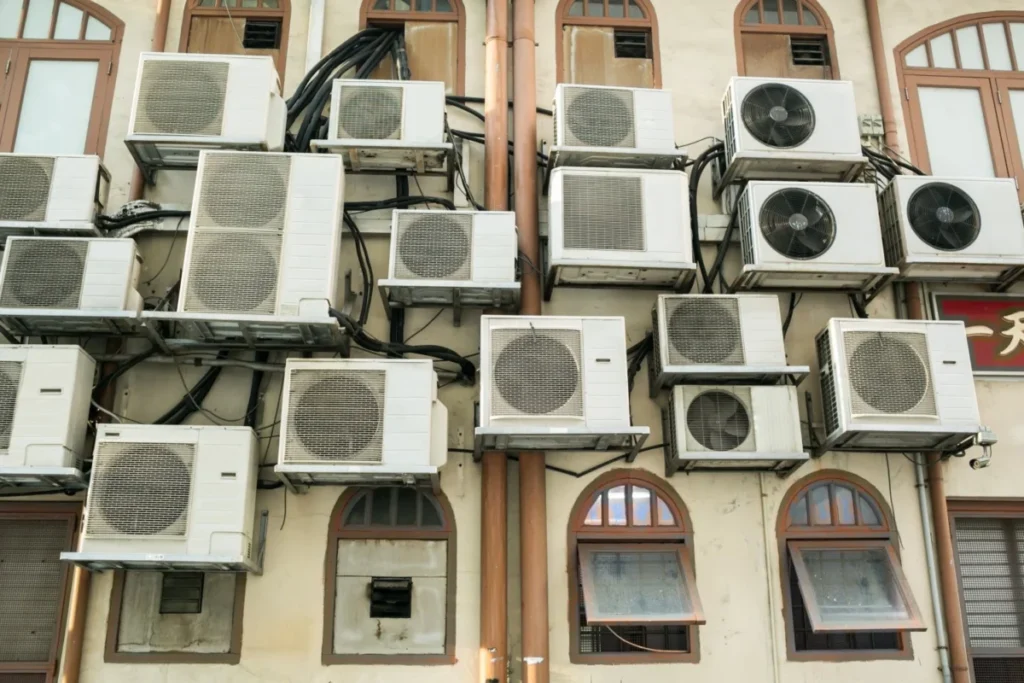
Simultaneously, the environmental cost of existing cooling technologies is staggering. Air conditioning already contributes between 3 and 4 percent of global warming emissions, primarily due to the energy consumed and the leakage of HFC refrigerants. As the planet continues to warm, the demand for cooling is projected to skyrocket. Experts predict that the market for air conditioners could triple or even quadruple in the coming years, particularly in rapidly developing economies in Asia, Africa, and Latin America. This explosive growth, if powered by conventional, inefficient, and HFC-dependent systems, would lead to a commensurate increase in global warming emissions, creating a dangerous feedback loop. The dilemma is clear: how to provide essential cooling for human health and productivity without accelerating climate change. This is the critical juncture that the MIT initiative aims to address.
Collaborative Momentum and Future Prospects
The success of the Critical Cooling initiative stemmed not only from the innovative research but also from a robust collaborative framework. Christoph Reinhart’s leadership was complemented by a partnership with the Abdul Latif Jameel Poverty Action Lab (J-PAL), with Senior Policy Manager Andre Zollinger leading J-PAL’s engagement. The initiative kicked off with a workshop that brought together a diverse group of stakeholders, including representatives from the World Bank, leaders from the Global South, industry experts, and engineers brimming with innovative ideas. This multi-sectoral approach ensured that the proposed solutions were not only scientifically sound but also practical, scalable, and attuned to the specific needs and challenges of vulnerable communities.
Liana Frey, a managing director at the MIT Climate Project, confirmed that all teams made significant progress, with most producing initial prototypes. She emphasized the project’s ongoing commitment: "We’re continuing to look at different ways of proceeding with the work," signaling that efforts will be made to further develop and secure funding for these promising ideas. The urgency, Frey noted, is only growing. "There are a lot of people interested in this heat-stress question," she said. "It’s just becoming more and more urgent."
Implications and Conclusion
The MIT Critical Cooling initiative represents a vital step in humanity’s fight against the escalating climate crisis. By focusing on sustainable, accessible, and energy-efficient cooling solutions, these projects hold the potential to deliver far-reaching implications across multiple domains.
Public Health and Well-being: Widespread deployment of these technologies, particularly personal cooling systems and climate-neutral ACs, could drastically reduce heat-related illnesses and fatalities, especially among vulnerable populations in the Global South. Improved sleep quality and reduced heat stress would enhance productivity, cognitive function, and overall quality of life.
Energy Security and Economic Development: By offering alternatives to conventional, power-hungry AC units, these innovations can alleviate strain on fragile energy grids in developing countries, reduce electricity costs for households, and foster energy independence. The potential for local manufacturing and charging stations, as envisioned by Varanasi, could stimulate local economies and create sustainable livelihoods.
Climate Change Mitigation: The elimination of HFC refrigerants, the reduction in energy consumption for cooling, and the development of entirely climate-neutral systems would significantly curb greenhouse gas emissions. This directly contributes to global efforts to limit warming and achieve the targets set by international climate agreements.
Technological Advancement: The breakthroughs achieved by these MIT researchers, from novel caloric materials to advanced personal thermal management, push the boundaries of materials science, thermodynamics, and engineering. These foundational advancements could inspire further innovation across various sectors.
In a world where extreme heat is becoming the norm rather than the exception, the proactive, interdisciplinary approach demonstrated by MIT’s Critical Cooling initiative offers a beacon of hope. By translating cutting-edge research into practical, scalable solutions, MIT is not just addressing a technological challenge but a profound humanitarian and environmental imperative, working towards a future where cooling is a right, not a luxury, and achieved without compromising the planet’s health.