The cinematic landscape, dramatically reshaped by groundbreaking films like James Cameron’s "Avatar," which redefined visual storytelling and became the highest-grossing film of all time, has ushered in an entirely new era of production methodologies known as virtual production. This paradigm shift, leveraging an intricate tapestry of advanced technologies including sophisticated performance capture systems, immersive LED virtual environments, and cutting-edge 3D imaging, is fundamentally altering how modern cinema and interactive media are conceived, produced, and realized. While millions worldwide have marvelled at the seamless digital worlds and compelling characters brought to life through these innovations, only a comparatively small fraction truly comprehend the intricate "magic" woven behind the scenes. Bridging this knowledge gap and exposing the next generation of filmmaking students to these transformative tools is the core mission of Daniel Pillis, SM ’24, an alumnus of the MIT Media Lab.
The Evolution of Virtual Production: From Concept to Industry Standard
Virtual production, at its essence, is a suite of techniques that integrate physical and digital production workflows in real time. Its origins can be traced back to earlier forms of digital effects and motion capture, but it truly began to coalesce into a distinct methodology with films that pushed the boundaries of computer-generated imagery (CGI). "Avatar," released in 2009, stands as a pivotal milestone. Its unprecedented use of performance capture for its Na’vi characters and its groundbreaking fusion of live-action and virtual sets demonstrated the immense potential of creating believable, expansive worlds that existed primarily in the digital realm. The film employed a revolutionary virtual camera system, allowing Cameron to ‘shoot’ scenes within the digital world as if on a physical set, a precursor to the real-time visualization tools prevalent today.
The subsequent decade saw further refinement and broader adoption. Notably, the Disney+ series "The Mandalorian" (2019) popularized the use of LED volumes (also known as "The Volume"), large curved screens displaying high-resolution digital backgrounds, effectively replacing traditional green screens. This innovation allowed actors to perform within interactive digital environments, seeing their surroundings in real-time and benefiting from realistic in-camera lighting, thereby enhancing performances and streamlining post-production. The global virtual production market, valued at approximately USD 2.3 billion in 2022, is projected to expand significantly, reaching an estimated USD 9.5 billion by 2030, according to reports by Grand View Research, indicating a compound annual growth rate (CAGR) of 19.5% during this forecast period. This rapid expansion underscores the urgent need for skilled professionals proficient in these cutting-edge techniques.
Key technological components of virtual production include:
- Performance Capture (MoCap): The process of digitally recording movements from actors and translating them onto digital characters. This can involve full-body suits with markers, facial capture rigs, and even finger tracking.
- LED Virtual Environments (Volumes): Large LED screens that display pre-rendered or real-time generated 3D environments, providing dynamic backgrounds and lighting for live-action shoots.
- Real-time Game Engines: Software like Unreal Engine or Unity, which allow for the creation and rendering of complex 3D worlds in real time, facilitating immediate feedback and iterative design.
- Advanced 3D Imaging Technologies: Photogrammetry and lidar scanning for creating highly detailed digital assets and environments from real-world objects and locations.
Bridging Theory and Practice: Daniel Pillis’s Educational Initiative
Daniel Pillis, now an assistant professor at Emerson College, recognized the imperative to equip aspiring filmmakers with practical experience in these advanced techniques. "Motion capture, like that in ‘Avatar,’ bridges real human movement with digital technology," Pillis states. "In this digital age, and as artificial intelligence becomes more involved in film studios, technology that enables the authenticity of human expression and performance is becoming increasingly important." His philosophy centers on the belief that while theoretical understanding is crucial, direct, hands-on engagement with these tools is indispensable for true mastery and innovation.
Pillis’s journey to this educational initiative began during his graduate studies at the MIT Media Lab, where he was part of Professor Hiroshi Ishii’s Tangible Media group. It was during this period that he first encountered the MIT.nano Immersion Lab, a facility whose capabilities deeply impressed him. Collaborating with colleague Georine Pierre, SM ’24, Pillis embarked on a significant project focused on Haitian folklore dance. This initiative involved creating a motion capture-driven simulation of sacred Yanvalou dance traditions, building a living digital archive. The project utilized the Immersion Lab’s sophisticated tools to enable participants to interact with an AI-driven ancestral avatar, a powerful blend of cultural preservation and technological innovation. This experience solidified Pillis’s understanding of the lab’s potential, not just for scientific research, but also for artistic and cultural expression.
Upon joining the faculty at Emerson College, a renowned institution for communication and the arts, Pillis immediately saw the Immersion Lab as an unparalleled resource to elevate his students’ learning experiences. He understood that access to such high-end film production technology is typically "out of reach for so many students who would benefit from this technology in their practice." The facility’s unique blend of cutting-edge equipment and accessibility, even to those outside of MIT, made it an ideal partner.
The MIT.nano Immersion Lab: A Hub for Interdisciplinary Innovation
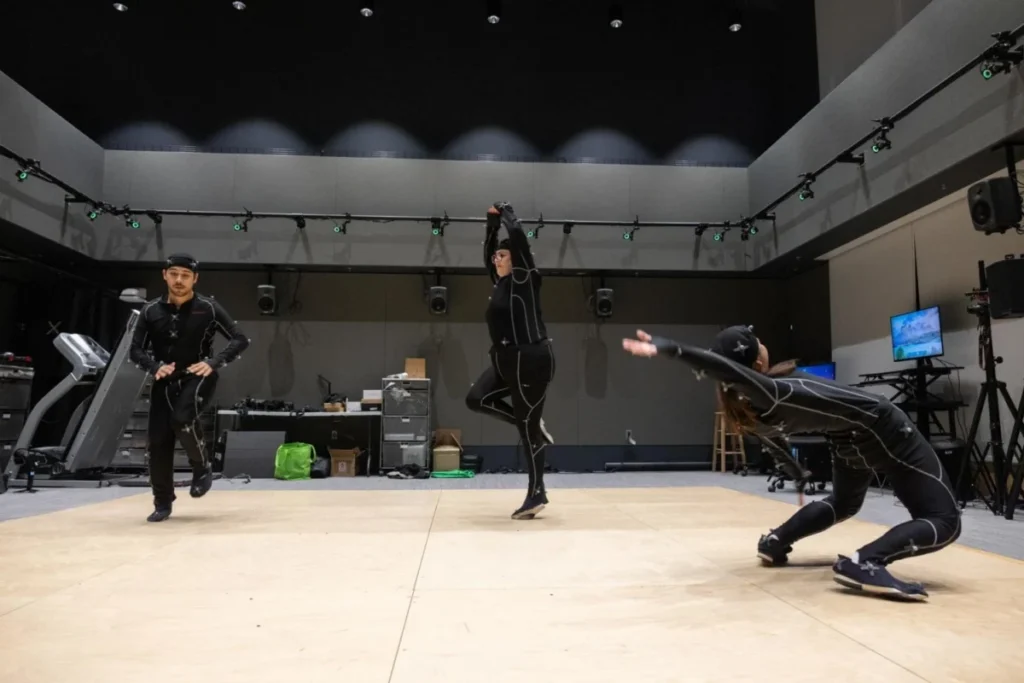
The MIT.nano Immersion Lab, managed by Talis Reks, is a state-of-the-art facility designed to support a wide array of research and creative endeavors requiring high-precision spatial tracking and immersive environments. Its centerpiece for virtual production is a robust 28-camera OptiTrack system, capable of capturing minute details of movement with exceptional accuracy. This system works in conjunction with specialized full-body motion-capture suits, which students don to become their own digital avatars.
Each semester, Pillis’s Emerson College students journey across the Charles River to MIT, transforming the Immersion Lab into a dynamic stage for their virtual productions. Here, they engage directly with the technology, generating virtual characters that can perform a myriad of actions—from intricate dance sequences and choreographed fights to even playing instruments with the flair of musical legends like The Beatles. A crucial aspect of this hands-on learning is the immediate feedback loop: students observe their animation data displayed instantly on computer screens, allowing them to refine or augment their character’s movements in real time. This iterative process fosters rapid learning and creative experimentation. Following their sessions at MIT, students take their meticulously captured data back to Emerson, where they integrate it into their short films for final projects, often culminating in visually stunning and technically sophisticated pieces.
Talis Reks, overseeing the Immersion Lab, expresses profound satisfaction with the collaboration. "It has been truly gratifying to support this course and to see the curiosity and ingenuity students have brought to the stage," Reks comments. He emphasizes how this partnership extends the lab’s utility far beyond traditional scientific research, showcasing its versatility in supporting artistic and performing arts disciplines. "This class highlights the range of what our lab can offer, extending well beyond research and into art and the performing arts." The lab’s ability to facilitate such diverse applications underscores its significance as a unique resource in the academic and creative landscape, especially given its advanced capabilities that are largely unparalleled in the Boston area.
Transforming Student Potential into Professional-Grade Output
The impact of this immersive experience on the students’ projects is profound, often surpassing their initial expectations. The type of mechanical character animation enabled by the Immersion Lab’s technology allows for a level of realism and detail that student productions typically struggle to achieve. "The final projects end up light-years beyond what these students thought they could achieve," Pillis remarks. Beyond the technical achievements, the students’ engagement and enthusiasm are palpable. Reks observes, "They really get into it. These students are not necessarily trained as actors, but the moment they see themselves as virtual characters, the realistic, granular movement enabled by motion capture, they get fully into performing." This transformation highlights the power of immediate visual feedback and the immersive nature of virtual production in unlocking creative potential.
Over the past two years, more than 60 Emerson College students have benefited from using the Immersion Lab through Pillis’s course, a testament to the program’s success and growing impact. These experiences have not only enhanced their technical skills but also provided tangible recognition for their work. Emerson undergraduate student Nick Forsch, for instance, received an EVVY Award nomination for his project titled "Enter," a short film depicting a human’s journey into a digital world to encounter artificial intelligence. The EVVY Awards, Emerson’s equivalent of the Emmy Awards, recognize student projects judged by a panel of industry experts based on creativity, quality, and professionalism. Forsch acknowledged the pivotal role of the Immersion Lab, stating, "Being able to use the MIT.nano Immersion Lab really elevated my project. I was excited to submit it for an EVVY, knowing the technology behind my work was on a professional level." This professional-grade technological foundation provided a crucial competitive edge.
Another notable project came from undergraduate student Evan Costa, who undertook a virtual recreation of The Beatles’ iconic performance on "The Ed Sullivan Show." Costa meticulously captured a version of each musician’s performance, reconstructing a vivid simulation of 1950s television. This ambitious project not only showcased technical prowess but also a deep understanding of historical media. Costa’s dedication and skill have already opened doors: he is set to join the MIT Learning Engineering and Practice Group, led by principal research scientist John Liu in the Department of Mechanical Engineering, as an intern this summer. This opportunity will allow him to continue exploring virtual production, further cementing the direct career pathways forged by this unique collaboration. "Having the opportunity to gather motion-capture data within the Immersion Lab gave me more than advanced technology for my project; it provided insight into an often-unseen world of creativity," Costa reflects. "Modern storytelling exists across a wide range of mediums, from film to video games, and witnessing the inner workings of this process has deepened my passion for virtual production." His statement encapsulates the profound impact of the Immersion Lab experience, extending beyond mere technical skill acquisition to fostering a deeper understanding and passion for the evolving landscape of digital storytelling.
Broader Implications and Future Horizons
The collaboration between Emerson College and the MIT.nano Immersion Lab holds significant implications for the future of media education and the broader entertainment industry. As virtual production continues its ascent, the demand for professionals proficient in these specialized workflows—including virtual production supervisors, real-time technical artists, motion capture specialists, and virtual art department artists—is rapidly growing. By providing students with hands-on experience on professional-grade equipment, this partnership directly addresses this industry need, preparing graduates for high-demand, cutting-edge roles.
This initiative also highlights the increasing convergence of art, science, and technology. The Immersion Lab, a facility primarily associated with scientific research, is now a vibrant crucible for artistic expression, demonstrating how technological advancements can empower creative fields in unprecedented ways. It democratizes access to tools that would otherwise be exclusive to large studios, fostering innovation and reducing barriers for independent filmmakers and student creators.
Looking ahead, the collaboration is poised for further advancements. Daniel Pillis and Talis Reks are actively planning to leverage even more sophisticated Immersion Lab technologies in the upcoming academic year. Their curriculum will expand to include specialized training in facial animation, intricate hand and finger tracking, multi-modal data capture (integrating various data streams like audio, video, and biometric data), and further developments in interactive generative motion capture. These additions will ensure that students remain at the forefront of virtual production techniques, equipped to tackle the most complex and innovative projects.
In an era where digital tools are not merely augmenting but fundamentally transforming creative processes, the partnership between Emerson College and the MIT.nano Immersion Lab stands as a beacon of forward-thinking education. It is not just teaching students about the future of filmmaking; it is actively empowering them to shape it, ensuring that the next generation of storytellers is fully fluent in the language of virtual production. This synergy between academic rigor and cutting-edge technology promises to inspire continued innovation and redefine the boundaries of cinematic art for years to come.