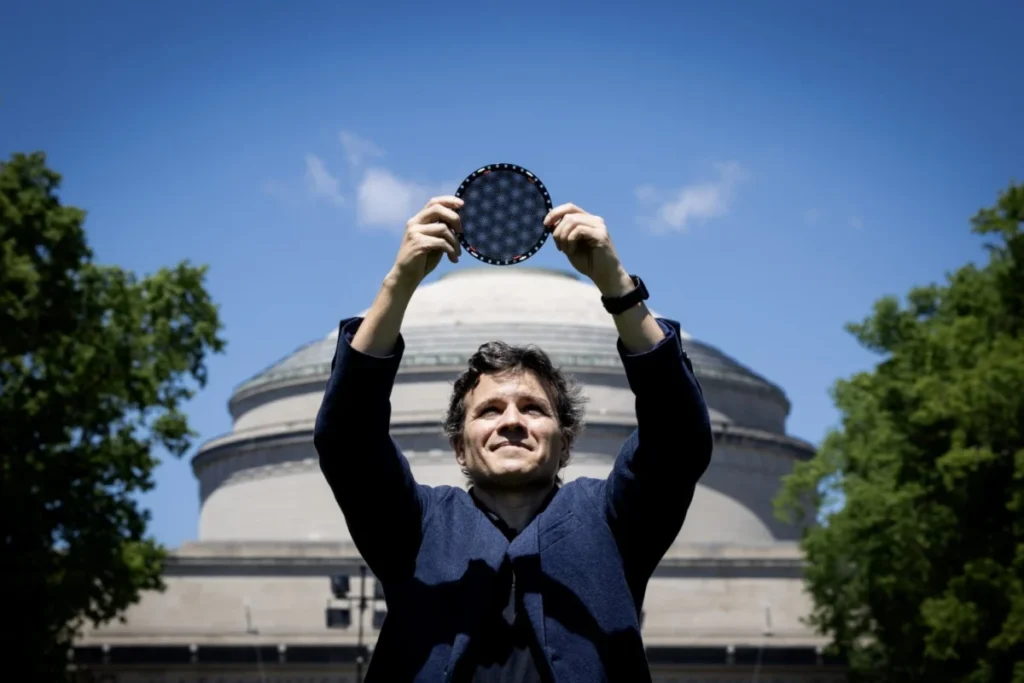
The Norwegian Academy of Science and Letters has officially named Pablo Jarillo-Herrero, the Cecil and Ida Green Professor of Physics at the Massachusetts Institute of Technology (MIT), as a co-recipient of the 2026 Kavli Prize in Nanoscience. This prestigious international award, often regarded as one of the highest honors in the scientific community second only to the Nobel Prize, recognizes Jarillo-Herrero for his foundational contributions to the birth and development of "twistronics." He shares the honor and the accompanying $1 million prize with two other distinguished physicists: Professor Eva Y. Andrei of Rutgers University and Professor Allan MacDonald of the University of Texas at Austin. The trio is being celebrated for a decade of work that has fundamentally altered the landscape of condensed matter physics by proving that the physical properties of two-dimensional materials can be radically transformed through precise geometric manipulation.
The Kavli Prize, established by the late philanthropist Fred Kavli, is awarded every two years to researchers who have made transformative breakthroughs in three specific fields: astrophysics, nanoscience, and neuroscience. These categories represent "the big, the small, and the complex." Jarillo-Herrero’s recognition in the nanoscience category highlights a paradigm shift in how scientists approach material design. Rather than relying on chemical doping or the creation of entirely new alloys to achieve specific electronic states, the field of twistronics demonstrates that simply rotating two layers of a material—most notably graphene—to a specific "magic angle" can unlock entirely new physical behaviors, including superconductivity and magnetism.
The Genesis of Twistronics: From Theory to Experimental Validation
The journey toward the 2026 Kavli Prize began nearly two decades ago with the isolation of graphene, a single layer of carbon atoms arranged in a hexagonal honeycomb lattice. While graphene was already known for its extraordinary strength and electrical conductivity, the three laureates looked beyond its inherent properties to explore what happens when layers are stacked and misaligned.
The chronology of this scientific revolution is marked by three distinct milestones. The first occurred in 2009, when Eva Y. Andrei and her research group at Rutgers University utilized scanning tunneling microscopy and spectroscopy to study graphene. They observed that even minute variations in the twist angle between layers could profoundly alter the material’s electronic structure. This was a landmark discovery because it suggested that the electronic fate of a material could be controlled by geometry rather than chemistry. This experimental observation provided the first hint that a new field of study was on the horizon.
Building on these observations, Allan MacDonald and his team at the University of Texas at Austin provided the theoretical scaffolding for the field in 2011. MacDonald’s research quantitatively predicted the emergence of a unique electronic structure at specific, discrete "magic angles." He proposed that when two layers of graphene are twisted to approximately 1.1 degrees, the electrons in the material slow down significantly, allowing them to interact with one another in ways previously thought impossible in graphene. This theoretical framework became the blueprint for "moiré materials"—named after the interference patterns created when two similar grids are overlaid at an angle.
The final piece of the puzzle was placed in 2018 by Pablo Jarillo-Herrero and his team at MIT. In a series of experiments that shocked the global physics community, Jarillo-Herrero’s group successfully fabricated devices consisting of two layers of graphene twisted to exactly 1.1 degrees. They observed two distinct and remarkable states: the material first became a "correlated insulator," where electron-electron interactions prevent the flow of current, and then, with a slight adjustment of the electric field, it transformed into a superconductor. This ability to tune a single material from an insulator to a superconductor using only an external voltage and a specific geometric twist was unprecedented.
Technical Implications of the Magic Angle
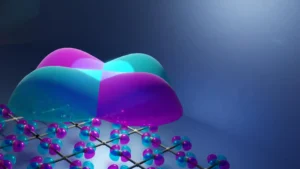
The "magic angle" of 1.1 degrees is more than just a numerical curiosity; it represents a state where the kinetic energy of electrons is minimized, and their mutual repulsion—known as Coulomb interaction—takes over. In standard metals, electrons move independently at high speeds. In magic-angle twisted bilayer graphene, the moiré pattern created by the twist creates a "flat band" electronic structure. In this state, electrons become "aware" of one another, leading to collective behaviors like superconductivity, where electricity flows with zero resistance.
The simplicity of the system is part of its brilliance. Traditionally, studying high-temperature superconductivity required complex ceramic materials that are difficult to synthesize and manipulate. Jarillo-Herrero’s twistronics platform allows scientists to study these complex quantum phenomena in a system made entirely of carbon, the same element found in pencil lead. This structural simplicity, combined with extreme electronic tunability, has turned twisted graphene into a "quantum simulator," allowing researchers to test theories of quantum mechanics that were previously inaccessible.
Institutional Reactions and the Significance of Fundamental Research
The announcement of the 2026 Kavli Prize has been met with widespread acclaim within the MIT community and the broader scientific world. Nergis Mavalvala, the dean of the MIT School of Science and the Curtis and Kathleen Marble Professor of Astrophysics, praised the achievement as a testament to the power of curiosity-driven exploration.
"Pablo’s groundbreaking research has once again been given well-deserved recognition," Mavalvala stated. "Pablo and his co-recipients have pioneered twistronics, very fundamental scientific research that has opened up a new field with myriad possibilities for novel quantum materials."
Jarillo-Herrero himself reflected on the journey in an autobiographical essay, emphasizing that the discovery was far from guaranteed. He noted that the techniques required to align two-dimensional flakes to within a tenth of a degree were "conceptually straightforward but hard to pull off in the lab." Despite the technical hurdles, the results proved to be a "big surprise" even to the researchers involved.
"I’m humbled and incredibly honored to be sharing this award with [Andrei and MacDonald]," Jarillo-Herrero said. He also used the platform to advocate for continued investment in basic science. "It is incredibly important for society to continue to support fundamental research: Although it often doesn’t have a direct near-term application, in the long run it happens to be the most transformative and impactful in society."
Deepto Chakrabarty, the head of the MIT Department of Physics, highlighted the potential long-term technological impact of this work. "Pablo’s research has helped spark a revolution in condensed matter physics and nanoscience, inspiring physicists worldwide to explore superconductivity and other emergent phenomena in engineered quantum materials," Chakrabarty said. "This work could potentially lead to the creation of superconductors at room temperature, which would have an enormous technological impact."
Broader Impact on Technology and Industry
The implications of twistronics extend far beyond the laboratory. While the current experiments are conducted at extremely low temperatures, the insights gained from magic-angle graphene are providing a roadmap for the development of room-temperature superconductors. If realized, room-temperature superconductivity would revolutionize the global energy landscape by enabling lossless power transmission, ultra-efficient electric motors, and high-speed maglev trains.
Furthermore, the field of twistronics is intersecting with the burgeoning industry of quantum computing. The ability to precisely control the states of electrons in two-dimensional materials offers a potential platform for the creation of more stable qubits, the building blocks of quantum computers. The "tunability" of twisted materials means that a single device could theoretically function as multiple components of a circuit—acting as a transistor, a sensor, or a memory bit—simply by changing the external voltage or the twist angle.
The impact of the 2018 discovery has already led to a massive influx of research. Thousands of papers have been published since Jarillo-Herrero’s initial announcement, exploring twisted trilayer graphene, twisted transition metal dichalcogenides, and even twisted light-matter interactions. The field has effectively democratized the study of "strong correlations," allowing smaller labs without access to massive particle accelerators or specialized chemical synthesis facilities to participate in cutting-edge quantum research.
MIT’s Growing Legacy of Kavli Laureates
Pablo Jarillo-Herrero’s selection as a Kavli Prize laureate adds to a storied history of excellence at MIT. He becomes the ninth faculty member from the institute to receive this honor since the prize was established in 2008. The list of previous MIT winners reflects the institute’s leadership across all three Kavli categories:
- Neuroscience: Nancy Kanwisher (2024) and Ann Graybiel (2012).
- Nanoscience: Bob Langer (2024) and Mildred Dresselhaus (2012).
- Astrophysics: Sara Seager (2024), Rainer Weiss (2016), Alan Guth (2014), and Jane Luu (2012).
This consistent recognition underscores MIT’s role as a global hub for interdisciplinary research. Jarillo-Herrero, who is also a member of the Research Laboratory of Electronics (RLE), represents the next generation of physicists who are blurring the lines between materials science, engineering, and theoretical physics.
Conclusion and Future Outlook
The 2026 Kavli Prize in Nanoscience serves as a formal validation of a field that is still in its infancy. While the discovery of twistronics has already fundamentally changed the textbooks of condensed matter physics, the full extent of its applications remains to be seen. The work of Jarillo-Herrero, Andrei, and MacDonald has shifted the focus of materials science from "what a material is made of" to "how a material is arranged."
As the scientific community gathers to celebrate these three laureates, the focus remains on the future. Researchers are now looking at "multi-layer" twistronics and "non-graphene" moiré systems, searching for even more exotic states of matter such as fractional Chern insulators and topological superconductors. For Pablo Jarillo-Herrero, the award is not just a career milestone but a call to continue exploring the "unseen" properties of the microscopic world. The "magic" of the magic angle, it seems, is only just beginning to be understood.