The phenomenon of a glass of ice water, where a single substance exists simultaneously in both solid and liquid states, serves as a fundamental introduction to the concept of coexisting phases. While this duality is a staple of classical thermodynamics, researchers at the Massachusetts Institute of Technology (MIT) have recently demonstrated that similar, albeit far more complex, phase dualities exist within the realm of quantum materials. In a study published in the journal Nature Physics, the team has successfully mapped the emergence and coexistence of two distinct electronic phases within a single material, offering a breakthrough that could redefine the future of high-performance quantum devices and the search for silicon alternatives.
The research, led by Nuh Gedik, the Donner Professor of Physics at MIT, focuses on the rare-earth material erbium tritelluride (ErTe3). By utilizing ultra-fast laser pulses to "shake" and then "listen" to the material’s internal structure, the team observed how electrons organize into wave-like patterns known as charge density waves (CDWs). The findings reveal that while some electronic phases form through gradual, uniform transitions, others emerge through a process of nucleation and expansion, similar to the way ice crystals form in water. This discovery provides a powerful new framework for understanding the hidden physics that governs phase transitions in complex quantum systems.
The Nature of Charge Density Waves and Quantum Phase Duality
In most conductive materials, electrons are distributed uniformly throughout the atomic lattice. However, in certain quantum materials, electrons can spontaneously reorganize into periodic patterns when subjected to extreme conditions, such as ultra-low temperatures. These patterns, characterized by crests of high electron density and troughs of low density, are known as charge density waves.
Lead author Yifan Su, an MIT PhD, notes that CDWs serve as a vital "playground" for fundamental physics. "Just like superconductivity, charge density waves are a collective phenomenon where electrons move together in certain ways," Su explains. "The power of CDWs is that they are a much simpler form of matter compared to superconductivity, allowing us to gain a deeper understanding of how electrons coordinate."
The material under investigation, erbium tritelluride, is particularly significant because it can host multiple CDW phases simultaneously. When cooled, the electrons in ErTe3 undergo a transformation where they no longer behave as individual particles but as a collective wave. Understanding how these waves emerge and interact is critical to answering one of the most persistent questions in condensed matter physics: why do some materials host multiple phases—such as magnetism and superconductivity—while others do not?
Experimental Methodology: The "Shake and Listen" Technique
To untangle the overlapping phases of erbium tritelluride, the MIT team employed an advanced experimental setup involving ultrafast time-resolved photoemission spectroscopy. This method allows researchers to observe electronic changes on a femtosecond timescale (one quadrillionth of a second), providing a high-speed "movie" of how phases dissolve and reform.
The experiment began by cooling atomically thin sheets of erbium tritelluride to approximately -230 degrees Celsius. At this temperature, the material exists in a "checkerboard" state where two different charge density waves coexist. The researchers then used a primary laser pulse to "shake" the system, effectively melting or weakening the electronic phases.
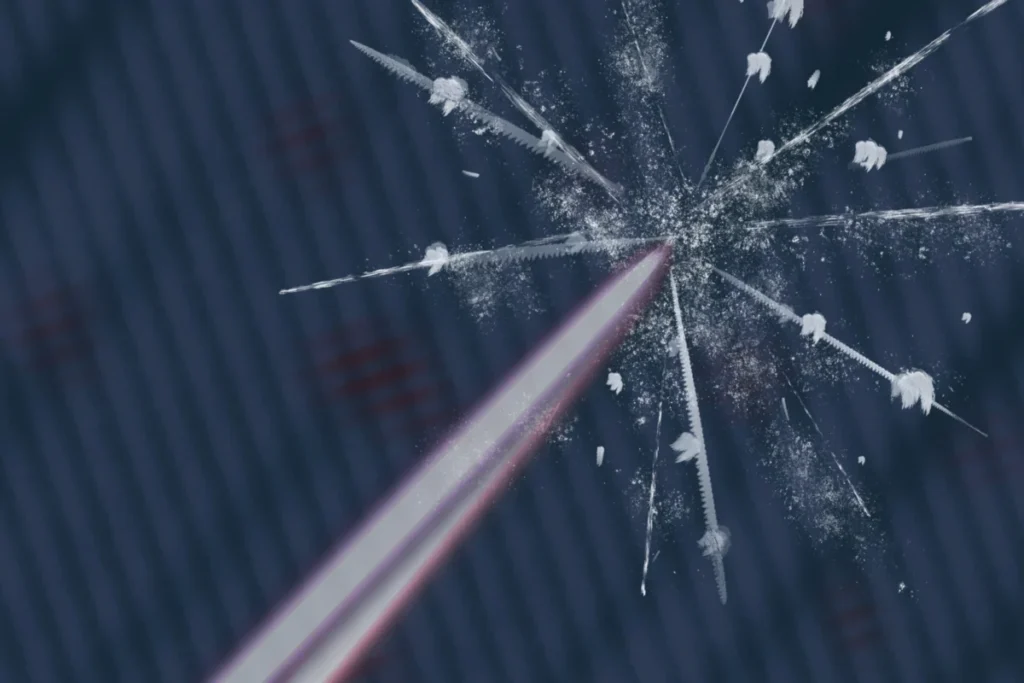
Following this disruption, a second laser pulse of high-energy photons was directed at the sample. This pulse ejected electrons from the material, allowing the researchers to measure their energy and momentum. By varying the timing of the second pulse, the team could capture snapshots of the material as it returned to its equilibrium state.
"We see the destroying of these phases, and then if we wait long enough, they come back," Professor Gedik explains. "Depending on how you hit them, the two phases respond differently." This approach allowed the team to isolate the dynamics of each phase, even though they occupied the same physical space within the material.
A Tale of Two Transitions: Gradual vs. Nucleated Growth
The most striking revelation of the study was the contrast in how the two CDW phases reemerged. Erbium tritelluride possesses a "dominant" phase and a "subdominant" phase. The dominant wave typically forms at -8 degrees Celsius, stretching across the material in a single direction. The subdominant wave appears at much lower temperatures, around -113 degrees Celsius, forming perpendicular to the first.
The MIT team found that the dominant phase recovered in a "second-order" transition. This means the wave re-established itself gradually and uniformly across the entire sample, regardless of the intensity of the initial laser pulse. This behavior is consistent with classic textbook descriptions of phase transitions, such as a piece of iron slowly gaining magnetism as it cools.
However, the subdominant phase behaved in an entirely unexpected, "first-order" manner. Instead of appearing uniformly, it emerged in isolated pockets or "seeds" that eventually expanded to cover the material. This is analogous to the way liquid water crystallizes into ice, where freezing begins at specific points and spreads outward. This nucleated growth in an electronic phase had long been a subject of theoretical debate, and the MIT study provides the first clear observational evidence of this mechanism in ErTe3.
Chronology of Discovery and Research Context
The study of erbium tritelluride and its electronic properties has been a collaborative effort spanning several years and multiple institutions.
- Initial Discovery: Charge density waves in rare-earth tritellurides were first identified decades ago, but the coexistence of multiple waves remained difficult to study due to the overlapping nature of the signals.
- 2017-2020: Researchers at Stanford University, led by collaborators who synthesized the high-purity ErTe3 samples used in this study, began refining the growth of atomically thin sheets of the material.
- 2020-2023: The MIT team, including co-author Alfred Zong (now an assistant professor at Stanford), developed the ultrafast laser protocols necessary to distinguish between the dominant and subdominant phases.
- 2024: The publication of the findings in Nature Physics marks the culmination of these efforts, providing a definitive map of how multiple quantum phases compete or coexist.
This research builds upon a long lineage of work in the Gedik Lab at MIT, which specializes in using light to probe and control the quantum properties of matter. The ability to manipulate these phases with light suggests a future where electronic properties can be switched on and off at speeds far exceeding current semiconductor technology.
Implications for the Post-Silicon Era
The motivation behind this research extends beyond fundamental curiosity. As the miniaturization of silicon-based transistors approaches its physical limits—a phenomenon often referred to as the end of Moore’s Law—engineers are looking toward quantum materials to power the next generation of computing.
"People believe the cornerstone of replacing silicon lies in quantum materials that have multiple coexisting phases," says Alfred Zong. The ability of a single material to switch between different electronic states (such as a conductor, an insulator, or a superconductor) could allow for the creation of multi-functional devices that are smaller, faster, and more energy-efficient than current silicon chips.
Furthermore, the study has significant implications for high-temperature superconductivity. In many high-temperature superconductors, various phases—magnetism, CDWs, and superconductivity—exist in a complex, often competitive relationship. By understanding the "hidden physics" of how these phases emerge in a simpler material like ErTe3, scientists can develop better models for how to stabilize superconductivity at higher temperatures, potentially leading to lossless power grids and revolutionary transportation technologies.
Analysis of Broader Impacts and Future Directions
The MIT study underscores the importance of "nonequilibrium physics"—studying materials not as they sit still, but as they react to external stimuli. By pushing a material out of its comfort zone with lasers, researchers can reveal properties that are invisible under static conditions.
The discovery that an electronic phase can emerge through first-order nucleation (the "ice" model) suggests that quantum materials may be more tunable than previously thought. If engineers can control where and how these "pockets" of electronic phases form, they could potentially "pattern" electronic functions into a material at the nanometer scale without needing to physically etch the surface.
This work was supported by several major scientific bodies, including the U.S. Department of Energy (DOE), the U.S. National Science Foundation (NSF), and the Gordon and Betty Moore Foundation’s EPiQS Initiative. Such broad institutional support highlights the strategic importance of quantum material research in maintaining global technological leadership.
As the team moves forward, they plan to apply this "shake and listen" technique to other complex materials, including cuprates and iron-based superconductors. The goal is to create a comprehensive "atlas" of phase transitions, providing the blueprints necessary for engineers to build the quantum devices of the future. By untangling the intricate checkerboard of electron behavior, the MIT physicists have opened a new window into the quantum world, one where the transitions of electrons are as visible and understandable as the freezing of a glass of water.