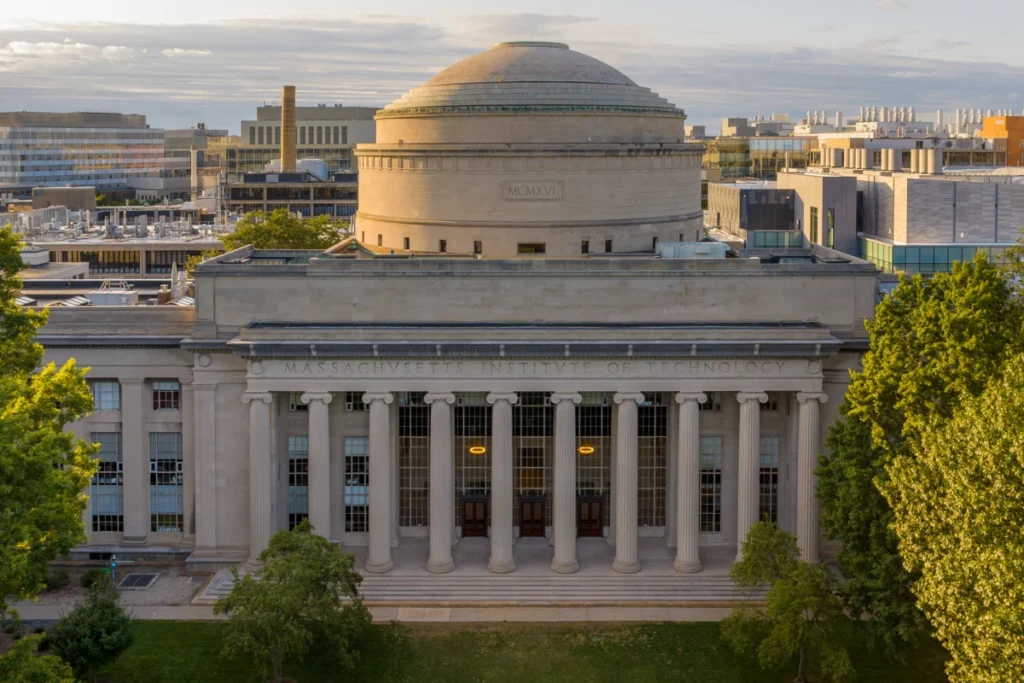
The Massachusetts Institute of Technology (MIT) has been selected to play a pivotal role in the U.S. Department of Energy’s (DOE) ambitious Genesis Mission, an initiative designed to fundamentally transform the landscape of American scientific inquiry. On Wednesday, the DOE announced that MIT researchers will contribute to 15 collaborative projects under Genesis Phase I, a move that underscores the university’s leadership in the integration of artificial intelligence, quantum computing, and advanced engineering. These projects, six of which are led directly by MIT principal investigators, represent a concerted effort to harness the most sophisticated technologies available to address pressing challenges in energy production, national security, and fundamental science.
The Genesis Mission is described by federal officials as the blueprint for the "world’s most powerful integrated science discovery platform." By incentivizing cross-sector partnerships between academia, private industry, and the 17 U.S. National Laboratories, the program seeks to compress the timeline between theoretical discovery and practical application. This first phase of the mission focuses on developing and demonstrating research workflows that integrate AI with rigorous scientific investigation, ensuring that the next generation of American innovation is built on a foundation of computational excellence.
A Strategic Mandate for National Innovation
The announcement of the Genesis Mission awards comes at a critical juncture for U.S. science policy. As global competition in technology intensifies, the DOE is moving to ensure that the United States maintains its edge in high-stakes fields such as fusion energy and quantum information systems. Ian A. Waitz, MIT’s vice president for research, emphasized the strategic importance of these collaborations, noting that MIT researchers are "proud to be leading and contributing to projects under the Genesis Mission, in vital areas of research that support national priorities."
Waitz further characterized the mission as a "fantastic opportunity to catalyze the power of universities, industry, and the U.S. national laboratories to advance science, technology, and innovation for the benefit of the nation and the world." This sentiment reflects a broader shift in the American research ecosystem toward "team science," where the scale of modern problems—such as climate change or the development of secure quantum networks—requires resources and expertise that no single institution can provide in isolation.
The Genesis Summit and Phase I Objectives
The initial cohort of projects was unveiled during the Genesis Summit held in Washington, D.C. The summit served as a gathering point for the nation’s leading scientific minds to discuss the integration of AI into the scientific method. Under Phase I, the selected teams are tasked with proving the viability of their proposed workflows. This involves not only the technical application of AI and supercomputing but also a rigorous evaluation of the scientific merit and reproducibility of AI-driven results.
Funding for MIT is currently pending the completion of negotiations toward individual award agreements. Once finalized, these Phase I projects will serve as a testing ground. Those that demonstrate "promising pathways toward transformative capabilities at scale" will be eligible for further, more substantial funding in subsequent phases of the Genesis Mission. The goal is to move beyond small-scale experimentation toward "industrial-scale" discovery platforms that can autonomously suggest experiments, analyze vast datasets, and even predict the properties of yet-to-be-created materials.
High-Impact Research Frontiers at MIT
The 15 projects involving MIT span a diverse array of scientific domains, each carrying significant implications for the future of technology and the environment.
Fusion Energy and Digital Twins
One of the most prominent areas of focus for the MIT teams is fusion energy. Often referred to as the "holy grail" of clean energy, fusion seeks to replicate the processes that power the sun. However, managing the ultra-hot plasma within a tokamak—a donut-shaped fusion reactor—requires near-instantaneous calculations and control. MIT researchers are working on modeling plasma behavior and developing "digital twins" for fusion magnet systems. A digital twin is a virtual model that accurately reflects a physical object; in this context, it allows scientists to simulate how magnets will react under extreme conditions, preventing costly damage and accelerating the path to commercial fusion power.
Rare Earth Elements and Critical Minerals
As the world transitions to renewable energy, the demand for rare earth elements (REEs) has skyrocketed. These minerals are essential for everything from electric vehicle motors to wind turbines and advanced defense systems. Currently, REE extraction is often chemically intensive and environmentally damaging. MIT-led projects under the Genesis Mission aim to advance chemical-free methods for extracting these vital materials. By utilizing AI to understand the molecular-level interactions during extraction, researchers hope to create a more sustainable and secure domestic supply chain for critical minerals.
Quantum Sensing and Fundamental Physics
In the realm of quantum science, MIT researchers are developing powerful sensors designed to answer fundamental questions about the nature of the universe. These sensors operate at the limits of measurement, capable of detecting minute fluctuations in gravity or electromagnetic fields that were previously invisible. Such technology has dual-use potential: it can help physicists understand dark matter while also providing the basis for ultra-precise navigation systems that do not rely on GPS—a major priority for national security.
Biomolecular Design and Generative Engineering
The mission also touches on the intersection of biology and materials science. By exploiting the self-assembly of biomolecules, MIT teams are designing new materials with specific, "targeted" properties, such as enhanced strength or self-healing capabilities. Simultaneously, in the field of mechanical engineering, researchers are using generative AI to design rotating blades for machinery systems. This approach allows for the creation of optimized geometries that human engineers might never conceive, leading to more efficient turbines and engines.
The Vision of Under Secretary Darío Gil
The Genesis Mission is a cornerstone of the DOE’s broader strategy to modernize the scientific enterprise. Under Secretary for Science and Innovation Darío Gil, an MIT alumnus (SM ’00, PhD ’03), has been a vocal advocate for the "AI for Science" movement. In the DOE’s official announcement, Gil praised the scientific community’s response to the call for proposals.
"The extraordinary response to this Genesis Mission application process demonstrates that America’s scientific community is ready to reimagine how discovery happens," Gil stated. He highlighted the mission’s role in building the "next generation of scientific capability," emphasizing that the integration of AI and science will "reveal what is possible when AI and science advance together."
Gil’s leadership is particularly relevant given his previous role as Senior Vice President and Director of Research at IBM, where he oversaw the development of some of the world’s most advanced AI and quantum systems. His move to the DOE signals a federal commitment to treating AI not just as a tool for data analysis, but as a fundamental partner in the creative process of scientific discovery.
Chronology of the Genesis Initiative
The path to the current Phase I awards began with a series of strategic assessments by the DOE regarding the future of the American research infrastructure.
- Initial Conception (2023): The DOE began formulating a strategy to integrate the capabilities of its Office of Science with the emerging power of generative AI and exascale computing (computing capable of at least one exaflop, or a quintillion calculations per second).
- The FASST Initiative: This was followed by the launch of the "Frontiers in Artificial Intelligence for Science, Security, and Technology" (FASST) initiative, which laid the groundwork for the Genesis Mission.
- Call for Proposals (Early 2024): The DOE issued a Request for Applications (RFA) for the Genesis Mission, seeking projects that could bridge the gap between high-performance computing and laboratory experimentation.
- Review and Selection (Summer-Fall 2024): A rigorous peer-review process evaluated hundreds of proposals based on scientific merit, collaborative depth, and the potential for technological breakthrough.
- Phase I Announcement (November 2024): The DOE officially announced the first cohort of Genesis Mission projects, including the 15 involving MIT.
Broader Implications and National Security
The implications of the Genesis Mission extend far beyond the laboratory. At its core, the mission is about national resilience. By developing digital twins for energy systems, the U.S. can better protect its power grid from cyberattacks or physical failures. By leading in quantum sensing, the nation ensures that it remains at the forefront of the "Second Quantum Revolution."
Furthermore, the focus on "chemical-free" extraction of rare earth elements addresses a significant geopolitical vulnerability. Currently, a large percentage of REE processing is concentrated outside the United States. Developing indigenous, environmentally friendly extraction technologies is a matter of economic and strategic independence.
The collaborative nature of the Genesis Mission also serves to train the next generation of the American workforce. Students and post-doctoral researchers at MIT will work alongside experts from national labs like Oak Ridge or Argonne and industry leaders from the private sector. This cross-pollination of ideas ensures that the expertise developed within the Genesis Mission will permeate the entire U.S. economy.
Looking Ahead: From Workflow to Scale
As MIT and its partners enter the negotiation phase for these awards, the focus will quickly shift to execution. The success of Phase I will be measured by how effectively these teams can demonstrate that AI-integrated workflows actually produce better science, faster.
If the Phase I projects prove successful, the DOE is expected to move into Phase II, which will involve scaling these capabilities. This could lead to the creation of "Autonomous Discovery Laboratories" where AI systems manage the entire lifecycle of an experiment, from hypothesis generation to physical execution using robotic arms, to data analysis and publication.
The Genesis Mission represents a bold bet on the future of human-AI collaboration. For MIT, being at the center of 15 of these projects is a testament to its enduring role as an engine of progress. As the mission moves forward, the discoveries made in these initial phases may well define the technological landscape of the mid-21st century, securing the nation’s position as a global leader in the age of intelligent discovery.