The stifling embrace of an Indian summer in June 2024 offered a stark, personal illustration of the escalating global heat crisis to MIT mechanical engineering Professor Kripa Varanasi. Landing in New Delhi in the dead of night to attend a conference, he was immediately enveloped by a scorching 104-degree Fahrenheit heat. "This was June, and it was crazy. It was so hot for the whole meeting that I never left the hotel," Varanasi recounted, noting daytime temperatures that neared an unbearable 122 F (50 C). The experience was a stark contrast to his childhood memories in India, where such extreme, prolonged heat was far less common. "When I grew up in India, it was not like this," he reflected, adding, "That kind of inspired me."
This personal encounter ignited a renewed urgency for Varanasi, driving him to address the profound challenge of extreme heat. His resolve quickly found an avenue through a crucial grant from the MIT Climate Project, providing the seed funding necessary to develop a proof-of-concept prototype for a wearable personal cooling system. This grant was one of four pivotal allocations made under the "Critical Cooling" initiative, for which the Climate Project had issued a call for proposals the previous year. Collectively, these innovative projects received grants totaling $450,000, and their initial six-month development phases have now concluded, yielding promising results and laying the groundwork for further development.
The Global Imperative: A World Overheating
Professor Varanasi’s experience in Delhi is far from isolated; it is a symptom of a much larger, rapidly intensifying global crisis. Heatwaves are becoming more frequent, more intense, and longer-lasting across the planet, especially in regions of the Global South like India, Southeast Asia, and parts of Africa. India, in particular, has faced a relentless onslaught of extreme heat in recent years. Data from the India Meteorological Department (IMD) shows a consistent upward trend in average temperatures, with 2023 being the warmest year on record globally, and consecutive years witnessing unprecedented heat events across South Asia. The summer of 2024, as Varanasi experienced, continued this alarming pattern, with temperatures regularly exceeding 45°C (113°F) in many northern Indian states, pushing human physiological limits and leading to significant public health concerns.
The human toll of these heatwaves is immense. They exacerbate existing health conditions, lead to heatstroke, dehydration, and can be fatal, particularly for vulnerable populations such as the elderly, young children, outdoor laborers, and those living in informal settlements without adequate shelter or cooling. Beyond health, the economic ramifications are severe, impacting agricultural productivity, labor output, and energy grids struggling to cope with peak demand. Schools and businesses often close, daily life is disrupted, and the very fabric of society is strained. According to the World Health Organization (WHO), heat stress is among the deadliest natural hazards, with thousands of excess deaths attributed to heat annually, a figure projected to rise dramatically without effective interventions. This urgent backdrop underscores the critical need for scalable, sustainable cooling solutions, not just for comfort, but for survival and economic stability.
MIT’s Strategic Response: The Critical Cooling Initiative
Recognizing the escalating humanitarian and environmental crisis posed by extreme heat, the MIT Climate Project launched its "Critical Cooling" initiative. This ambitious program was championed by Christoph Reinhart, the Terri and Alan Spoon Professor of Architecture and Climate, who leads MIT’s Sustainable Design Lab (SDL). Professor Reinhart explains that the term "critical cooling" originated from a collaborative effort between the SDL and Harvard’s Human Rights Entrepreneurs Clinic. "It is motivated by the fact that climate change increasingly causes heat fatalities, primarily among vulnerable populations, who lack access to active cooling," Reinhart stated. He emphasized the profound potential impact of MIT’s research: "The impact that MIT can have by ‘cooling people, not spaces’ is enormous." This guiding philosophy directly informed the creation of the grant program, which provided each of the selected teams with six months of seed funding to rapidly explore and develop truly innovative approaches to the complex cooling problem.
The initiative was designed to foster rapid innovation and interdisciplinary collaboration. To ensure the solutions developed would be relevant and implementable in the target regions, the project teams, in collaboration with the Abdul Latif Jameel Poverty Action Lab (J-PAL), commenced their work with a crucial workshop. Led on J-PAL’s side by Senior Policy Manager Andre Zollinger, this workshop brought together a diverse group of stakeholders, including representatives from the World Bank, leaders from the Global South, industry experts, and engineers with a wealth of ideas. This collaborative approach aimed to align research efforts with real-world needs and ensure the proposed technologies had pathways to practical application and societal impact. Liana Frey, a managing director at the MIT Climate Project, affirmed the success of this initial phase, noting, "All of the teams made progress and most produced initial prototypes," and confirming that significant effort would now be dedicated to further developing and funding these promising ideas. "We’re continuing to look at different ways of proceeding with the work," Frey added, highlighting the ongoing commitment to these vital innovations.
Innovating for a Cooler Future: The Four Breakthrough Projects
The four projects funded under the Critical Cooling initiative represent a diverse portfolio of approaches, each tackling different facets of the cooling challenge with novel scientific and engineering solutions.
Personalized Comfort: Kripa Varanasi’s Wearable Cooling System
Professor Kripa Varanasi’s project, directly inspired by his Delhi experience, focused on "cooling people, not spaces." His wearable personal cooling system operates on a principle akin to how an elephant uses its large, vascularized ears to dissipate heat and cool its blood. This bio-inspired design optimizes heat transfer from the body. The prototype device is remarkably energy-efficient, consuming only about 33 watts – a tiny fraction of the approximately 1,000 watts typically required by a standard room air conditioner. This low power demand makes it particularly suitable for regions with unreliable or expensive electricity.
Cost-effectiveness is another cornerstone of Varanasi’s design. While the prototype device, using U.S.-sourced materials, would cost around $20, he estimates that local manufacturing and material sourcing in India could drive the production cost down to less than $1 per unit. This extreme affordability opens up possibilities for widespread distribution. Varanasi envisions governments procuring these garments in bulk and distributing them to communities, where local entrepreneurs could establish charging stations for nightly recharges. Other local businesses could emerge to manufacture the systems, fostering economic development. The wearable components, such as socks, would be washable separately from the cooling material, ensuring hygiene and longevity. Such a system could dramatically improve quality of life, enabling people to get a good night’s sleep even amidst extreme heat, which in turn could boost productivity and well-being.
The proof-of-concept prototype, which used a simulated foot with a heater, successfully demonstrated the ability to maintain the required cooling zone for the body. "We were able to keep it in the zone that we need for the body to stay cool," Varanasi confirmed. "So our initial prototype that we were able to build with this funding showed that this can become a viable solution." The core innovation lies in a novel material treatment process developed by his team, which overcame a "fundamental science bottleneck" to enable this efficient heat dissipation. This versatile material could also be integrated into other applications, such as cooling sleeping bags. Varanasi is actively exploring commercialization pathways, emphasizing that for any good idea to thrive, it "has to be a business, otherwise good ideas can die. It has to be a good business and a sustainable business."
Harnessing Earth’s Coolth: Yet-Ming Chiang’s Subsurface Well Systems
Another promising avenue of research was pursued by Yet-Ming Chiang, the Kyocera Professor of Materials Science and Engineering. His project delved into the potential of subsurface wells, utilizing innovative heat-absorbing materials, to supply spaces with air significantly cooler than peak ambient temperatures. This approach aims to achieve cooling with substantially less energy expenditure compared to conventional vapor-compression heat pumps, which are energy-intensive and often financially prohibitive in developing regions.
Chiang’s system leverages the principle of geothermal cooling, where the stable temperatures found beneath the earth’s surface are harnessed. By integrating advanced heat-absorbing materials, the efficiency of heat exchange is enhanced, allowing for more effective cooling with a smaller footprint. This technology holds particular promise for small apartment buildings and single-family homes in India and other parts of the Global South, where space is often limited, and energy costs are a significant burden. The ability to provide effective cooling without relying heavily on grid electricity or fossil fuels represents a significant step towards sustainable and equitable access to thermal comfort.
Eco-Friendly Refrigeration: Asegun Henry’s Rubber-Based Caloric Cooling
Asegun Henry, the George N. Hatsopoulos Professor in Thermodynamics, addressed the critical environmental impact of traditional air conditioning systems. His research explored an alternative approach designed to be far more energy-efficient and, crucially, to eliminate the use of hydrofluorocarbon (HFC) refrigerants. HFCs are potent greenhouse gases, with a Global Warming Potential (GWP) thousands of times higher than carbon dioxide, contributing significantly to climate change. International agreements like the Kigali Amendment to the Montreal Protocol aim to phase out these harmful substances, underscoring the urgency of finding viable alternatives.
Professor Henry’s innovative solution utilizes a cheap, widely abundant solid "caloric" material – rubber – to achieve a cooling effect. Caloric materials exhibit a temperature change when subjected to external stimuli (e.g., mechanical stress in elastocaloric materials like rubber, or magnetic fields in magnetocaloric materials). By mechanically stressing and releasing rubber, heat can be efficiently pumped away from a space. This process then uses plain water as an efficient and environmentally benign heat transfer fluid, completely avoiding the need for HFCs. The initial target market for this technology includes single-family houses and apartment buildings, but Henry noted its potential for larger systems, such as cooling energy-intensive data centers, which are rapidly growing and demanding ever more efficient cooling solutions. This technology offers a pathway to truly green refrigeration with zero GWP refrigerants, a monumental step for climate action.
Reinventing Refrigerants: Gang Chen’s Greenhouse-Neutral AC
Gang Chen, the Carl Richard Soderberg Professor of Power Engineering, tackled the inherent problems of existing air conditioning units: their high cost, substantial power consumption, and reliance on refrigerants that are powerful greenhouse gases. He highlighted that these coolants are not only potent climate warming agents but are also prone to leakage during operation and especially upon the ultimate disposal of the devices, further amplifying their contribution to global warming. The current global air conditioning market already contributes between 3% and 4% of global warming emissions, a figure projected to triple or quadruple in coming years as demand surges in rapidly developing economies.
To address this escalating challenge, Professor Chen’s approach involves developing a completely different kind of chemical refrigerant that boasts no greenhouse impact. This represents a radical departure from conventional refrigerants. The grant enabled Chen to move his theoretical ideas into the experimental phase, allowing him to build and test three prototypes. While still in the developmental stages, Chen is optimistic about the preliminary results. "I’m not at the stage where I can say that I know this will work," he stated cautiously, but based on the experiments, he intends to build a further prototype. If this next iteration performs as expected, it could signify a dramatic paradigm shift in air conditioning technology worldwide, offering a truly sustainable cooling solution for residential, commercial, and even the intensive cooling needs of burgeoning data centers.
From Concept to Commercialization: The Road Ahead
The initial six-month grant period proved highly productive, with all four teams making significant progress and most successfully producing initial prototypes. This rapid advancement underscores the efficacy of targeted seed funding in accelerating climate solutions. Liana Frey of the MIT Climate Project reiterated the institution’s ongoing commitment: "We’re continuing to look at different ways of proceeding with the work." This includes exploring additional funding mechanisms, forging industry partnerships, and navigating the complex path from laboratory innovation to widespread market adoption.
The commercialization of these technologies is a crucial next step. Professor Varanasi, for instance, is actively exploring various possibilities for developing his novel cooling material into a viable commercial product. He underscores the fundamental truth of innovation: "Ultimately, to make anything work, it has to be a business, otherwise good ideas can die. It has to be a good business and a sustainable business." This perspective highlights the need for not just technological breakthroughs but also robust business models that can ensure scalability, affordability, and long-term impact, especially for the vulnerable populations these solutions are designed to serve.
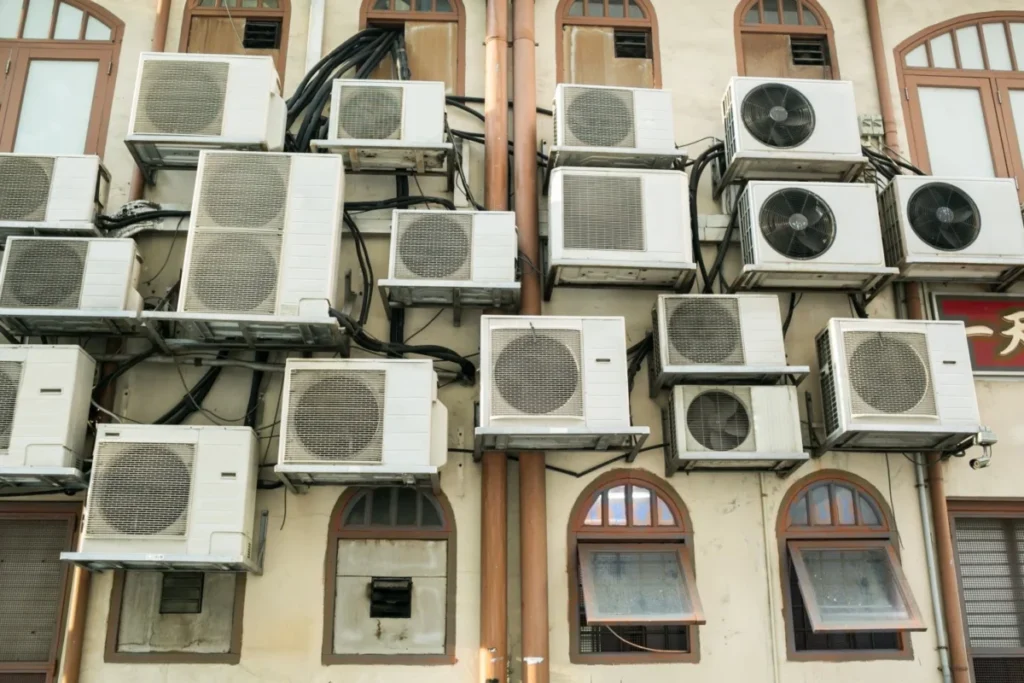
The global cooling gap remains immense; only about 8% of the 2.8 billion people residing in the hottest parts of the world currently have access to air conditioning. This disparity is often compounded by limited access to reliable and affordable power, and high levels of poverty. As the planet continues to warm, the need for effective and sustainable cooling will only intensify. "There are a lot of people interested in this heat-stress question," Frey observed, emphasizing that "It’s just becoming more and more urgent."
Broader Implications and the Path to Climate Resilience
The initiatives undertaken by MIT researchers hold profound implications extending far beyond technological innovation. They represent a critical step towards global climate resilience, aligning with several United Nations Sustainable Development Goals (SDGs), particularly SDG 3 (Good Health and Well-being), SDG 7 (Affordable and Clean Energy), and SDG 13 (Climate Action).
By focusing on energy-efficient, environmentally benign, and cost-effective cooling solutions, MIT is addressing a looming humanitarian crisis. The ability to provide thermal comfort to vulnerable populations can prevent heat-related fatalities, improve public health outcomes, and enhance productivity, thereby fostering economic stability in regions disproportionately affected by climate change. Moreover, the emphasis on local manufacturing and entrepreneurship, as envisioned by Varanasi, offers a pathway for inclusive economic growth, creating jobs and empowering communities.
The shift away from high-GWP refrigerants and energy-intensive cooling systems is paramount for mitigating climate change. If the projected tripling or quadrupling of the AC market relies on current technologies, the environmental consequences would be catastrophic. Innovations like those from Professors Henry and Chen are vital to decouple cooling from greenhouse gas emissions, offering a blueprint for a sustainable future where human comfort does not come at the expense of planetary health.
The collaborative model, involving institutions like J-PAL and engaging stakeholders from the World Bank and the Global South, demonstrates a holistic approach to problem-solving. This integrated strategy is crucial for ensuring that research outputs are not only scientifically sound but also socially relevant, economically viable, and politically actionable.
In conclusion, the work spearheaded by the MIT Climate Project’s Critical Cooling initiative stands as a testament to the power of targeted academic research in addressing humanity’s most pressing challenges. As the world grapples with unprecedented heat, the pioneering efforts of these MIT researchers offer tangible hope for a cooler, more equitable, and more sustainable future. Their breakthroughs are not merely scientific achievements; they are vital contributions to global health, economic development, and climate resilience, paving the way for innovations that could redefine how billions of people adapt to a warming planet.