In a breakthrough that could fundamentally alter the economics of plastic recycling and domestic energy production, a multidisciplinary team at the Department of Energy’s Oak Ridge National Laboratory (ORNL) has pioneered a chemical process to transform polyethylene into liquid transportation fuels. Polyethylene, the most prevalent plastic in the world, is found in everything from single-use shopping bags and food packaging to industrial-grade cutting boards and milk jugs. Despite its ubiquity, it remains one of the most difficult materials to recycle effectively, often ending up in landfills or the ocean. The new ORNL method utilizes molten salts and aluminum chloride to break down these resilient polymers at temperatures significantly lower than current industrial standards, yielding gasoline- and diesel-like hydrocarbons with unprecedented efficiency.
The Global Polyethylene Challenge and the Need for Upcycling
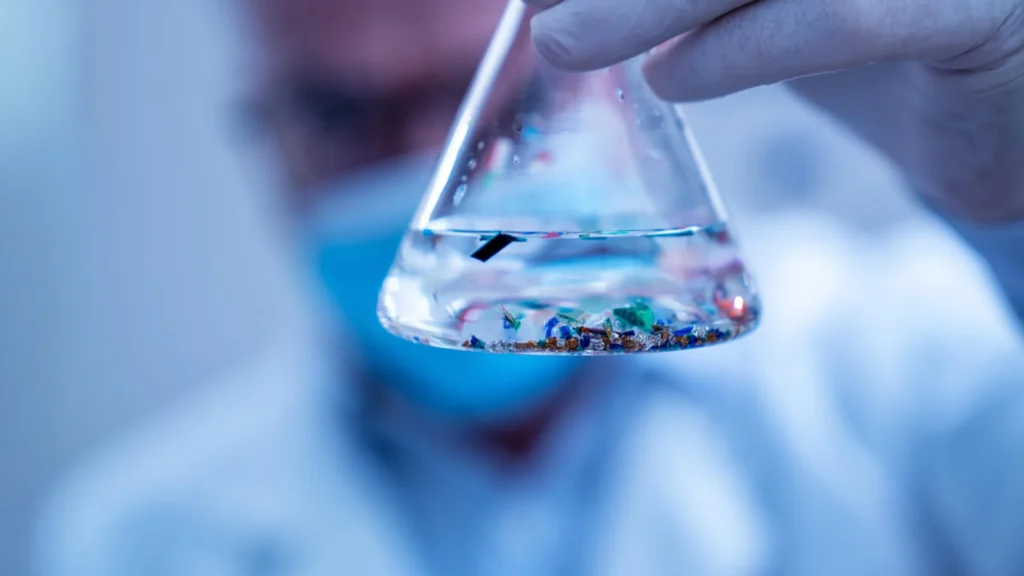
Polyethylene is a polymer consisting of long chains of carbon and hydrogen atoms. Its chemical stability—the very quality that makes it so useful for durable goods—is also its greatest environmental liability. Globally, millions of tons of polyethylene are produced annually, but the rates of effective recycling remain stubbornly low. Traditional mechanical recycling, which involves melting and reforming the plastic, often results in "downcycling," where the material loses its structural integrity and eventually becomes unrecyclable waste.
Chemical recycling, or "upcycling," offers a more sustainable alternative by breaking the plastic down into its original chemical building blocks or into new, high-value products. However, conventional chemical methods like pyrolysis—the thermal decomposition of materials at elevated temperatures—typically require heat exceeding 450 to 500 degrees Celsius. These processes are energy-intensive, expensive to scale, and often require the addition of external hydrogen or expensive noble-metal catalysts like platinum or palladium to produce high-quality fuel.
The ORNL team sought to bypass these hurdles by developing a process that is both more energy-efficient and economically viable. By using commercially available inorganic salts as the reaction medium, the researchers have demonstrated a way to achieve high-value fuel yields at temperatures below 200 degrees Celsius—a thermal range comparable to a standard household oven.
The Science of Molten Salt Catalysis
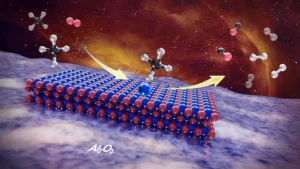
The core of the ORNL innovation lies in the use of molten salts containing aluminum chloride. In this system, the salts serve a dual purpose: they act as the liquid medium in which the reaction occurs and as the catalyst that facilitates the chemical transformation. This "all-in-one" approach eliminates the need for organic solvents, which can be toxic and difficult to recover, and external hydrogen, which adds significant cost and complexity to industrial operations.
To understand the mechanics of this transformation, the researchers employed a suite of advanced analytical techniques. Using soft X-ray spectroscopy and nuclear magnetic resonance (NMR), the team observed how charged aluminum atoms within the molten salt bind with other atoms to create highly acidic catalytic sites. These sites are the "engine" of the reaction; they aggressively attack the long, stable molecular chains of the polyethylene, cleaving the carbon-carbon bonds and reorganizing them into smaller hydrocarbon molecules.
"We developed an efficient and selective polyethylene-to-gasoline conversion," explained Liqi Qiu, a postdoctoral researcher at the University of Tennessee, Knoxville (UTK), who conducted the primary experiments at ORNL. Under the leadership of Sheng Dai, an ORNL Corporate Fellow and expert in separations and polymer chemistry, the team achieved a gasoline yield of approximately 60 percent. This high yield under mild conditions represents a significant leap forward in the field of polymer upcycling.
Advanced Imaging and Atomic Tracking
The complexity of breaking down a solid polymer into a liquid fuel required the team to track the reaction at an atomic level. This was made possible through ORNL’s unique research infrastructure, including the Spallation Neutron Source (SNS) and the Center for Nanophase Materials Sciences.
The researchers used isotopic labeling—replacing standard hydrogen with its heavier isotope, deuterium—to follow the movement of ions through the reaction. Because neutrons are exceptionally sensitive to light elements like hydrogen and deuterium, the team was able to monitor the behavior of the polymer as it interacted with the aluminum catalytic sites. This tracking revealed the formation of positively charged carbon ions (cations), which are critical intermediates in the conversion process.
Further research was conducted at the Advanced Light Source at Lawrence Berkeley National Laboratory. There, staff scientist Zhenzhen Yang and her colleagues used soft X-rays to examine the electronic interactions between the aluminum and the polyethylene. They discovered that the aluminum’s electronic signature shifted during the reaction, indicating the formation of electron-rich intermediates. This provided concrete evidence that the aluminum was not just a spectator but was actively driving the catalytic cycle.
"The ORNL system solves two fundamental issues," noted Sheng Dai. "First, for a stable system, the process can be radically easier to scale up. Second, previous systems needed an initiator to kick off catalytic reactions. Our system does not need one, as the molten salt itself provides the necessary environment for the chemistry to begin."
Chronology of Innovation and Historical Context
The development of this technology is rooted in decades of molten salt research at ORNL. In the 1960s, the laboratory gained international recognition for its Molten Salt Reactor Experiment (MSRE), which proved that molten salts could safely transport nuclear fuel and manage heat in a reactor environment. While that research was focused on energy generation, it provided the fundamental chemical knowledge that Sheng Dai and his team leveraged to address the modern plastic crisis.
The project, managed by ORNL’s Tomonori Saito, represents a convergence of polymer science, inorganic chemistry, and advanced materials engineering. The timeline of the study involved:
- Phase I: Conceptualization: Applying the principles of molten salt chemistry to carbon-carbon bond cleavage in polymers.
- Phase II: Experimental Testing: Testing various salt combinations and identifying aluminum chloride as a key catalyst.
- Phase III: Mechanism Verification: Using neutron scattering and X-ray spectroscopy to prove the "acidic site" theory.
- Phase IV: Refinement: Optimizing the temperature to below 200 degrees Celsius and measuring gasoline yields.
- Phase V: Publication and Patenting: The findings were recently published in the Journal of the American Chemical Society, and the team has officially applied for a patent to protect the intellectual property.
Economic and Industrial Implications
The implications of this research extend far beyond the laboratory. If the process can be scaled to an industrial level, it could provide a domestic source of fuel while simultaneously solving a major waste management problem. Unlike traditional oil refining, which depends on the extraction of finite fossil fuels, this "circular" approach uses existing waste as a feedstock.
From an industrial competitiveness standpoint, the absence of noble-metal catalysts is a game-changer. Metals like platinum are subject to volatile global markets and supply chain risks. By using cheap, commercially available inorganic salts, the ORNL method lowers the barrier to entry for chemical recycling companies.
Furthermore, the selectivity of the process is a major advantage. The research showed that the structure of the starting polymer influences the final product: simpler chains yield gasoline, while more complex, high-density polyethylene chains tend to produce diesel-like fuels. This level of control allows refineries to tune their output based on market demand.
Challenges and the Path to Commercialization
Despite the promising results, one significant technical hurdle remains: the stability of the molten salts. The aluminum-based system is hygroscopic, meaning it greedily absorbs moisture from the air. When water enters the system, it can degrade the salt and reduce its catalytic effectiveness.
The next phase of research will focus on "confining" the molten salts. Researchers are investigating the use of carbon-based materials or halogens to act as a protective barrier or support structure for the salts. This would make the catalyst easier to separate from the fuel products and improve its longevity in a continuous industrial process.
"Polymer source material is abundantly available from consumer waste, and our catalyst system is very cheap," said Liqi Qiu. "This advance may be promising for industry, providing a path to turn a environmental burden into an economic asset."
Conclusion: A New Frontier for Energy Security
The work at Oak Ridge National Laboratory represents a significant milestone in the Department of Energy’s mission to enhance U.S. energy security. By reducing the energy requirements for plastic upcycling and eliminating the need for expensive catalysts, the ORNL team has laid the groundwork for a more sustainable and self-reliant energy infrastructure.
As the global community grapples with the dual challenges of plastic pollution and the transition to more efficient fuel production, technologies that bridge the gap between waste management and energy science will be critical. The "kitchen oven" temperature conversion of polyethylene may soon move from the lab bench to the industrial plant, marking a new era in the chemistry of recycling.