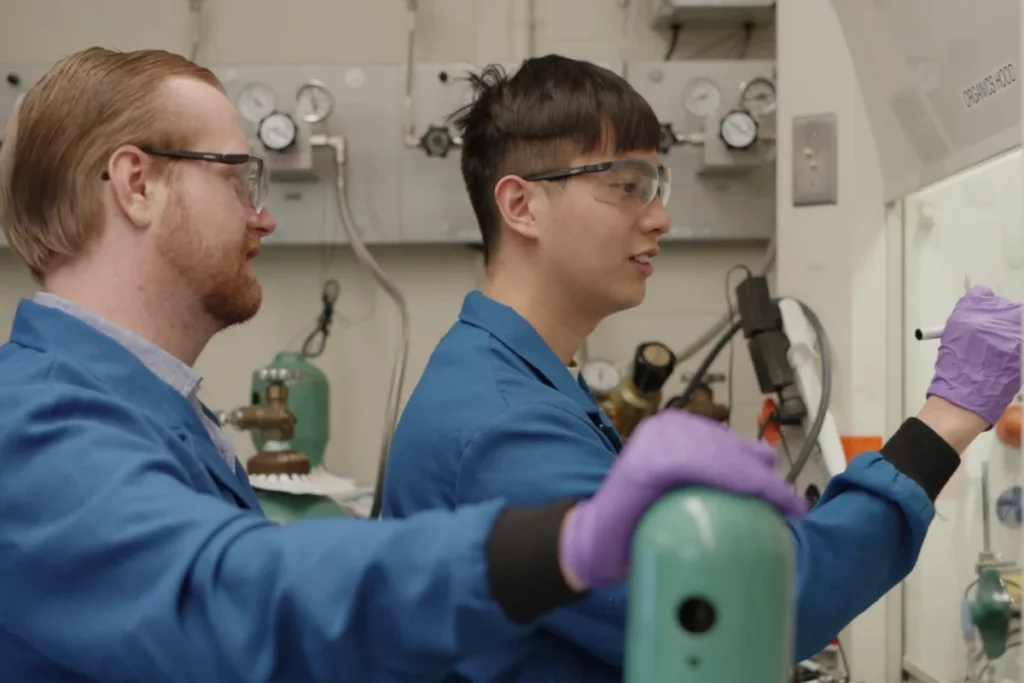
Carbon capture, a pivotal strategy in the global fight against climate change, faces persistent hurdles rooted in its technological complexity, energy intensity, and prohibitive costs. In a significant stride towards overcoming these barriers, a dedicated team of researchers at the Massachusetts Institute of Technology (MIT), operating with crucial support from the MIT Climate and Sustainability Consortium (MCSC), has unveiled promising advances in developing energy-efficient and scalable alternatives to conventional carbon dioxide (CO2) capture methods. Their findings, recently published in the esteemed journal Nature Energy, introduce a novel electrochemical approach that could fundamentally reshape the landscape of carbon removal, pushing the needle closer to widespread, flexible, and economically viable deployment.
The urgency for innovation in carbon capture technology stems directly from the escalating climate crisis. Global atmospheric CO2 concentrations surpassed 420 parts per million (ppm) in 2023, a level unprecedented in at least 800,000 years, according to data from the National Oceanic and Atmospheric Administration (NOAA). The Intergovernmental Panel on Climate Change (IPCC) has consistently highlighted that achieving the ambitious targets set by the Paris Agreement – limiting global warming to well below 2°C, preferably to 1.5°C above pre-industrial levels – will necessitate not only drastic reductions in emissions but also the widespread deployment of carbon dioxide removal (CDR) technologies. Carbon capture and storage (CCS) and carbon capture, utilization, and storage (CCUS) are central to these strategies, offering a pathway to decarbonize hard-to-abate sectors like heavy industry (cement, steel, chemicals) and power generation, while also potentially providing a source for valuable carbon-based products.
The Limitations of Conventional Carbon Capture Technologies
The current gold standard for CO2 capture, amine scrubbing, presents a formidable challenge in its energy demands and scalability. This post-combustion capture technology typically involves passing flue gas through a solvent containing amines, which chemically bind to CO2. While effective, regenerating the amine solvent to release the captured CO2 requires substantial heat, often derived from burning fossil fuels, thus creating a parasitic energy load that can reduce the net power output of a plant by 10-30%. The energy penalty, coupled with the large equipment footprint and high operational costs associated with solvent degradation and regeneration, has severely limited its widespread adoption. For instance, the capital cost for a typical large-scale amine-based carbon capture plant can range from $200 million to over $1 billion, with operating costs often exceeding $50 per tonne of CO2 captured. These economic and energetic inefficiencies underscore the critical need for next-generation capture technologies that are less energy-intensive, more cost-effective, and inherently scalable.
Introducing Electrochemically Mediated CO2 Capture (EMCC) and N-Heterocyclic Imines (NHIs)
The MIT research, spearheaded by graduate students Fang-Yu Kuo of the Department of Chemical Engineering and Gi Hyun Byun of the Department of Mechanical Engineering (MechE), alongside Professor Betar Gallant of MechE, and former MCSC postdoctoral Impact Fellows Glen Junor and Akachukwu Obi, delves into electrochemically mediated CO2 capture (EMCC) as a promising alternative. EMCC represents a paradigm shift by enabling the electrification of CO2 separation, ideally powered by renewable energy sources such as solar or wind. This intrinsic linkage to clean energy offers a distinct advantage over thermal-driven processes, potentially decoupling carbon capture from fossil fuel consumption and significantly reducing its carbon footprint.
However, EMCC has its own set of challenges. Prior EMCC systems often rely on sorbents that necessitate highly reducing potentials to operate effectively. This requirement makes them susceptible to significant oxygen reduction side reactions, which can severely compromise both the efficiency and long-term performance of the capture system. Recognizing this critical shortcoming, the MIT team embarked on an investigation into a novel class of sorbents: N-heterocyclic imines (NHIs).
Fang-Yu Kuo explains the rationale behind this choice: "NHIs have shown promise in recent years as CO2 sorbents because of the ease of NHI molecular modifications for tuning basicity." The team’s groundbreaking contribution lies in translating these NHIs for the first time into the EMCC application space. "Our work demonstrates that NHI-based sorbents can be modulated electrochemically for CO2 separation by a unique separation mechanism that avoids the need of applying highly reducing potentials," Kuo elaborated, highlighting a key advantage that addresses one of EMCC’s most persistent limitations.
Unpacking the Research Findings: A Novel Bis(NHI) Structure
The MIT team’s initial research establishes a novel bis(NHI) structure, a molecular architecture specifically engineered to enhance CO2 capture efficiency within an electrochemical framework. This innovative design allows for a theoretical CO2 modulation of two molecules per electron during cell operation. This "two molecules per electron" characteristic is particularly significant because it implies a higher efficiency of CO2 capture for a given electrical energy input, potentially halving the electron requirement compared to systems that capture one CO2 molecule per electron. This increased electron efficiency is a direct pathway to lower energy consumption and reduced operational costs, making the technology more economically attractive.
The published results further indicate that with continued molecular engineering, particularly focusing on strengthening the CO2 binding affinity of bis(NHI) structures, this technology could operate effectively in a broader range of electrolyte environments. This expanded operational flexibility is crucial for real-world applications, as it opens new avenues to optimize overall system performance across multiple metrics: electron efficiency, energy efficiency, and adaptability to varying industrial or atmospheric conditions. For instance, a system that can operate efficiently in different electrolyte compositions might be more robust to impurities in flue gas or could be tailored for specific capture scenarios, such as direct air capture (DAC) versus point source capture.
Future Directions and the Path to Practical Deployment
While the initial findings are highly encouraging, the researchers acknowledge that significant work remains. "A critical future direction of our work involves gaining deeper mechanistic insight into the stability and degradation pathways of the bis(NHI) radical cation," says Kuo. Understanding these intricate molecular processes is paramount for developing durable and long-lasting capture systems. "Understanding these pathways will inform the rational design of next-generation bis(NHI) molecules, enabling longer operational lifetimes and enhanced cycling durability for practical deployment," he adds. This focus on stability and degradation is not merely academic; it is a direct prerequisite for commercial viability, as any large-scale industrial application demands materials that can withstand repeated cycles and harsh operating conditions over extended periods without significant loss of performance.
The Broader Carbon Capture Landscape and Market Dynamics
The global carbon capture, utilization, and storage (CCUS) market is experiencing rapid growth, driven by ambitious climate targets and increasing corporate commitments to net-zero emissions. Projections from various market research firms indicate that the global CCUS market, valued at approximately $2.1 billion in 2022, is expected to reach over $7 billion by 2030, growing at a compound annual growth rate (CAGR) exceeding 15%. This growth is fueled by both policy incentives, such as the 45Q tax credit in the United States (which offers up to $85 per metric ton for CO2 stored geologically and $60 per metric ton for CO2 utilized), and a growing recognition of CCUS as an indispensable tool for deep decarbonization.
Currently, most operational CCUS projects globally utilize amine-based absorption. However, the field is actively exploring a diverse portfolio of alternative technologies, including membrane separation, adsorption, cryogenic distillation, and other electrochemical methods. Direct Air Capture (DAC), though still nascent and highly energy-intensive, is also gaining traction as a long-term solution for legacy emissions. The MIT team’s EMCC research positions itself squarely within this evolving landscape, offering a potentially disruptive technology that could address the core limitations of both conventional capture and some emerging electrochemical methods.
Economic and Environmental Implications of EMCC Advancement
The successful development and commercialization of efficient EMCC technologies like the one proposed by MIT hold profound economic and environmental implications. Economically, a significant reduction in the energy penalty for CO2 capture translates directly into lower operational costs. If the bis(NHI) system can indeed achieve high electron efficiency and operate with less energy input, it could drive down the overall cost per tonne of captured CO2 to levels that are more competitive with, or even superior to, current market prices for carbon credits or existing subsidies. This cost reduction is vital for accelerating the deployment of CCUS across various industries. Furthermore, the ability to power these systems with renewable energy sources enhances their appeal, creating a symbiotic relationship between clean energy generation and carbon removal.
Environmentally, highly efficient and scalable carbon capture technologies are essential for achieving net-zero emissions targets. By providing a pathway for decarbonizing sectors that are difficult to electrify or for removing historical emissions from the atmosphere, EMCC could play a critical role in mitigating the worst impacts of climate change. The potential to "upgrade" captured CO2 into valuable products, such as sustainable aviation fuels, building materials, or industrial chemicals, further strengthens the economic case and closes the loop on carbon, transforming it from a waste product into a resource. This circular carbon economy concept is a significant driver for innovation in the CCUS space.
Challenges and the Road Ahead
Despite the promising nature of the MIT research, several challenges remain before EMCC using NHIs can reach commercial viability. Beyond the critical need to understand and mitigate degradation pathways for long-term stability, scaling up laboratory-scale demonstrations to industrial pilot plants presents its own set of engineering and financial hurdles. The availability of robust, cost-effective materials, the optimization of electrochemical cell designs, and the integration of these systems into existing industrial infrastructure will all require substantial research, development, and investment. Furthermore, regulatory frameworks and market mechanisms must continue to evolve to support the deployment of advanced carbon capture technologies, providing clear incentives and reducing investment risks.
The work by Fang-Yu Kuo, Gi Hyun Byun, Professor Betar Gallant, Glen Junor, and Akachukwu Obi represents a compelling step forward in the quest for effective climate change mitigation tools. By addressing the fundamental energy and scalability limitations of existing carbon capture methods through innovative electrochemical science, MIT is contributing to a future where decarbonization is not only a necessity but also a practical and economically viable reality. The continued refinement of NHI-based sorbents and EMCC systems holds the potential to unlock a new era of carbon capture, making a tangible difference in the global effort to combat climate change.






