The landscape of European synchrotron science has reached a significant milestone with the formal commissioning of a groundbreaking Transition Edge Sensor (TES) spectrometer at the BESSY II facility in Berlin. Developed through an international multi-institutional partnership involving the Helmholtz-Zentrum Berlin (HZB), the Max Planck Institute for Chemical Energy Conversion (MPI-CEC), and the National Institute of Standards and Technology (NIST) in the United States, the instrument represents a quantum leap in X-ray detection capabilities. As the first and only TES spectrometer operating at a synchrotron facility in Europe, the device offers a level of sensitivity that was previously unattainable on the continent, promising to unlock new frontiers in quantum materials, molecular biology, and sustainable energy research.
The introduction of this system addresses a long-standing bottleneck in X-ray spectroscopy. By delivering a photon detection efficiency that is between 100 and 1,000 times greater than conventional wavelength-dispersive spectrometers, the TES array allows researchers to observe phenomena that were once hidden by the limitations of hardware. With the commissioning phase complete, the HZB has officially opened the doors to the international scientific community, inviting research proposals to utilize this state-of-the-art diagnostic tool.
The Technological Leap: From Conventional Gratings to Superconducting Sensors
To understand the impact of the new TES spectrometer, one must consider the traditional challenges of X-ray Emission Spectroscopy (XES) and Resonant Inelastic X-ray Scattering (RIXS). These techniques are essential for probing the electronic structure of matter, yet they are notoriously "photon-hungry." In a standard setup, X-rays hit a sample, causing it to emit photons. These emitted photons must then be collected and sorted by energy.
Traditional spectrometers rely on crystals or gratings to disperse the X-rays, much like a prism disperses visible light. While these methods provide high energy resolution, they suffer from extremely low collection efficiency because they can only capture a tiny fraction of the emitted photons at any given time. Consequently, experiments on dilute samples—such as trace metal ions in biological enzymes or individual layers of atoms—often required days of continuous beamtime, or were simply impossible because the signal was drowned out by background noise.
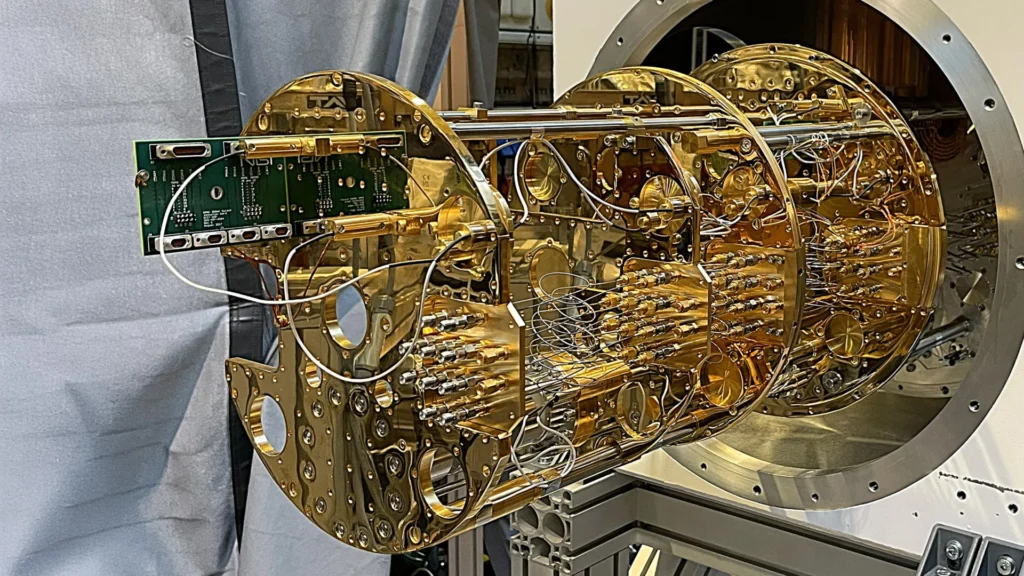
The TES array changes this paradigm entirely. Instead of using geometric dispersion, it utilizes the physics of superconductivity. The heart of the instrument consists of 248 individual sensors that operate at the "transition edge"—the narrow temperature range where a material switches from being a normal conductor to a superconductor. By maintaining the sensors at this critical threshold, even the tiny amount of energy from a single incoming X-ray photon is enough to cause a measurable change in the sensor’s temperature and, subsequently, its electrical resistance.
This "calorimetric" approach allows the detector to capture a much larger solid angle of emitted radiation while simultaneously measuring the energy of every single photon it hits. The result is a dramatic reduction in data collection time. Experiments that previously spanned an entire work shift can now be completed in a matter of minutes, allowing for high-throughput screening of materials and the study of transient chemical states.
Engineering at the Limits: The 25 Milli-Kelvin Environment
Operating a TES spectrometer is an immense cryogenic challenge. For the superconducting sensors to function with the necessary sensitivity, they must be cooled to 25 milli-Kelvin—just a fraction of a degree above absolute zero (-273.15°C). This temperature is significantly colder than the vacuum of deep space.
To achieve and maintain this extreme environment, the team at BESSY II utilizes a Helium-4/Helium-3 dilution refrigerator. This technology, which has become a cornerstone of the burgeoning quantum computing industry, allows for continuous cooling without the vibrations that typically plague mechanical cryostats. The sensors are further shielded from the "warm" environment of the synchrotron beamline by a series of ultra-thin filters that allow X-rays to pass through while blocking thermal infrared radiation.
When a photon strikes one of the 248 sensors, the resulting spike in resistance is processed through an array of Superconducting Quantum Interference Devices (SQUIDs). These SQUIDs act as ultra-sensitive amplifiers, converting the subtle changes in the superconducting state into digital signals that can be analyzed by computers. The integration of nearly 250 such sensors into a single coherent array represents a masterpiece of micro-fabrication and electronic engineering, spearheaded largely by the expertise of NIST in Boulder, Colorado.
Expanding the Horizons of Material Science and Chemistry
The primary beneficiaries of this new sensitivity are researchers working on "dilute" or "fragile" systems. In the realm of molecular chemistry and biology, many of the most important processes occur at metal centers within large, complex molecules. For instance, the catalytic centers of enzymes often contain only a few iron or manganese atoms buried deep within a protein structure. Traditional X-ray methods often damage these delicate biological samples before enough data can be collected. The TES spectrometer’s high efficiency allows scientists to gather high-quality data using much lower X-ray doses, preserving the sample’s integrity.
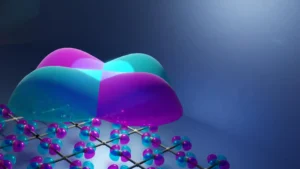
In the field of quantum materials, the instrument is expected to provide unprecedented insights into systems with reduced dimensions. This includes atomically thin monolayers—materials like graphene or transition metal dichalcogenides—where the physical properties are dictated by the behavior of electrons in a two-dimensional plane.
"The TES spectrometer complements methods such as ARPES (Angle-Resolved Photoemission Spectroscopy), which scans the electronic band structures of such systems," explains Régis Decker, the HZB scientist responsible for the instrument. While ARPES is excellent for mapping how electrons move through a crystal, the TES-based RIXS can provide a complementary view of how those electrons interact with each other and with the crystal lattice, particularly in "correlated" systems where traditional physics models fail.
A Global Context and the Path to BESSY II
The installation at BESSY II marks a significant shift in the global distribution of advanced X-ray instrumentation. For the past decade, TES technology for X-ray science was largely concentrated in the United States and Japan. Prior to this deployment, only five such spectrometers were in operation worldwide: four at various Department of Energy (DOE) facilities in the U.S. (including the Stanford Synchrotron Radiation Lightsource and the Advanced Light Source) and one at the Photon Factory in Japan.
The journey to bring this technology to Europe began with a strategic collaboration. Recognizing the need for high-efficiency detection to support its energy research mission, the MPI-CEC partnered with HZB to fund and develop the project, drawing on the foundational sensor technology developed by NIST.
The timeline of the project highlights the complexity of the undertaking:
- Phase 1: Conceptualization and Design: Collaborative efforts between HZB and NIST to adapt astrophysics-grade TES sensors for the high-flux environment of a synchrotron.
- Phase 2: Cryogenic Integration: Building the custom dilution refrigerator and ultra-high vacuum (UHV) sample chambers capable of maintaining milli-Kelvin temperatures while allowing for sample manipulation.
- Phase 3: Installation and Testing: Integrating the spectrometer at the UE52-SGM beamline at BESSY II, which provides the necessary tunable, polarized X-rays.
- Phase 4: Commissioning: Successful "first light" experiments confirming the 100-1000x efficiency gain.
- Phase 5: Operational Status: Opening the instrument to the general user community in late 2024.
Future Upgrades: Magnetism and Real-World Conditions
While the current system is already a world-class tool, the team at BESSY II has a roadmap for further enhancements. One of the most anticipated upgrades involves the ability to study materials within strong magnetic fields. This will enable X-ray Magnetic Circular Dichroism (XMCD) and RIXS-MCD experiments, which are vital for developing the next generation of data storage devices and spintronic materials.
Furthermore, there are plans to enhance the sample preparation capabilities. The current system is connected to a custom UHV chamber that allows for precise temperature control from 10 K to room temperature. Future iterations will likely include "in-situ" and "operando" cells, allowing researchers to watch chemical reactions—such as those inside a working battery or on the surface of a catalyst—in real-time and with the extreme sensitivity provided by the TES array.
Impact and Implications for the Scientific Community
The commissioning of the TES spectrometer at BESSY II is more than just a technical upgrade; it is a strategic asset for European science. By reducing the time required for complex measurements, the facility can accommodate a larger number of research groups, accelerating the pace of discovery in fields ranging from environmental science to fundamental physics.
The ability to study highly diluted samples also has direct implications for the green energy transition. Developing more efficient catalysts for hydrogen production or carbon dioxide capture requires a deep understanding of how individual atoms interact during a reaction. The TES spectrometer provides the "microscope" necessary to see these interactions in detail.
As Régis Decker noted, the team is now eagerly awaiting the first round of user proposals. The arrival of this technology in Berlin ensures that European researchers remain at the cutting edge of the global race to understand and manipulate matter at the atomic level. With its unmatched efficiency and the power of the BESSY II synchrotron behind it, the TES spectrometer is set to become one of the most productive tools in the arsenal of modern X-ray science.