A groundbreaking system developed by researchers at the Massachusetts Institute of Technology (MIT) promises to revolutionize the creation of interactive objects by enabling dynamic visual changes without the need for fragile electronic circuits. This innovative platform, dubbed ShiftLens, opens up a myriad of possibilities, from adaptable warning signs capable of withstanding harsh environmental conditions to dynamic packaging that can visually alert users to issues like loose fasteners during transit. The end-to-end system is also poised to significantly streamline the rapid prototyping of adaptable objects across diverse fields such as art, architecture, and engineering, offering a robust and intuitive alternative to conventional interactive technologies.
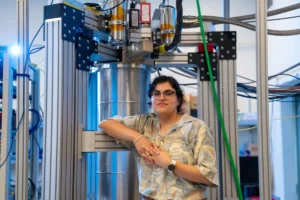
"With our system, an object can tell you whether you are using it properly, without the need for sensors or any complicated electronics. The interactive display is mechanical, so you can create a self-contained, multistate, interactive device that a user can control very intuitively," explains Yunyi Zhu, a graduate student in the MIT Department of Electrical Engineering and Computer Science (EECS) and the lead author of the paper detailing this novel platform. This research, representing a significant stride in the field of human-computer interaction, is scheduled for presentation at the prestigious ACM Symposium on User Interface Software and Technology, a key forum for advancements in user interface design and software.
Zhu’s co-authors include Dingning Cao, an MIT undergraduate; Jeremy Mrzyglocki, a graduate student at the Technical University of Munich; Stefanie Mueller, an associate professor in EECS and the Department of Mechanical Engineering at MIT and a member of the Computer Science and Artificial Intelligence Laboratory (CSAIL); and Narjes Pourjafarian, a postdoc at Northeastern University. Their collective work addresses a critical limitation in modern interactive design: the inherent vulnerability of electronic components to physical stress and environmental degradation.
The Limitations of Electronic Interactivity
Contemporary interactive products are overwhelmingly reliant on screens, embedded sensors, and complex electronic circuits to change their appearance or provide feedback. While these electronic interfaces offer unparalleled versatility and computational power, they are inherently fragile. Exposure to elements such as water, harsh chemicals, extreme temperatures, or physical forces like crushing, twisting, or pressing can easily damage or completely disable these sensitive components. This fragility significantly limits their application in environments where robustness and durability are paramount, such as outdoor industrial settings, marine applications, or even everyday items subjected to wear and tear.
Consider, for instance, warning signs on construction sites or in hazardous chemical facilities. If these signs rely on electronic displays to convey dynamic information (e.g., "safe" vs. "hazardous," or "entry permitted" vs. "entry restricted"), their functionality can be compromised by rain, dust, impacts, or vibrations. Similarly, packaging for sensitive goods might benefit from integrated indicators, but embedding electronics could add cost, complexity, and introduce failure points if the package experiences rough handling.
Conversely, traditional non-electronic methods for changing an object’s appearance typically involve static labels, stickers, or fixed optical elements like curved lenses. These approaches can create different visual effects, often dependent on the user’s viewing angle, but they fundamentally lack true interactivity. They cannot dynamically respond to user actions or changes in the object’s state in a meaningful, self-contained way. This dichotomy—between fragile electronic dynamism and robust static visuals—has long presented a design challenge, limiting the scope for truly resilient and adaptable interactive objects.
ShiftLens: A Mechanically Switchable Solution
To bridge this gap, the MIT researchers developed an end-to-end system that automatically translates a user’s design vision into a 3D printer-ready model of an object featuring a mechanically switchable surface appearance. At its core, ShiftLens achieves its dynamic visual states by combining two distinct optical layers on an object’s surface: a layer of specialized lenses positioned over an underlying, patterned backplane.
The magic happens through the relative motion between these two layers. The lens layer comprises an array of tiny lenticular lenses. Lenticular lenses are known for their ability to steer light differently depending on the viewing angle, often used to create 3D images or images that change based on perspective. In the ShiftLens system, however, their primary role is to magnify and display specific parts of the underlying pattern layer. The pattern layer itself is composed of strips of images, each strip corresponding to a different desired visual appearance or "state" of the object surface.
When a user initiates a mechanical shift of the lens layer relative to the patterned backplane, different sections of the backplane come into view through the lenses. The lenses then magnify these newly exposed parts of the backplane image, causing the entire surface appearance to change dramatically and instantly. This ingenious mechanical interplay creates a dynamic display that is robust, entirely passive (requiring no power once fabricated), and impervious to many of the environmental stressors that would incapacitate electronic alternatives.
Yunyi Zhu emphasizes the intricate engineering behind this seemingly straightforward concept: "The biggest challenge in this project was to make sure all moving parts align. We need to make sure that the optical effect, mechanical linkages, and computational graphics align with one another." This statement underscores the complexity involved in coordinating the physical design of the lenses and patterns with the mechanical actuation system and the computational tools used to generate these intricate designs. Precision in manufacturing and design is paramount to ensure the seamless transition between visual states and the clarity of the displayed information.
A Straightforward Design and Fabrication System
Recognizing that not all potential users would possess expertise in optics or mechanical engineering, the researchers dedicated significant effort to creating a user-friendly tool that automates the complex design process. This tool operates largely "behind the scenes," simplifying the creation of ShiftLens structures for designers, engineers, and even hobbyists.
Users interact with the system by providing a few key inputs: images representing the desired visual states for the object (e.g., a green checkmark, a red exclamation point, an ‘X’, an ‘O’), and the intended shape and curves of the object itself. The ShiftLens software then automatically generates the necessary lenticular lens array, the corresponding patterned backplane, and the mechanical linkages required for the shifting motion, all optimized for 3D printing. This automation democratizes access to complex optical and mechanical design, enabling rapid prototyping and iteration.
However, the researchers were also careful to communicate the inherent limitations of the ShiftLens design tool. As Zhu notes, "Another challenge is to communicate to users who are not familiar with optics or mechanical structures and let them specify and achieve what they have in mind." For instance, ShiftLens is not universally compatible with all object designs, as it fundamentally requires a mechanism for relative shifting motion between its two optical layers.
To address this, users have two primary integration options. They can either incorporate a ShiftLens mechanism into an object that already features a natural shifting interaction, such as the rotational movement of a lipstick tube or a dial on an appliance. Alternatively, they can integrate an explicit actuation mechanism like a slide switch, a rotating knob, or a roller into their design, specifically to drive the ShiftLens interaction. This flexibility allows for broad application while maintaining the core mechanical principle. "With ShiftLens, users can control what an object looks like while they are using it," Zhu highlights, emphasizing the intuitive, direct manipulation that characterizes the system.
Illustrative Demonstrations and Broader Applications
To demonstrate the versatility and practical utility of ShiftLens, the researchers fabricated a range of interactive objects, showcasing its potential across various sectors.
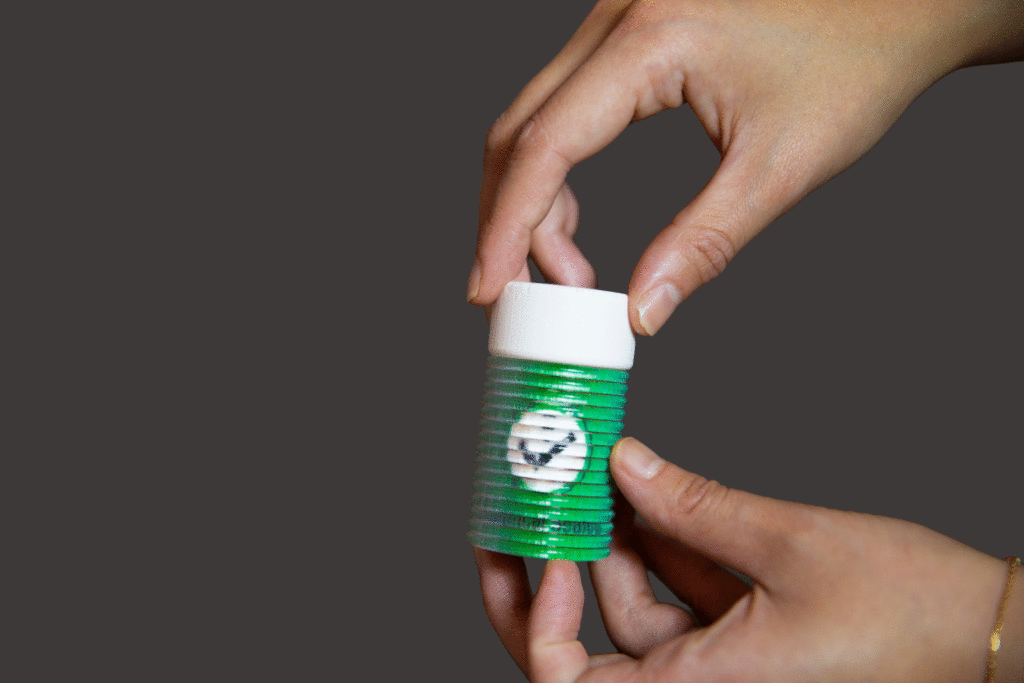
One compelling experiment involved a chemical bottle designed to provide immediate visual feedback on its cap’s security. When the cap is securely tightened, the bottle’s surface turns green and displays a prominent checkmark, offering clear assurance of proper closure. Conversely, if the cap is loose, the surface instantly switches to red and displays an exclamation mark, serving as an unambiguous warning. This application holds significant promise for industrial safety, laboratory settings, and even household chemical storage, where spills or exposure can have serious consequences. A mechanical, non-electronic indicator offers a fail-safe solution that doesn’t rely on batteries or complex sensors that could fail in harsh chemical environments.
Another demonstration featured a tic-tac-toe game. The squares on the game board could dynamically display a red ‘X’, a blue ‘O’, or remain blank, depending on the direction a user turned an integrated knob. This not only illustrates the system’s capacity for multi-state displays but also hints at its potential for educational toys, intuitive physical puzzles, or even accessible gaming interfaces that prioritize tactile interaction over screen-based input.
Beyond these proof-of-concept models, the researchers envision ShiftLens scaling up for commercial and industrial applications. Zhu provides a vivid example: "The leaking sink in my apartment would be a lot easier to fix if it could tell me where the leak was coming from." This anecdote underscores the system’s potential for proactive diagnostics in infrastructure. Imagine piping systems that visually indicate a damaged connection causing a leak, or industrial machinery panels that display operational status without requiring power. This could translate to significant cost savings in maintenance, reduced downtime, and improved safety protocols across various industries, from manufacturing to civil engineering.
Broader Impact and Implications
The implications of ShiftLens extend far beyond simple visual indicators. This technology represents a significant step towards creating a new generation of smart, durable, and sustainable interactive products.
- Industrial and Commercial Applications: In harsh industrial environments, where dust, moisture, and impact are common, ShiftLens offers an unparalleled level of robustness. Its application in warning signs, equipment status indicators, and leak detection in critical infrastructure could drastically improve workplace safety and operational efficiency. In logistics and supply chain management, dynamic packaging could provide instant visual confirmation of package integrity, reducing spoilage or damage to goods.
- Consumer Products: For everyday items, ShiftLens could lead to more intuitive and resilient designs. Children’s toys could feature robust, interactive elements that change color or shape without electronic components. Home appliances could provide clear, physical feedback on their status (e.g., "locked," "open," "cleaning cycle complete") without reliance on digital screens.
- Environmental Sustainability: By eliminating the need for complex electronic circuits, ShiftLens has the potential to significantly reduce electronic waste (e-waste). Products incorporating ShiftLens could have longer lifespans due to their inherent durability and reparability. Furthermore, the reliance on 3D printing allows for the use of various materials, potentially opening doors for more sustainable and recyclable object fabrication.
- Cost-Effectiveness and Accessibility: The mechanical nature of ShiftLens could lead to lower manufacturing costs compared to electronic equivalents, especially in high-volume production. Its simplicity also enhances accessibility, making interactive feedback available in contexts where electronics are impractical or too expensive. For individuals with certain disabilities, tactile and immediately visible mechanical feedback could offer a more intuitive interaction experience than digital interfaces.
- Artistic and Architectural Design: The ability to create dynamic surfaces without power or complex wiring offers exciting new avenues for architects and artists. Building facades could subtly change patterns with the wind, or art installations could offer physical, tactile interaction that alters their visual presence, integrating interactivity directly into the physical form rather than superimposing it.
Looking Ahead: The Future of ShiftLens
The MIT researchers are committed to further developing the ShiftLens platform. Their future work plans include exploring an even wider array of applications, pushing the boundaries of what can be achieved with mechanically switchable surfaces. A key area of focus is the development of advanced algorithms that can generate ShiftLens structures with fewer user inputs, further streamlining the design process and making the technology even more accessible to a broader user base.
Additionally, the team plans to enhance the design tool to allow users to incorporate a wider variety of actuation mechanisms. This would expand the range of physical interactions possible with ShiftLens, from simple slides and rotations to more complex movements, enabling even greater creativity and functionality in interactive object design. Advances in materials science for the lenticular lenses and backplanes could also unlock new optical effects and improve durability.
The ShiftLens project stands as a testament to MIT’s continued leadership in innovation, demonstrating how a creative approach to fundamental principles can yield solutions that are both elegant and profoundly impactful. By reimagining interactivity through mechanical means, Yunyi Zhu and her colleagues have paved the way for a future where objects are not just static forms but intuitive, robust, and self-contained communicators, seamlessly integrated into our physical world without the vulnerabilities of fragile electronics. This mechanical revolution in interactive design promises to make our environments safer, our products more durable, and our interactions with the world around us more intuitive and engaging.