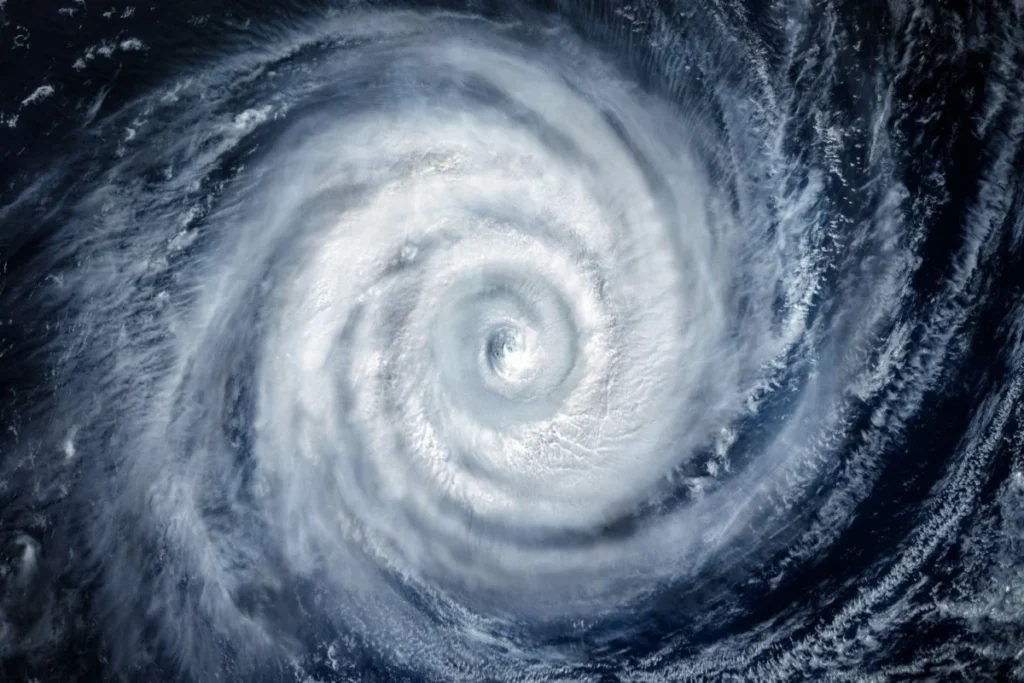
The accelerating pace of global warming is unmistakably fueling a surge in extreme weather-related events, manifesting as catastrophic floods, devastating hurricanes and cyclones, and wildfires intensified by prolonged drought. This escalating crisis presents an unprecedented challenge, yet the conventional tools employed by local communities, emergency and public safety agencies, and the critical insurance and risk markets have largely lagged, failing to keep pace with the dynamic, up-to-date data and sophisticated modeling required to accurately predict the evolution and impact of these phenomena.
Recognizing this critical shortfall, the Massachusetts Institute of Technology (MIT) launched its ambitious Climate Grand Challenges in 2022, an initiative designed to dramatically accelerate the development of science-based solutions to the world’s most pressing climate problems. Among the five pivotal research areas selected was “Preparing for a New World of Weather and Climate Extremes.” This focused endeavor aims to develop groundbreaking tools and methodologies to meticulously evaluate a location’s vulnerabilities to a spectrum of climate-related threats, including but not limited to flooding, cyclones, and the increasingly prevalent humid heat waves. Four years into this intensive program, a collaborative network of over 40 faculty and student researchers has already yielded significant dividends: 29 published research papers, alongside a suite of digital tools and datasets that are either already in active use or nearing critical deployment. These individual projects span a broad spectrum, encompassing enhanced forecasting capabilities, refined risk assessment methodologies, on-the-ground planning strategies, and the design of resilient infrastructure.
Evelyn Wang, MIT’s vice president for energy and climate, whose office has provided essential funding and support for all Grand Challenges initiatives since 2024, underscored the urgency of the situation. “Communities across the United States and around the world are already confronting the severe consequences of extreme weather,” Wang stated. “Through the Climate Grand Challenges, an interdisciplinary team at MIT is advancing the science, technologies, and practical strategies needed to help communities anticipate these risks and build greater resilience against future impacts.”
The Genesis of a Critical Initiative: MIT’s Climate Grand Challenges
The MIT Climate Grand Challenges represent a multi-year, multi-million-dollar commitment by one of the world’s leading research institutions to marshal its vast intellectual resources against the existential threat of climate change. Launched in early 2022, the initiative was conceived as a bold, expedited pathway to translate cutting-edge scientific discovery into tangible, scalable solutions. The five selected research areas, chosen from a competitive pool of proposals, reflect a comprehensive approach to climate action, addressing everything from carbon capture to climate resilience. The “Preparing for a New World of Weather and Climate Extremes” project stands out for its direct focus on adaptation and preparedness, acknowledging that even with aggressive mitigation efforts, the world must learn to live with and withstand the impacts of a warming planet.
The escalating frequency and intensity of extreme weather events underscore the urgency. Data from the National Oceanic and Atmospheric Administration (NOAA) reveals a stark trend: the number of billion-dollar weather and climate disasters in the U.S. has significantly increased over recent decades. While the annual average from 1980-2023 was 8.5 events, the average for the most recent five years (2019-2023) jumped to 20.4 events. Globally, the human and economic toll is similarly rising, with the IPCC consistently highlighting the direct link between anthropogenic climate change and these observed increases. This background context sets the stage for MIT’s focused effort, aiming to arm decision-makers with the foresight needed to mitigate damage, save lives, and secure infrastructure.
Advancing the Science of Extreme Weather Forecasting
At the core of the "Weather and Climate Extremes" initiative lies a dedicated effort to reduce scientific uncertainties surrounding the prediction of these events. Paul O’Gorman, the Robert R. Shrock Professor of Earth and Planetary Sciences at MIT and co-lead of the initiative, is spearheading research aimed at refining the fundamental science behind forecasting. His work often draws on recent, high-profile events, such as the catastrophic flooding in Central Texas and Pakistan last year, which serve as stark reminders of the gaps in current predictive capabilities. “There have been a lot of unprecedented, record-breaking events,” O’Gorman observed. “We want to understand how they are changing as the climate warms, and how they’re changing in different regions.”
One critical area of O’Gorman’s group’s research has been the intricate relationship between extreme rainfall events and a warming climate. Conventional climate models have often predicted that extreme rainfall increases less significantly in summer compared to other seasons across much of the United States and Europe. O’Gorman’s team has made a pivotal discovery, revealing that these observed seasonal shifts are influenced not solely by the amount of water vapor in the atmosphere, traditionally measured by specific humidity, but also by how close that air is to saturation, quantified by relative humidity. “We found that changes in relative humidity played a big role, which was something that hadn’t been appreciated before, and something we need to take into account,” he explained.
Modeling relative humidity presents a formidable challenge, as it is intricately linked to complex atmospheric processes, including air circulation patterns, the differential warming rates of land versus ocean, soil moisture content, and even vegetation cover. “It’s a complex story, but this helps us understand precipitation patterns,” O’Gorman affirmed, highlighting the team’s breakthrough in disentangling these interconnected variables to enhance the accuracy of rainfall predictions.
Hurricane and Convective Storm Risk Assessment
Complementing the work on rainfall, Kerry Emanuel, MIT professor (post tenure) in the Department of Earth, Atmospheric and Planetary Sciences and also a co-lead of Weather and Climate Extremes, has dedicated his research to developing superior methods for estimating the risks associated with extreme hurricanes and severe convective storms, such as thunderstorms and tornadoes. Emanuel’s work has long been foundational in hurricane science, and his current efforts build on decades of expertise.
“For hurricanes, we’re pretty much there,” Emanuel stated confidently, referring to the team’s ability to generate highly accurate statistical representations of real hurricanes using only coarse-grained weather data that doesn’t explicitly contain hurricane formations. This breakthrough allows for robust risk assessments even for events not directly observed in historical records. However, the landscape for severe convective storms is markedly different. “For severe convective storms, we’re not close to being there,” Emanuel conceded, emphasizing the significant research gap despite these storms having caused more lives and damage than hurricanes in the last decade. The complex, localized, and rapid development of tornadoes and severe thunderstorms makes them notoriously difficult to model and predict with the same fidelity as larger-scale hurricane systems.
Despite the ongoing challenges with convective storms, Emanuel’s research on the fundamental physics of tropical cyclones is already having a profound impact on practical applications. He cited the example of First Street, a company that leverages his methodologies to provide invaluable environmental risk guidance to local governments, insurance providers, real-estate developers, and property platforms across the United States. This application demonstrates a direct pipeline from advanced scientific theory to actionable insights for property owners and planners, helping to quantify flood and hurricane risk for virtually every private property.
Bridging Science to Action: Enhancing Community Resilience
Beyond the realm of pure scientific modeling, another crucial phase of the Grand Challenge, spearheaded by Miho Mazereeuw, an associate professor in MIT’s Department of Architecture and a leading expert in resilient design, focuses on translating complex scientific data into accessible, actionable tools for on-the-ground planners and communities. This translational effort is vital, as even the most accurate forecasts are useless if they cannot be effectively utilized by those on the front lines of disaster preparedness and response.
Working in close collaboration with community leaders and residents in diverse locations such as Boston and Broward County, Florida – areas highly susceptible to climate impacts – Mazereeuw’s team has developed interactive web-based tools. These platforms simplify the process of planning for impacts like flooding, allowing users to explore a broad range of future climate scenarios without requiring specialized technical expertise. “When an extreme event happens, there is a gap between scientific knowledge and actionable public information,” explained Aditya Barve, a research scientist in Mazereeuw’s Urban Risk Lab. This gap manifests at various levels, from disseminating real-time information during an emergency to collecting robust data for long-term strategic planning and effectively communicating those plans to affected communities.
The team’s objective is to systematically address this disconnect through innovative tools for community emergency data collection, proactive recovery planning, and AI-assisted visualization tools that can scale to illustrate future climate impacts. The ultimate goal is to ensure communities are genuinely prepared when disaster strikes. Barve highlighted the practical utility of their flood modeling outputs, which are designed to be usable by a wide array of stakeholders, circumventing the common hurdle of specialized software or technical expertise that often impedes rapid decision-making across city departments. “Users can ask practical questions, such as which schools are likely to stay driest across different flood scenarios, and receive answers grounded in flood models and city datasets within seconds,” Barve noted, illustrating the immediate applicability of their work.
Strategic Post-Disaster Recovery Planning
Mazereeuw further emphasized a critical yet often overlooked aspect of disaster preparedness: post-event recovery. While most municipalities possess an emergency response plan detailing immediate actions, very few proactively develop a comprehensive recovery plan that includes crucial elements like housing before an event occurs. This oversight can lead to protracted recovery times and missed opportunities for rebuilding better. Mazereeuw argues that by planning how recovery can lead to a more resilient and improved future for the city, communities can more effectively leverage the substantial emergency relief funding that typically becomes available after a disaster. “In almost all cases, the resources available after a disaster are much larger,” she explained. “By having a plan in place, those resources can fit the vision of the place moving forward,” ensuring that reconstruction efforts align with long-term resilience goals rather than simply restoring the status quo. This foresight transforms a reactive crisis into a strategic opportunity for urban renewal and enhanced climate adaptation.
Fortifying Critical Infrastructure: Energy Systems in a Changing Climate
The escalating frequency of extreme weather events also poses significant threats to critical infrastructure, particularly energy systems. Associate Professor Michael Howland, the Jeffrey Cheah Career Development Professor of Civil and Environmental Engineering at MIT, is leading a team – which includes Jessika Trancik, a professor in the MIT Institute of Data Systems and Society (IDSS), and Saurabh Amin, the Edmund K. Turner Professor in Civil Engineering at MIT – to analyze these impacts and optimize decisions regarding the placement and sizing of new energy infrastructure.
Howland highlighted a dual challenge currently altering electrical power systems: the rapid proliferation of renewable energy and storage technologies, and simultaneous, large-scale changes in weather patterns and extreme events driven by climate change. “Each of these would independently push our electrical power system potentially outside of what we are used to, and their combined, synergistic impacts could be even larger because they are occurring simultaneously,” he explained. This interplay necessitates a holistic approach to energy planning that integrates climate modeling with grid infrastructure development.
The team’s work, by bringing climate modeling and grid-infrastructure analysis together, has accelerated practical insights into how societies can both adapt to and mitigate climate change concurrently. Such advanced modeling can yield non-obvious yet highly effective infrastructure decisions. Howland provided an illustrative example from their optimization model for siting power resources in Texas. This model, counter-intuitively, recommended placing a number of wind power plants along the Gulf Coast. “If you look at an average wind speed map,” Howland explained, “you would say this doesn’t make much sense because it’s really windy in northwest Texas on average, and much less windy along the Gulf Coast.”
However, the model accounted for the complementary nature of typical daily wind cycles. Wind farms distributed between the consistently windy northwest and the Gulf Coast tend to smooth out overall generation variability. Crucially, Gulf Coast winds often pick up when inland winds subside or when solar power generation dips, thereby better complementing solar power and easing burdens on the grid. “We’re trying to take it further not just by smoothing the generation, but actually aligning it with the time- and space-varying electricity demand so that we can reduce storage, transmission, and other backup generation needs,” Howland detailed, outlining the ongoing efforts to achieve even greater grid efficiency and resilience.
This ongoing research is poised to deliver actionable products that can directly assist utility grid planners and regulators with critical information for the optimal siting and sizing of various electrical infrastructure resources. Howland articulated the team’s ambition: “We want to continuously push on model realism and accuracy to eventually make it more of a practical and useful tool for grid planners.” The implication for energy security and the cost-effective transition to renewable energy is profound, offering a roadmap for building a more robust and climate-adapted power system.
Broader Implications and the Path Forward
The "Weather and Climate Extremes" Grand Challenge, along with other allied projects under MIT’s broader climate initiative, has generated a wealth of specific and detailed information designed to guide political, economic, and civic decision-making. The implications of this research are far-reaching, touching upon urban planning, disaster preparedness, insurance risk assessment, infrastructure investment, public safety, and economic stability. Improved forecasting and resilience tools can lead to more targeted investments in protective measures, more efficient allocation of emergency resources, and potentially lower insurance premiums in well-prepared areas. The ability to model future scenarios allows for proactive rather than reactive policy-making, fostering a more secure and adaptable society.
However, translating these sophisticated scientific findings into widespread policy and practical implementation presents its own set of challenges. As Kerry Emanuel aptly described, applying these insights in the real world can be a slow process, akin to “steering a supertanker.” The inertia of existing bureaucratic structures, economic considerations, and public perception often create hurdles for rapid adoption of new strategies. Nevertheless, the continuous progress demonstrated by the MIT Climate Grand Challenges offers a beacon of hope. By reducing scientific uncertainties, providing actionable data, and developing user-friendly tools, MIT is systematically dismantling barriers to effective climate action. The ongoing collaborations and the commitment to pushing the boundaries of climate science underscore a critical message: while the challenges are immense, dedicated research and interdisciplinary effort can indeed pave the way for a more resilient and prepared world in the face of escalating climate extremes. The goal is not merely to predict the future, but to empower humanity to shape a safer one.