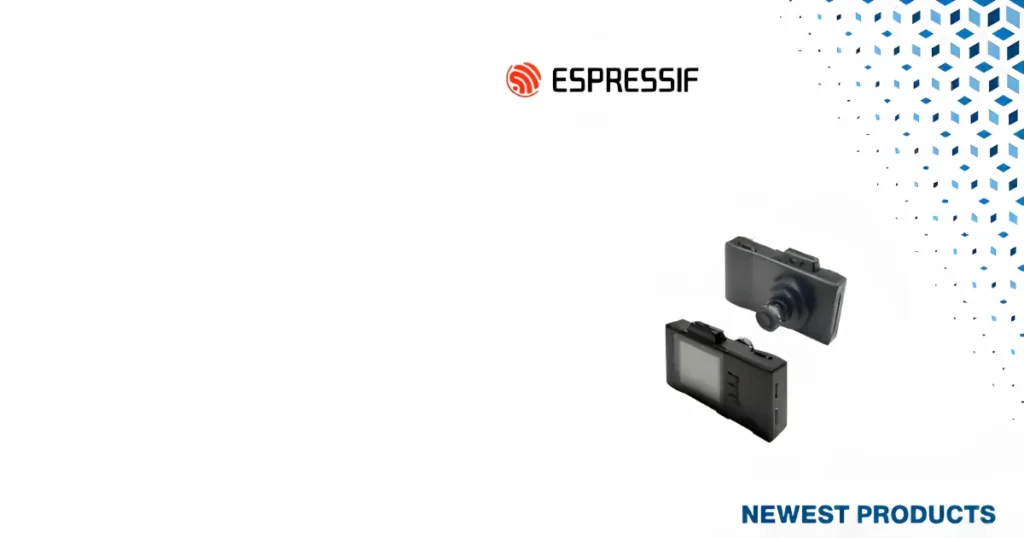
A New Paradigm for Vision-Centric Edge Computing
The introduction of the ESP32-P4X-EYE kit underscores a growing industry trend towards distributing computational power closer to the data source, a concept known as edge computing. By enabling local processing of visual and audio data, the kit addresses critical challenges associated with cloud-centric architectures, including latency, bandwidth consumption, data privacy concerns, and operational costs. Target applications poised for significant transformation with this technology include next-generation smart surveillance cameras, sophisticated vision model detection systems, real-time environmental monitoring solutions, and interconnected camera networks. This integration allows for faster decision-making, reduced reliance on constant cloud communication, and enhanced security for sensitive data.
The kit’s design philosophy prioritizes ease of use and comprehensive functionality. Developers no longer need to source and integrate disparate components for camera, display, and control functions. Instead, the ESP32-P4X-EYE provides a cohesive, pre-assembled platform, drastically shortening development cycles and reducing the complexity often associated with embedded vision projects. This all-in-one approach is particularly beneficial for startups, academic researchers, and small to medium-sized enterprises looking to innovate in the rapidly expanding fields of smart devices and intelligent automation.
The Powerhouse at the Core: RISC-V Processing for Edge Vision
At the technological heart of the ESP32-P4X-EYE is the Espressif ESP32-P4, a highly capable system-on-chip (SoC) that leverages the increasingly popular RISC-V instruction set architecture. This dual-core processor operates at a robust 400 MHz, providing substantial computational horsepower for demanding real-time image and video applications. The inclusion of up to 32 MB of PSRAM (Pseudo-Static RAM) further enhances its capabilities, offering ample memory bandwidth and capacity for complex algorithms, large image buffers, and advanced AI models, which are often memory-intensive.
Espressif’s strategic adoption of RISC-V for its high-performance P-series processors marks a significant endorsement for the open-source architecture. RISC-V has emerged as a formidable alternative to proprietary architectures like ARM, offering unprecedented flexibility, transparency, and the ability for deep customization. This open standard empowers hardware designers and software developers with greater control over their intellectual property and reduces licensing overheads, fostering innovation across the semiconductor industry. For the ESP32-P4, the RISC-V core allows for efficient execution of vision processing tasks, from basic image manipulation to complex neural network inferences, directly at the edge.
Beyond its powerful processor, the ESP32-P4 offers a rich set of interfaces crucial for modern multimedia applications. It supports USB 2.0, providing high-speed data transfer capabilities for peripherals or external storage. More critically for vision applications, it includes MIPI-CSI (Camera Serial Interface) and MIPI-DSI (Display Serial Interface) interfaces. MIPI standards are widely adopted in mobile and embedded systems for connecting cameras and displays, ensuring high-bandwidth, low-power data transmission. The integrated H.264 encoder is another pivotal feature, enabling efficient compression of video streams. H.264 is a ubiquitous video coding standard that dramatically reduces the file size of video data while maintaining acceptable quality, which is vital for streaming, storage, and network transmission in connected camera systems. These combined features equip developers with the necessary tools for creating sophisticated, real-time image and video processing solutions.
Integrated Camera, Display, and Audio for Seamless Interaction
The comprehensive nature of the ESP32-P4X-EYE vision development kit extends to its integrated peripherals, which transform it into a truly versatile platform for HMI and IoT applications. It incorporates a camera for immediate image and video acquisition, serving as the primary input for vision-based projects. Complementing this is a rear-mounted 1.54-inch SPI LCD display, offering visual feedback, user interface elements, or real-time data visualization. This integrated display eliminates the need for external screens during the prototyping phase, simplifying the development process.
Audio capabilities are also built-in, with a digital microphone allowing for sound capture and processing. This opens up possibilities for applications requiring voice commands, environmental sound detection, or multi-modal sensing. User interaction is further enhanced by the inclusion of a rotary encoder and a push-switch, providing tactile input mechanisms commonly found in consumer electronics and industrial control panels. These components enable intuitive navigation through menus, adjustment of settings, or activation of specific functions without requiring a separate touchscreen or complex button arrays.
For data retention, a MicroSD card interface is integrated, providing local storage capabilities. This is particularly valuable for capturing and storing large volumes of image and audio data generated by the camera and microphone, enabling offline analysis, data logging, or buffering before transmission. The thoughtful aggregation of these functions onto a single development platform significantly simplifies prototyping. Developers can focus on application logic and algorithm development rather than spending valuable time on hardware integration and debugging, accelerating the journey from concept to functional prototype for applications that demand real-time interaction with visual or audio information. The compact, camera-style enclosure is not merely aesthetic; it provides a practical, ready-to-evaluate platform for potential vision applications, eliminating the arduous task of assembling individual camera, display, and control components separately.
Unlocking Connectivity with the ESP32-C6-MINI-1 Module
Recognizing the indispensable role of connectivity in modern IoT and edge computing ecosystems, the ESP32-P4X-EYE kit ingeniously integrates Espressif’s ESP32-C6-MINI-1 module. This powerful addition bestows the kit with a comprehensive suite of wireless communication capabilities, including Wi-Fi, IEEE 802.15.4 (which forms the basis for protocols like Zigbee and Thread), and Bluetooth LE (Low Energy). The ESP32-C6-MINI-1 module itself features an integrated PCB antenna, ensuring reliable wireless performance without the need for external antenna components, further contributing to the kit’s compact and integrated design.

The inclusion of Wi-Fi enables seamless integration into existing home or industrial networks, allowing for cloud communication, remote monitoring, and firmware over-the-air (FOTA) updates. Bluetooth LE provides low-power, short-range communication, ideal for connecting to mobile devices, sensors, or other peripheral accessories. IEEE 802.15.4, with its mesh networking capabilities, is crucial for robust and scalable deployments in smart home systems and industrial automation, where many devices need to communicate reliably over a wider area.
This potent combination of advanced vision processing from the ESP32-P4 and versatile wireless connectivity from the ESP32-C6-MINI-1 positions the ESP32-P4X-EYE kit as an ideal platform for developing a diverse array of connected applications. Its utility spans across various sectors, including sophisticated smart home systems that incorporate facial recognition or presence detection, industrial automation solutions for quality control and predictive maintenance, innovative healthcare devices for patient monitoring, and next-generation consumer electronics that offer intelligent visual and audio interaction. The ability to connect external peripherals using jumper wires also provides flexibility for expanding the kit’s functionality, catering to specialized application requirements.
Background and Chronology: Espressif’s Journey in IoT and RISC-V Adoption
Espressif Systems has long been a pivotal player in the embedded systems and IoT landscape. Founded in 2008, the Shanghai-based company gained widespread recognition with the launch of its ESP8266 Wi-Fi SoC in 2014. This low-cost, high-performance module democratized Wi-Fi connectivity for hobbyists and professional developers alike, sparking a revolution in DIY IoT projects. Building on this success, Espressif introduced the ESP32 in 2016, a more powerful SoC featuring both Wi-Fi and Bluetooth connectivity, along with a dual-core Tensilica Xtensa LX6 microprocessor, significantly expanding its capabilities for more complex applications.
Over the years, Espressif has continually evolved its product line, introducing variants like the ESP32-S series (enhanced security, USB-OTG), ESP32-C series (cost-optimized, RISC-V based), and the ESP32-H series (ultra-low power, multi-protocol). The ESP32-P4, which powers the new kit, represents Espressif’s foray into high-performance RISC-V based processing specifically tailored for multimedia and vision applications. This strategic shift towards RISC-V aligns with a broader industry movement that has seen the open-source architecture gain significant traction, particularly in embedded, AI, and data center applications, due to its flexibility and open intellectual property model. The ESP32-P4 was first announced in late 2023, signaling Espressif’s commitment to expanding its portfolio into more computationally intensive domains. The release of the ESP32-P4X-EYE development kit by Mouser Electronics follows this announcement, making the underlying technology immediately accessible to a global developer base.
Mouser Electronics, as a global authorized distributor of semiconductors and electronic components, plays a crucial role in bringing such innovative technologies to market. With a long-standing partnership with Espressif, Mouser ensures that developers, engineers, and purchasing professionals worldwide have access to the latest Espressif products, backed by comprehensive technical resources and efficient supply chain logistics. This partnership has been instrumental in the widespread adoption of Espressif’s modules in countless IoT devices and embedded systems globally.
Industry Reactions and Implications
The release of the Espressif Systems ESP32-P4X-EYE vision development kit through Mouser Electronics is anticipated to generate significant interest within the embedded systems and AI development communities. Industry experts believe this kit addresses a critical need for integrated, high-performance, and cost-effective solutions for edge AI vision.
"The ESP32-P4X-EYE kit represents a pivotal moment for edge AI development," stated a hypothetical spokesperson from Mouser Electronics. "We are seeing an unprecedented demand for platforms that combine robust processing with integrated vision and connectivity, all within an accessible form factor. By stocking Espressif’s latest offering, Mouser continues its commitment to empowering engineers and innovators with the tools they need to bring next-generation smart devices to life faster than ever before. This kit lowers the barrier to entry for complex vision-based applications, enabling a broader range of developers to experiment and deploy."
A hypothetical Espressif Systems representative added, "Our vision for the ESP32-P4 and the P4X-EYE kit was to democratize edge AI vision. By leveraging the power and openness of RISC-V, we’ve created a platform that delivers exceptional performance for real-time image and video processing, while also integrating the essential connectivity and HMI elements. We believe this kit will accelerate innovation across various industries, from smart home security to industrial automation and beyond, solidifying Espressif’s position at the forefront of intelligent IoT solutions."
Analyst firm TechInsights, in a recent report on the embedded vision market, highlighted the growing importance of integrated development platforms. "The trend is clear: developers are looking for more than just a chip; they need a complete ecosystem that includes hardware, software tools, and robust documentation," commented a hypothetical senior analyst. "Espressif’s ESP32-P4X-EYE, with its blend of RISC-V processing, comprehensive peripherals, and multi-protocol wireless connectivity, is well-positioned to capture a significant share of this expanding market. Its compact form factor and focus on edge processing align perfectly with the demands for privacy-centric, low-latency, and energy-efficient AI applications."
The implications of such an accessible and powerful kit are far-reaching. It is expected to significantly accelerate the prototyping phase for a multitude of applications. Small businesses and individual developers, often constrained by budget and specialized hardware requirements, can now access a complete vision development environment. This democratization of edge AI capabilities will likely foster a surge of innovation in areas previously dominated by larger corporations with greater R&D resources.
Furthermore, the kit’s emphasis on local processing contributes to enhanced data privacy and security, as sensitive visual and audio data can be processed on-device without necessarily being transmitted to the cloud. This aligns with increasing regulatory demands for data protection and consumer expectations for privacy. The reduced reliance on cloud resources also translates to lower operational costs and potentially more robust system performance, especially in environments with unreliable internet connectivity.
In conclusion, the Espressif Systems ESP32-P4X-EYE vision development kit, now readily available from Mouser Electronics, represents a significant advancement in the realm of edge AI, HMI, and IoT. By combining a powerful RISC-V processor, comprehensive vision and audio capabilities, and versatile wireless connectivity in a user-friendly form factor, it empowers developers to rapidly innovate and deploy sophisticated intelligent applications. This launch not only solidifies Espressif’s commitment to cutting-edge technology but also underscores Mouser’s role in facilitating the widespread adoption of these transformative solutions across the global electronics industry. The stage is set for a new wave of intelligent devices that will shape the future of connected living and working.