WEST LAFAYETTE, IN – The National Aeronautics and Space Administration (NASA) has announced a significant investment in AnalySwift LLC, a burgeoning start-up specializing in advanced robotic technology for welding thermoplastic composites in the challenging environment of space. This strategic move is poised to revolutionize the assembly of large structures in orbit and beyond, offering unprecedented capabilities for future space missions. The immediate focus for this groundbreaking technology includes the construction of massive truss structures designed for critical applications such as communication antennas, vast solar arrays, high-resolution telescope mirrors, and efficient thermal radiators, all vital components for sustained human presence and scientific exploration in deep space.
Allan Wood, president and CEO of AnalySwift, highlighted the transformative potential of this initiative, stating, "This capability allows the repurposing of spacecraft components for other missions, achieving multiuse structures and assembling large structures without the limit of launch-fairing dimensions." This vision directly addresses one of the most persistent and costly challenges in space exploration: the size and mass constraints imposed by current launch vehicle fairings. Traditional methods of deploying large structures involve complex folding and unfolding mechanisms, which are inherently prone to failure and limit the ultimate scale and complexity of orbital assets. By enabling in-space assembly and reconfiguration, NASA and AnalySwift aim to unlock new possibilities for mission design and operational flexibility.
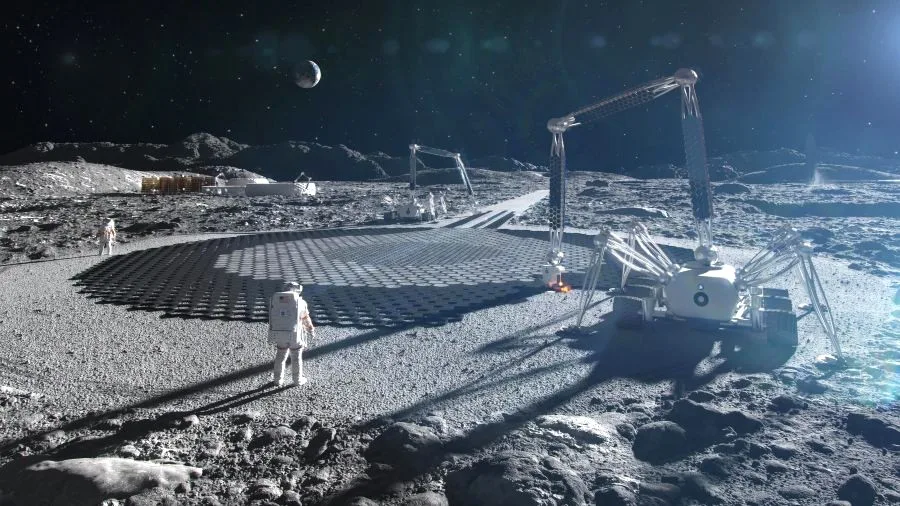
Wood further emphasized the necessity of this technology for long-term objectives. "Our focus will be simulating the advanced materials and structures needed for this activity, including the feasibility of repurposing full-scale truss structures," he elaborated. The broader context for this development lies in NASA’s ambitious "Moon to Mars" initiative, which envisions a sustainable human presence on the lunar surface as a stepping stone for eventual crewed missions to Mars. Such long-duration endeavors necessitate robust, adaptable, and locally constructed infrastructure. "Long-duration crewed missions to the moon, Mars and beyond require infrastructure to be constructed sustainably on these surfaces," Wood underscored, pointing to the critical barrier posed by relying solely on Earth-launched materials and structures.
The Strategic Imperative for In-Space Manufacturing (ISM)
The investment in AnalySwift is a clear signal of NASA’s commitment to advancing In-Space Manufacturing (ISM) and On-Orbit Servicing, Assembly, and Manufacturing (OSAM) capabilities. For decades, the size of launch vehicle fairings has dictated the maximum dimensions of spacecraft and orbital platforms. This limitation has forced engineers to design complex, expensive, and often fragile deployable structures that must unfold perfectly once in space. Failures in deployment mechanisms have led to significant mission setbacks, underscoring the need for a more robust and flexible approach.
ISM offers a paradigm shift by allowing components to be launched in smaller, more manageable segments and then assembled or even fabricated in orbit. This approach not only bypasses fairing size restrictions but also promises to reduce launch mass and volume, leading to substantial cost savings and enabling the construction of structures orders of magnitude larger than currently possible. From super-sized telescopes with unprecedented light-gathering capabilities to vast solar power arrays that could provide abundant energy for lunar bases, the potential applications are immense. Moreover, the ability to repair, upgrade, or repurpose existing space assets extends their operational lifespan and reduces the accumulation of space debris, contributing to a more sustainable space environment.
Technological Core: Thermoplastic Composites and Robotic Welding
At the heart of AnalySwift’s innovation is the use of thermoplastic composites coupled with advanced robotic welding. Thermoplastic composites, unlike their thermoset counterparts, can be repeatedly heated, melted, and reformed without significant degradation. This unique property makes them ideal for in-space manufacturing, where materials need to be joined, separated, and re-joined for assembly, repair, or reconfiguration. Their high strength-to-weight ratio, excellent fatigue resistance, and recyclability further enhance their appeal for aerospace applications.
The specific technology being developed by AnalySwift, in collaboration with Purdue University’s School of Aeronautics and Astronautics, involves creating thermoplastic composite joints embedded with resistance heaters. These heaters provide "in situ" heating, meaning the heat is applied directly at the joint interface. Kawai Kwok, Ph.D., an associate professor of aeronautics and astronautics leading the R&D project, explained the mechanism: "The embedded heater provides in situ heating to bring the thermoplastic matrix to the processing temperature for bonding and debonding the joint-strut interface by mechanical forces." This precise temperature control is crucial for achieving strong, reliable welds and for enabling controlled debonding when structures need to be disassembled or reconfigured.
Once the thermoplastic material reaches its processing temperature, robotic manipulators take over for the welding and unwelding operations. "Intelligent robotic systems will perform the welding operation and structural reassembly to achieve reconfiguration of a truss," Dr. Kwok added. This integration of advanced materials science with sophisticated robotics is key to the success of the project.
The Indispensable Role of Advanced Robotics and AI
The complexity and precision required for assembling large structures in the unforgiving vacuum of space necessitate highly advanced robotic systems. Manual operations are not only time-consuming and costly but also expose human astronauts to significant risks. Yu She, Ph.D., assistant professor of industrial engineering at Purdue, emphasized this point: "Robots are essential to assemble and repurpose large structures in space, because it requires precise and repeatable manipulation."

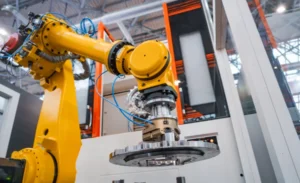
Dr. She’s team is tasked with developing a dual-arm robotic system, a critical component that will bring human-like dexterity and intelligence to space construction. This system will incorporate a suite of advanced sensing capabilities, including vision systems for spatial awareness, tactile sensing for delicate manipulation, and force and thermal feedback mechanisms. These sensors will allow the robots to accurately locate composite joints, activate their embedded heaters with precision, and carefully execute the separation or reconnection of structural components. The autonomy and intelligence embedded within these robotic systems will enable them to perform complex tasks with minimal human intervention, a vital capability for missions far from Earth.
The development of such intelligent robotic systems represents a significant leap forward in space automation. Beyond simple pick-and-place operations, these robots will need to adapt to unforeseen conditions, identify anomalies, and execute intricate maneuvers in a dynamic environment where gravity, temperature extremes, and radiation pose unique challenges. The data collected by the vision, tactile, force, and thermal sensors will feed into sophisticated control algorithms, allowing the robots to learn and refine their operations, thereby increasing efficiency and reliability.
A Chronology of Growing Interest in ISM
While AnalySwift’s technology represents a cutting-edge advancement, the concept of in-space assembly and manufacturing has a rich, albeit often theoretical, history. Early visions of large space stations and orbital cities in the mid-20th century inherently assumed some form of in-space construction.
- 1970s-1980s: Concepts like Gerard K. O’Neill’s space colonies and early Space Shuttle missions hinted at the potential for assembly in Low Earth Orbit (LEO). The construction of the International Space Station (ISS), beginning in 1998, provided the first large-scale, modular assembly experience in space, primarily relying on human extravehicular activity (EVA) and robotic arm assistance (Canadarm2). However, the ISS modules themselves were pre-fabricated on Earth.
- 2000s-2010s: Renewed interest in deep space exploration, particularly lunar and Martian missions, brought ISM back to the forefront. NASA and other space agencies began exploring technologies for 3D printing in space, robotic assembly of small components, and additive manufacturing. Projects like Made In Space’s 3D printer on the ISS demonstrated the feasibility of manufacturing small parts in microgravity.
- Late 2010s – Present: The rise of commercial space and the Artemis program have accelerated the drive for robust ISM capabilities. Concepts like OSAM-1 (formerly Restore-L) by NASA’s Goddard Space Flight Center aim to demonstrate on-orbit satellite servicing, refueling, and assembly, laying crucial groundwork. Companies like Maxar Technologies have also been developing robotic arms for satellite servicing. AnalySwift’s investment fits perfectly into this accelerating timeline, focusing on a critical aspect: robust and reconfigurable structural joining using advanced materials. This represents a mature step towards assembling truly large-scale infrastructure, moving beyond mere servicing or small-scale fabrication.
Broader Implications and Future Outlook
The implications of successful implementation of AnalySwift’s robotic thermoplastic welding technology are far-reaching, touching upon economic, technological, strategic, and environmental facets of space exploration.
Economic Impact: The ability to construct large structures in space will significantly reduce the cost per kilogram of launched material. By disaggregating large payloads into smaller, more launch-friendly components, rocket payload capacity can be optimized, and a wider range of launch vehicles can be utilized. This could spur the growth of a new "in-space economy" encompassing orbital construction services, materials supply chains, and specialized robotic operations. Lower costs could also democratize access to space, enabling more scientific missions, commercial ventures, and even space tourism infrastructure.
Technological Advancement: This project pushes the boundaries of several key technological areas. It demands advancements in materials science for thermoplastic composites that can withstand the harsh space environment (radiation, thermal cycling). It drives innovation in robotics, requiring more autonomous, dexterous, and AI-enabled systems capable of complex manipulation and decision-making in real-time. Furthermore, it necessitates sophisticated sensing and feedback loops for precise control in microgravity. Spin-off technologies from these developments could find applications in terrestrial manufacturing, robotics, and advanced materials.
Strategic Importance: For nations like the United States, leadership in space is a strategic imperative. Developing superior in-space manufacturing capabilities enhances national security by enabling the rapid deployment and maintenance of critical satellite constellations for communication, navigation, and surveillance. It also solidifies a nation’s position in the global space race, fostering innovation and attracting top talent.
Environmental Impact: The ability to repurpose and reconfigure structures in space contributes significantly to sustainability. Instead of launching entirely new assets, existing components can be modified or reused, reducing the demand for new launches and minimizing the generation of space debris. This aligns with global efforts to ensure the long-term viability of orbital environments.
Future of Space Exploration: Ultimately, this technology is a cornerstone for the ambitious future of human space exploration. Sustainable lunar bases, large orbital habitats, deep-space observatories that cannot be launched in one piece, and the eventual journey to Mars all depend on the ability to build, maintain, and adapt infrastructure beyond Earth’s protective atmosphere. AnalySwift’s robotic welding system provides a critical tool in NASA’s arsenal to achieve these monumental goals, transforming science fiction into engineering reality.
The investment in AnalySwift by NASA is more than just funding a startup; it’s an investment in a foundational technology that promises to redefine the economics, scale, and sustainability of human endeavors in space. By tackling the challenges of in-space assembly with advanced materials and intelligent robotics, NASA and its partners are laying the groundwork for an era where the cosmos is not just visited, but truly inhabited and developed.