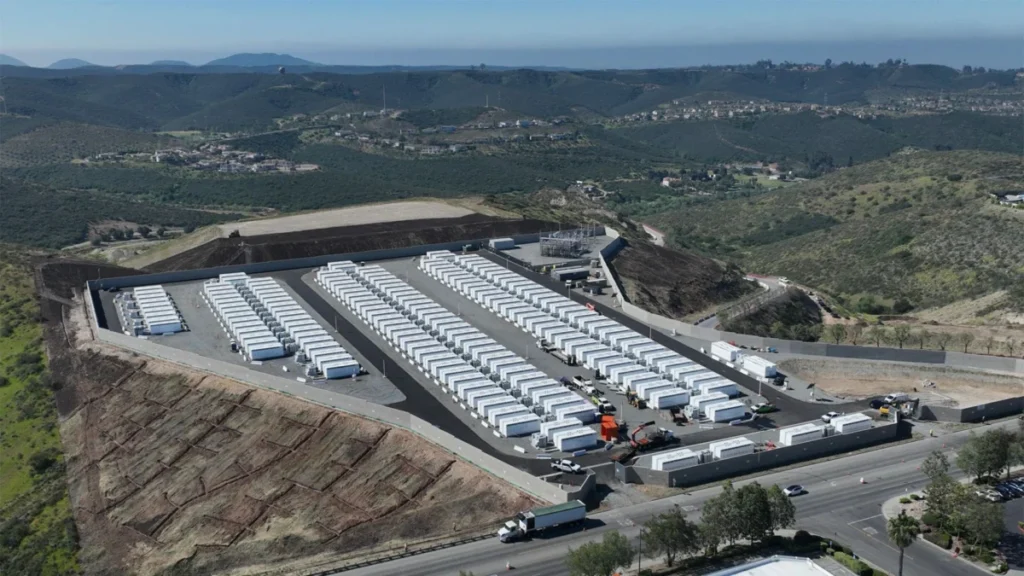
Arevon Energy has officially brought online its Nighthawk Energy Storage Project, a monumental 300-megawatt (MW) / 1,200-megawatt-hour (MWh) battery facility situated in Poway, California. This landmark development marks a significant milestone for the US-based company, representing its largest standalone energy storage venture to date. At its full operational capacity, the Nighthawk facility possesses the capability to discharge a substantial volume of electricity, sufficient to power an estimated 385,000 homes for a continuous period of four hours. This immense capacity positions Nighthawk as a critical asset for California’s energy infrastructure, particularly adept at bridging the crucial gap when solar generation declines as the sun sets, coinciding with the typical evening surge in power demand across the state. The project underscores a pivotal shift in how modern electricity grids are managed, moving towards a more resilient, reliable, and sustainably powered future.
California’s Grid Imperative: The Need for Advanced Storage
California, a global leader in renewable energy adoption, frequently faces a unique challenge colloquially known as the "duck curve." This phenomenon describes the imbalance between peak solar energy generation during midday and the sharp increase in electricity demand during late afternoon and early evening hours, after solar production begins to wane. Without adequate, large-scale energy storage solutions, the abundant solar power generated during midday often risks curtailment or going to waste, while the state’s grid relies on less efficient and often carbon-intensive "peaker plants" to meet the evening demand spike. The Nighthawk project directly addresses this critical mismatch by efficiently charging its batteries when electricity is cheap and abundant from solar farms, then seamlessly dispatching that stored clean power back into the San Diego power grid precisely during these high-demand peak hours. This operational strategy not only optimizes the utilization of renewable energy but also reduces the strain on traditional power plants, contributing to a cleaner and more stable energy supply.
The state of California has set ambitious targets for its energy future, aiming for 100% clean electricity by 2045. Achieving this goal necessitates a robust expansion of renewable energy sources, coupled with equally robust and flexible energy storage capabilities. Projects like Nighthawk are indispensable components of this vision, providing the grid with the flexibility to integrate more intermittent renewable energy sources, such as solar and wind, without compromising reliability. The intermittency of renewables has historically been a significant hurdle to their widespread adoption, but utility-scale battery storage effectively mitigates this issue, transforming variable power into dispatchable, on-demand energy.
Nighthawk’s Technical Edge: LFP and Megapacks
The technological backbone of the Nighthawk Energy Storage Project is its utilization of advanced lithium iron phosphate (LFP) battery technology. LFP cells have rapidly emerged as the preferred standard for utility-scale grid installations, primarily due to their superior safety profile, exceptional thermal stability, and prolonged operating life compared to other lithium-ion chemistries like Nickel Manganese Cobalt (NMC). The inherent chemical structure of LFP batteries makes them less susceptible to thermal runaway, a critical safety consideration for large-scale deployments in populated areas. Furthermore, their longer cycle life contributes to a lower total cost of ownership over the project’s lifespan, making them an economically sound choice for long-duration grid applications.
Specifically, the LFP batteries integrated into the Nighthawk facility are reported to be Tesla Megapack units. The Tesla Megapack is a fully integrated battery energy storage system designed for utility-scale applications, renowned for its high energy density, modularity, and rapid deployment capabilities. Each Megapack unit arrives pre-assembled and ready for connection, significantly streamlining the construction and commissioning process of large battery projects. These units incorporate sophisticated thermal management systems and advanced battery management systems (BMS) that continuously monitor cell performance, temperature, and voltage, ensuring optimal operation and safety.
The Nighthawk project’s infrastructure includes an on-site substation, which plays a crucial role in stepping up the voltage from the battery system to the transmission grid level. The battery containers themselves are compact, measuring up to 25 feet long and 10 feet high, and are designed for efficiency and safety. Within these robust containers, rows of battery racks house the individual LFP cells and modules. Alongside the batteries, integrated control systems manage the entire operation, power conversion components like inverters transform the direct current (DC) electricity from the batteries into alternating current (AC) suitable for the grid, and transformers further adjust voltage levels. Crucially, each container is equipped with advanced fire protection equipment, including sophisticated detection and suppression systems, underscoring the paramount importance of safety in such large-scale energy infrastructure. This comprehensive design ensures the reliable, safe, and efficient transfer of energy to the grid.
From Conception to Commissioning: Project Development
The development of a project of Nighthawk’s magnitude is a multi-year endeavor, involving extensive planning, permitting, financing, and construction. While specific dates for each phase were not detailed in the original brief, the typical timeline for such a significant energy infrastructure project begins with site identification and feasibility studies, often spanning several months to a year. This is followed by a rigorous permitting process, involving local, state, and sometimes federal agencies, ensuring compliance with environmental regulations, zoning laws, and safety standards. Given Poway’s location within San Diego County, this would have involved close coordination with local authorities.
Financing is another critical stage, and the Nighthawk project, with its reported $600 million investment, would have secured capital through a combination of equity and debt financing, likely involving institutional investors and lenders specializing in renewable energy infrastructure. Once financing and permits are in place, the construction phase commences. For Nighthawk, this phase was significant, employing over 130 workers during its peak. These jobs encompassed a wide range of skilled trades, from electricians and engineers to construction managers and safety officers. The construction process involves preparing the site, installing foundations, deploying the battery containers, connecting the electrical systems, and constructing the substation. Finally, the commissioning phase involves extensive testing and validation to ensure all systems are operating optimally and safely before the facility is officially brought online and connected to the grid. Arevon Energy, as a leading American energy developer and owner, has demonstrated its expertise in navigating these complex stages to deliver such a critical infrastructure project.
A Pillar of Local Economic Growth
Beyond its profound impact on grid reliability and environmental sustainability, the Nighthawk project stands as a significant economic catalyst for the local communities of Poway and San Diego County. Throughout its operational lifespan, the facility is projected to generate over $30 million in local property tax revenues. This substantial financial contribution will flow directly into the public coffers, providing a vital boost to essential public services and community programs. These funds are earmarked to strengthen the local economy by supporting critical sectors such as public education, ensuring schools have the resources they need to provide quality learning environments. Additionally, the revenues will enhance emergency services, including fire and police departments, bolstering public safety and response capabilities. Municipal road improvements, a perpetual need for growing communities, will also benefit, leading to better infrastructure and smoother transportation. Finally, the project’s tax contributions will support essential community programs tailored for youth and individuals with special needs, fostering social well-being and inclusivity.
The economic benefits were also keenly felt during the construction phase. As a $600 million undertaking, the project created more than 130 construction jobs at its height. This influx of employment provided direct income for workers and their families, while also injecting substantial commerce into surrounding small businesses. Local restaurants, hardware stores, accommodation providers, and other service industries would have experienced increased demand, creating a ripple effect of economic activity throughout the region. Such large-scale infrastructure projects are vital for regional economic development, creating both temporary and long-term economic opportunities that extend far beyond the immediate site of the facility.
Leadership Voices on Grid Reliability and Community Benefits
The successful commissioning of the Nighthawk project has been met with enthusiastic endorsements from key stakeholders, highlighting its multifaceted benefits. Justin Johnson, Chief Executive Officer at Arevon, articulated the broader significance of such ventures. "Energy storage is becoming increasingly important as electricity demand continues to rise across California and the United States," Johnson stated. He emphasized that "Projects like Nighthawk are critical to America’s growing energy needs because they strengthen grid reliability while delivering lasting economic benefits for local communities." His remarks underscore the dual imperative of energy projects: meeting demand while also contributing positively to the socio-economic fabric of the regions they serve. Johnson further expressed pride in the achievement, saying, "We are proud to have developed, constructed, and brought Nighthawk online, and we look forward to its continued contribution to the San Diego region for years to come." This sentiment reflects a long-term commitment to the community and the state’s energy future.
Echoing this enthusiasm, Joel Anderson, San Diego County District 2 Supervisor, highlighted the practical and strategic advantages of the project for the local area. "One thing that clean, green energy has taught us: battery storage is essential," Anderson remarked. He emphasized the comprehensive positive impact, stating, "This project strengthens our infrastructure, boosts our local economy, supports grid reliability, and provides enough capacity to power up to 385,000 homes when we need it most." Supervisor Anderson’s statement succinctly encapsulates the project’s value proposition, linking grid resilience directly to tangible community benefits and economic prosperity. These official responses solidify the understanding that Nighthawk is not merely an engineering feat but a strategic investment in California’s sustainable future and local well-being.
Shaping the Future: Broader Implications for Energy Storage
The activation of the Nighthawk project by Arevon Energy serves as a powerful testament to the maturity and critical importance of utility-scale battery energy storage systems (BESS) in the evolving global energy landscape. With Nighthawk now active and another significant 250 MW project under construction in Daly City, Arevon’s operational footprint in California alone has impressively crossed the 4 gigawatts (GW) mark. This substantial portfolio underscores the company’s leadership in the sector and the rapid scaling of BESS deployments.
This milestone for Arevon, and the success of projects like Nighthawk, emphatically demonstrates that utility-scale battery storage is no longer an experimental technology or a niche solution. Instead, it has firmly established itself as an essential backbone supporting the modern electric grid. Its ability to absorb surplus renewable energy, mitigate grid congestion, provide ancillary services like frequency regulation, and rapidly dispatch power during peak demand periods makes it indispensable for grid operators.
Across the United States, policy initiatives such as the Inflation Reduction Act (IRA) have provided significant incentives for renewable energy and energy storage development, further accelerating the deployment of projects like Nighthawk. These incentives, coupled with falling battery costs and technological advancements, are driving a rapid expansion of battery storage capacity nationwide. The benefits extend beyond grid stability; BESS facilities help reduce reliance on older, less efficient, and often polluting fossil fuel "peaker plants" that are typically brought online during high-demand periods. By displacing these plants, battery storage contributes to improved air quality, reduced greenhouse gas emissions, and potentially lower wholesale electricity prices by reducing the need for expensive spot market power. The Nighthawk project in Poway is a shining example of this transformative trend, illustrating how strategic investments in energy storage are paving the way for a more resilient, cleaner, and economically vibrant energy future for California and the nation.