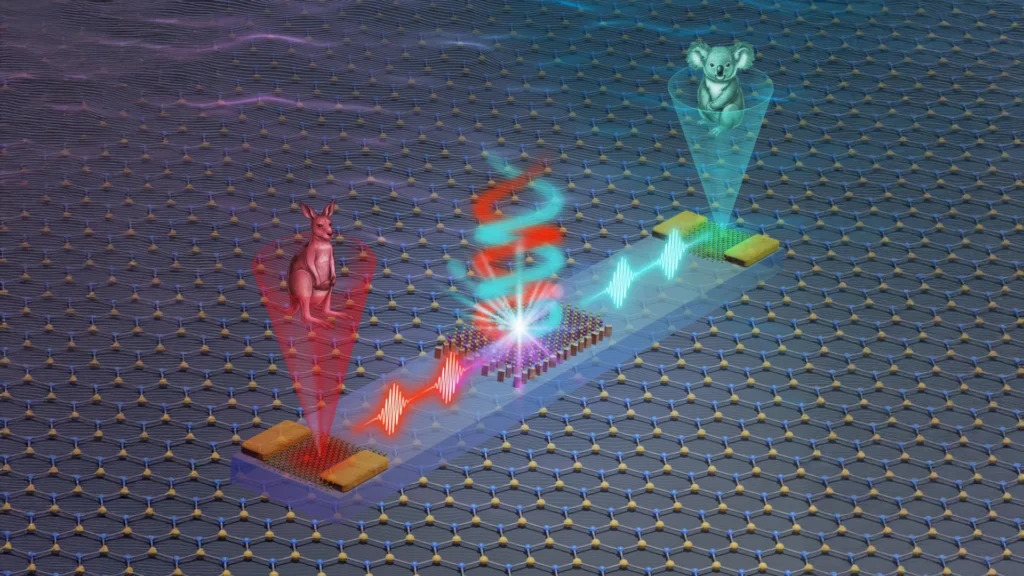
Scientists at Monash University have achieved a significant breakthrough in the burgeoning field of valleytronics, developing a groundbreaking integrated circuit that can generate, direct, and read information encoded in light, all within a single, compact chip. This advancement, detailed in a recent publication in Nature Photonics, addresses a long-standing challenge in the pursuit of faster, more energy-efficient computing and the development of next-generation quantum technologies. The new device seamlessly combines advanced nanotechnology with cutting-edge materials to manipulate the "valley degree of freedom," a quantum property of electrons that holds immense potential for encoding and processing data in entirely new ways.
A New Paradigm for Information Processing: The Dawn of Valleytronics
For decades, the foundation of modern computing has rested on electronics, where information is processed using the charge of electrons. However, as silicon-based transistors approach their physical limits, encapsulated by the slowing pace of Moore’s Law, the scientific community has been fervently exploring alternative paradigms. Among these, spintronics, which harnesses the intrinsic spin of electrons, has garnered considerable attention. More recently, valleytronics has emerged as a powerful contender, promising to leverage another quantum property: the "valley degree of freedom."
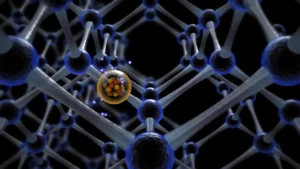
In certain materials, particularly two-dimensional (2D) materials like transition metal dichalcogenides (TMDs), electrons can exist in distinct energy minima or "valleys" within their band structure. These valleys are often separated in momentum space, and an electron residing in one valley can possess a different effective mass or behave differently from an electron in another valley. The valley degree of freedom, therefore, represents a new binary state – analogous to the 0s and 1s of conventional bits or the up/down spin states in spintronics – that can be used to encode information. The appeal of valleytronics lies in its potential for robust data storage and processing, as valley states can be relatively immune to certain types of environmental noise, making them attractive for quantum information applications.
The challenge, until now, has been the practical integration of all necessary functions onto a single chip: efficiently generating these valley-polarized light signals, precisely steering them along predefined paths, and then reliably converting them back into electrical signals for detection and further processing. Previous efforts typically involved separate components for each function, leading to bulky, inefficient, and complex systems that were difficult to scale for practical applications.
Monash’s Integrated Solution: A Leap in On-Chip Valleytronics
The team from Monash University’s School of Physics and Astronomy, led by Dr. Chi Li, Dr. Kaijian Xing, and Dr. Haoran Ren, has overcome this hurdle by constructing a fully integrated chip that achieves all three crucial functions. "Until now, we could generate or detect these signals, but not do everything in one integrated device," explained Dr. Chi Li, the lead author whose team’s findings were published in the prestigious journal Nature Photonics. "What we’ve built is a complete on-chip system that can create, route and read this information with very high precision."
This pioneering device leverages ultra-thin materials, often just a few atoms thick, combined with specially engineered nanostructures known as metasurfaces. These metasurfaces are meticulously designed to control light at scales far smaller than its wavelength, enabling unprecedented precision in guiding and manipulating the valley-polarized light signals. The breakthrough lies not just in the conceptualization but also in the practical fabrication. Dr. Kaijian Xing, co-first author of the study and a Research Fellow at Monash University, elaborated on their innovative manufacturing approach: "We employ a straightforward stacking approach to integrate ultra-thin materials with metasurfaces, overcoming the technical challenges of direct material growth on photonic structures, and enabling further advances in valleytronics." This "stacking" method bypasses the complex and often damaging processes associated with directly growing exotic 2D materials onto pre-fabricated photonic structures, a significant bottleneck in the field.
Chronology of a Scientific Pursuit: From Concept to Integrated Reality
The journey towards practical valleytronic devices has been a gradual yet accelerating one, spanning over a decade of intensive research.
- Early 2000s: The theoretical concept of valleys in the electronic band structure of materials gained traction, particularly with the discovery and characterization of graphene, where electrons behave as massless Dirac fermions with distinct valleys.
- Early 2010s: The focus shifted to TMDs (e.g., molybdenum disulfide, tungsten diselenide) due to their direct bandgaps and strong spin-orbit coupling, which allows for optical manipulation of valley states. Researchers began demonstrating the ability to selectively excite electrons into specific valleys using circularly polarized light, a process known as valley polarization.
- Mid-2010s: Initial experiments showcased methods for generating valley-polarized light and detecting valley states, often in separate experimental setups and under stringent conditions, such as extremely low temperatures. The challenge remained to control the propagation of these valley-polarized excitations and to integrate these functionalities.
- Late 2010s – Early 2020s: Advances in nanofabrication techniques and the understanding of light-matter interactions at the nanoscale paved the way for more sophisticated designs. The concept of metasurfaces, capable of tailoring light fields with high precision, became increasingly relevant for guiding valley-encoded photons.
- 2023 (Monash Breakthrough): The Monash University team’s publication in Nature Photonics marks a critical juncture. By successfully integrating the generation, routing, and detection of valley-encoded light signals onto a single chip operating at room temperature, they have solved a major integration challenge that has limited the field for years. This represents a mature step from individual proof-of-concept demonstrations to a more cohesive, functional system.
This chronological progression underscores the increasing sophistication of materials science, nanotechnology, and quantum physics necessary to bring valleytronics from a theoretical curiosity to a viable technological pathway.
Key Advantages: Room Temperature Operation and Energy Efficiency
One of the most compelling aspects of the Monash breakthrough is its ability to operate effectively at room temperature. Many nascent quantum technologies, including certain types of quantum computers and advanced sensors, demand cryogenic environments – temperatures near absolute zero – to maintain the fragile quantum states of their components. This requirement adds immense complexity, cost, and infrastructure demands, severely limiting their widespread applicability outside specialized laboratories.
The Monash chip’s room-temperature functionality dramatically lowers the barrier to entry for practical applications. It suggests a future where valleytronic devices could be incorporated into everyday electronics without the need for cumbersome cooling systems. This inherent robustness at ambient conditions is a significant differentiator and a powerful indicator of its potential for commercialization and broad adoption.
Furthermore, the technology promises substantial improvements in energy efficiency. Senior author Dr. Haoran Ren, an ARC Future Fellow and leader of the Monash NanoMeta Group, highlighted this benefit. "Photonic devices use light to achieve massive bandwidths, ultra-fast data transmission speeds, and lower energy consumption, so what we have achieved has strong potential for applications in quantum computing, advanced imaging, and next-generation optical communication systems." The global energy consumption of data centers and computing infrastructure is skyrocketing, contributing significantly to carbon emissions. By replacing power-hungry electronic signal processing with light-based solutions, this valleytronic chip offers a pathway to drastically reduce the energy footprint of future information technologies, aligning with global efforts towards sustainability.
Demonstrated Capabilities: Parallel Information Processing
To showcase the practical capabilities of their integrated chip, the Monash researchers successfully conducted an experiment demonstrating parallel information processing. They encoded and processed two distinct images simultaneously using the device. This capability, managing multiple streams of information concurrently, is a cornerstone for future high-performance computing architectures. Traditional electronic systems often struggle with bottlenecks when processing vast amounts of data in parallel, but light, with its inherent ability to carry multiple information channels (e.g., through different wavelengths, polarizations, or, in this case, valley states), offers a powerful solution. This demonstration moves beyond theoretical potential, providing concrete evidence of the chip’s ability to handle complex data tasks efficiently.
Broader Impact and Future Implications
The implications of this breakthrough extend across multiple critical technological sectors:
- Faster Computing Systems: By utilizing light and the valley degree of freedom, the chip can potentially overcome the speed limitations of electron charge transport in traditional silicon chips. This could lead to processors capable of executing computations at speeds orders of magnitude faster than current technologies, a boon for demanding applications like artificial intelligence, machine learning, and complex scientific simulations.
- Reduced Energy Consumption: As discussed, the shift from electronic to photonic processing significantly lowers power requirements. This is vital for sustainable computing, reducing operational costs for data centers, and extending battery life for mobile devices. It directly addresses the growing environmental concern associated with the digital economy’s energy demands.
- Quantum Computing: The "valley degree of freedom" offers a new avenue for encoding quantum information. While not a full quantum computer, this chip’s ability to precisely manipulate valley states at room temperature could serve as a fundamental building block for future quantum processors, potentially leading to more stable and accessible qubits. This is a critical step towards realizing the promise of quantum supremacy in fields like drug discovery, materials science, and cryptography.
- Secure Communications: The principles of quantum mechanics, including those leveraged by valleytronics, can enable intrinsically secure communication protocols. Photonic-based systems are inherently difficult to tap without detection, offering a foundation for next-generation secure communication networks that are resistant to even advanced cyber threats.
- Advanced Imaging and Sensing: The precise manipulation of light at the nanoscale, combined with the unique properties of valley-polarized light, could lead to novel imaging techniques with enhanced resolution and sensitivity, applicable in medical diagnostics, industrial inspection, and environmental monitoring.
- Next-Generation Optical Communication Systems: The massive bandwidth potential of light, coupled with the ability to encode more information per photon through valley states, promises to revolutionize optical communication. This could lead to ultra-fast, high-capacity internet infrastructure, capable of handling the exponential growth in global data traffic.
Professor Stefan A. Maier, Head of the School of Physics and Astronomy and Nanophotonics Laboratory at Monash University, emphasized the bridging nature of this research. "This is an important step toward fully integrated valleytronic systems," he stated. "By combining light and quantum materials on a chip, we can access new ways of encoding and processing information." This sentiment resonates across the scientific community, which has long sought practical methods to harness quantum phenomena for tangible technological benefits. The Monash team’s work provides a compelling pathway forward.
Collaborative Global Effort
The complexity and multidisciplinary nature of this research underscore the necessity of international collaboration in pushing the frontiers of science. This project was a testament to global scientific cooperation, bringing together a diverse group of experts from Australia, China, Singapore, Germany, and Japan. This collective expertise spanned critical domains including nanophotonics, the study of light at the nanoscale; two-dimensional materials, with their unique quantum properties; and optoelectronics, the integration of optical and electronic components.
The core Monash University team included Dr. Chi Li, Dr. Kaijian Xing, Professor Michael S. Fuhrer, Professor Stefan A. Maier, and Dr. Haoran Ren. Their efforts were significantly augmented by contributions from esteemed institutions such as the Singapore University of Technology and Design, LMU Munich, and the University of Technology Sydney. This synergistic approach, pooling knowledge and resources from leading research centers worldwide, was instrumental in tackling the intricate technical and scientific challenges inherent in developing such a sophisticated integrated system.
Looking Ahead: The Future of Light-Based Computing
The Monash University breakthrough represents a pivotal moment in the quest for post-silicon computing. By successfully integrating the fundamental functions of generation, routing, and detection of valley-encoded light signals onto a single chip, and demonstrating its operation at room temperature, the researchers have laid a robust foundation for scalable, chip-based photonic technologies. As Dr. Ren aptly summarized, "This is a significant step toward scalable, chip-based technologies that use light instead of electricity to process information." The journey from laboratory discovery to widespread commercial application is often long and arduous, but this advancement positions Monash University and its international collaborators at the forefront of a technological revolution that could redefine the landscape of computing, communications, and quantum science for decades to come. The promise of faster, greener, and more powerful information processing, driven by the elusive yet powerful quantum properties of light, is now a tangible step closer to reality.