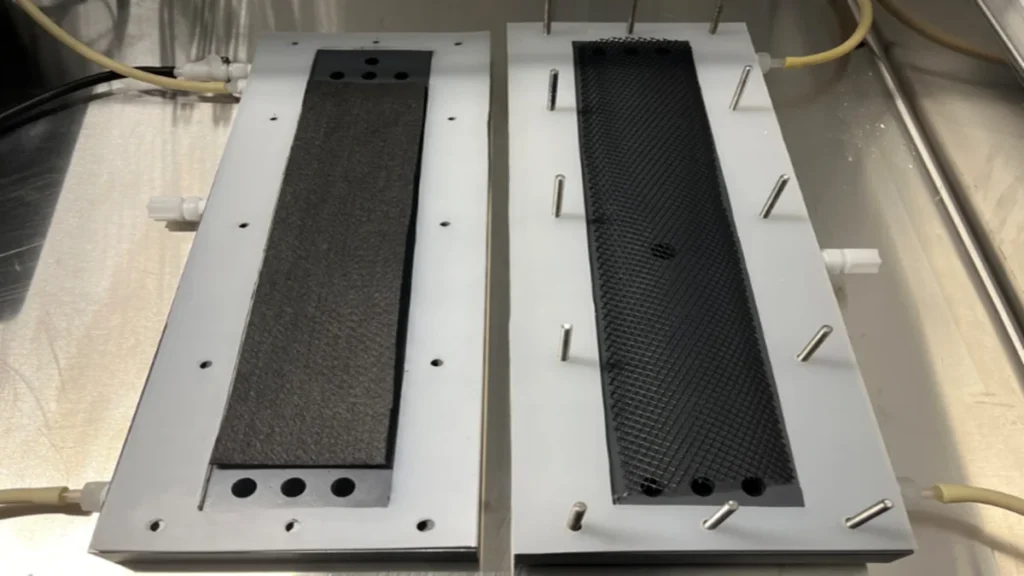
The international research team, spearheaded by Bruce Logan, an eminent figure in environmental engineering and Kappe Professor of Environmental Engineering at Penn State, has achieved a critical milestone by scaling up a microbial electrosynthesis (MES) system without compromising its performance. This breakthrough directly addresses one of the most formidable challenges that have historically hampered the commercial viability and widespread adoption of this promising technology. The implications of this development are far-reaching, potentially reshaping how societies store surplus renewable energy and manage atmospheric carbon dioxide.
The Urgent Need for Long-Duration Energy Storage
The global push towards decarbonization and the increasing reliance on intermittent renewable energy sources like solar and wind power have underscored an urgent and growing need for effective, large-scale, and long-duration energy storage solutions. While lithium-ion batteries have proven effective for short-to-medium duration storage (typically a few hours), they struggle with the requirements of seasonal or multi-day storage due to their cost, limited capacity, and self-discharge rates over extended periods. Traditional methods, such as pumped-hydro storage, require specific geographical features and face environmental and social hurdles in site selection and construction.
This critical gap in the energy infrastructure creates bottlenecks in the transition to a fully renewable grid. Without robust long-duration storage, the full potential of renewable energy cannot be realized, as surplus electricity generated during peak production times (e.g., sunny afternoons, windy nights) often goes to waste or necessitates curtailment, while fossil fuel plants must remain operational to cover periods of low renewable output. Logan articulates this challenge succinctly: "Traditionally, large-scale, long-term storage means pumping water uphill and letting it flow back down through turbines. If you’re talking seasonal storage, you really need to put that energy into a chemical form." This chemical storage, often referred to as "power-to-X" (where X can be hydrogen, methane, or other fuels), is precisely what the Penn State innovation aims to provide.
Microbial Electrosynthesis: A Primer and its Challenges
Microbial electrosynthesis is an innovative biotechnological process that harnesses microorganisms to convert electrical energy and carbon dioxide into value-added chemicals or fuels. At its core, the technology uses electricity from renewable sources to split water, generating hydrogen. This hydrogen then serves as an electron donor for specific microorganisms, known as methanogens, which subsequently consume carbon dioxide and convert it into methane. Methane, the primary component of natural gas, is a readily storable and transportable fuel, making this process particularly attractive for energy storage.
The concept of MES has been explored for over a decade, with initial laboratory-scale systems demonstrating the fundamental feasibility of converting CO2 to methane. However, a persistent stumbling block has been the difficulty in scaling these systems beyond laboratory prototypes without experiencing a significant drop in performance and energy efficiency. As the size of reactors increases, internal resistance often rises, leading to inefficiencies in electron transfer and mass transport, making larger systems uneconomical and impractical for industrial application. This scaling dilemma has largely confined MES to research labs, preventing its transition to a viable commercial technology for renewable energy storage or carbon capture and utilization.
Penn State’s Breakthrough: The "Zero-Gap" Reactor Design
The Penn State team’s monumental achievement lies in its development of an up-scaled "zero-gap" reactor design, which directly confronts and overcomes the long-standing efficiency degradation associated with larger MES systems. The innovative configuration positions the electrodes in close proximity, separated only by a specialized membrane. This minimal gap between the anode and cathode is critical, as it drastically reduces the internal electrical resistance within the system. High internal resistance in larger reactors leads to substantial energy losses, effectively wasting a portion of the electrical input before it can drive the desired chemical reactions. By minimizing this resistance, the "zero-gap" design ensures a more efficient transfer of energy throughout the system.
This design innovation represents a significant leap from previous MES reactor architectures. Earlier designs often featured larger electrode separations, which simplified construction but inherently led to higher resistive losses. The "zero-gap" approach, while potentially more complex in manufacturing, unlocks efficiencies previously unattainable at larger scales. It allows for a more direct and unhindered movement of ions and electrons, optimizing the electrochemical environment necessary for the methanogens to operate effectively.
Engineering for Enhanced Efficiency and Scale
Beyond the fundamental "zero-gap" principle, the researchers implemented several other sophisticated engineering solutions to ensure the reactor’s robust performance at an expanded scale. The team successfully increased the electrode area by approximately tenfold compared to typical laboratory-scale devices, marking a substantial increase in the reactor’s active surface for electrochemical reactions. Concurrently, the internal flow path—the distance over which fluids and gases travel within the reactor—was extended to nearly 12 inches. Despite these considerable increases in physical dimensions, the reactor remarkably maintained its strong methane production rates and high energy efficiency.
Logan emphasized the significance of this achievement: "Even though we made the system much bigger, the internal resistance didn’t get worse. That’s because we were able to use the hydrogen coming off the electrodes much more efficiently." This statement highlights a key aspect of their success: it wasn’t just about reducing resistance but also about optimizing the subsequent biological process. The reactor’s design incorporates multiple flow ports, strategically placed to distribute fluids and gases (like CO2 and the produced hydrogen) more evenly across the entire system. This uniform distribution is vital for maintaining stable operating conditions, preventing localized concentration gradients, and ensuring that the methanogens have consistent access to their necessary substrates throughout the expanded reactor volume. The combination of reduced internal resistance and optimized mass transfer mechanisms is what allows the system to scale effectively without performance penalties.
Performance Metrics and Validation: A Benchmark for MES
The efficacy of the new reactor was rigorously tested under controlled conditions, demonstrating impressive performance metrics that set new benchmarks for microbial electrosynthesis systems. In tests conducted at a temperature of 30 degrees Celsius, the reactor achieved a methane production rate of up to 6.9 liters of methane per liter of reactor volume per day. This volumetric productivity is crucial for industrial applications, as it dictates the physical footprint and throughput of a commercial facility. A high volumetric productivity means more methane can be generated from a smaller reactor size, improving economic viability.
Furthermore, the system exhibited coulombic efficiencies exceeding 95 percent. Coulombic efficiency is a measure of how effectively the electrical energy supplied to the system is converted into the desired chemical product (methane), rather than being diverted to undesirable side reactions. A coulombic efficiency above 95 percent signifies that almost all the electrons supplied by the renewable electricity are directly utilized in the methane production pathway by the methanogens, indicating minimal energy waste.
The researchers reported overall energy efficiency levels ranging from 45 percent to 47 percent. While this figure may appear modest when compared to the nearly 100% efficiency of converting electricity into heat, it is exceptionally high for a complex bioelectrochemical system that transforms electrical energy and CO2 into a chemical fuel. For context, typical electrolyzers for hydrogen production alone might achieve 70-80% energy efficiency, but they do not convert CO2. The Penn State system’s efficiency ranks among the highest achieved globally for microbial electrosynthesis systems operating under standard conditions, positioning it as a leading contender in the race for practical carbon-to-fuel technologies.
The Biological Mechanism: Hydrogen as the Efficient Intermediate
A crucial insight from the study clarified the precise mechanism of methane production within the reactor, resolving previous ambiguities in the field. The research confirmed that the methanogens do not directly collect electrons from the electrodes. Instead, the process initiates with the electrochemical splitting of water, which generates hydrogen gas. This hydrogen then acts as an immediate and readily available substrate for the methanogens. These specialized microorganisms rapidly consume the generated hydrogen, along with carbon dioxide, to produce methane at significantly enhanced rates.
Logan elucidated this two-step, yet highly integrated, process: "We split water to make hydrogen, and the methanogens are right there to use it immediately. You can think of it as a water electrolyzer, which uses electricity to split water into hydrogen and oxygen, combined with a biological system." This understanding is vital for optimizing future reactor designs, as it emphasizes the need to efficiently generate and transfer hydrogen to the microbial community. The close coupling of the electrochemical hydrogen production with the biological methane conversion minimizes energy losses and maximizes reaction kinetics, contributing to the overall high efficiency observed in the "zero-gap" system.
Strategic Implications: A New Energy Storage Paradigm
The development of this scalable and efficient MES reactor carries profound strategic implications for the future of renewable energy and environmental sustainability. It introduces a viable "power-to-gas" solution that can address the critical challenge of long-duration and seasonal energy storage. Unlike batteries, which store energy electrochemically and degrade over time, methane produced through this process can be stored indefinitely in existing natural gas infrastructure, offering a robust solution for balancing supply and demand over weeks or months.
The vision articulated by the researchers is compelling: future methane-generation facilities could be co-located with large-scale renewable energy plants, such as solar farms in sunny regions or wind farms in windy corridors. Instead of curtailing excess electricity during periods of high generation and low demand, this surplus power could be directly channeled into the MES reactors on-site. The resulting methane, a "renewable natural gas" or "e-methane," could then be seamlessly injected into the existing natural gas pipeline networks.
"I see methane generation plants built next to solar or wind farms," Logan stated. "Instead of putting electricity onto the grid, you use it on site to produce methane and inject that into gas lines." This direct integration would bypass the need for costly new transmission infrastructure often required to transport electricity from remote renewable sites to distant load centers. It leverages a vast, established energy delivery system, drastically reducing the logistical and economic hurdles associated with new energy storage technologies.
Environmental and Economic Outlook: Towards a Circular Carbon Economy
From an environmental perspective, this technology offers a dual benefit: enabling greater penetration of renewable energy and actively utilizing carbon dioxide. By converting waste CO2 (potentially captured from industrial emissions or even directly from the air in future iterations) into a usable fuel, the process contributes to a circular carbon economy. The methane produced, if used responsibly, can displace fossil natural gas, leading to a net reduction in greenhouse gas emissions when considering the entire lifecycle. This renewable methane could be used for heating, industrial processes, or even power generation in existing gas turbines, effectively "greening" sectors that are challenging to electrify directly.
Economically, the ability to store renewable energy in a chemical form and transport it via existing infrastructure presents a compelling business case. It provides a valuable outlet for otherwise wasted renewable electricity, improving the economics of solar and wind farms. Furthermore, the creation of a "renewable natural gas" market could open new revenue streams for energy producers and contribute to energy security by diversifying fuel sources. While the initial capital costs for such facilities would need to be competitive, the long-term benefits of enhanced energy resilience, reduced carbon footprint, and utilization of existing assets are substantial. Further research will undoubtedly focus on optimizing reactor materials, improving longevity, and driving down operational costs to make this technology broadly competitive.
The Road Ahead: Challenges and Future Research
While the Penn State breakthrough represents a significant leap forward, the journey from laboratory to widespread commercial deployment still entails further steps. Future research will likely focus on even greater scaling, long-term operational stability under varying conditions, and further optimization of energy efficiency. Economic analyses will need to be conducted to determine the exact levelized cost of methane production and compare it with other energy storage and fuel production methods. Pilot projects and demonstration plants will be crucial to test the technology in real-world scenarios, gather operational data, and refine design parameters.
The global scientific community, policymakers, and industry stakeholders will be closely watching the progression of this technology. The ability to efficiently convert CO2 into a storable, transportable, and usable fuel using renewable electricity could be a game-changer in the quest for a sustainable, decarbonized energy future. The work published in the esteemed journal Water Research by Bruce Logan and his team from Pennsylvania State University has undeniably opened a new, exciting chapter in this critical endeavor.