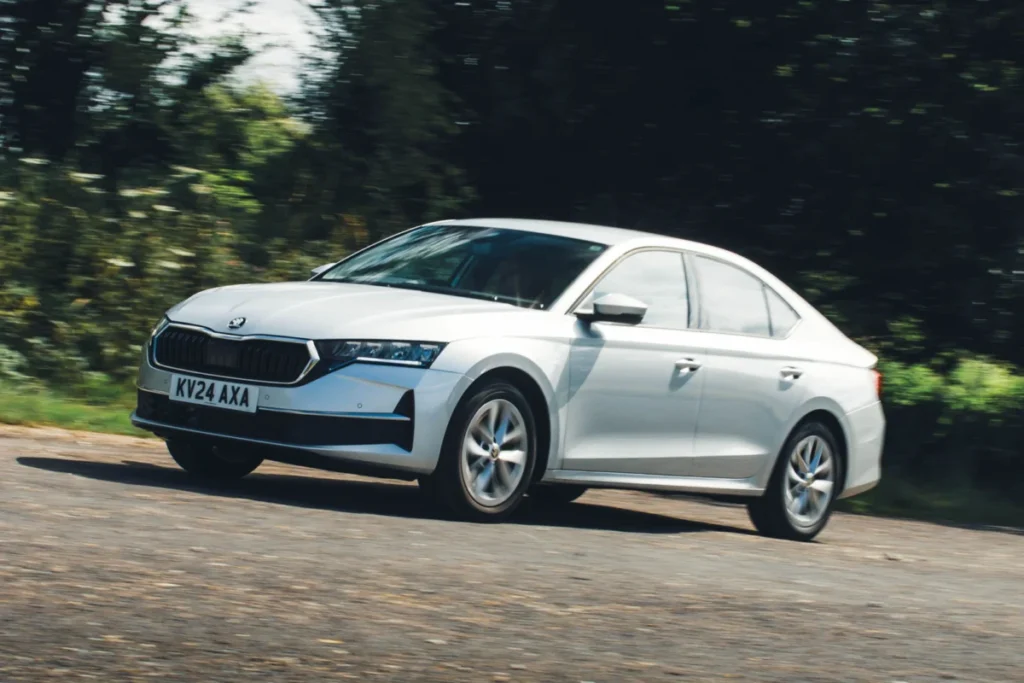
The Skoda Octavia, a stalwart in the family hatchback and estate car market, is poised for a significant evolution as the Czech manufacturer gears up to introduce a comprehensive suite of hybrid powertrains. This strategic move by Skoda, part of the larger Volkswagen Group, aims to cater to an increasingly diverse buyer base by offering a full spectrum of propulsion technologies, from advanced pure hybrids to potent plug-in hybrid variants. The expansion signifies Skoda’s commitment to adapting to evolving automotive landscapes and meeting stringent emissions regulations while maintaining its reputation for practicality and value.
Johannes Neft, Skoda’s technical chief, confirmed the upcoming electrification of the Octavia in an interview with Autocar, stating, "What you can expect for the Octavia is that you will get pure-hybrid and plug-in hybrid solutions in future." This announcement underscores a deliberate strategy to enhance the Octavia’s appeal to a wider demographic, including environmentally conscious consumers and fleet operators who are increasingly prioritizing fuel efficiency and reduced environmental impact. The integration of hybrid technology is not merely an addition; it represents a fundamental shift in the Octavia’s powertrain philosophy, aligning it with the broader electrification ambitions of the Volkswagen Group.
Unveiling the Pure-Hybrid Powertrain
The pure-hybrid system destined for the Skoda Octavia is anticipated to mirror the technology set to debut in its technically related siblings, the Volkswagen Golf and T-Roc, later this year. This shared architecture is a testament to the Volkswagen Group’s strategy of platform and powertrain synergy, enabling efficient development and production across its brands. At the heart of this system lies a familiar and proven combination: a 1.5-litre turbocharged four-cylinder petrol engine, renowned for its balance of performance and efficiency, mated to a seven-speed dual-clutch automatic transmission. This is augmented by an integrated electric motor and a compact 1.6 kWh battery.
The operational logic of this pure-hybrid system is designed for seamless transition between electric and internal combustion power. At lower speeds and during urban driving, the electric motor will primarily drive the wheels, offering silent and emission-free operation. As demand increases, such as during acceleration or when encountering higher loads, the petrol engine seamlessly engages to provide the necessary power. This intelligent management of power sources optimizes fuel consumption and enhances the driving experience, particularly in stop-and-go traffic.
In the Volkswagen Golf and T-Roc, this powertrain is expected to be available in two output configurations, delivering either 136 bhp or 170 bhp. It is highly probable that both these power levels will also be offered in the Skoda Octavia, providing buyers with a choice that aligns with their performance expectations and driving needs. This dual-output strategy ensures that the Octavia can cater to a broader range of customer preferences, from those seeking maximum efficiency to those desiring a more spirited driving dynamic.
The Plug-in Hybrid Variant: Enhanced Electric Range
Complementing the pure-hybrid option, Skoda will also introduce a plug-in hybrid (PHEV) version of the Octavia. This model is expected to adopt the same powertrain architecture as the current Volkswagen Golf eHybrid. This powertrain utilizes the same efficient 1.5-litre turbocharged petrol engine, but it is paired with a six-speed dual-clutch automatic gearbox. The key differentiator for the PHEV is its significantly larger 19.7 kWh battery.
This substantial battery capacity is designed to deliver a compelling electric-only range, with the Golf eHybrid currently boasting an impressive 88 miles on a single charge. While the larger, heavier Octavia might see a slightly reduced electric-only range, figures in this vicinity would still position the model very competitively within the market. Notably, a substantial electric-only range, such as that offered by the Golf eHybrid, has significant implications for company car drivers. Such vehicles often qualify for lower benefit-in-kind (BIK) tax bands, typically around 7% in the UK, making them an attractive and cost-effective option for fleet managers and employees alike. This strategic offering could significantly boost the Octavia’s appeal in the lucrative fleet sector, a segment where the model has historically performed well.
Commitment to Combustion and Future Vision
Despite the significant push towards electrification, Skoda remains committed to offering a diverse range of powertrain options, including traditional internal combustion engines. Johannes Neft explicitly stated the brand’s intention to provide a "complete range of combustion versions" for the Octavia. This suggests that diesel engines, which have long been a popular choice for their fuel efficiency and long-distance cruising capabilities, will continue to be a part of the Octavia line-up for the foreseeable future. This dual approach acknowledges that while electrification is the future, a substantial segment of the market still relies on and prefers the proven reliability and established infrastructure of petrol and diesel engines.
The brand’s forward-looking strategy was further hinted at by the preview of an all-electric Octavia concept, the Vision O, at last year’s Munich motor show. While this concept showcases Skoda’s long-term vision for an electric Octavia, it is not expected to reach production until around the turn of the decade. This timeline suggests that the hybrid variants will serve as a crucial transitional step, bridging the gap between current combustion engine technology and a fully electric future for the model. Skoda CEO Klaus Zellmer has previously articulated this philosophy, emphasizing the company’s desire to "keep all avenues open in terms of what is feasible" in ensuring the long-term viability of an internal combustion engine (ICE) Octavia. This indicates a pragmatic approach, balancing the demands of environmental regulations with the needs of a broad customer base.
Market Context and Competitive Landscape
The introduction of hybrid powertrains for the Skoda Octavia arrives at a time of intense competition and evolving consumer expectations within the C-segment. The family car segment is characterized by a demand for practicality, comfort, fuel efficiency, and increasingly, environmental consciousness. Rivals such as the Ford Focus, Vauxhall Astra, and its Volkswagen Group stablemate, the Golf, already offer or are preparing to offer various forms of hybridisation.
Skoda’s move to offer both pure-hybrid and plug-in hybrid options positions the Octavia to compete effectively across these evolving market demands. The pure-hybrid system, with its focus on urban efficiency and seamless integration, will appeal to everyday commuters and families looking for a more economical and environmentally friendly alternative to traditional petrol or diesel engines. The plug-in hybrid variant, with its extended electric-only range, will attract those who can leverage electric power for their daily commutes while retaining the flexibility of a petrol engine for longer journeys. The potential for attractive BIK tax rates further solidifies its appeal in the fleet market, a crucial battleground for sales volume in this segment.
The decision to retain diesel engines also reflects a nuanced understanding of the market. While the overall trend is towards electrification, diesel engines continue to offer significant advantages for high-mileage drivers and those who frequently undertake long journeys, particularly in terms of fuel economy and reduced CO2 emissions over extended distances compared to equivalent petrol engines. By offering this continued choice, Skoda ensures it doesn’t alienate a significant portion of its traditional customer base.
Implications for Skoda and the Volkswagen Group
The electrification of the Skoda Octavia is a key component of the Volkswagen Group’s overarching strategy to become a leader in electric mobility. By sharing powertrain technologies across its brands, the group can achieve economies of scale, accelerate development, and ensure a consistent level of technological advancement throughout its portfolio. For Skoda, this means not only keeping pace with its sister brands but also enhancing its own competitive standing. The Octavia is a cornerstone of Skoda’s sales volume, and its successful integration of hybrid technology will be critical to the brand’s future growth and its contribution to the group’s electrification targets.
The introduction of these new powertrains also aligns with increasingly stringent emissions regulations being implemented globally. By offering more electrified options, Skoda can proactively address these regulatory pressures, ensuring compliance and demonstrating its commitment to sustainability. This is crucial for maintaining market access and avoiding potential penalties.
Furthermore, the hybrid Octavia can serve as a stepping stone for consumers who are not yet ready to fully embrace battery electric vehicles (BEVs). The familiarity of a petrol engine combined with the benefits of electric assistance provides a less daunting entry point into electrified driving. This can help to gradually shift consumer perceptions and prepare the market for a broader transition to pure electric mobility in the years to come.
A Glimpse into the Future
The current news signifies a pivotal moment for the Skoda Octavia, a model that has consistently delivered on practicality and value for decades. The addition of pure-hybrid and plug-in hybrid powertrains is more than just an update; it’s a strategic evolution designed to future-proof the Octavia and solidify its position as a leading contender in the competitive family car segment. With the groundwork laid by the Vision O concept and the ongoing commitment to diverse powertrain options, Skoda is demonstrating a clear and adaptable vision for its future, one that embraces innovation while respecting the established preferences of its loyal customer base. The coming years will undoubtedly see the Octavia continue to be a benchmark for its class, now with an even broader appeal and a greener footprint.