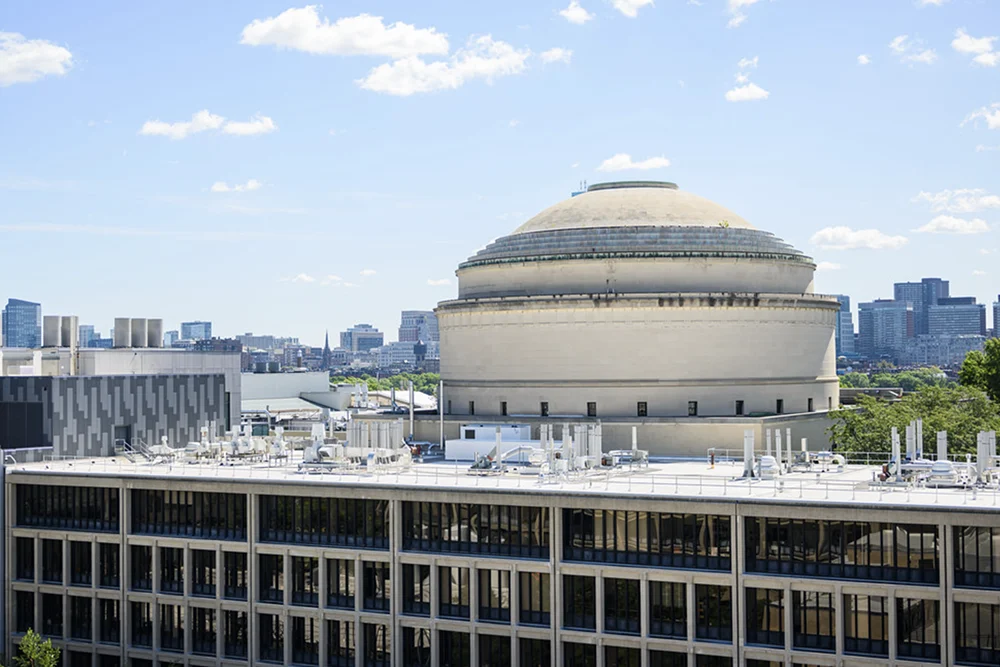
The National Science Foundation (NSF) has officially designated the Massachusetts Institute of Technology (MIT) as the lead institution for a prestigious new Materials Research Science and Engineering Center (MRSEC), a move intended to catalyze breakthroughs in medical diagnostics, sustainable industrial manufacturing, and the next generation of semiconductor technology. Announced on July 30 as part of a broader federal initiative to fortify the United States’ leadership in materials science, the new center is poised to receive an estimated $18 million in research funding over a six-year period. This award, which remains subject to the final negotiation of a formal research agreement between the NSF and the Institute, represents a significant milestone in interdisciplinary scientific collaboration, uniting 16 distinct research groups from nine academic departments across four premier institutions.
The MIT MRSEC will be directed by Associate Professor Rafael Jaramillo of the Department of Materials Science and Engineering (DMSE), with Professor Caroline Ross, also of DMSE, serving as the associate director. Administratively, the center will be anchored within the MIT Materials Research Laboratory (MRL), a hub known for fostering high-impact, cross-disciplinary studies. By integrating expertise from five MIT departments—including Chemistry, Chemical Engineering, Earth, Atmospheric and Planetary Sciences (EAPS), and Physics—and collaborating with Yale University, the University of California at Santa Barbara, and the Department of Radiology at Massachusetts General Hospital and Harvard Medical School, the center aims to address some of the most pressing technical challenges of the 21st century.
A Strategic Framework for Research and Development
The center’s operational strategy is built upon two primary research "thrusts," each designed to bridge the gap between fundamental science and practical application. These thrusts reflect the NSF’s commitment to funding research that not only pushes the boundaries of human knowledge but also offers tangible benefits to the economy and public health.
The first research thrust focuses on the engineering of specialized materials to revolutionize X-ray detectors. Currently, X-ray imaging is a cornerstone of modern medicine, yet it remains limited by the efficiency of scintillators—materials that convert X-rays into visible light for digital processing. By re-engineering these materials at the nanoscale, the MRSEC team hopes to achieve unprecedented levels of resolution, speed, and energy sensitivity. The implications of this work are vast: improved scintillator technology could lead to the earlier detection of cancerous tumors, significantly lower radiation doses for patients, and more robust imaging systems for industrial non-destructive testing and national security screening. This effort is expected to be spearheaded by optical materials experts Professor Marin Soljačić of the Department of Physics and Professor Juejun Hu of DMSE.
The second thrust delves into the complex world of high-temperature, sulfur-based molten materials. This research seeks to transform the foundational processes of metal and semiconductor production. As the global demand for critical materials like copper surges—driven by the transition to renewable energy and electric vehicles—the need for more efficient and environmentally sustainable extraction methods has become a matter of national importance. The center will explore the electrochemical properties of these molten systems to open new pathways for metal production that reduce carbon footprints and improve access to essential elements. Furthermore, this research is expected to yield new thin-film semiconductor technologies, which are vital for the continued evolution of microelectronics. Professor Jaramillo noted that expertise in high-temperature sulfur chemistry has become increasingly rare in American academia, and a primary goal of this thrust is to rebuild this intellectual "center of gravity" at MIT.
Expanding National Research Infrastructure
Beyond its primary research objectives, the NSF award will support the establishment of a new shared laboratory facility managed by MIT.nano. This facility will be dedicated to the testing of magnetic materials and the study of materials under extreme conditions, such as high temperatures and intense pressures. By making this infrastructure available to both academic researchers and industry partners, the MIT MRSEC will expand the nationwide portfolio of NSF-supported research facilities, providing a critical resource for the broader scientific community.
The inclusion of MIT.nano in this project underscores the importance of state-of-the-art instrumentation in modern materials science. The ability to characterize materials at the atomic level is essential for validating the theoretical models developed within the center’s two research thrusts. This shared facility is expected to become a cornerstone of the regional innovation ecosystem, allowing startups and established corporations alike to test new materials and devices without the prohibitive cost of building their own specialized laboratories.
Historical Context and the Legacy of Interdisciplinary Science
The selection of MIT for this new MRSEC is not an isolated event but rather the latest chapter in a 60-year history of materials research at the Institute. The legacy began in the 1960s with laboratories supported by the U.S. Department of Defense, which laid the groundwork for the interdisciplinary model that defines MIT today. Over the decades, NSF-funded centers at MIT have been instrumental in the birth of various "centers of excellence," including the MIT Microphotonics Center and the Microsystems Technology Laboratories (MTL).
"We were inspired to continue that legacy of collaborative research in materials science," Jaramillo stated. He emphasized that the MRSEC program is unique because it mandates an intentional, team-based approach across disciplinary boundaries. This collaborative "muscle memory" is what allows the Institute to tackle challenges that would be insurmountable for a single laboratory or department. The new center aims to build on this tradition, ensuring that the next 60 years of materials science at MIT are as transformative as the last.
Educational Outreach: The "DISASTER!" Initiative
Recognizing that scientific advancement requires a robust pipeline of talent, the MIT MRSEC is launching an ambitious outreach and educational program. A central component of this effort is an initiative titled "DISASTER!"—an acronym and a rallying cry intended to capture the public’s imagination. The program will focus on telling the stories of real-world catastrophes and the forensic materials science that eventually explained why they happened.
By examining historical failures, such as the brittle rivets that contributed to the sinking of the RMS Titanic or the metal fatigue that caused the crashes of the de Havilland Comet jetliners, the program aims to introduce the field of materials science to a broader audience. "If it bleeds, it leads," Jaramillo remarked, noting that public interest often peaks when high-profile failures occur. The initiative will encourage MIT undergraduates to conduct forensic research into these events, illustrating how understanding material failure is the first step toward preventing future tragedies.
Furthermore, the center plans to address a regional gap in workforce development. While materials science is a well-known field in industrial hubs like Michigan, Jaramillo pointed out that community colleges in the Boston area often lack specialized programs in materials processing. The MRSEC will work to bridge this gap, ensuring that the local workforce is equipped with the skills necessary to support the region’s growing biotechnology and semiconductor industries. Public outreach events are already being planned for the MIT Future Fest to engage the local community in these efforts.
Broader Impact and the National Research Landscape
The $18 million award to MIT is part of a larger $108 million investment by the NSF in six MRSECs across the United States. Other centers selected in this cohort will explore diverse topics, including artificial intelligence-driven experimental laboratories and hybrid quantum materials. This investment is a clear signal of the federal government’s commitment to the "CHIPS and Science Act" era, where materials science is viewed as a critical pillar of national security and economic competitiveness.
The implications of the MIT MRSEC extend far beyond the laboratory. By developing more efficient ways to produce metals and semiconductors, the center is directly contributing to the sustainability goals of the modern industrial economy. The focus on copper, for instance, is particularly timely; as the world shifts toward electrification, the demand for copper is projected to double by 2035, leading to a potential supply-demand gap. Innovative extraction techniques developed at MIT could help mitigate this risk.
Similarly, the advancements in medical imaging have the potential to transform healthcare economics. Higher resolution detectors can lead to more accurate diagnoses at earlier stages of disease, potentially reducing the long-term costs of treatment. By decreasing radiation exposure, these technologies also make diagnostic imaging safer for vulnerable populations, including pediatric patients.
A Vision for a Self-Sustaining Future
As the MIT MRSEC prepares to begin its six-year mandate, the leadership team is already looking toward the future. The ultimate goal is to create a self-sustaining hub for materials research that transcends the duration of the initial NSF grant. Jaramillo expressed hope that the center will rebuild the institutional capacity for interdisciplinary work, laying the groundwork for future generations of scientists to compete for subsequent centers and continue the cycle of innovation.
The proposal for the MRSEC was supported by MIT Research Administration Services through its Research Development team, which provides strategic assistance for large-scale, complex research initiatives. This internal support was crucial in coordinating the diverse array of faculty members involved, including Moungi Bawendi (Chemistry), Martin Bazant (Chemical Engineering), Nicole Nie and Shuhei Ono (EAPS), and Riccardo Comin, Nuh Gedik, and Long Ju (Physics).
In conclusion, the establishment of the new Materials Research Science and Engineering Center at MIT represents a strategic alignment of federal funding, institutional expertise, and industrial need. By focusing on the fundamental properties of materials and their real-world applications, the center is poised to deliver innovations that will resonate across the medical, environmental, and technological sectors for decades to come. Through its commitment to research, education, and infrastructure, the MIT MRSEC stands as a testament to the power of collaborative science in solving the world’s most complex challenges.