The Open Source Hardware Association (OSHWA) has officially released its certification report for June 2026, marking a significant milestone in the continued expansion of the global open-source hardware ecosystem. This month, the association approved 26 new certifications, pushing the total number of certified projects in the OSHWA database to an impressive 3,352. These certifications span a diverse range of technological applications, from cutting-edge RISC-V silicon development to innovative consumer interface tools and retro-gaming preservation hardware. By providing a standardized framework for "openness," the OSHWA certification program ensures that hardware labeled with the official logo adheres to a strict community definition, granting users the right to study, modify, distribute, and manufacture the designs.
The June 2026 cohort highlights a growing trend toward "full-stack" openness, where creators are no longer content with just releasing circuit board schematics but are now open-sourcing the very silicon that powers their devices. This evolution signals a maturing industry where transparency is becoming a foundational requirement for security, education, and long-term sustainability.
The Silicon Frontier: ElemRV and the RISC-V Revolution
Leading the June certifications is the ElemRV (UID: DE0000174), a project that represents a breakthrough in the democratization of semiconductor design. Developed by aesc silicon, the ElemRV is a comprehensive open-source RISC-V platform of microcontrollers. What distinguishes this project from many of its predecessors is its commitment to a completely open workflow that extends from high-level hardware description down to the physical silicon layout.

The ElemRV utilizes a VexiiRiscv core, which is fully implemented in SpinalHDL—a high-level hardware description language that offers more flexibility and safety than traditional Verilog or VHDL. Perhaps most significantly, the project employs a complete RTL-to-GDSII (Register-Transfer Level to Graphic Data System II) flow using OpenROAD. This means the transition from digital logic to the physical blueprints required for a semiconductor foundry was achieved without any proprietary or "black-box" dependencies.
Industry analysts suggest that the certification of the ElemRV is a watershed moment for OSHWA. Historically, "open hardware" often relied on proprietary chips from vendors like Intel, Microchip, or STMicroelectronics. By certifying a RISC-V chip designed with open-source Electronic Design Automation (EDA) tools, OSHWA is validating a future where hardware can be truly audited and reproduced at every level of the stack. This has profound implications for cybersecurity, as it allows researchers to verify that no "backdoors" exist at the silicon level.
Preserving Legacy: The SNES OEM Controller PCB Replacement
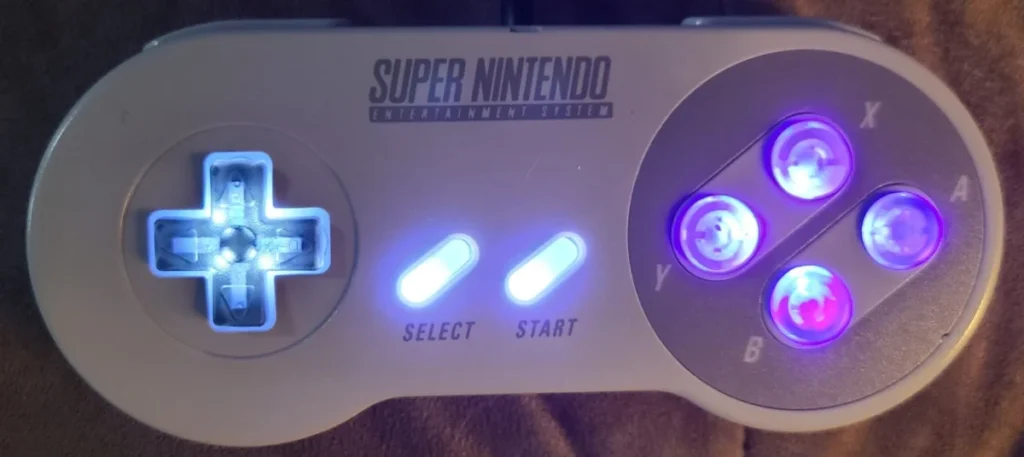
While some projects look toward the future of silicon, others focus on the preservation and improvement of technological history. The SNES OEM Controller PCB Replacement (UID: US002830), registered by Robert Taylor, illustrates the practical necessity of open hardware in the realm of "Right to Repair."
The backstory of this project provides a unique glimpse into how localized environmental factors can drive hardware innovation. Taylor, based in Alaska, identified a recurring problem with original Super Nintendo Entertainment System (SNES) controllers. In the cold, extremely dry climate of the northernmost U.S. state, static electricity buildup is a constant threat to electronics. Original SNES controller boards, which are decades old, frequently suffer from static-induced failures that render the gaming peripherals useless.
Rather than relying on a dwindling supply of used replacement parts, Taylor designed a modern, open-source PCB that fits perfectly into the original SNES controller shells. This allows enthusiasts to maintain the tactile feel of the original hardware while benefiting from modern manufacturing standards and more resilient circuit protection. The certification of this project ensures that the design files remain available for anyone else facing similar environmental challenges, or for those who simply wish to keep their legacy hardware operational in an era of planned obsolescence.
Human-Computer Interaction: The Sponde Scrolling Tool
In the category of user interface and ergonomics, the Sponde (UID: NL000044), created by Tanmoy Dutta in the Netherlands, offers a refined take on traditional computer input devices. While the computer mouse and scroll wheel have remained largely unchanged for decades, the Sponde introduces a high-precision approach to scrolling.
The device utilizes a magnetic rotary position sensor that tracks the rotation of a permanent magnet mounted on a high-quality ball bearing. Unlike traditional mechanical encoders, which rely on physical contact and are prone to wear, dust accumulation, and "stepping" sensations, the Sponde’s magnetic approach provides a frictionless, extraordinarily smooth user experience.
The Sponde project highlights a key strength of the open-source hardware movement: the ability to create "boutique" hardware that addresses specific aesthetic or functional niches that large-scale manufacturers might overlook. By open-sourcing the design, Dutta allows other makers to integrate this high-precision scrolling mechanism into custom keyboards, macro pads, or industrial control interfaces.

Statistical Overview and Global Reach
The June 2026 certifications reflect a globally distributed effort. The 26 new projects originated from several countries, including Germany, the United States, and the Netherlands. This geographic diversity is a hallmark of the OSHWA program, which has seen exponential growth since its inception.
To understand the scale of the movement, it is helpful to look at the chronology of OSHWA’s database:
- 2016: The certification program is launched to provide a legal and technical framework for open hardware.
- 2020: The database reaches 1,000 certifications, driven largely by the rise of open-source medical hardware during the global pandemic.
- 2023: Certifications surpass the 2,000 mark, with increased participation from academic institutions and large-scale hobbyist manufacturers like Adafruit and SparkFun.
- June 2026: The database hits 3,352 certifications, with a notable shift toward complex integrated circuits and specialized scientific instrumentation.
The 26 certifications added this month represent a steady growth rate, suggesting that the "Open Source Hardware" label is becoming a standard requirement for developers who want to signal trust and interoperability to their customer base.
The Role of OSHWA and the Certification Process
The Open Source Hardware Association serves as the steward of the Open Source Hardware Definition. To receive certification, a creator must submit their project to a rigorous review process. The requirements are stringent:

- Documentation: All design files, including schematics, board layouts, and mechanical drawings, must be available in a format that others can edit.
- Software: Any necessary firmware or software required to operate the hardware must be released under an OSI-approved open-source license.
- Licensing: The hardware itself must be licensed under a recognized open-source hardware license (such as CERN-OHL, TAPR, or Creative Commons BY-SA).
- No Restrictions: The creator cannot restrict the hardware from being used for specific purposes, such as commercial sale or military use, as this would violate the "open" definition.
The OSHWA certification is more than just a badge; it is a legally binding statement. By using the logo, creators agree to be held accountable to the community. If a certified project is found to be non-compliant, OSHWA has the authority to revoke the certification, protecting the integrity of the "Open Source" brand.
Broader Implications for the Tech Industry
The continued influx of certified hardware has significant implications for the broader technology industry. As supply chain volatility remains a concern for many manufacturers, open-source designs offer a level of "vendor independence." Companies can adopt certified designs knowing that they are not locked into a single supplier’s proprietary ecosystem. If a specific component becomes unavailable, the open nature of the design makes it easier to adapt the hardware to alternative parts.
Furthermore, the ElemRV project suggests that the industry is moving toward a "transparent silicon" model. As concerns over hardware-level vulnerabilities grow, especially in critical infrastructure and government applications, the ability to verify every gate in a processor becomes a powerful security feature.
The June 2026 report also underscores the role of open hardware in education. With 26 new projects available for study, students and self-taught makers have a wealth of peer-reviewed, high-quality engineering examples to learn from. Projects like the SNES PCB replacement teach the fundamentals of retro-engineering and environmental hardening, while the Sponde introduces advanced sensor integration.

Conclusion
The June 2026 OSHWA certification report serves as a testament to the vitality and maturity of the open-source hardware movement. From the microscopic level of RISC-V silicon to the macroscopic level of ergonomic peripherals and the restorative efforts of retro-gaming enthusiasts, the 26 new certifications represent a commitment to a transparent and collaborative technological future.
As the database moves toward the 3,500-certification milestone, the influence of OSHWA continues to expand, challenging traditional notions of intellectual property and proving that innovation thrives when knowledge is shared. For the makers, engineers, and hobbyists involved, these certifications are not just technical achievements; they are contributions to a growing global commons that ensures technology remains accessible to all.