The Open Source Hardware Association (OSHWA) has announced the registration of 39 new certified projects for the month of March 2026, marking a significant milestone in the global movement toward transparent and accessible technology. This latest cohort brings the total number of entries in the OSHWA Certification database to 3,292 individual certifications. These certifications span a diverse array of industries and applications, ranging from agricultural tools developed in South America to sophisticated electronic music interfaces and high-performance computing badges from Europe. By adhering to the community-defined standards for open-source hardware, these creators ensure that their designs, schematics, and software are freely available for study, modification, and distribution.
The Role of OSHWA in Modern Engineering
Founded to foster a collaborative environment for hardware development, OSHWA provides a framework that mirrors the open-source software movement. The certification program is a voluntary, free service that allows creators to signal to the public that their hardware meets a rigorous definition of "open." This definition requires that the hardware’s design is released in a format that allows for modification, that the documentation includes the necessary files for manufacturing, and that no proprietary restrictions prevent the hardware from being studied or sold.
The certification logo acts as a seal of quality and ethical commitment. For consumers and researchers, it guarantees that they are not locked into a single vendor’s ecosystem. For creators, it provides a structured way to contribute to the global commons, encouraging innovation through iteration rather than the constant "reinvention of the wheel."

March 2026 Milestone: Analyzing the 39 New Certifications
The 39 certifications added in March 2026 represent a steady growth trend in the open-hardware sector. While the early years of the OSHWA registry were dominated by simple breakout boards and hobbyist electronics, the current database reflects a maturing industry where complex, integrated systems are becoming the norm. The March entries highlight three distinct categories of innovation: decentralized agriculture, educational "badge" culture, and creative technology.
LibreIncu: Empowering Small-Scale Agriculture (UID: AR000005)
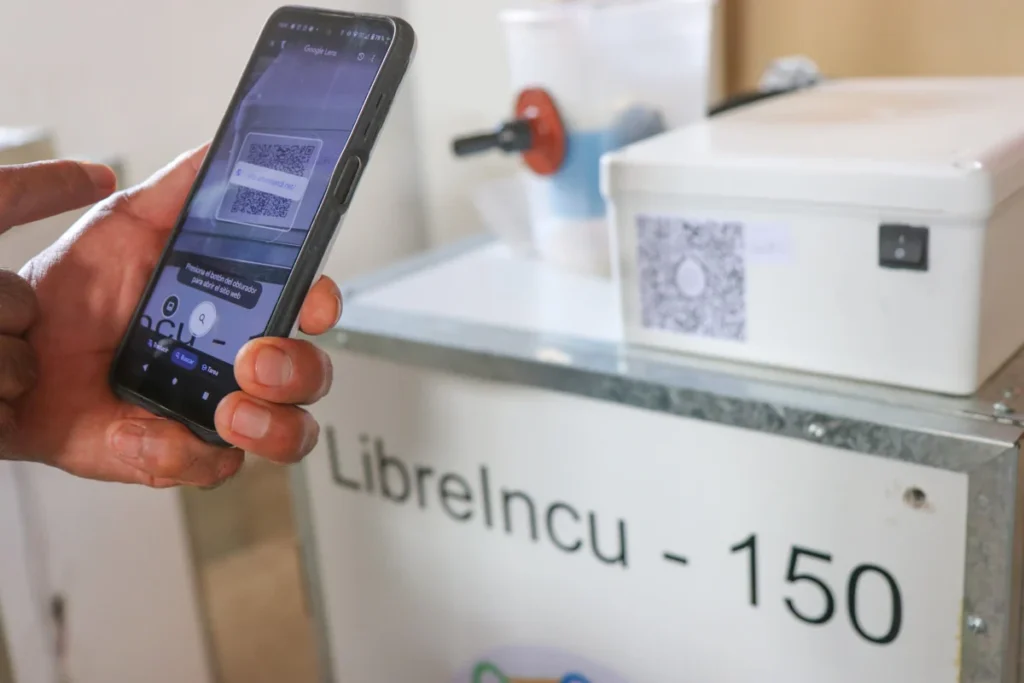
One of the most notable entries this month is the LibreIncu, a collaborative project emerging from Córdoba, Argentina. Developed by AlterMundi in partnership with Comunidad, Trabajo y Organización, the LibreIncu (UID: AR000005) is a fully open-source poultry incubator designed specifically for family farming and small-scale backyard chicken keeping.
The technical specifications of the LibreIncu include an integrated temperature control system, a specialized humidification module, and an automated egg-rotation mechanism. Beyond the hardware, the project includes a dedicated mobile application that allows farmers to monitor the status of the incubation process remotely.
The significance of the LibreIncu extends beyond its technical utility. In many regions, commercial agricultural equipment is prohibitively expensive or difficult to repair due to proprietary parts and software locks. By certifying the LibreIncu as open-source hardware, the developers have provided a blueprint that can be manufactured locally using accessible materials. This promotes food sovereignty and technological autonomy in rural communities, demonstrating how open-source principles can solve real-world logistical and economic challenges.

The MCH2022 Badge: A Masterclass in Portable Computing (UID: NL000038)
From the Netherlands, the MCH2022 Badge (UID: NL000038) represents the pinnacle of "badge culture"—a movement within the global hacker and maker community where event attendees receive sophisticated, wearable computers. Certified in March, this hardware was developed by the Stitching Badge.Team and serves as both a commemorative item and a powerful development platform.
The MCH2022 Badge features a rich array of hardware components, including a high-resolution display, wireless connectivity, and various input sensors. It is designed to be highly customizable; users can assemble the device themselves, program it using Python, and even discover hidden "Easter eggs" embedded in the circuitry and firmware.
The certification of this badge is particularly timely as the 2026 Open Hardware Summit approaches. It serves as a benchmark for how event-based hardware can transition from a temporary novelty to a permanent educational tool. Because the design is open-source, other organizations can fork the project to create their own custom hardware, drastically reducing the research and development costs for future community events.
Synthiboard: Bridging the Gap Between Music and Electronics (UID: DE000172)
The third standout project of the month is the Synthiboard (UID: DE000172), an Arduino-based synthesizer development board produced by Makervan Labs in Germany. The Synthiboard is designed for musicians and engineers who want to explore the intersection of digital logic and analog sound.

The board is notable for its high density of potentiometers, which allow for granular control over various sound parameters. It also includes a dedicated protoboard area, enabling users to solder additional components and expand the board’s functionality. The project has already seen significant community engagement, with reworked codebases such as the "Drummachine" by Sebastian Tomczak and "GlitchStorm" by the Spherical Sound Society being integrated into the ecosystem.
The Synthiboard’s certification highlights the importance of open hardware in the creative arts. By providing a transparent platform for sound synthesis, Makervan Labs allows artists to understand exactly how their instruments function, leading to more experimental and personalized musical expressions.
Chronology and Growth of the OSHW Registry
The trajectory of OSHWA certifications reveals a clear increase in global adoption.
- 2016–2018: The program launched with a focus on establishing the certification process. Initial entries were primarily from the United States and Europe.
- 2019–2022: The database surpassed 1,000 certifications as major players in the hobbyist market, such as Adafruit and SparkFun, began certifying their entire product lines.
- 2023–2025: A surge in international participation was noted, with significant contributions from India, Brazil, and Japan. The database reached the 2,500 mark.
- March 2026: With 39 new certifications in a single month, the registry reached 3,292, showing that the rate of new entries remains robust even as the industry faces global supply chain shifts.
Technical Standards and the Certification Process
To achieve certification, a project must undergo a rigorous self-assessment and documentation phase. The OSHWA process requires that:

- Documentation is Public: All schematics, Bill of Materials (BOM), and PCB layout files must be hosted on a publicly accessible platform (such as GitHub, GitLab, or a personal website).
- Software is Open: Any firmware or software required to operate the hardware must be released under an OSI-approved license.
- No Proprietary Blocks: While certain components (like integrated circuits) may be proprietary, the overall design must allow for the creation of a functional equivalent without violating intellectual property.
- The Certification Mark: Once approved, the hardware is assigned a unique UID (e.g., DE000172) which must be silk-screened onto the board or included in the digital documentation.
Official Responses and Community Impact
Industry experts suggest that the continued growth of the OSHWA database is a response to the increasing "black-box" nature of consumer electronics. "The 39 certifications we saw in March aren’t just hobbyist projects; they are a form of insurance against obsolescence," noted a spokesperson for the open-hardware community. "When a company goes out of business or stops supporting a product, open-source hardware lives on because the community has the blueprints to maintain it."
Representatives from AlterMundi, the creators of the LibreIncu, emphasized that certification provides a layer of trust. In the context of Argentinian agriculture, having a certified open-source tool means that local cooperatives can build their own incubators without fear of patent litigation, ensuring that technological progress benefits the many rather than the few.
Broader Implications for the Future of Technology
The diversification of open-source hardware into fields like agriculture and professional audio signals a shift in the global manufacturing landscape. As the OSHWA database nears the 3,500-certification mark, the data suggests that open-source methodologies are becoming a viable alternative to traditional proprietary R&D.
From an economic perspective, open hardware encourages a "circular economy." Devices like the MCH2022 Badge or the Synthiboard are designed to be repaired and upgraded rather than discarded. This aligns with global sustainability goals and the "Right to Repair" movement, which has gained significant legislative traction in both the European Union and the United States over the last three years.

Furthermore, the educational impact cannot be overstated. With 3,292 certified designs now available for study, students and aspiring engineers have access to a massive library of "real-world" engineering examples. This peer-reviewed, transparent repository serves as a global classroom, democratizing the knowledge required to build the next generation of technology.
As OSHWA prepares for the 2026 Open Hardware Summit, the March certifications serve as a testament to the resilience and creativity of the maker movement. Whether it is hatching chicks in Argentina, coding on a wearable badge in the Netherlands, or synthesizing new sounds in Germany, the open-source hardware community continues to prove that transparency is the most effective catalyst for innovation.