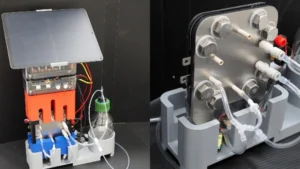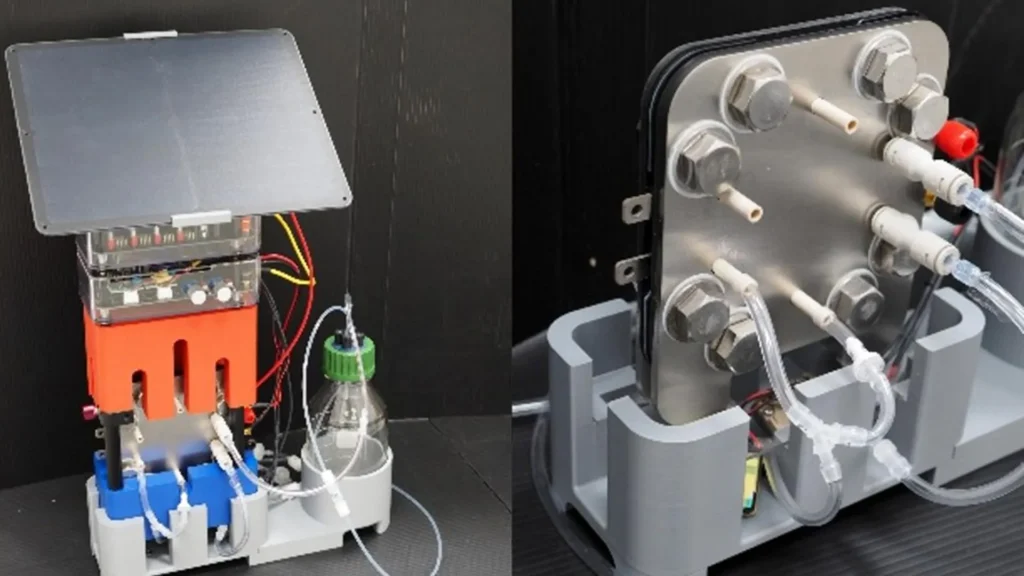
Researchers at Osaka Metropolitan University have engineered a groundbreaking artificial photosynthesis system capable of generating solar fuel with unprecedented consistency, entirely eliminating the need for complex, battery-based control equipment. This significant scientific stride is achieved through the ingenious integration of a self-regulating chemical component directly into the electrolyzer, a core element of the system, thereby drastically reducing both its operational complexity and associated costs. This development marks a pivotal moment in the quest for sustainable energy, addressing long-standing challenges in the efficiency and practicality of converting sunlight into storable chemical energy.
The Global Imperative for Renewable Energy and Solar Fuels
The accelerating pace of climate change and the finite nature of fossil fuels have underscored a global imperative to transition towards sustainable and renewable energy sources. Solar energy stands out as the most abundant clean energy resource, yet its widespread adoption has been hampered by two primary challenges: intermittency and storage. Sunlight is not constant; its intensity fluctuates throughout the day, with weather patterns, and across seasons. This variability makes it difficult to provide a steady supply of electricity, a problem often addressed by large-scale battery storage or integration with other energy sources.
Artificial photosynthesis offers a compelling solution to these challenges by mimicking nature’s most fundamental energy conversion process. Just as plants use chlorophyll to convert sunlight, water, and carbon dioxide into sugars (chemical energy), artificial systems aim to transform these readily available inputs into energy-rich chemical compounds, often referred to as "solar fuels." These fuels can then be stored and transported, decoupling energy generation from immediate consumption and offering a viable pathway to overcome the intermittency of solar power. One such promising product is formic acid, a versatile chemical that can function both as a direct fuel source and an efficient medium for energy storage, holding significant potential for various industrial and domestic applications.
Understanding Artificial Photosynthesis and the MPPT Dilemma
At the technological heart of artificial photosynthesis systems lies the electrolyzer. This device plays a crucial role by converting electrical energy, typically supplied by solar photovoltaic cells, into chemical energy stored within the produced fuels. The efficiency of this conversion process is paramount, and it hinges critically on how well the electrolyzer can adapt to varying power inputs.
A major technical hurdle in developing efficient artificial photosynthesis systems has been maintaining stable and optimal operation when sunlight levels change throughout the day. Solar cells exhibit a characteristic power curve, where there is a specific voltage and current combination that yields the maximum power output under given illumination conditions. To continuously extract this maximum power, many advanced solar energy systems employ a technique known as Maximum Power Point Tracking (MPPT). MPPT algorithms continuously monitor the solar cell’s output and adjust the electrical load to ensure that the system operates at its peak efficiency, thereby maximizing the energy harvested from fluctuating sunlight.
However, conventional MPPT implementations in artificial photosynthesis setups typically rely on a suite of external electronic components. These often include power converters, microcontrollers, and, crucially, batteries. While effective in smoothing out energy flow and ensuring consistent operation despite solar variability, these additional components introduce significant drawbacks. They contribute substantially to the overall system cost, increase the physical footprint, and add layers of complexity in terms of design, manufacturing, and maintenance. This complexity has been a major impediment to the broader commercialization and widespread deployment of artificial photosynthesis technologies.
Osaka Metropolitan University’s Breakthrough: A Self-Regulating Electrolyzer
To circumvent these persistent limitations, a dedicated team of researchers at the Research Center for Artificial Photosynthesis at Osaka Metropolitan University embarked on an ambitious project. Led by Associate Professor Yasuo Matsubara and Professor Yutaka Amao, the team collaborated with Iida Group Holdings Co., Ltd., a prominent Japanese conglomerate with interests in housing and sustainable technologies, to fundamentally redesign the electrolyzer itself. Their innovative approach focuses on inherent system intelligence rather than external control.
The core of their breakthrough lies in the development and integration of a specially designed solid electrolyte directly into the electrolyzer device. This novel material, rather than being a passive component, actively participates in the system’s regulation. The brilliance of this design is that the electrolyzer can now automatically perform the essential MPPT function on its own, rendering external, battery-based control systems entirely superfluous.
This self-regulating mechanism operates on fundamental physical principles. Instead of depending on external electronics, power converters, or auxiliary batteries to manage its electrical characteristics, the electrolyzer autonomously adjusts its behavior through its intrinsic thermal and impedance properties. As sunlight intensity increases, the solar cells generate more power, which in turn leads to a natural increase in the electrolyzer’s operating temperature. The system is meticulously engineered such that this internal warming causes a predictable and beneficial drop in the electrical resistance of the integrated solid electrolyte. This reduction in resistance then allows electricity to flow more freely and efficiently, effectively matching the increased power output from the solar cells.
Professor Amao elaborated on this elegant solution: "As sunlight increases, the electrolyzer naturally heats up. The system is designed so that this warming causes the electrical resistance to drop, allowing electricity to flow more freely. This makes the system automatically adjust its electrical behavior, akin to a built-in thermostat for power management." He further emphasized the profound implications, stating, "This self-regulating behavior helps keep fuel production more stable throughout the day and automates the system, while significantly reducing dependence on expensive batteries and complex external components." This inherent adaptability ensures that the system consistently operates near its optimal efficiency point, even under rapidly changing environmental conditions.
From Lab to Exhibition: Validating the Technology
The true test of any innovative technology lies in its performance under real-world conditions. The Osaka Metropolitan University team rigorously tested their self-regulating artificial photosynthesis system outdoors, subjecting it to the unpredictable fluctuations of actual sunlight. The results were highly encouraging: the system consistently produced formic acid from water and carbon dioxide, maintaining stable output even as ambient light levels varied significantly throughout the day. This empirical validation outside controlled laboratory environments is crucial for demonstrating the technology’s practical viability.
The confidence in their innovation was not merely academic; it had been publicly showcased. Associate Professor Matsubara proudly recalled, "We were confident that it would be successful, as we previously showcased this research at the ‘Joint Pavilion Iida Group × Osaka Metropolitan University’ exhibition as part of the Osaka Kansai Expo 2025." This high-profile exhibition provided an early platform to demonstrate the technology’s potential. During the exhibition, the system successfully generated enough formic acid to power a miniature diorama within the pavilion, providing a tangible and visually compelling demonstration of its energy conversion capabilities. "This successful demonstration at the Expo," Matsubara added, "clearly showed its potential as an efficient artificial photosynthesis system that could eventually be used to charge applications in our homes, bringing the vision of solar fuels closer to everyday reality."
The findings of this groundbreaking research have been peer-reviewed and published in EES Solar, a reputable scientific journal focusing on energy and environmental science, lending further credibility and scientific validation to the team’s claims.
Formic Acid: A Versatile Solar Fuel
The choice of formic acid as the primary product of this artificial photosynthesis system is strategic. Formic acid (HCOOH) is the simplest carboxylic acid and offers several advantages as a solar fuel and energy storage medium. It is a liquid at room temperature, making it relatively easy to handle, transport, and store compared to gaseous fuels like hydrogen. Its energy density is also considerable, and it can be safely stored in conventional tanks. Furthermore, formic acid can be directly used in direct formic acid fuel cells (DFAFCs) to generate electricity, providing a clean power source with water and CO2 as byproducts (the CO2 can then be recycled back into the artificial photosynthesis system, creating a closed-loop carbon cycle). Beyond energy applications, formic acid has widespread industrial uses in sectors such as agriculture (as a preservative and antibacterial agent), textiles, and leather processing, potentially opening up new markets for sustainably produced chemicals.
Collaborative Innovation: Industry and Academia
The success of this project also highlights the power of collaborative innovation between academia and industry. The partnership between Osaka Metropolitan University’s cutting-edge research faculty and Iida Group Holdings Co., Ltd. was instrumental. Academic institutions often drive fundamental scientific discovery, pushing the boundaries of knowledge. However, translating these discoveries into practical, scalable, and commercially viable technologies frequently requires the resources, engineering expertise, and market understanding that industry partners provide. Iida Group Holdings’ involvement likely facilitated the engineering aspects of integrating the novel electrolyte into a robust electrolyzer design and provided a vision for its potential applications, as evidenced by the Expo demonstration. This synergy is critical for accelerating the transition from laboratory prototypes to deployable solutions.
Broader Implications: Towards a Sustainable Energy Future
The implications of Osaka Metropolitan University’s self-regulating artificial photosynthesis system are far-reaching and potentially transformative.
Environmental Benefits: By efficiently converting CO2 and water into valuable fuels using solar energy, the system offers a pathway to reduce greenhouse gas emissions. The ability to recycle CO2 from industrial sources or even direct air capture could contribute significantly to carbon neutrality goals. Producing fuels without relying on fossil resources would also mitigate the environmental impact of extraction and combustion.
Economic Advantages: The elimination of expensive batteries and complex electronic control systems directly translates into lower capital expenditure (CapEx) for deploying artificial photosynthesis plants. Reduced system complexity also implies lower operational expenditure (OpEx) due to simpler maintenance and fewer points of failure. This cost reduction is crucial for making solar fuels economically competitive with traditional fossil fuels and other renewable energy alternatives.
Technological Advancement: This breakthrough represents a significant leap in material science and electrochemical engineering. Developing a material that inherently performs a complex control function previously requiring external electronics opens doors for designing "smart" materials and devices across various energy and chemical processing applications. It moves the field closer to robust, autonomous, and distributed energy production systems.
Energy Security and Independence: The ability to produce storable fuels directly from sunlight and ubiquitous resources like water and CO2 offers nations greater energy independence. It can enable decentralized energy production, particularly beneficial for remote communities or areas with unreliable grid infrastructure, fostering energy resilience.
New Market Opportunities: Beyond direct fuel applications, the efficient and cost-effective production of formic acid could stimulate new markets for green chemicals. Companies looking to reduce their carbon footprint might seek sustainably produced formic acid for their industrial processes, creating a symbiotic relationship between energy production and chemical manufacturing.
Challenges and the Road Ahead
While immensely promising, the path to widespread commercialization will involve further research and development. Scaling up the technology from laboratory prototypes to industrial-scale production remains a significant challenge. This includes optimizing the material composition of the solid electrolyte for long-term stability and efficiency under continuous operation, refining the electrolyzer design for mass production, and improving overall system efficiency (solar-to-fuel conversion rate) to maximize economic returns. Research will also focus on expanding the range of solar fuels that can be efficiently produced, such as methanol or hydrogen, each with its own unique applications and market potential. Furthermore, establishing the necessary infrastructure for distributing and utilizing solar fuels will be crucial for their societal integration.
Conclusion
The self-regulating artificial photosynthesis system developed by Osaka Metropolitan University represents a monumental step forward in sustainable energy technology. By elegantly solving the intermittency challenge and drastically simplifying system architecture through integrated material intelligence, the researchers have brought the vision of economically viable solar fuels considerably closer to reality. This innovation not only promises a more consistent and affordable way to harness solar energy but also lays a foundation for a future where clean, renewable chemicals power our homes and industries, fostering a truly sustainable global energy landscape. The publication in EES Solar and the public demonstration at the Osaka Kansai Expo 2025 underscore the scientific rigor and practical relevance of this pivotal breakthrough, positioning Osaka Metropolitan University at the forefront of the global energy transition.