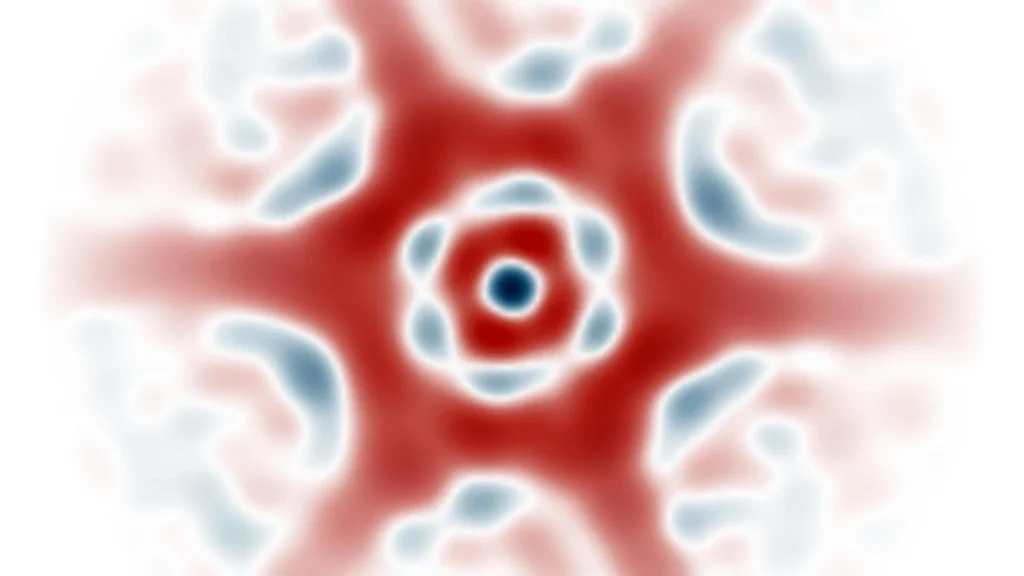
Researchers at the University of Oxford have unveiled a groundbreaking achievement in quantum physics, successfully creating a novel family of quantum superposition states. Unlike prior demonstrations that often relied on components analogous to classical states, these newly engineered superpositions are built from inherently nonclassical quantum constituents. This significant development, published recently, has profound implications, potentially accelerating the advancement of quantum computing beyond traditional binary systems, dramatically improving the precision of sensing technologies, and offering unprecedented opportunities to delve deeper into the foundational mysteries of quantum mechanics.
Unveiling the Quantum Realm: From Qubits to Harmonic Oscillators
The concept of quantum superposition is one of the most counterintuitive yet fundamental tenets of quantum mechanics. It posits that quantum objects can exist in multiple states simultaneously until measured, at which point they "collapse" into a single, definite state. This perplexing phenomenon is famously encapsulated by Erwin Schrödinger’s 1935 thought experiment involving a cat in a sealed box, hypothesized to be both alive and dead concurrently until an observer opens the box. While a fictional scenario designed to highlight the bizarre implications of quantum theory when scaled to the macroscopic world, scientists routinely engineer and manipulate real quantum superpositions in laboratory settings. These include placing individual atoms, photons of light, and even the vibrational motion of particles into multiple quantum states at once. The ability to precisely generate, control, and measure these elusive states is paramount for the development of cutting-edge quantum technologies, from ultra-secure communication networks to highly sensitive scientific instruments and, most prominently, quantum computers.
A commonly understood manifestation of superposition is the quantum bit, or qubit, the fundamental building block of quantum computers. Unlike classical bits, which can only represent a 0 or a 1, a qubit can exist in a superposition of both 0 and 1 simultaneously, offering an exponential increase in processing power for certain computational problems. However, the quantum world’s potential extends far beyond mere two-state systems.
Quantum harmonic oscillators (QHOs) represent a much richer class of quantum systems, capable of occupying a vast number of energy levels. These oscillators are ubiquitous in physics, providing accurate descriptions for a diverse array of phenomena, including the quantized energy levels of light (photons), the vibrations of atoms in a crystal lattice, and the controlled motion of trapped particles. Their multi-level nature offers a significantly expanded Hilbert space compared to simple two-level qubits, presenting a far broader spectrum of possibilities for encoding and processing quantum information. For decades, scientists have leveraged QHOs to create various types of quantum superpositions. A prominent example is the "cat state," where a quantum harmonic oscillator exists as a superposition of two spatially separated wave packets, often moving in opposite directions. These wave packets, known as coherent states, are considered the closest quantum analogues to classical motion, exhibiting minimal quantum uncertainty and behaving in many respects like classical waves.
A New Architecture for Quantum States: Leveraging Nonclassicality
The recent breakthrough from the Oxford team, based in the Department of Physics, marks a significant departure from these established methods. Rather than constructing cat-like states from these classical-like coherent-state wave packets, the researchers developed a novel technique that combines quantum components that are already intrinsically highly nonclassical. This distinction is critical. In "squeezed states," for instance, quantum uncertainty, governed by Heisenberg’s uncertainty principle, is distributed unevenly. While the uncertainty in one observable (like position) is reduced below its classical limit, it is compensated by an increased uncertainty in its conjugate observable (like momentum). These squeezed states are inherently more "quantum" than coherent states and have found applications in fields like gravitational wave detection (e.g., LIGO) to improve measurement precision. By using these and other highly nonclassical components, the Oxford team has effectively pushed the boundaries of what constitutes a quantum superposition.
The experimental platform for this achievement was a single trapped ion. Trapped ion systems are renowned for their exquisite control and coherence properties, making them one of the leading contenders for building quantum computers and sensors. A key advantage of a trapped ion is its unique ability to combine two distinct quantum systems within a single, highly controllable environment. The internal electronic state of the ion behaves precisely like a qubit, offering discrete, two-level quantum information. Concurrently, the ion’s physical motion within the electromagnetic trap acts as a quantum harmonic oscillator, capable of occupying numerous distinct motional quantum states. This synergistic combination renders trapped ions exceptionally versatile for engineering complex quantum states that extend well beyond the capabilities of conventional two-state qubits.
To generate these unprecedented quantum states, the researchers meticulously engineered a series of interactions designed to entangle the ion’s internal electronic state with its various possible states of motion. Entanglement, often described by Einstein as "spooky action at a distance," is a unique quantum phenomenon where two or more particles become linked in such a way that the quantum state of each particle cannot be described independently of the others, even when separated by vast distances. Following this entanglement process, the team performed a crucial mid-circuit quantum measurement on the ion’s internal state. This measurement, a non-unitary operation that causes the quantum state to collapse, was precisely timed and executed to project the ion’s motion into the desired superposition of highly nonclassical components. "This approach gave us a tool to sculpt the quantum superposition into almost any shape we desired," explained Dr. Sebastian Saner, the lead author of the study from the Department of Physics at the University of Oxford, highlighting the unprecedented level of control achieved.
Precision Engineering and Verification of Exotic Quantum States
The new methodology afforded the Oxford team an unparalleled degree of control over the intricate quantum states they produced. By meticulously adjusting various experimental parameters, such as the laser pulse sequences and interaction durations, they could precisely modify the relative size, orientation, and spatial separation of the nonclassical components within the generated superposition. This remarkable flexibility allowed them to create a diverse array of unusual and complex motional quantum states using the very same trapped-ion system, demonstrating the robustness and programmability of their technique.
Crucially, the researchers did not stop at state generation; they also rigorously reconstructed the quantum states directly through a process known as quantum state tomography. Their painstaking measurements yielded unmistakable evidence of genuine quantum superposition. The reconstructed states exhibited intricate interference patterns, a hallmark of wave-like quantum behavior where probability amplitudes combine constructively and destructively. More importantly, these states displayed regions of "Wigner negativity." The Wigner function is a quasi-probability distribution that provides a phase-space representation of a quantum state. While positive for classical systems, a Wigner function with negative values is an unambiguous signature of a truly nonclassical quantum state, meaning it cannot be described by any classical probability distribution. These empirical observations unequivocally confirmed that the experiment had successfully produced genuine quantum superpositions composed of truly nonclassical motional states, pushing the boundaries of what is experimentally achievable.
"We were really encouraged by our colleagues’ reaction when we showed them what we had made," remarked Dr. Raghavendra Srinivas, also from the Department of Physics at the University of Oxford, who supervised the pioneering work. "We believe we’re still scratching the surface of what’s possible, both for practical applications and for understanding these states at a more fundamental level." This sentiment underscores the potential for future discoveries and the collaborative spirit within the global quantum research community.
Historical Context: A Journey Through Quantum Milestones
The Oxford team’s achievement stands on the shoulders of over a century of quantum scientific endeavor. The foundations of quantum mechanics were laid in the early 20th century by luminaries such as Max Planck, Albert Einstein, Niels Bohr, Werner Heisenberg, and Erwin Schrödinger, who grappled with phenomena that classical physics could not explain, such as black-body radiation and the photoelectric effect. The concept of superposition, initially a theoretical construct, began to find experimental verification with early demonstrations using photons and then atoms. Seminal experiments in the mid-20th century, such as the Stern-Gerlach experiment, showcased the quantization of spin and intrinsic angular momentum, hinting at the non-classical nature of atomic states.
The specific field of trapped-ion quantum technology has its own rich history. The first successful trapping of individual ions was achieved in the 1970s by Wolfgang Paul, who later shared the Nobel Prize for his ion trap work. Over the subsequent decades, researchers developed sophisticated techniques for laser cooling ions to near absolute zero, allowing for unprecedented control over their quantum states. Key milestones include the demonstration of the first quantum logic gate with trapped ions in the late 1990s by David Wineland’s group (for which he also received a Nobel Prize), and continuous advancements in coherence times, scalability, and gate fidelities. Oxford has been a consistent leader in this field, with its quantum research groups contributing significantly to the theoretical and experimental development of trapped-ion systems, pushing the frontiers of quantum information processing and fundamental quantum physics. This latest work is a testament to the university’s enduring legacy in pioneering quantum research.
Far-Reaching Implications: Advancing Quantum Technologies and Fundamental Understanding
The research by the Oxford team points toward a future where quantum technologies are not solely reliant on simple binary quantum bits but can harness the richer capabilities of quantum oscillators. The potential impact spans several critical domains:
Revolutionizing Quantum Computing: One of the most promising applications lies in quantum computing. Current qubit-based quantum computers face significant challenges with error correction. Quantum states built from nonclassical components, particularly multi-level QHO states (sometimes referred to as qudits), may offer inherent advantages. These states could be more robust against certain types of noise and errors, or they could enable simpler and more effective quantum error-correction strategies. This is because errors often manifest as shifts between discrete levels, and having more levels or different types of states could provide more redundancy or distinct error signatures. Moving beyond binary logic to qudit-based systems could also lead to more compact and powerful quantum processors, capable of encoding more information per physical unit and potentially simplifying complex quantum algorithms. This could be particularly impactful for quantum simulations, optimization problems, and cryptography.
Enhancing Quantum Sensing and Metrology: Beyond computing, the ability to precisely engineer and control these exotic nonclassical states provides a potent new experimental platform for quantum sensing and metrology. Nonclassical states, especially squeezed states, have already demonstrated their utility in enhancing the precision of measurements beyond the standard quantum limit, as famously demonstrated in the LIGO experiment for detecting gravitational waves. By creating superpositions of these highly nonclassical components, researchers could potentially develop ultra-precise clocks, magnetic field sensors, gravity gradiometers, or gyroscopes with sensitivities far exceeding classical limits. Such advancements could have transformative applications in navigation, medical imaging, geophysical exploration, and fundamental physics experiments.
Probing the Foundations of Quantum Physics: This research also offers a unique lens through which to investigate some of physics’ biggest and most enduring questions. One such question concerns the elusive boundary between the classical world we experience and the underlying quantum reality that governs it. Where does quantum weirdness give way to classical predictability? The creation of macroscopic superpositions, even in highly controlled lab settings, pushes this boundary further and provides a testbed for theories of decoherence – the process by which quantum states lose their coherence and transition to classical behavior due to interaction with their environment. By studying these complex, nonclassical superpositions, scientists can gain new insights into the measurement problem, the role of observation, and the fundamental nature of reality itself. The team’s ongoing collaboration with theoretical physicists aims to better quantify and understand the "quantumness" of these newly created states, potentially leading to new theoretical frameworks.
The Global Quantum Race: Oxford’s Place in the Landscape
The global race to develop quantum technologies is intensifying, with nations and major corporations investing billions into research and development. Universities like Oxford, alongside institutions in the US, China, Europe, and elsewhere, are at the forefront of this scientific frontier. Oxford’s continuous output of pioneering research, exemplified by this latest breakthrough, reinforces its position as a world leader in quantum physics and engineering. The ability to precisely sculpt and control such sophisticated quantum states is a testament to decades of cumulative expertise and infrastructure. As Dr. Srinivas hinted, the team is actively exploring the next steps, including scaling up these techniques and exploring new applications, ensuring Oxford remains a pivotal player in shaping the future of quantum science. This work is not merely an academic exercise; it is a critical step towards unlocking the full potential of quantum mechanics for the benefit of humanity.