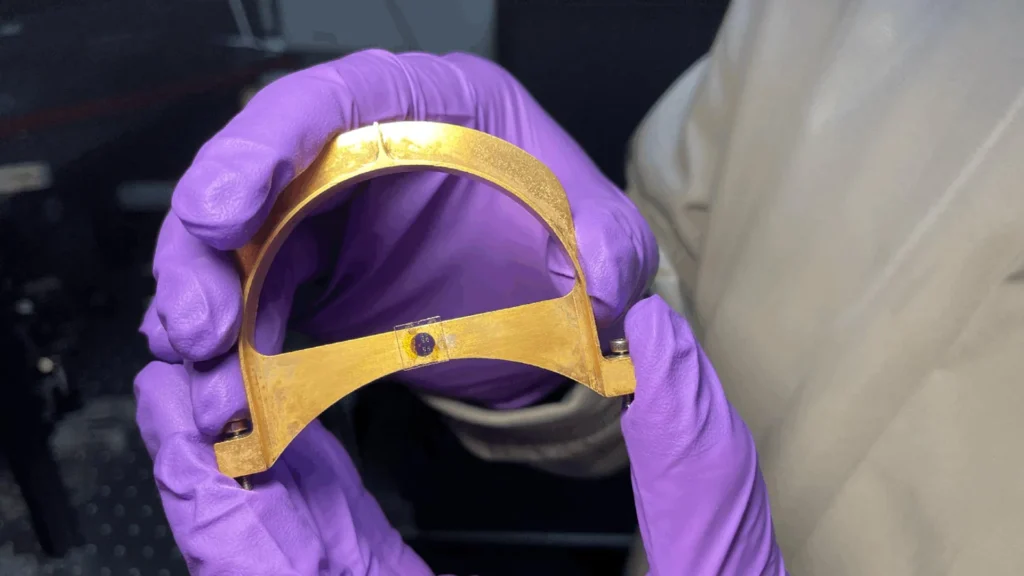
A significant hurdle in the advancement of quantum computing and communication has long been the extreme environmental conditions required for operation. Most current quantum systems demand temperatures hovering near absolute zero, a chilling -459 degrees Fahrenheit (-273 degrees Celsius), to sustain the incredibly delicate quantum states vital for processing and transmitting information. This necessity for cryogenic cooling translates into immense operational complexity, substantial energy consumption, and prohibitive costs, severely limiting the practical deployment and scalability of quantum technologies. However, a recent breakthrough from Stanford University researchers could dramatically alter this landscape, offering a pathway to quantum systems that function efficiently at ambient room temperature.
A Leap Beyond Cryogenics: The Stanford Innovation
Researchers at Stanford University have successfully developed a nanoscale optical device that operates effectively at room temperature, crucially linking the quantum properties of light and electrons. This pioneering development, detailed in a study published in Nature Communications, represents a pivotal step towards creating smaller, more affordable, and widely accessible quantum technologies capable of transmitting information over long distances without the need for cumbersome and expensive cryostats. The core innovation lies in its ability to enable entanglement—a fundamental quantum connection—between photons, the elementary particles of light, and electrons. This entanglement is widely considered an indispensable requirement for the architecture of future quantum communication networks and distributed quantum computing systems.
Professor Jennifer Dionne, a leading figure in materials science and engineering at Stanford and the senior author of the study, emphasized the novelty of their approach. "The material in question is not really new, but the way we use it is," Dionne stated, underscoring the ingenuity behind the device’s design. She elaborated on its critical function: "It provides a very versatile, stable spin connection between electrons and photons that is the theoretical basis of quantum communication. Typically, however, the electrons lose their spin too quickly to be useful." This stability at room temperature addresses one of the most persistent challenges in quantum physics: maintaining quantum coherence.
The Intricacies of the Device: Twisted Light and Quantum Spin
The device’s architecture is a sophisticated blend of advanced material science and nanophotonics. It comprises a thin, precisely patterned layer of molybdenum diselenide (MoSe2) integrated onto a nanopatterned silicon substrate. Molybdenum diselenide belongs to a class of materials known as transition metal dichalcogenides (TMDCs), which have garnered considerable scientific interest due to their unique optical and quantum properties. These materials exhibit strong light-matter interactions and host robust excitons—bound states of an electron and an electron hole—making them ideal candidates for quantum applications.
The silicon nanostructures embedded within the device play an indispensable role by generating what the researchers term "twisted light." Feng Pan, a postdoctoral scholar in Dionne’s lab and the paper’s first author, elucidated this crucial mechanism. "The Silicon nanostructures enable what we call ‘twisted light,’" Pan explained. "The photons spin in a corkscrew fashion, but more importantly, we can use these spinning photons to impart spin on electrons that are the heart of quantum computing." This transfer of angular momentum from photons to electrons is the key to creating stable entangled states at room temperature.
Dionne highlighted the incredible precision involved in crafting these components, noting their minute scale. "The patterned nanostructures are imperceptible to the human eye, about the size of the wavelength of visible light," she added. "But they help us manipulate photons very precisely to make them spin—to twist them—in a specific direction, for example, up or down." This meticulous control over light’s properties at the nanoscale is what allows for the deterministic transfer of quantum information, a process that has historically required extreme cooling to prevent thermal noise from disrupting the delicate quantum spins.
Understanding the Quantum Realm: Qubits, Entanglement, and Decoherence
To appreciate the significance of this Stanford breakthrough, it’s essential to grasp some fundamental concepts of quantum mechanics as applied to information technology. In conventional computing, information is encoded as bits, which exist in one of two states: 0 or 1. Quantum technologies, however, utilize qubits, which are the basic building blocks of quantum information. Unlike classical bits, qubits can exist in a superposition of both 0 and 1 simultaneously, enabling a vastly richer information processing capability. Furthermore, qubits can become entangled, meaning their states are intrinsically linked, regardless of the physical distance separating them. This entanglement is a cornerstone for quantum communication, allowing for secure information transfer, and for quantum computing, enabling exponential speedups for certain computational problems.
One of the most formidable challenges confronting the development and widespread adoption of quantum technologies is maintaining stable quantum states. Quantum systems are incredibly fragile and susceptible to environmental interference. Even minute interactions with the surroundings can cause a qubit to lose its quantum properties, a phenomenon known as decoherence. This loss of coherence is akin to losing information, and it severely limits the computational power and communication range of quantum devices. To counteract decoherence, many existing quantum systems—such as those based on superconducting circuits or trapped ions—rely on extreme cooling to temperatures just fractions of a degree above absolute zero. This cryogenic infrastructure is not only costly but also bulky, power-intensive, and inherently difficult to scale, posing a significant bottleneck to the practical realization of quantum computers and quantum internet.
The Stanford device’s ability to operate at room temperature directly addresses this major obstacle. By bypassing the need for sophisticated cooling systems, it significantly reduces the complexity, size, and energy footprint of quantum components. This compact and relatively inexpensive design offers a practical advantage over many current quantum systems, which are typically confined to specialized laboratories due to their stringent environmental requirements.
The Strategic Choice of Material: Transition Metal Dichalcogenides
The research team’s selection of TMDC materials was a deliberate strategic choice, driven by their unusual quantum characteristics. They collaborated with Stanford researchers Fang Liu and Tony Heinz, specialists in these advanced materials, to optimize the device’s performance. As Pan articulated, "It all comes down to this material and our Silicon chip. Together, they efficiently confine and enhance the twisting of light to create a strong coupling of spin between photons and electrons. This stabilizes the quantum state that makes quantum communication possible."
TMDCs like molybdenum diselenide are two-dimensional materials, similar in structure to graphene but with a crucial difference: they possess a direct bandgap. This property means they can efficiently absorb and emit light, making them excellent candidates for optoelectronic applications. More importantly for quantum technologies, TMDCs exhibit strong spin-orbit coupling and host excitons with well-defined spin states that can interact strongly with light. This strong light-matter interaction is vital for transferring quantum information between photons (which are excellent carriers of information over long distances) and electrons (which can store information). The precise combination of MoSe2 with the silicon nanostructure effectively enhances this interaction, preserving the fragile quantum properties required for robust communication and computing tasks at temperatures far above those previously thought possible.
Implications for Quantum Communication and Beyond
The potential ramifications of this room-temperature quantum entanglement device are profound and far-reaching. If further developed, this technology could accelerate advancements across a spectrum of critical fields:
- Secure Communications: The ability to entangle photons and electrons at room temperature is a cornerstone for Quantum Key Distribution (QKD), a method for establishing inherently secure cryptographic keys that are impervious to eavesdropping based on the laws of quantum mechanics. Current QKD systems often face limitations in distance and require specialized infrastructure; this new device could enable more robust, long-distance, and easily deployable QKD networks.
- Quantum Internet: A global quantum internet, envisioned as a network of interconnected quantum processors, would revolutionize communication, sensing, and distributed computing. This device represents a crucial building block for such a network, allowing for the creation and distribution of entangled states across nodes without the need for cryogenic intermediaries.
- Advanced Sensing: Quantum sensors leverage the extreme sensitivity of quantum states to measure physical quantities with unprecedented precision. Room-temperature quantum components could lead to highly portable and robust quantum sensors for applications in medical imaging, navigation, and fundamental scientific research.
- High-Performance Computing and Artificial Intelligence: While quantum computers are still in their nascent stages, the ability to maintain quantum coherence at higher temperatures could simplify the architecture of quantum processors, making them more practical to build and integrate. This could eventually lead to new paradigms for artificial intelligence, optimization problems, and drug discovery.
The economic and practical advantages of eliminating cryogenics are substantial. Current quantum computing facilities can cost hundreds of millions of dollars to build and operate, with a significant portion dedicated to cooling infrastructure and energy consumption. A room-temperature solution could dramatically reduce these overheads, making quantum technology accessible to a wider range of research institutions, businesses, and eventually, consumers.
The Global Race for Quantum Supremacy and Future Outlook
The development of practical, scalable quantum technologies is a global scientific and economic race, with nations and major technology companies investing billions in research and development. Governments worldwide, including the United States with its National Quantum Initiative, the European Union with its Quantum Flagship, and significant investments from China and other nations, are pouring resources into various quantum modalities, from superconducting qubits and trapped ions to photonic and topological approaches. This Stanford breakthrough positions the U.S. at the forefront of a promising new avenue, potentially offering a simpler, more robust path to widespread quantum adoption.
The Stanford researchers are not resting on their laurels. They are actively engaged in improving the device’s performance and exploring other TMDC materials and combinations that could offer even greater efficiency and stability. A parallel line of inquiry involves investigating whether these room-temperature systems might unveil entirely new quantum capabilities that are currently unattainable under cryogenic conditions.
The long-term vision is to integrate devices like this into expansive quantum networks. Achieving this ambitious goal will necessitate concurrent advancements in supporting technologies, including more efficient light sources, high-speed modulators, ultra-sensitive detectors, and robust interconnects capable of preserving quantum information.
Ultimately, the aspiration is to miniaturize quantum components to a degree where they can be incorporated into everyday electronics. While such a future remains many years away, this work represents a profound step toward making quantum technology not just a scientific curiosity, but a practical and ubiquitous tool. As Feng Pan expressed with a forward-looking smile, "If we can do that, maybe someday we could do quantum computing in a cell phone. But that’s a 10-plus-year plan." This vision, once purely speculative, moves closer to reality with each successive breakthrough like the one achieved by the Stanford team. The journey to a quantum-enabled world is long, but this room-temperature device marks a significant milestone on that path, promising a future where the enigmatic power of quantum mechanics is harnessed for the benefit of all.