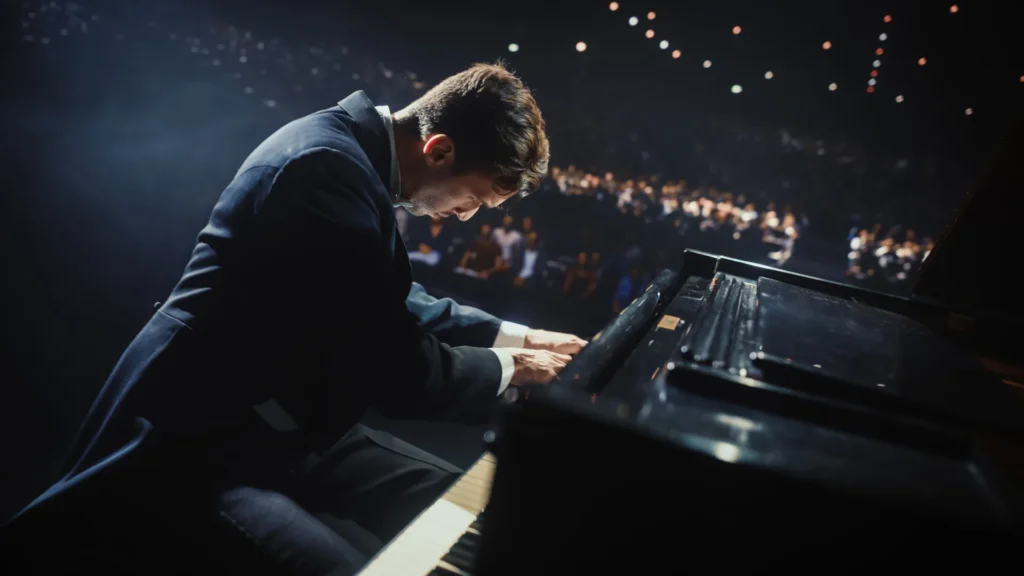
For generations, pianists and music teachers have insisted that a performer’s touch can change the character of a piano’s sound, imbuing notes with qualities like warmth, brightness, or darkness. This deeply held artistic intuition, however, often faced skepticism from the scientific community, which argued that once a piano hammer strikes a string, the resulting tone is determined almost entirely by the instrument itself. Now, groundbreaking research has provided some of the clearest evidence yet, scientifically validating the long-standing belief that pianists truly can shape a piano’s timbre through touch alone. This pivotal study, published in the prestigious Proceedings of the National Academy of Sciences (PNAS), marks a significant milestone in bridging the gap between artistic experience and empirical science.
The Genesis of a Scientific Breakthrough
The research, spearheaded by Dr. Shinichi Furuya of the NeuroPiano Institute and Sony Computer Science Laboratories, Inc., employed cutting-edge ultra-high-speed sensing technology to meticulously record and analyze the subtle, often imperceptible, movements of pianists. Their findings illuminate the hidden biomechanical nuances behind expressive piano playing, demonstrating how a performer’s precise finger and hand motions influence listeners’ perception of critical musical qualities such as brightness, heaviness, and clarity in individual notes. This validation not only confirms what countless musicians have intuitively understood but also opens new avenues for understanding human motor control, musical expression, and the very nature of artistic creativity.
A Century of Debate: Artistry Versus Acoustics
The question of whether a pianist’s touch could truly alter timbre—the quality of a musical note that distinguishes different types of sound production—has been a subject of intense debate since the early 20th century. This discussion often pitted the subjective, experiential world of musicians against the objective, measurable parameters favored by scientists and acousticians.
Musicians, from classical virtuosos like Sergei Rachmaninoff and Vladimir Horowitz to contemporary jazz innovators, have consistently used rich, evocative language to describe tonal variations stemming from their touch. They speak of "singing tones," "pearly runs," a "velvet touch," or the ability to produce a "warm, dark sound" versus a "brilliant, piercing one." For these artists, the piano, despite its mechanical nature, felt like an extension of their expressive will, capable of infinite sonic nuances dictated by the subtlety of their physical interaction with the keys.
However, many scientists and early acousticians, influenced by the burgeoning field of psychoacoustics, contended that these perceived differences were largely psychological. They argued that the fundamental physical properties of a piano string, once struck, produce a fixed set of overtones and harmonics, largely independent of how the key was depressed. Any perceived variation in timbre, they posited, was more likely attributable to changes in dynamics (loudness), timing (rhythm and articulation), or even the listener’s subjective interpretation rather than a direct alteration of the note’s inherent sound quality through touch alone. Some theories suggested that changes in key velocity, which directly affect loudness, might subtly alter the initial attack transient of a note, leading to a perception of timbre change, but not a fundamental alteration of the steady-state tone. This scientific perspective, while grounded in the physics of sound production, often left musicians feeling misunderstood, their deeply felt artistic truths dismissed as mere illusion.
This scientific skepticism was further fueled by the difficulty of isolating "touch" from other performance variables. Early recording technologies lacked the precision to capture the minute details of a pianist’s interaction with the instrument, making it challenging to conduct rigorous, controlled experiments. The advent of digital pianos and sophisticated recording techniques began to offer new possibilities, but a definitive, broadly accepted scientific consensus remained elusive until now.
Methodology: Unveiling the Microscopic Mechanics of Touch
To finally address this long-standing enigma, Dr. Furuya’s team developed an innovative, custom-built noncontact sensing system named "HackKey." This remarkable technology was capable of recording the movements of all 88 piano keys with unprecedented precision. Operating at a speed of 1,000 frames per second and boasting microscopic spatial resolution, HackKey could capture the minutest kinematic details of key depression and release, far beyond the capabilities of the human eye or conventional motion capture systems.
The experimental design was equally rigorous. Twenty internationally acclaimed pianists, recognized for their exceptional artistry and technical command, were recruited for the study. These virtuosos were tasked with a seemingly simple yet profoundly challenging assignment: to play individual notes while intentionally producing contrasting tonal qualities. Specifically, they were asked to generate "bright" versus "dark" sounds, and "light" versus "heavy" sounds, using the same key and maintaining consistent loudness and timing as much as possible to isolate the effect of touch. This controlled approach was crucial for disentangling the role of touch from other acoustic variables that could influence perception.
Following the performance phase, a series of listening tests were conducted. Participants, including both professional pianists and individuals with no formal musical training, were asked to identify the intended timbral qualities (e.g., whether a note sounded bright or dark). The results were strikingly consistent: listeners, across the board, reliably recognized the specific timbres the pianists aimed to produce. Notably, professional pianists, with their finely tuned ears and extensive experience, demonstrated an even greater sensitivity to these subtle timbral differences, underscoring the validity of the performers’ claims.
The Hidden Movements Behind Musical Expression
The detailed kinematic data collected by HackKey allowed researchers to correlate specific physical movements with the perceived timbral changes. The analysis revealed that only a handful of extremely precise movement features were strongly connected to alterations in perceived timbre. These features included tiny variations in acceleration profiles during key depression, the exact timing of impact, and subtle synchronization differences between the hands when playing chords or rapid passages.
A particularly significant finding was the demonstration that manipulating a single movement feature could reliably and reproducibly change how listeners described the sound. This provided direct, causal evidence that touch itself plays an independent and fundamental role in shaping timbre, rather than merely accompanying or being a byproduct of other musical effects like loudness or tempo. This level of precision in identifying the causal link had largely eluded previous research.
The study characterized these subtle gestures not as accidental variations, but as integral components of a "shared motor skill" developed through years of advanced piano training. This implies that the artistry behind piano tone is not merely a metaphorical construct or a subjective interpretation; it is deeply grounded in measurable, repeatable physical actions. As Dr. Furuya articulated, this work successfully translates a long-standing artistic intuition into the realm of verifiable science. The findings not only corroborate the beliefs held by generations of pianists but also offer an unprecedentedly clear understanding of how skilled, nuanced movement creates profound emotional and aesthetic experiences in music.
Broader Implications: Beyond the Concert Hall
The ramifications of this research extend far beyond the immediate world of music performance and classical concert halls. The discoveries promise to have a transformative impact on several diverse fields, including music education, rehabilitation science, neuroscience, robotics, and human-computer interaction.
Transforming Music Education: One of the most immediate and exciting implications is for music pedagogy. For centuries, piano teachers have relied on metaphorical language ("play warmer," "use a lighter touch," "sing through the keys") to convey expressive techniques. While these metaphors are powerful for experienced musicians, they can be vague and challenging for students to interpret and implement. The new findings suggest that future music education systems could be revolutionized. Instead of abstract instructions, students might receive real-time visual feedback, perhaps through augmented reality or specialized sensors, showing them the exact physical movements—the precise acceleration, timing, and hand synchronization—associated with specific tonal qualities. This could make the learning process more efficient, demystify advanced techniques, and potentially accelerate skill acquisition, allowing students to develop a more nuanced and expressive touch earlier in their training. This precise, data-driven approach could also help musicians optimize their practice routines, avoid injuries related to inefficient movements, and overcome physical limitations.
Advancements in Rehabilitation and Neuroscience: The study’s insights into the exquisite fine motor control required for expressive piano playing have significant implications for rehabilitation science. Understanding how minute physical gestures are linked to complex sensory perceptions could inform new therapeutic approaches for individuals recovering from neurological injuries (e.g., stroke) or those with motor control disorders. By studying and mimicking the highly refined motor skills of pianists, researchers could develop targeted exercises to improve dexterity, coordination, and proprioception. In neuroscience, the research provides a powerful model for investigating how the brain integrates motor commands with sensory feedback to produce complex, aesthetically pleasing outcomes. It offers clues about the neural pathways and cognitive processes involved in learning and executing highly precise movements that evoke specific emotional and aesthetic responses.
Revolutionizing Robotics and Human-Computer Interaction: The ability to quantify the physical parameters of expressive touch also holds immense potential for robotics and human-computer interaction. Current robotic systems often struggle to replicate the subtle nuances of human performance, especially in creative domains. By providing a blueprint of the physical gestures underlying expressive timbre, this research could pave the way for developing robots that can interact with instruments or interfaces in a more human-like, nuanced, and emotionally resonant manner. This could lead to more expressive digital musical instruments, more intuitive haptic feedback systems, and even robotic companions capable of understanding and responding to subtle human expressions.
Shaping Music Technology and AI: Researchers in artificial intelligence and music technology are already exploring applications inspired by expressive musical performance. The study offers critical data for modeling timbre, generating realistic piano motion for virtual performers, and building AI systems capable of reproducing and even generating subtle expressive nuances in performance. This could lead to a new generation of digital audio workstations, virtual instruments, and AI composers that possess a far greater capacity for human-like musicality and expression. Imagine AI that can "learn" a pianist’s unique touch and apply it to new compositions, or digital instruments that respond to a performer’s subtle gestures with unprecedented fidelity.
The Science of Creativity: A New Frontier
Beyond its practical applications, this study makes a profound contribution to the growing scientific effort to understand creativity itself. For decades, research on music perception largely focused on more easily measurable elements such such as pitch, loudness, and rhythm. Timbre, however, has been notoriously difficult to study scientifically because it involves higher-level sensory interpretation, complex cognitive processing, and deep emotional response. It is often described in subjective, almost mystical terms.
By definitively identifying specific physical actions that are causally linked to timbre perception, the researchers have opened a crucial door. They have provided a concrete framework for studying how artistic expression emerges from the intricate interaction between the body, the brain, and the resulting sound. This moves the study of creativity from the abstract to the empirically observable.
This work is part of a broader, emerging field sometimes referred to as "dynaformics"—the science of music performance. Dynaformics seeks to understand the dynamic forms of movement that underlie musical expression and their impact on both the performer and the listener. Supporters of this field believe that by scientifically dissecting the mechanics of musical performance, musicians can train more efficiently, reduce the risk of injury often associated with years of intense practice, and even overcome physical limitations, ultimately enhancing their artistry and longevity.
The excitement surrounding these findings transcends merely solving an old musical mystery. It underscores a powerful revelation: some of the most profound emotional power and aesthetic beauty in music may originate from movements so infinitesimally small they are nearly invisible to the naked eye, yet precise and impactful enough for human listeners to instinctively feel and interpret the difference. This study not only validates the intuition of generations of pianists but also deepens our understanding of the intricate dance between human physiology, perception, and the transcendent power of music.