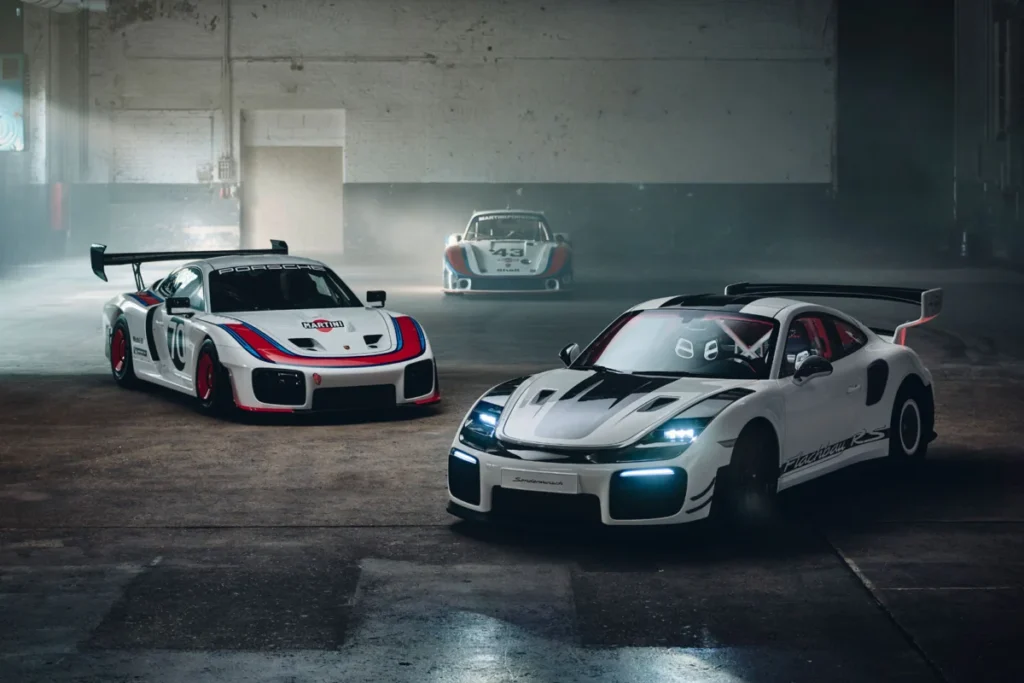
Porsche has meticulously crafted a breathtaking one-off homage to its legendary 935/78 "Moby Dick" race car, bestowing the previous-generation 911 GT2 RS with the iconic, elongated "Flachbau" (flat-nose) silhouette. This extraordinary commission, born from the depths of Porsche’s esteemed Sonderwunsch ("special request") division, represents a three-year collaborative endeavor with long-standing tuning and racing partner, Manthey. The result is a dramatic metamorphosis of the already formidable GT2 RS, a car renowned for its extreme focus and track-bred prowess, into a road-legal masterpiece that channels the spirit of one of motorsport’s most distinctive machines.
Genesis of a Bespoke Masterpiece: The Sonderwunsch Division and the Moby Dick Legacy
The genesis of this unique project lies within Porsche’s Sonderwunsch division, a department dedicated to fulfilling the most ambitious and exclusive customer requests. For decades, this specialized team has been the conduit for enthusiasts seeking unparalleled personalization, transforming production Porsches into unique expressions of desire. The decision to revisit the 935/78 "Moby Dick" for inspiration is deeply rooted in Porsche’s rich racing heritage. Introduced in 1978, the 935/78 was a formidable machine, a dominant force in Group 5 racing, and a technological marvel of its era. Its distinctive, elongated, and aerodynamically optimized bodywork, often referred to as the "Moby Dick" due to its whale-like proportions, became an instant icon, synonymous with raw power and groundbreaking design.
The decision to translate this iconic design language onto a road-legal 911 GT2 RS is a testament to both the enduring appeal of the 935/78 and the capabilities of Porsche’s customization experts. The GT2 RS, already a pinnacle of the 911 range, provided a potent and suitable canvas for such a radical transformation. Its twin-turbocharged 3.8-litre flat-six engine, producing a formidable 691 horsepower and 553 lb-ft of torque, offers a performance foundation that complements the aggressive aesthetic.
The Three-Year Evolution: Navigating the Challenges of Road Legality and Design Integrity
The journey from concept to completion for this one-off GT2 RS "Flachbau" was a lengthy and intricate process, spanning a full three years. This extended timeline underscores the significant engineering and design challenges involved in not only replicating the visual essence of the 935/78 but also ensuring its adherence to stringent road legality standards. The primary hurdle was the integration of the "Flachbau" – the characteristic flat, elongated front end of the 935/78. This design element, crucial for aerodynamic efficiency in racing, presented a complex puzzle when adapting it to the constraints of a production road car.
The design direction for this ambitious project was guided by veteran designer Grant Larson. Larson, a distinguished figure within Porsche’s design department, boasts a career spanning 36 years, during which he penned numerous iconic designs. Notably, he was instrumental in the creation of the reborn Porsche 935, unveiled in 2018, which itself drew heavily on the legacy of its predecessor. Larson’s deep understanding of Porsche’s design DNA, combined with his experience in reimagining historic models, made him the ideal choice to lead this unique conversion. His task was to capture the soul of the "Moby Dick" while ensuring the new creation was not merely a static display piece but a fully functional and legal road car.
Engineering the Iconic Silhouette: Key Design and Aerodynamic Modifications
The transformation of the standard 911 GT2 RS into the "Flachbau RS" involved a series of precise and sophisticated modifications, each meticulously engineered to both evoke the spirit of the 935/78 and enhance aerodynamic performance. At the forefront of these changes is the signature "Flachbau" nose. This involved a complete redesign of the front fascia, extending the car’s snout and incorporating the characteristic low-slung, aerodynamically optimized profile.
Beyond the overarching silhouette, specific elements were crucial in achieving the desired aesthetic and functional enhancements. The front wings have been notably lowered, a design cue directly inspired by the 935/78. These lower wings are integrated with cleverly designed slatted air ducts. These ducts serve a vital aerodynamic purpose: they are engineered to reduce air pressure build-up within the wheel arches. By managing this pressure differential, they contribute to improved downforce and overall aerodynamic stability.
The modification of the front arch design necessitated further engineering ingenuity. The repositioning and reshaping of these elements required Porsche to adapt the fuel filler flap and its associated mechanism. This seemingly minor detail highlights the depth of the conversion, where every aspect had to be considered and integrated seamlessly. The result is a harmonious blend of retro styling and modern engineering, where the visual impact is matched by functional aerodynamic benefits.
A Purist’s Approach: Weight Reduction and the Stripping of Luxuries
In a bold move that further emphasizes its connection to its racing brethren, the "Flachbau RS" has undergone a significant process of weight reduction. This mirrors the philosophy of its racing ancestor, where every kilogram was scrutinized for its impact on performance. To achieve this, Porsche’s Sonderwunsch division, in collaboration with Manthey, meticulously stripped the car of non-essential creature comforts.
The infotainment system, a standard feature in modern road cars, has been entirely removed. Similarly, the speakers and sound deadening materials have been eliminated. These deletions not only contribute to a purer driving experience, allowing the raw mechanical symphony of the engine to take center stage, but also shave critical kilograms from the overall weight. The pursuit of lightness extended even to the intricate wiring loom; individual, non-essential cables were removed to further optimize the weight-to-power ratio.
The culmination of these weight-saving measures is a noticeable reduction in the car’s overall mass. The "Flachbau RS" weighs an impressive 31.6 kilograms less than the standard 911 GT2 RS upon which it is based. While this might seem like a modest figure in absolute terms, in the context of a high-performance sports car where marginal gains are crucial, it represents a significant achievement and a clear statement of intent from the Sonderwunsch team.
Unaltered Heartbeat: The Potent Powertrain Remains
Despite the extensive visual and structural modifications, the heart of this extraordinary machine remains unchanged. The formidable twin-turbocharged 3.8-litre flat-six engine continues to deliver its prodigious output of 691 horsepower and 553 lb-ft of torque. This decision to retain the original powertrain underscores the focus on the aesthetic and aerodynamic transformation, while leveraging the already exceptional performance capabilities of the GT2 RS. The power delivery, known for its brutal acceleration and unwavering thrust, remains a core characteristic of this unique creation.
Official Statements: Reinterpreting an Icon Responsibly
Alexander Fabig, Porsche’s Vice-President of Product Offering and Individualisation, articulated the core philosophy behind this ambitious project. "Our aim was to reinterpret the iconic look of the 935 without compromising on safety, technology or road legality," he stated. This statement encapsulates the delicate balance that the Sonderwunsch division and Manthey had to strike. The goal was not to merely create a visual replica, but a functional and legally compliant road car that pays genuine homage to the racing legend. The emphasis on safety and technology signifies Porsche’s commitment to its rigorous standards, even in bespoke commissions. The successful integration of the "Flachbau" within these parameters is a testament to the engineering prowess of the involved teams.
Broader Implications: The Enduring Power of Porsche’s Heritage
The creation of the one-off 911 GT2 RS "Flachbau" is more than just the unveiling of a unique car; it is a powerful demonstration of Porsche’s enduring commitment to its heritage and its innovative approach to customer personalization. It serves as a potent reminder of the iconic status of the 935/78 "Moby Dick" and its lasting influence on automotive design and motorsport.
For Porsche, projects like these reinforce its brand identity, showcasing its ability to blend cutting-edge engineering with a deep respect for its storied past. The Sonderwunsch division, through such exclusive commissions, not only caters to the desires of its most discerning clientele but also generates significant brand equity and media attention. It highlights the fact that even as automotive technology advances, the allure of classic designs and the pursuit of automotive art remain potent forces.
The "Flachbau RS" also serves as a benchmark for what is possible within the realm of road-legal modifications. The successful integration of the "Flachbau" design while adhering to safety and regulatory standards is a significant engineering feat. This could potentially inspire future bespoke projects and even influence design trends within the performance car segment, demonstrating that iconic aesthetics can be harmoniously married with contemporary engineering and legal requirements. Ultimately, this unique Porsche stands as a striking testament to the timeless appeal of automotive legends and the unwavering dedication of Porsche to pushing the boundaries of design and performance.