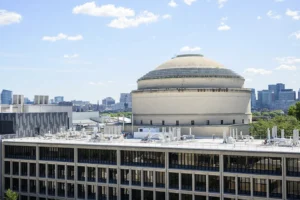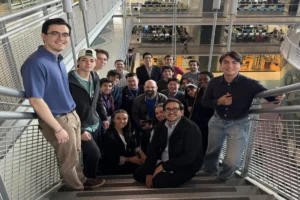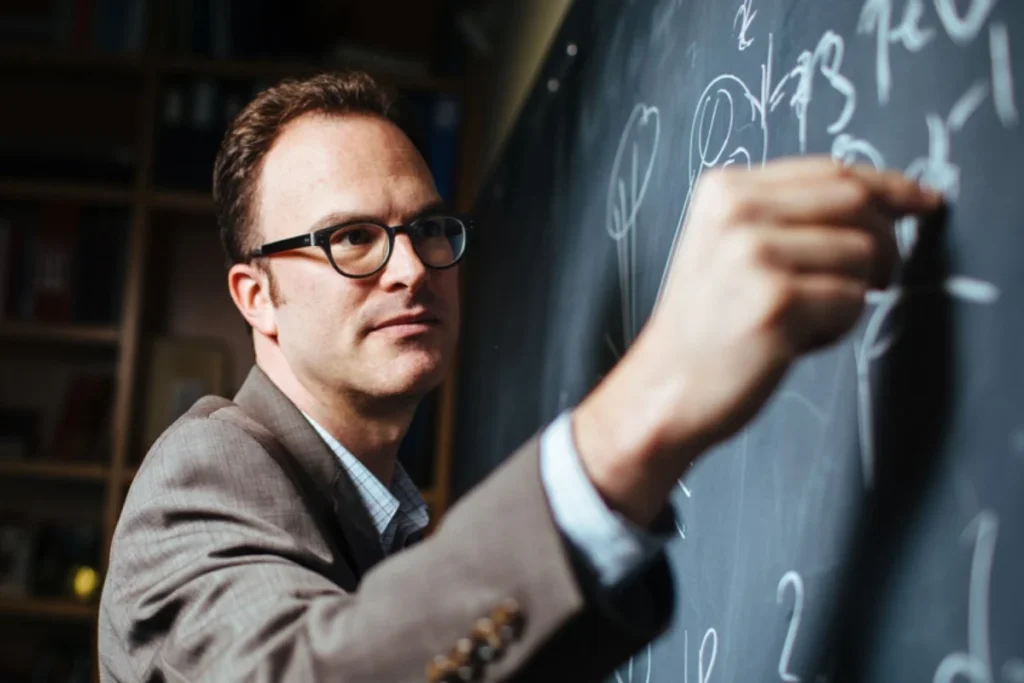
The Massachusetts Institute of Technology (MIT) has officially announced the appointment of Professor Jesse Thaler as the new director of the Laboratory for Nuclear Science (LNS), effective August 1. Thaler, a distinguished theoretical particle physicist and a pioneer in the integration of artificial intelligence with fundamental physics, succeeds Professor Bolek Wyslouch, who concludes a decade-long tenure as the laboratory’s head. This leadership transition marks a significant moment for one of MIT’s most storied research institutions as it pivots toward a future increasingly defined by the intersection of computational science and subatomic exploration.
Thaler currently serves as the William and Emma Rogers Professor of Physics within the MIT Center for Theoretical Physics, which is part of the Leinweber Institute (CTP-LI). His appointment comes at a time when the field of nuclear and particle physics is grappling with an unprecedented "data deluge" generated by high-energy experiments, such as those conducted at the Large Hadron Collider (LHC) in Switzerland. Thaler’s expertise in combining techniques from quantum field theory with advanced machine learning makes him a strategic choice to lead LNS through what many experts call the "third era" of particle physics—one driven by automated discovery and high-dimensional data analysis.
A Legacy of Excellence: The Laboratory for Nuclear Science
To understand the weight of Thaler’s appointment, one must consider the historical and scientific importance of the MIT Laboratory for Nuclear Science. Established in 1946, shortly after the conclusion of World War II, LNS was founded to provide a formal structure for the burgeoning field of nuclear physics. In its early years, the laboratory was instrumental in developing the technologies and theoretical frameworks that defined the atomic age.
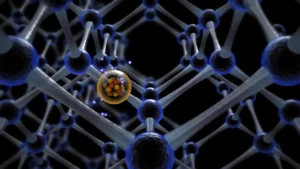
Over the decades, the scope of LNS has expanded far beyond its original mandate. Today, it serves as an umbrella for a vast array of research initiatives, encompassing cosmology, the study of gravity, quantum field theory, and the emerging field of quantum information science. LNS is also the administrative home of the MIT Center for Theoretical Physics, which provides the intellectual foundation for much of the university’s work in fundamental forces.
Under the outgoing leadership of Professor Bolek Wyslouch, LNS maintained its position at the forefront of international collaborations. Wyslouch, a heavy-ion physicist, oversaw MIT’s significant contributions to the Compact Muon Solenoid (CMS) experiment at the LHC. His decade of leadership ensured that MIT researchers remained central to the discovery of the Higgs boson and the subsequent studies of the quark-gluon plasma—the state of matter that existed moments after the Big Bang.
Jesse Thaler: Bridging Theory and Artificial Intelligence
Professor Jesse Thaler’s academic journey reflects a consistent focus on the mathematical foundations of the universe. He earned his Bachelor of Science in math and physics from Brown University in 2002, followed by a PhD in physics from Harvard University in 2006. Before joining the MIT faculty in 2010, Thaler was a fellow at the Miller Institute for Basic Research in Science at the University of California at Berkeley, a prestigious appointment reserved for early-career scientists showing exceptional promise.
Thaler’s research is perhaps best known for its focus on "particle jets." In high-energy collisions, such as those occurring within the LHC, quarks and gluons are produced at nearly the speed of light. Because of the nature of the strong nuclear force, these particles cannot exist in isolation; they immediately fragment into sprays of stable particles known as jets. Analyzing these jets is crucial for identifying new particles or forces, but the process is computationally intensive and incredibly complex.
Thaler pioneered the use of machine learning to "see" these jets more clearly. By treating the data from particle detectors like images and applying computer vision techniques, he has enabled researchers to distinguish between different types of subatomic interactions with much higher precision than traditional methods allowed. This work has not only improved the efficiency of data analysis at the LHC but has also opened new avenues for theoretical calculations that were previously considered "heroic" or nearly impossible to perform.
The Success of IAIFI and the Future of AI in Physics
A central pillar of Thaler’s recent career has been his role as the inaugural director of the National Science Foundation (NSF) AI Institute for Artificial Intelligence and Fundamental Interactions (IAIFI). Launched in 2020, IAIFI was designed to foster a two-way street between physics and AI: using AI to solve physics problems and using physics principles to improve AI algorithms.
Under Thaler’s guidance, IAIFI has become a model for interdisciplinary collaboration. The institute was recently renewed for another five years, a testament to its impact on the scientific community. During his tenure, Thaler championed programs that integrated data science into the core curriculum for physics students. In collaboration with the MIT Institute for Data, Systems, and Society, IAIFI established a specialized doctoral program in physics, statistics, and data science. This initiative ensures that the next generation of physicists is as comfortable with neural networks as they are with Schrödinger’s equation.
Thaler also prioritized the creation of dedicated postdoctoral fellowships. These roles give early-career researchers the freedom to work across departmental boundaries, preventing the "siloing" of knowledge that often hampers scientific breakthroughs. "Giving young scientists space to build connections across domains, universities, and career stages has been transformative within IAIFI," Thaler noted, expressing his intention to bring a similar interdisciplinary framework to LNS.
With Thaler moving to lead LNS, Mike Williams, a professor of physics at MIT known for his work on the LHCb experiment and his own contributions to AI in physics, will take over as the director of IAIFI. This internal succession ensures that the close relationship between LNS and IAIFI will continue to flourish.
Strategic Initiatives: The Genesis Mission and Leinweber Foundation
The timing of Thaler’s appointment coincides with several major institutional developments. LNS is currently preparing to participate in the Department of Energy’s (DOE) Genesis Mission. This initiative is specifically focused on AI-enabled scientific discovery, aiming to leverage high-performance computing to accelerate the search for "new physics"—phenomena that cannot be explained by the Standard Model of particle physics, such as dark matter or the asymmetry between matter and antimatter.
Furthermore, Thaler will oversee the CTP-LI, which recently benefited from a landmark philanthropic contribution. Last year, the Leinweber Foundation provided a substantial gift to establish a network of theoretical physics research institutes. According to the Science Philanthropy Alliance, this represents the largest philanthropic commitment ever made to the field of theoretical physics. This funding provides LNS with the financial stability to pursue high-risk, high-reward theoretical research that might not fit the criteria of traditional federal grants.
Official Reactions and Broader Implications
The appointment has been met with widespread acclaim from the MIT administration. Nergis Mavalvala, the Dean of the MIT School of Science and the Curtis and Kathleen Marble Professor of Astrophysics, highlighted Thaler’s unique ability to bridge disparate fields.
"In his research, Jesse has done pioneering work on particle jets at the Large Hadron Collider and is a leader in combining AI and machine learning with fundamental particle physics," Mavalvala stated. "The collaborative nature of his research programs will serve the Laboratory for Nuclear Science as science enters a new era of AI-driven discovery."
The broader implications of this leadership change extend to the very methodology of scientific inquiry. For decades, the barrier to discovery in nuclear physics was the power of the particle accelerators themselves. While hardware remains vital, the bottleneck has shifted toward the interpretation of data. Thaler’s leadership suggests that MIT is doubling down on the belief that the next great discovery in physics—be it the nature of dark matter or a deeper understanding of the early universe—will likely be found within the data we already have, provided we have the AI tools to find it.
Timeline of Key Milestones
- 1946: Foundation of the MIT Laboratory for Nuclear Science.
- 2002: Jesse Thaler graduates from Brown University (BS Math/Physics).
- 2006: Thaler receives PhD from Harvard; begins Miller Fellowship at UC Berkeley.
- 2010: Thaler joins the MIT faculty.
- 2014: Bolek Wyslouch begins his tenure as Director of LNS.
- 2020: Thaler named inaugural director of the NSF AI Institute (IAIFI).
- 2023: Leinweber Foundation announces record-breaking gift to the Center for Theoretical Physics.
- June 2024: NSF renews IAIFI for an additional five years.
- August 1, 2024: Jesse Thaler officially assumes the role of Director of the MIT Laboratory for Nuclear Science.
Analysis: A Paradigm Shift in Nuclear Science
Thaler’s transition to the directorship of LNS is more than a routine administrative change; it is a signal of a paradigm shift. Historically, nuclear science was divided into "experimentalists" who built machines and "theoreticians" who built models. Thaler represents a new breed of "computational physicists" who sit in the middle, using AI to refine both the models and the interpretation of the experiments.
As LNS enters this new era, the laboratory is expected to increase its focus on quantum information science and the development of "physics-informed" machine learning. These are algorithms that don’t just look for patterns in data but are constrained by the laws of physics, such as the conservation of energy and momentum. This approach reduces the "black box" problem of AI, making machine-generated results more reliable for scientific publication.
Under Thaler, LNS is poised to remain the central hub for MIT’s contributions to global physics. From the subatomic interactions at the LHC to the cosmic scales of the Genesis Mission, the laboratory will continue to probe the fundamental nature of reality, now equipped with the most advanced digital tools ever conceived. The legacy of the past 78 years at LNS provides the foundation, but Thaler’s vision for an AI-integrated future will provide the trajectory for the decades to come.