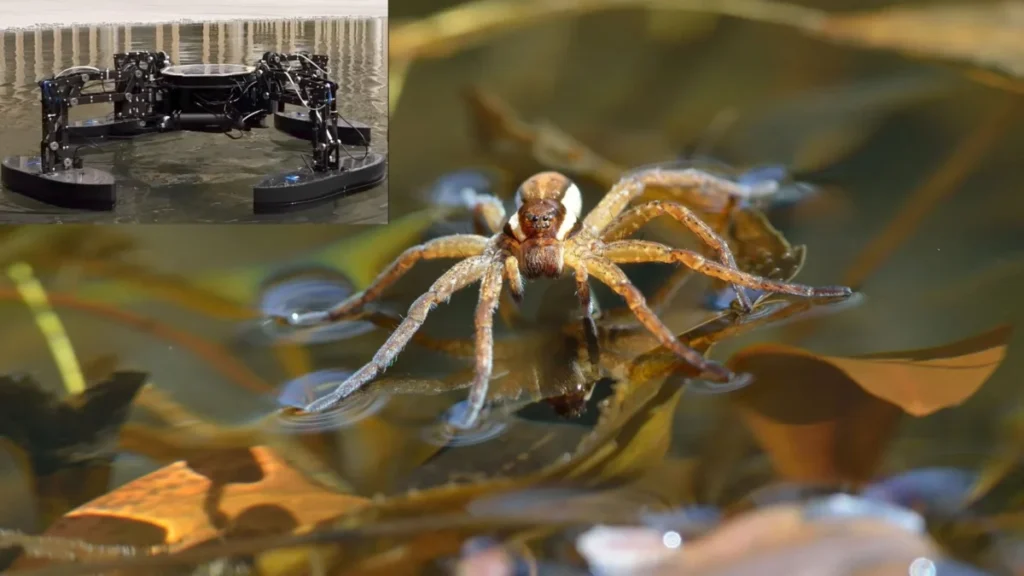
A groundbreaking four-legged robotic boat, drawing its fundamental design inspiration from the remarkable locomotion of fishing spiders, has been developed with the ambitious goal of transforming water-based search and rescue operations. This innovative autonomous surface vehicle (ASV), christened QuadBoat, is engineered not merely to locate individuals in distress but to actively track and physically retrieve victims directly from the water, addressing a critical gap in current maritime rescue capabilities. The collaborative effort behind QuadBoat stems from the research prowess of the Shenzhen Institute of Artificial Intelligence and Robotics for Society (AIRS) in China and the Stevens Institute of Technology in the United States, signifying an international push towards advanced robotic solutions for humanitarian challenges.
Addressing a Critical Gap in Maritime Search and Rescue
Globally, drowning remains a significant public health issue. According to the World Health Organization (WHO), an estimated 236,000 people die from drowning each year, making it a leading cause of unintentional injury death worldwide. These statistics underscore the urgent need for more efficient and effective rescue technologies. Traditional search and rescue (SAR) missions in aquatic environments are inherently complex and dangerous, often involving human responders operating in challenging conditions such as strong currents, rough seas, extreme temperatures, and limited visibility. The time factor is paramount in such scenarios; survival rates diminish rapidly with prolonged exposure to water, especially cold water which can induce hypothermia within minutes.
Current unmanned surface vehicles (USVs) predominantly deployed in SAR operations are primarily designed for surveillance, mapping, or delivering flotation devices. While invaluable for initial reconnaissance and localization, most lack the dexterity and capability to physically engage with and extract a person from the water. This is precisely where QuadBoat carves out its niche. Its developers emphasize that while locating a person is the first step, the subsequent swift and safe retrieval is equally, if not more, critical for survival. QuadBoat’s design explicitly targets this phase, aiming to bridge the gap between detection and extraction, thereby enhancing the overall efficacy and safety of rescue missions.
Bio-Inspired Engineering: The Fishing Spider’s Influence
The most distinctive feature of QuadBoat is its quadrupedal configuration, directly inspired by fishing spiders (genus Dolomedes). These fascinating arachnids are renowned for their ability to glide effortlessly across the surface of calm water, a feat achieved through a combination of their long, lightweight, water-repellent (hydrophobic) legs and the principle of surface tension. Their specialized leg hairs trap air, increasing buoyancy and allowing them to distribute their weight over a large area, effectively walking on water.
While QuadBoat draws aesthetic and structural inspiration from these spiders, its operational mechanics diverge significantly. Unlike its biological muse, the robotic vessel does not rely on surface tension for flotation. Instead, QuadBoat employs conventional buoyancy, akin to a standard boat hull, to remain afloat. The four independently controlled legs, however, are pivotal for propulsion and exceptional maneuverability. This bio-inspired approach allows the robot to navigate complex aquatic environments with a level of agility that traditional propeller-driven USVs often struggle to achieve, particularly when operating in close proximity to obstacles or individuals in distress. The independent articulation of each leg enables a nuanced control over movement, allowing for precise adjustments in posture and direction, mimicking the fluidity of biological motion.
Advanced Control Systems for Agile Maneuverability
The sophistication of QuadBoat extends beyond its bio-inspired physical form to its advanced control architecture. The researchers have implemented an inverse kinematics controller, a computational method that determines the joint parameters needed to achieve a desired position and orientation for the robot’s end-effectors – in this case, its legs. This controller is crucial for coordinating the intricate movements of the four legs, enabling the robot to adjust its posture dynamically and execute a wide range of movements, from forward propulsion to lateral translation and even rotating on the spot.
Further enhancing its operational capabilities, the team developed a cascaded control system integrating Model Predictive Control (MPC) and Proportional-Integral-Derivative (PID) control. MPC is an advanced method that uses a model of the system to predict its future behavior and then optimizes control actions over a receding horizon, allowing for proactive and robust control. PID controllers, on the other hand, are widely used feedback control mechanisms that calculate an "error" value as the difference between a measured process variable and a desired setpoint, and then apply a correction based on proportional, integral, and derivative terms. The combination of MPC and PID in QuadBoat’s steering and stabilization systems allows for both predictive, optimized path following and precise, robust error correction, ensuring stability and accuracy even in dynamic water conditions.
"QuadBoat features a quadrupedal robot configuration, enabling it with highly adaptable and agile maneuverability through its actively adjustable posture," stated the authors in their paper. "Employing an inverse kinematics-based controller and cascaded model predictive control (MPC)-PID controller for overall movement, QuadBoat can accurately track and retrieve objects on the water surface." This highlights the synergistic role of mechanical design and sophisticated software in achieving the robot’s core functions.
Rigorous Testing and Promising Results
The development of QuadBoat involved a methodical testing regimen to validate its capabilities. Initial experiments were conducted in controlled environments, specifically a pool, to assess fundamental performance metrics. These early trials focused on evaluating the robot’s accuracy in following pre-planned routes and executing specific, pre-defined movements. This phase was crucial for calibrating the control systems and ensuring the robot’s foundational stability and maneuverability.
Following these preliminary tests, subsequent experiments shifted focus to QuadBoat’s primary objective: the identification, tracking, and retrieval of floating targets. These trials included visual tracking experiments, where the robot utilized onboard cameras and computer vision algorithms to detect and monitor targets on the water surface. Object pickup experiments were also conducted, both indoors and outdoors, to simulate real-world retrieval scenarios. The researchers meticulously documented QuadBoat’s ability to approach, secure, and transport these targets. The results from these comprehensive tests demonstrated that QuadBoat could reliably follow targets on the water and successfully carry out retrieval tasks directly relevant to critical rescue operations. This empirical evidence forms the backbone of the researchers’ claims regarding the robot’s potential utility in saving lives.
Broader Implications and Future Outlook for Search and Rescue
The advent of technologies like QuadBoat has profound implications for the future of maritime search and rescue. Its ability to directly retrieve victims addresses a fundamental limitation in current autonomous systems, potentially revolutionizing how emergency services respond to incidents like boat capsizes, personal watercraft accidents, and other maritime emergencies. The prompt extraction of victims from water is often the difference between life and death, particularly when factors like exhaustion, hypothermia, or rough conditions rapidly degrade a person’s ability to self-rescue or remain afloat.
Lianxin Zhang, Yihan Huang, and Huihuan Qian, key researchers behind the project, emphasized this critical need: "The prompt extraction of victims from water is crucial in water surface rescue missions. However, previous research on rescue robots has seldom addressed this issue. This paper presents QuadBoat, a bio-inspired USV designed to track and retrieve victims from water."
Furthermore, QuadBoat’s unique maneuverability, derived from its articulated legs and adjustable posture, offers advantages in situations where conventional USVs might struggle. For instance, in shallow waters, cluttered environments (like debris fields), or when needing to approach a person very gently and precisely, a propeller-driven vessel might be too cumbersome or even dangerous. QuadBoat’s spider-like agility could allow it to navigate these complex scenarios with greater ease and safety, potentially reducing the risk of injury to victims during the retrieval process.
Challenges on the Path to Deployment
Despite its promising demonstrations, QuadBoat remains firmly in the research and development stage. The initial tests, while successful, were conducted in controlled environments. Translating these capabilities to the unpredictable and often harsh realities of real-world rescue missions presents several significant challenges.
One primary hurdle is performance in adverse weather and water conditions. The calm pool environment provides little insight into how QuadBoat would fare against strong waves, powerful currents, high winds, heavy rain, or fog. These conditions could drastically impact its stability, propulsion efficiency, sensor performance (for visual tracking), and overall operational integrity. Further research and testing are essential to determine the robot’s robustness and reliability under such strenuous circumstances.
Another crucial aspect for future development involves increasing its operational range and endurance. Real rescue missions can cover vast areas and require extended periods of operation. This necessitates advancements in battery technology or alternative power sources, as well as robust communication systems to maintain control and data transmission over long distances. The payload capacity of the robot for retrieving an adult human is also a significant engineering challenge that will need to be addressed for practical deployment.
Beyond technical refinements, the path to practical implementation will involve navigating regulatory landscapes. The deployment of autonomous robots in public waterways, especially for sensitive operations like human rescue, will require certifications, safety protocols, and potentially new legal frameworks. Integration with existing emergency response infrastructures and training for human operators will also be vital for its successful adoption.
The Future of Autonomous Rescue
The researchers are optimistic that continued development, addressing these challenges, could transform the spider-inspired design into a practical and indispensable tool for search-and-rescue teams worldwide. QuadBoat represents a significant leap forward in autonomous rescue technology, offering responders an unprecedented ability to locate, track, and directly retrieve people from the water. As robotics and artificial intelligence continue to advance, systems like QuadBoat will likely augment human rescue efforts, allowing human responders to focus on more complex tasks, operate more safely, and ultimately save more lives. The study, which details the foundational work on QuadBoat, was published on the arXiv preprint server, marking a pivotal step towards a future where intelligent machines play a more active and direct role in humanitarian aid and emergency response.