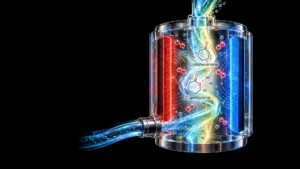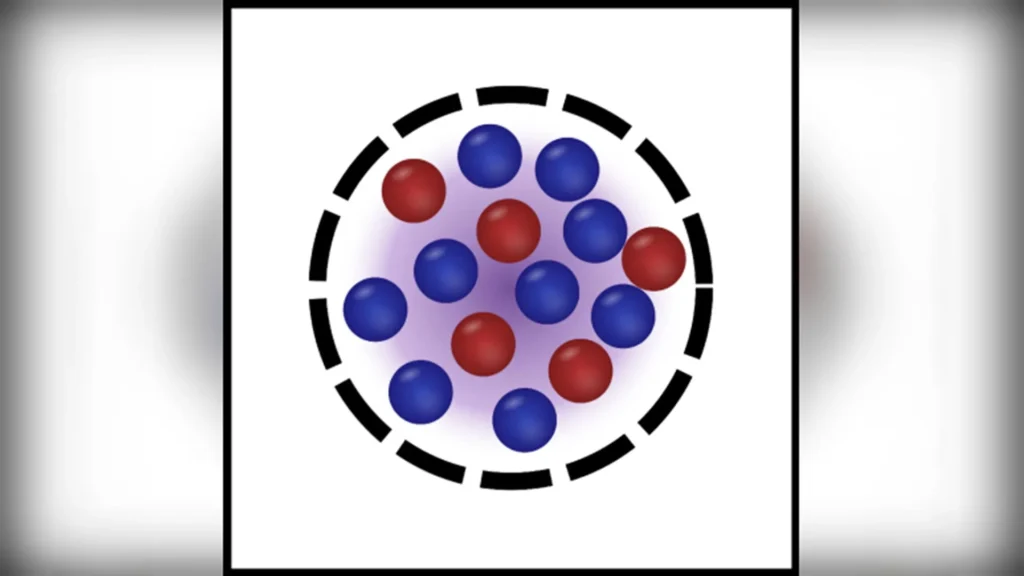
In a landmark study that challenges established paradigms in atomic physics, researchers at Monash University have predicted the existence of a new form of quantum matter: stable, self-bound "quantum droplets" composed of a mixture of bosons and fermions. This discovery, published in the prestigious journal Physical Review Letters, suggests that under specific conditions of strong interaction, these two fundamentally different classes of particles can synchronize to form a liquid-like state that remains cohesive without the need for external containment. The findings represent a significant leap forward in our understanding of many-body quantum systems and provide a new theoretical roadmap for the development of next-generation quantum technologies, ranging from ultra-precise gravitational sensors to more stable quantum computing architectures.
The research team, led by PhD candidate Sam Foster alongside Associate Professor Jesper Levinsen and Professor Meera Parish from the Monash School of Physics and Astronomy, worked in collaboration with theoretical physicists at Heidelberg University. Their work addresses a long-standing question in the field: whether the delicate balance required to form a quantum liquid could be maintained in a system where the constituent particles obey vastly different physical laws.
The Fundamental Divide: Bosons and Fermions
To appreciate the significance of the Monash discovery, one must first understand the primary actors in the quantum world. All known subatomic particles are categorized into two groups based on their "spin" or intrinsic angular momentum: bosons and fermions.
Bosons, named after the Indian physicist Satyendra Nath Bose, have integer spins and are known for their "social" behavior. At temperatures approaching absolute zero, bosons tend to occupy the same quantum state, leading to the formation of a Bose-Einstein Condensate (BEC). In this state, thousands or even millions of atoms act as a single "super-atom," exhibiting macroscopic quantum phenomena like superfluidity.
Fermions, named after Enrico Fermi, have half-integer spins and are decidedly "antisocial." Governed by the Pauli Exclusion Principle, no two fermions can occupy the same quantum state simultaneously. This principle is what prevents matter from collapsing in on itself; it is the reason why electrons occupy distinct shells around an atomic nucleus and why solid objects do not simply pass through one another.
Historically, mixing these two types of particles has been a complex endeavor. While "Bose-Fermi mixtures" have been studied for decades, scientists generally believed that if the attraction between the two types of particles became too strong, the system would become unstable and collapse. The Monash team’s research proves that a stable middle ground exists where attraction and quantum pressure reach a perfect equilibrium.
The Mechanics of a Self-Bound Droplet
The "quantum droplets" described by Sam Foster and his colleagues are fundamentally different from the droplets of water found in the macroscopic world. A typical water droplet is held together by surface tension, but it requires a certain density of molecules and is subject to evaporation. In contrast, a quantum droplet is "self-bound" in a vacuum. This means that even if the external magnetic traps used to hold ultracold atoms are turned off, the droplet will maintain its shape and density due to internal quantum forces.
The stability of these droplets arises from a sophisticated interplay of forces. In a resonant Bose-Fermi mixture, there is an attractive force between the bosons and the fermions. Left alone, this attraction would cause the system to shrink indefinitely until it vanished or exploded (a phenomenon sometimes called a "B-ball" or "Bose-nova"). However, as the particles get closer together, the fermions exert a counter-pressure. Because the Pauli Exclusion Principle prevents fermions from being squeezed into the same space, they generate a "repulsive" quantum pressure that pushes back against the attractive force.
"We’ve shown that these two very different types of particles can balance each other perfectly," explained Sam Foster. "The attractive force pulling the particles together is precisely counteracted by the pressure produced by the fermions, keeping the droplet from collapsing."
This balance is further stabilized by "quantum fluctuations"—tiny, fleeting changes in energy in the vacuum. In the context of quantum droplets, these fluctuations provide a crucial correction to the energy of the system (known as the Lee-Huang-Yang correction), which helps prevent the collapse that previous, simpler theories had predicted.
A Chronology of Quantum Droplet Research
The prediction of Bose-Fermi droplets is the latest milestone in a timeline of discovery that has redefined atomic physics over the last thirty years:
- 1995: The first Bose-Einstein Condensate is created in a lab using rubidium atoms, proving that bosons can act as a single quantum entity.
- 1999: Researchers achieve the first degenerate Fermi gas, cooling fermions to the point where quantum effects dominate.
- 2016: Physicist Dmitry Petrov theoretically predicts that purely bosonic systems could form quantum droplets if quantum fluctuations were taken into account.
- 2018: Experimental teams in Spain and Germany successfully observe these bosonic droplets in the laboratory using dilute gases of potassium and dysprosium.
- 2024: The Monash University team extends this concept to Bose-Fermi mixtures, providing the first theoretical framework for droplets containing both types of matter in a strongly interacting regime.
By moving beyond "weakly interacting" systems, the Monash team has entered the "resonant" regime. This is a state where the interactions between particles are as strong as the laws of physics allow, often achieved in the lab using a technique called Feshbach resonance, which uses external magnetic fields to tune the "stickiness" of atoms.
Overcoming Theoretical Hurdles
For years, the scientific community struggled to model strongly interacting Bose-Fermi systems because the mathematics becomes exponentially more difficult as the interaction strength increases. Standard "mean-field" theories, which treat the influence of all other particles as a single average force, fail to capture the nuances of strong correlation.
The Monash team developed a new approach that accounts for these strong interactions more accurately. By utilizing advanced mathematical techniques and computational models, they were able to map out the phase diagram of these mixtures. Their results suggest that these systems are much more complex than previously thought, exhibiting behaviors that resemble the transition between a liquid and a gas.
"Previous theories could only describe these systems when the particles interacted relatively weakly," said Foster. "Our new approach lets us explore what happens when those interactions become much stronger, which is where the most interesting physics emerges."
Supporting Data and Experimental Feasibility
One of the most exciting aspects of the Monash study is its practical applicability. The calculations indicate that the predicted droplets are not merely theoretical curiosities but are within reach of current experimental technology.
Specifically, the researchers pointed to ultracold atom experiments using isotopes such as Lithium-6 (a fermion) and Cesium-133 or Rubidium-87 (bosons). These atoms are already common in labs worldwide. The team’s data suggests that by tuning the magnetic fields to a specific Feshbach resonance, experimentalists should be able to observe the formation of these droplets.
The data also highlights the "critical density" required for these droplets to form. Unlike a gas, which expands to fill whatever container it is in, the quantum droplet has a fixed internal density. If you add more atoms, the droplet grows in size but stays at the same density. If you remove atoms below a certain threshold, the droplet "evaporates" back into a gas. This threshold is a key signature that experimentalists will look for.
Broader Implications: From Sensors to the Stars
While the research is categorized as "fundamental," the implications of discovering a new state of quantum matter are vast.
Quantum Computing and Information
In the quest to build a functional quantum computer, stability is the primary obstacle. Quantum states are notoriously fragile, easily disrupted by heat or vibration (decoherence). Self-bound quantum droplets, being naturally stable and cohesive, could potentially serve as a platform for more robust quantum bits (qubits). The collective nature of the droplet might offer a way to protect quantum information from local disturbances.
Ultra-Precise Sensors
Because quantum droplets are extremely sensitive to external forces while remaining cohesive, they could be used to create high-precision sensors. For instance, "atom interferometry" uses the wave-like nature of atoms to measure gravity with incredible accuracy. A stable, non-expanding droplet of atoms would allow for much longer measurement times than a rapidly expanding gas, potentially leading to sensors that can detect underground minerals, monitor volcanic activity, or test the limits of General Relativity.
Simulating Extreme Environments
The physics of dense, strongly interacting fermions and bosons is not limited to the lab. It is also central to understanding the interiors of neutron stars—the collapsed cores of massive suns. In a neutron star, matter is packed so tightly that it becomes a superfluid of neutrons (fermions) and potentially other particles. By studying Bose-Fermi droplets in the controlled environment of an ultracold lab, scientists can gain insights into the "strong force" and the behavior of matter under the most extreme conditions in the universe.
Official Responses and the Path Forward
The publication in Physical Review Letters has sparked interest across the international physics community. Associate Professor Jesper Levinsen emphasized that this work provides the "missing link" in the study of quantum liquids.
"Understanding how matter organizes itself under extreme quantum conditions gives us new tools for designing and controlling quantum systems," added Professor Meera Parish. "While this is fundamental research, discoveries like this often become the foundation for tomorrow’s quantum technologies."
The Monash team is now looking toward the next phase of research, which involves collaborating with experimental groups to bring these droplets to life. The transition from a theoretical prediction to a physical reality in the lab is often where the most unexpected discoveries occur. If the Monash predictions hold true, the "quantum droplet" may soon become a standard tool in the kit of atomic physicists, opening a new chapter in our mastery over the smallest building blocks of the universe.
As the field of quantum technology continues to accelerate, the ability to engineer new states of matter from the ground up remains the ultimate frontier. The work of Foster, Levinsen, and Parish ensures that Monash University remains at the forefront of this global scientific endeavor.