The 2026 iteration of the Rim of the Pacific (RIMPAC) exercise, the world’s largest biennial joint maritime warfare training event, has solidified its position as a pivotal platform for demonstrating cutting-edge defense technologies, particularly in the realm of advanced manufacturing. This year’s exercise prominently featured expeditionary additive manufacturing (AM), with the Pentagon framing the event as its "largest-ever advanced manufacturing demonstration." This assertion is further substantiated by the extensive deployment of over 50 advanced manufacturing technologies, a significant increase from previous iterations, highlighting a growing commitment to integrating these capabilities into operational military readiness.
Expeditionary Additive Manufacturing at the Forefront
The Naval Postgraduate School’s Consortium for Advanced Manufacturing Research and Education (CAMRE) reported the deployment of more than 50 advanced manufacturing technologies in collaboration with its partners during RIMPAC 2026. This significant number underscores the comprehensive scope of the advanced manufacturing initiatives undertaken during the exercise. Among the key participants was SPEE3D, a company specializing in cold spray additive manufacturing. For SPEE3D, RIMPAC has become a regular fixture, demonstrating their commitment to showcasing their deployable systems in real-world military scenarios.
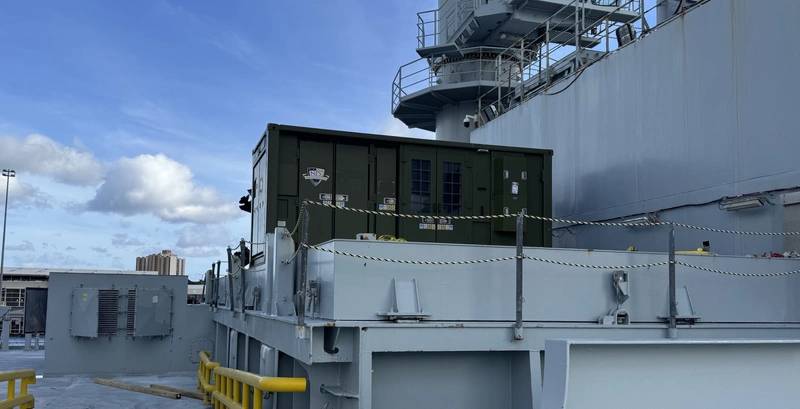
This year marked a significant milestone for SPEE3D, as their machines were utilized at sea on an operational vessel for the first time. The company deployed its Expeditionary Manufacturing Unit (EMU), a self-contained mobile manufacturing system, to the Hawaiian Islands, the traditional host of RIMPAC exercises. This deployment represented a critical step in validating the feasibility and effectiveness of at-sea additive manufacturing for critical spare parts and components.
Collaborative Efforts and Technological Advancements
The successful execution of these advanced manufacturing demonstrations was a result of extensive collaboration. SPEE3D worked closely with CAMRE, the Army Research Laboratory (ARL), personnel from the Tennessee Army National Guard, and the University of Tennessee’s Defense Development and Applied Research Center (DARC). This multi-organizational partnership brought together expertise from academia, government research institutions, and operational military units, fostering a synergistic approach to innovation.
This collaboration builds upon prior engagements. SPEE3D and its Tennessee-based partners, including the Tennessee Army National Guard and DARC, had previously participated in a live-fire exercise earlier in the year. In that exercise, the DARC program played a crucial role in enabling National Guard participants to test an EMU unit. A key scenario involved the drone delivery of a replacement ground vehicle part within a contested environment, demonstrating the potential for rapid, on-demand part production and delivery in austere conditions.
Maritime Application and Cross-National Partnership
The RIMPAC 2026 exercise adapted this concept of expeditionary manufacturing to a maritime environment. Notably, the at-sea manufacturing operations did not take place on a traditional U.S. Navy vessel, such as the USS Essex, which has been a hub for previous U.S. Navy on-the-move manufacturing demonstrations. Instead, SPEE3D and its U.S. partners engaged in a significant cross-national collaboration with the Royal Canadian Navy (RCN).
The manufacturing demonstrations were conducted aboard the MV Asterix, an RCN supply ship. The MV Asterix, originally a commercial container ship converted in the 2010s, provided a unique platform for testing the EMU’s capabilities in a deployed maritime setting. This partnership with a non-U.S. ally underscores the growing international interest and cooperation in advancing additive manufacturing for defense applications.
Production Numbers and Operational Integration
During RIMPAC 2024, SPEE3D had demonstrated the EMU’s capabilities from shore, successfully printing 11 parts shortly after the machine’s public release. In contrast, RIMPAC 2026 saw a substantial increase in output. A total of 32 parts were printed, with 24 produced on shore utilizing Knoxville Armory’s global "reachback capability." This "reachback" concept refers to the ability to leverage remote expertise and resources to support on-site operations, a capability that is increasingly relevant in the context of distributed military operations and additive manufacturing.
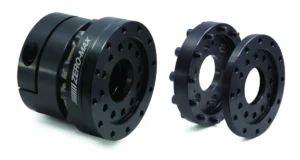
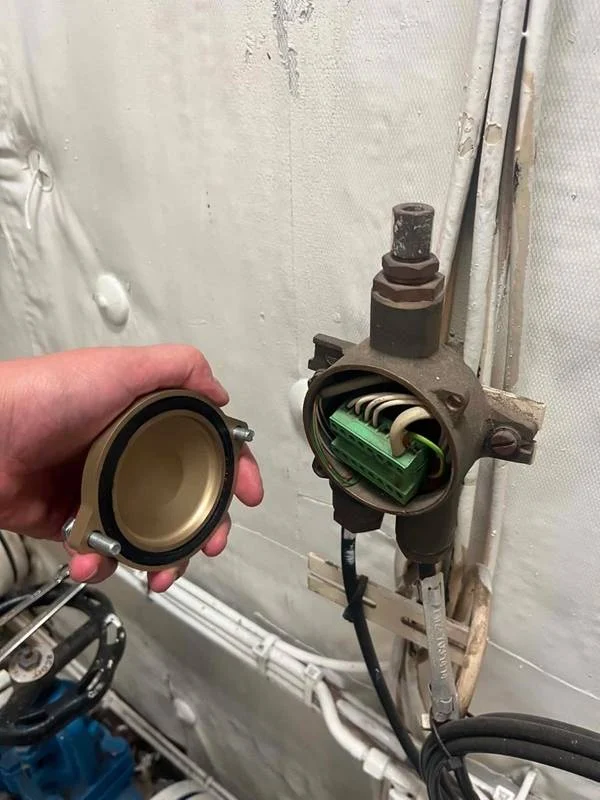
The remaining eight parts were printed aboard the MV Asterix. SPEE3D reported that an impressive 29 out of the 32 printed parts proceeded to final post-processing. This high success rate is attributed to the EMU’s integrated design, which includes a full suite of requisite equipment, such as a CNC mill, enabling the production of finished components directly from the printing unit. This integrated approach significantly reduces the logistical burden and time required to produce usable parts.
Strategic Implications of Joint Exercises and Advanced Manufacturing
The inclusion of a non-U.S. partner, like the Royal Canadian Navy, aboard a supply vessel during these demonstrations highlights a broader trend: the increasing relevance of combined exercises beyond purely military objectives. This integration of advanced manufacturing into multinational exercises offers a tangible benefit that strengthens interoperability and mutual reliance among allied forces.
The broader geopolitical context surrounding joint military exercises adds another layer of significance. Recent shifts in international relations, such as reported considerations for scaling back joint exercises with South Korea, suggest that the privilege of such collaborative training activities is increasingly being viewed as a diplomatic and strategic bargaining chip. If this is the case, then the value proposition of these joint exercises must be clearly understood and articulated.
The extensive focus on advanced manufacturing at RIMPAC 2026 suggests that these technologies are becoming a central component of this perceived value. The ability to rapidly produce critical components, repair equipment in theater, and enhance logistical resilience through additive manufacturing offers a tangible operational advantage. This not only enhances the military readiness of participating nations but also strengthens the overall alliance structure by fostering self-sufficiency and reducing reliance on traditional, often lengthy, supply chains.
The Future of Expeditionary Manufacturing
The RIMPAC 2026 exercise serves as a powerful testament to the evolving role of additive manufacturing in modern warfare. The successful deployment of expeditionary manufacturing units at sea, coupled with international collaboration, signals a strategic shift towards distributed, agile, and resilient production capabilities. As geopolitical landscapes continue to shift, the ability to demonstrate tangible technological advancements and foster strong allied partnerships through such exercises will likely remain paramount.
The data from RIMPAC 2026, showcasing a significant increase in the number of advanced manufacturing technologies deployed and the successful production of operational parts, provides compelling evidence of the maturity and readiness of these systems. The integration of capabilities like the SPEE3D EMU into operational environments, not just for demonstration but for actual part production, moves additive manufacturing from a research and development phase into a proven operational asset. This transition is crucial for future defense planning and the sustained readiness of global military forces. The continued emphasis on these technologies within major international exercises like RIMPAC indicates a clear strategic imperative to leverage innovation for enhanced operational effectiveness and a strengthened global security posture. The collaboration with allies, as seen with the Royal Canadian Navy, further amplifies the impact, fostering shared capabilities and reinforcing interoperability in an increasingly complex global security environment.