The Evolution of the Hall Effect: From 1879 to the Quantum Era
To appreciate the magnitude of this discovery, one must look back to 1879, when American physicist Edwin Hall first observed the phenomenon that now bears his name. In his classic experiment, Hall demonstrated that when a magnetic field is applied perpendicularly to a conductor carrying an electric current, a transverse voltage is generated. This occurs because the magnetic field exerts a Lorentz force on the moving charge carriers—electrons or holes—deflecting them toward one side of the material. The resulting accumulation of charge creates a measurable potential difference, known as the Hall voltage.
For over 140 years, this principle has served as a cornerstone of condensed matter physics and electrical engineering. It allows scientists to determine the density and sign of charge carriers in a material, as well as their mobility. In practical terms, Hall effect sensors have become ubiquitous in modern life. They are the silent workhorses in automotive anti-lock braking systems (ABS), computer keyboards, smartphones for compass functions, and industrial brushless DC motors. However, the operational "dogma" has always been that the magnetic field must be oriented perpendicularly to the plane of the current to produce a Hall response. The Carnegie Mellon team has now proven that this "perpendicular rule" is not an absolute law of nature.
Breaking the Symmetry: The In-Plane Anomalous Hall Effect
The research team, led by Associate Professor of Physics Simranjeet Singh, has demonstrated that a Hall response can occur even when the magnetic field is applied "in-plane"—parallel to the surface of the material rather than cutting through it. This phenomenon, referred to as the in-plane anomalous Hall effect (AHE), was previously theorized but remained elusive in experimental settings due to the stringent requirements of crystal symmetry.
"For a long time, people thought the Hall effect only worked when the magnetic field was applied perpendicular to the plane of the film," Singh explained. "We’ve shown that that’s not true—you can also get a response when the field is in-plane."
The "anomalous" aspect of this discovery refers to the Hall effect occurring in magnetic materials without the need for an external magnetic field to provide the Lorentz force. In such materials, the internal magnetization and the relativistic interaction between an electron’s spin and its orbital motion (spin-orbit coupling) drive the deflection of charges. While the anomalous Hall effect is well-documented for out-of-plane magnetization, the Carnegie Mellon experiment marks the first successful demonstration of this effect occurring purely from in-plane magnetic alignment.
Chronology of the Discovery: From Theory to Atomic Precision
The path to this discovery was a multi-year journey involving theoretical prediction, material synthesis, and precision nanofabrication. While theoretical physicists had suggested the possibility of an in-plane Hall response years ago, the primary obstacle was finding a material that possessed the specific "broken symmetry" required to allow such a response.
The timeline of the breakthrough can be traced through several critical phases:
- Theoretical Target Identification: Researchers identified that to achieve an in-plane Hall response, the material’s crystal structure must lack certain mirror symmetries. If a material is too symmetric, the electronic deflections in different directions cancel each other out, resulting in a zero Hall signal.
- Material Selection: The team settled on Tantalum iridium telluride (TaIrTe4), a "Weyl semimetal" candidate known for its low crystalline symmetry. TaIrTe4 is a member of a class of 2D materials that can be thinned down to atomic layers.
- Heterostructure Fabrication: Because TaIrTe4 is not naturally magnetic, the team had to "induce" magnetism. Working in the LIQUID lab, Singh collaborated with Associate Professor Jyoti Katoch, an expert in 2D quantum material fabrication. They utilized a technique called "van der Waals heterostructure assembly."
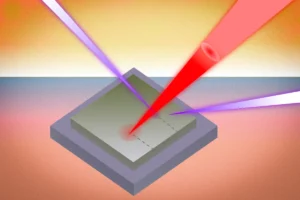
- The Experiment: The researchers took a flake of TaIrTe4 only a few nanometers thick and layered it against a thin sheet of Chromium germanium telluride (Cr2Ge2Te6, or CGT), a known 2-D ferromagnet.
Through a process known as the "magnetic proximity effect," the magnetic properties of the CGT layer leaked into the TaIrTe4 layer. This allowed the TaIrTe4 to retain its unique electronic structure while gaining the magnetic characteristics of its neighbor.
Technical Data and Experimental Results
The precision of the experiment was conducted at the nanometer scale. The team used postdoctoral researchers I-Hsuan Kao and Ravi Kumar to perform the delicate task of exfoliating and stacking these atomic layers. When the combined device was cooled to cryogenic temperatures (where CGT becomes ferromagnetic), the team applied an in-plane magnetic field and measured the electrical response.
The data revealed two distinct signals:
- The Standard Hall Signal: Representing the traditional out-of-plane response.
- The In-Plane Anomalous Signal: A clear, unconventional voltage that correlated directly with the magnetization lying within the plane of the material.
The researchers found that the reduced symmetry at the interface between the two materials allowed for additional spin-orbit coupling terms. These terms are the physical "engine" that drives the in-plane deflection of electrons. Shubhayu Chatterjee, an assistant professor of physics at CMU, provided the theoretical modeling that confirmed these observations. According to Chatterjee, the pairing of these specific materials creates a unique environment where the "Berry curvature"—a mathematical property of the electron’s wave function in quantum mechanics—becomes highly sensitive to in-plane magnetic alignment.
Implications for Future Technology and Industry
The practical implications of this discovery are substantial, particularly for the semiconductor and sensor industries. Currently, measuring a magnetic field in three dimensions (X, Y, and Z axes) requires multiple sensors oriented in different directions. This adds bulk, increases power consumption, and complicates the design of electronic circuits.
Vector Magnetometry
The ability to detect both in-plane and out-of-plane magnetic signals in a single, atomically thin device enables "vector magnetometry." This means a single sensor could potentially measure the full direction and strength of a magnetic field. This could revolutionize:
- Consumer Electronics: Smaller, more accurate compasses and spatial tracking for augmented reality (AR) and virtual reality (VR) headsets.
- Medical Imaging: Enhanced sensitivity for low-field MRI and other diagnostic tools that rely on detecting minute magnetic fluctuations.
- Automotive Systems: More compact and reliable sensors for autonomous vehicle navigation and engine timing.
Spintronics and Quantum Computing
Beyond sensors, this discovery impacts the field of spintronics, which seeks to use the spin of an electron rather than just its charge to process information. By controlling in-plane magnetization, engineers can design new types of non-volatile memory (MRAM) that are faster and more energy-efficient than current silicon-based RAM. Furthermore, because TaIrTe4 is a topological material, this research provides a new toolkit for physicists investigating the robust quantum states needed for fault-tolerant quantum computing.
Statements from the Research Team
The success of the project is attributed to the highly interdisciplinary nature of the LIQUID lab. Associate Professor Jyoti Katoch emphasized the importance of the material engineering involved: "This truly demonstrates the power of building atomically precise heterostructures of emergent two-dimensional quantum materials to obtain on-demand electronic and magnetic properties. We are no longer limited by what nature provides in a single crystal; we can engineer new properties by stacking layers."
Simranjeet Singh highlighted the broader scientific shift: "We have broadened the potential application of these materials. You can do multidimensional magnetic sensing with one sensor only. This discovery can enable novel planar device architectures that were previously thought to be physically impossible under the old understanding of the Hall effect."
The Path to Commercialization: Challenges and Next Steps
While the experimental results are a major victory for fundamental physics, several hurdles remain before this technology reaches the consumer market. The most significant challenge is temperature. The current experiment utilized Cr2Ge2Te6, which requires extremely low temperatures to remain magnetic.
The LIQUID team is currently:
- Searching for Room-Temperature Alternatives: Identifying different combinations of 2D materials that exhibit the same symmetry-breaking properties but remain stable at room temperature.
- Scalability Testing: Transitioning from "scotch-tape" exfoliation (which produces small flakes) to chemical vapor deposition (CVD) or other large-scale manufacturing techniques suitable for the semiconductor industry.
- Device Integration: Testing how these ultrathin sensors interface with standard silicon CMOS (Complementary Metal-Oxide-Semiconductor) technology.
Conclusion: A New Chapter in Condensed Matter Physics
The discovery of the in-plane anomalous Hall effect at Carnegie Mellon University serves as a reminder that even the most "settled" principles of physics are subject to revision as our ability to manipulate matter at the atomic scale improves. By proving that the Hall effect is not confined to a single dimension, Singh and his colleagues have provided the scientific community with a new lens through which to view the interaction of electricity and magnetism. As research continues, this "unusual magnetic response" may soon become the standard for the next generation of smart, multidimensional electronic devices.