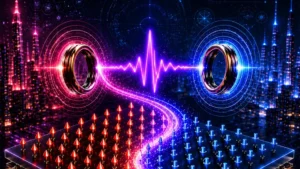
The groundbreaking research, spearheaded by scientists at the University of Warwick and published in the prestigious journal Nature Communications, marks a pivotal moment in the quest to reconcile the two most successful yet fundamentally disparate theories of the universe: quantum mechanics and general relativity. For decades, physicists have grappled with the challenge of unifying these pillars of modern science, with one of the most intriguing propositions being the existence of "spacetime fluctuations"—minute, ephemeral jitters in the very fabric of space and time. These fluctuations, often dubbed "quantum foam" or "spacetime foam," represent the Planck-scale granularity of spacetime, a realm where classical notions of smooth, continuous space and time break down, giving way to a chaotic, bubbling quantum landscape.
The Grand Challenge: Unifying Quantum Physics and Gravity
Modern physics rests on two colossal pillars: Albert Einstein’s General Theory of Relativity, which masterfully describes gravity as the curvature of spacetime by mass and energy, governing the cosmos on large scales, and Quantum Mechanics, which meticulously details the behavior of matter and energy at the atomic and subatomic levels. While both theories have been spectacularly successful within their respective domains, they become incompatible when attempts are made to describe extreme conditions, such as those found in black holes or the very early universe, where both gravity and quantum effects are significant. The pursuit of a "theory of everything" or a "quantum theory of gravity" is arguably the greatest unsolved problem in theoretical physics, aiming to provide a single, coherent framework that encompasses all fundamental forces and particles.
Many leading contenders for a quantum theory of gravity, including string theory and loop quantum gravity, predict the existence of these "spacetime fluctuations." These theories posit that at incredibly tiny scales, far smaller than anything we can directly observe, spacetime is not smooth but rather a dynamic, frothing sea of quantum activity. However, the exact nature and characteristics of these predicted fluctuations vary significantly from one theoretical model to another. This theoretical divergence has presented a formidable hurdle for experimental physicists, who, until now, lacked a clear, unified roadmap for what signals to search for in their highly sensitive experiments.
Historical Context: John Wheeler and the "Spacetime Foam"
The concept of spacetime fluctuations was first eloquently articulated by the visionary American theoretical physicist John Archibald Wheeler in the mid-20th century, particularly in the 1950s and 1960s. Wheeler, renowned for coining terms like "black hole" and for his work on quantum gravity, proposed that at the Planck length (approximately 1.6 x 10^-35 meters), spacetime would cease to be smooth and instead would exhibit a foamy, turbulent structure. He envisioned it as a chaotic sea of virtual particles constantly popping in and out of existence, creating transient wormholes and topological changes. This "quantum foam" hypothesis provided an intuitive, albeit qualitative, picture of how spacetime might behave at its most fundamental, quantum-mechanical level.
Wheeler’s idea, while highly influential, remained largely in the realm of theoretical speculation due to the sheer impossibility of directly probing such infinitesimally small scales with contemporary technology. The challenge has always been how to translate these abstract theoretical predictions into concrete, measurable phenomena that could be observed by experimentalists, thereby moving quantum gravity from the blackboard to the laboratory.
Turning Theory Into Measurable Signals: A Unified Approach
The Warwick-led research directly addresses this long-standing experimental conundrum. The team has developed the first unified framework that systematically categorizes spacetime fluctuations into three primary types. This categorization is based on their unique behavior across both spatial and temporal dimensions, providing a standardized lens through which to view diverse theoretical predictions. For each of these categories, the researchers have meticulously identified distinct, measurable patterns—specific "signatures" that could be detected by highly sensitive instruments known as laser interferometers.
Dr. Sharmila Balamurugan, Assistant Professor at the University of Warwick and the lead author of the study, emphasized the significance of this translational work. "Different models of gravity predict very different underlying trends in the random spacetime fluctuations, and that has left experimentalists without a clear target," Dr. Balamurugan explained. "Our work provides the first unified guide that translates these abstract, theoretical predictions into concrete, measurable signals. It means we can now test a whole class of quantum-gravity predictions using existing interferometers, rather than waiting for entirely new technologies. This is an important step towards bringing some of the most fundamental questions in physics firmly into the realm of experiment."
This framework represents a crucial bridge between theoretical speculation and empirical validation, offering a common language for physicists across the theoretical and experimental divide. By standardizing the search parameters, the research significantly reduces the guesswork involved in designing experiments, potentially accelerating the pace of discovery in quantum gravity.
Interferometry: The Precision Tool for Spacetime Measurements
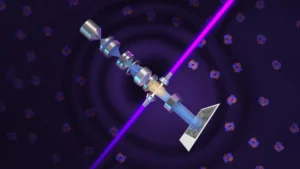
The instruments central to this experimental quest are laser interferometers. These devices are among the most sensitive measuring tools ever conceived, capable of detecting displacements far smaller than the diameter of an atom. They operate on the principle of interference, where a laser beam is split into two paths, sent along different arms, and then recombined. Any minute change in the length of one arm relative to the other—even due to a ripple in spacetime itself—will alter the phase of the light waves, creating a detectable interference pattern.
The most famous example of such an instrument is the Laser Interferometer Gravitational-Wave Observatory (LIGO), a monumental scientific endeavor with detectors located in Hanford, Washington, and Livingston, Louisiana, each featuring arms stretching 4 kilometers long. LIGO, along with its international partners Virgo (Italy) and KAGRA (Japan), achieved historical success in 2015 with the first direct detection of gravitational waves, ripples in spacetime generated by colliding black holes. This monumental discovery not only confirmed a major prediction of Einstein’s General Relativity but also opened a new window into the universe, demonstrating the extraordinary power of interferometry to probe spacetime dynamics.
The new framework is designed to leverage the capabilities of not only large-scale observatories like LIGO but also smaller, next-generation experimental setups. The study specifically mentions QUEST (Quantum Experiments at Space-Time) being developed at Cardiff University in the UK, and GQuEST (Gravitational-Wave Quantum Experiment for Spacetime) at Caltech in the USA. These smaller, often tabletop-scale interferometers offer complementary advantages, such as higher frequencies of operation or different noise characteristics, allowing for a broader spectrum of spacetime fluctuation signatures to be investigated. The ability to use existing and near-future technologies rather than requiring entirely new generations of instruments is a significant practical advantage, speeding up the experimental verification process.
What the Study Revealed and Scientific Enthusiasm
The findings of the study offer several critical insights into how various types of interferometers can be optimally deployed to detect these subtle fluctuations. By understanding the distinct characteristics of the three identified categories of fluctuations, experimentalists can fine-tune their instruments and analysis techniques to maximize their chances of detection. This includes optimizing the arm length, laser power, detector sensitivity, and frequency range of the interferometers.
Dr. Sander Vermeulen from Caltech, a co-author of the study, underscored the precision and versatility of these instruments. "Interferometers can measure spacetime with extraordinary precision," Dr. Vermeulen stated. "However, to measure spacetime fluctuations with an interferometer, we need to know where—i.e., at what frequency—to look, and what the signal will look like. With our framework, we can now predict this for a wide range of theories. Our results show that interferometers are powerful and versatile tools in the quest for quantum gravity."
The scientific community is likely to receive this framework with significant enthusiasm. For experimentalists, it provides much-needed guidance, transforming a largely unfocused search into a targeted investigation. For theorists, it offers a common ground for comparing and contrasting the observable predictions of their diverse quantum gravity models, fostering a more direct dialogue with experimental efforts. This convergence is essential for making tangible progress in a field that has long been dominated by theoretical abstraction.
A Flexible Tool for Fundamental Physics and Broader Applications
One of the most compelling aspects of this new framework is its inherent flexibility. It is not tethered to any single theoretical explanation for the origin of spacetime fluctuations. Instead, it merely requires a mathematical description of the proposed fluctuations and detailed information about the measurement setup. This agnostic approach means the framework can be applied universally, regardless of the specific quantum gravity model being considered, or even if the fluctuations arise from entirely different physical phenomena.
This versatility extends its utility far beyond the immediate goal of detecting quantum gravity effects. The framework can be invaluable for investigating other elusive phenomena in fundamental physics, such as stochastic gravitational waves—a background hum of gravitational waves from countless astrophysical sources across the universe. It can also be applied to the search for certain types of dark matter signals, particularly those that might interact subtly with spacetime itself or generate minute oscillations that could be picked up by highly sensitive interferometers. Furthermore, the framework provides a robust method for characterizing and understanding various types of experimental noise, which is crucial for distinguishing genuine physical signals from instrumental artifacts in ultra-sensitive measurements. This allows for a more rigorous and reliable interpretation of experimental data across a spectrum of investigations.
Prof. Animesh Datta, Professor of Theoretical Physics at Warwick, highlighted the long-term implications of this methodology. "With this methodology, we can now treat any proposed model of spacetime fluctuations in a consistent, comparable way," Prof. Datta concluded. "In the coming years, we can use this to design smarter tabletop interferometers to confirm or refute possible theories of quantum or semiclassical gravity and even test new ideas about dark matter and stochastic gravitational waves." This predictive power will enable researchers to optimize the design of future experiments, ensuring they are maximally sensitive to the specific signatures predicted by various theories.
The Road Ahead: Designing Smarter Experiments
The development of this unified framework represents a crucial inflection point. It shifts the paradigm from a broad, undirected search to a targeted, hypothesis-driven experimental program for quantum gravity. The next steps will involve applying this framework to existing data from LIGO and other interferometers, as well as using it to inform the design and operation of future experiments like QUEST and GQuEST. Researchers will be able to perform retrospective analyses of past observations, potentially uncovering signals that were previously overlooked due to a lack of specific search parameters. Concurrently, the framework will guide the development of next-generation interferometers, optimizing their sensitivity profiles to match the predicted signatures of spacetime fluctuations.
The implications for the broader field of quantum gravity are profound. By providing a clear pathway for experimental verification, this research injects a renewed sense of urgency and possibility into a field that has, for many decades, been largely theoretical. The potential to experimentally confirm or refute specific quantum gravity models could dramatically reshape our understanding of the universe at its most fundamental level, offering glimpses into the very structure of reality.
Funding the Frontiers of Physics
This pioneering work was made possible through significant financial support from various funding bodies, underscoring the collaborative and internationally supported nature of fundamental physics research. Key funding came from the UK Science and Technology Facilities Council (STFC) through its "Quantum Technologies for Fundamental Physics" program (Grant Numbers ST/T006404/1, ST/W006308/1, and ST/Y004493/1). The Leverhulme Trust also provided crucial support through research grants ECF-2024-124 and RPG-2019-022. These grants are vital for sustaining long-term, high-risk, high-reward research initiatives that push the boundaries of human knowledge and pave the way for future scientific breakthroughs.
Conclusion: A Step Towards a Unified Reality
The introduction of this unified framework by the University of Warwick-led team marks a significant stride in the scientific endeavor to unravel the mysteries of quantum gravity. By transforming abstract theoretical concepts into concrete, measurable signals, it empowers experimental physicists with a clear strategy to detect the elusive "spacetime fluctuations." This development not only accelerates the search for a quantum theory of gravity but also provides a versatile tool for probing other fundamental phenomena, from dark matter to stochastic gravitational waves. As interferometric technology continues to advance, this framework promises to bring some of the most profound questions in physics closer to experimental resolution, potentially ushering in a new era of discovery that could finally unite the quantum world with the cosmos at large. The journey to a unified understanding of reality is long, but with this new guide, the path forward appears clearer than ever before.